Australian Social-Horror Is A Blunt Force Allegory About The Stolen Generations [Sundance]
Jan 27, 2024
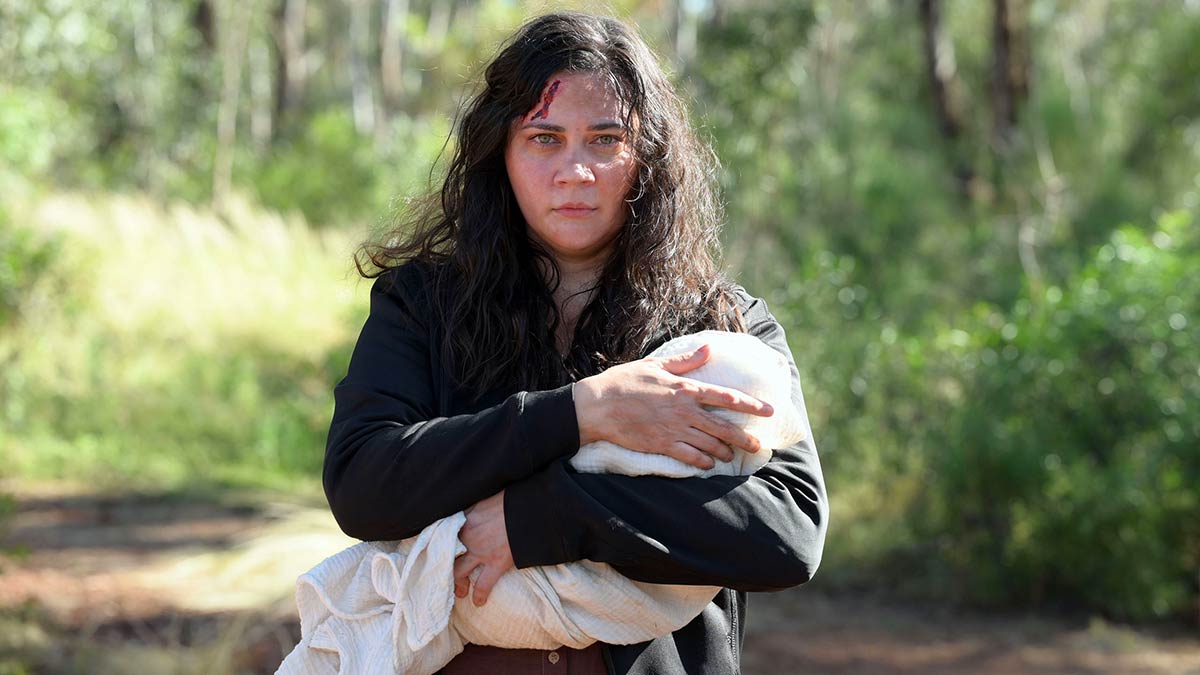
An exploration of the generational trauma surrounding the “stolen generations” of Aboriginal children by the Australian government, Jon Bell’s feature debut “The Moogai” fits all the criteria of what we would, perhaps pejoratively, describe as “elevated horror.” A fraught term, and one that would need more than the length of this review to dive into, it nevertheless seems apt for a film that so blatantly makes its subtext into text. After all, the titular “Moogai” is a less than subtle metaphor for the governmental organizations and missionaries that stole and re-homed light-skinned aboriginals throughout the twentieth century, attempting to sever their cultural connections in the process.
READ MORE: Sundance 2024: The 23 Most Anticipated Movies To Watch
Even the film’s prologue draws overt connections between the two, following the disruption of an idyllic Aboriginal family by white men who attempt to steal a young girl, only for that girl to be snatched into the Moogai’s subterranean cave instead. With that, “The Moogai’s” blunt force political critique wraps itself in the veil and grammar of horror. And, surprisingly, for some of the films, at least, it works.
Not as an otherworldly horror film, though. It’s rarely scary and is perhaps too seeped in the rhythms of the ‘mother fighting unseen horrors and society to protect her child’ sub-genre (see “The Babadook,” a film that shares producers here, and about half a dozen others on Shudder). But, as a critique of a colonizing government and its brutal methods of control and subjugation, it’s terrifying. One wonders why the film needs Moogai’s abstraction when the horror is so lived-in in the first place.
After its prologue, Bell jumps ahead to the present day, and the rest of the film follows Sarah (Shari Sebbens), who, along with her husband Fergus (Meyne Wyatt), are preparing for their second child. Raised by white parents but also having a cautious relationship with her birth mother, Sarah is unaware that her mother’s sister was the young girl stolen by the Moogai in the prologue.
During delivery, however, Sarah dies on the operating table, only to be quickly revived. That death awakens the Moogai, who turns its sights onto Sarah’s newborn. From there, Sarah’s recovery is hampered by visions of the monster, an entity that she doesn’t understand and isn’t willing to let her birth mother explain to her. Of course, Fergus initially thinks that his wife hasn’t fully recovered from her near-death experience, but he also slowly realizes that her visions are quite real.
If that all reads a bit too predictable, it is. While Bell’s script doesn’t break new narrative ground, it compensates in sustaining tension by consistently highlighting the ways that Sarah and Fergus are constantly reminded of their skin color. As the film hammers home time and again, the real horrors are how institutions (governmental and otherwise) attempt to control Sarah, Fergus, and others like them.
Further, Bell is a gifted visual stylist, playing up Sarah’s hallucinations in interesting ways. Once the Moogai shows itself, it’s also appropriately weird, an odd white man-ish creature that splits the difference between scary and amusing. Yet, when “The Moogai” turns back to its titular monster, however, the meaning behind it might be crystal clear, but it feels almost extraneous to what the couple has to contend with outside of the supernatural.
Bell obviously has a lot of ideas on his mind, and he ably trojan horses the history of Aboriginal stolen children into the skin of a horror film. But I often found myself wishing that the surface details and genre requirements — the jump scares, the plotting, etc. — were as thought through as the meaning behind them. [C+]
Follow along with all our coverage of the 2024 Sundance Film Festival.
Publisher: Source link



James Gunn Officially Addresses Hal Jordan’s Shocking Fate on ‘Lanterns’
This article contains spoilers for Lanterns.Lanterns is a new series set in the DC Universe, an interconnected network of TV shows and movies based on DC Comics. The show follows veteran Green Lantern Hal Jordan (Kyle Chandler) as he trains…
Sep 23, 2026
Jon Hamm’s New Crime Thriller Streaming Hit Has a 90% Rotten Tomatoes Score
Jon Hamm remains the undisputed king of TV, as his latest crime thriller has a knockout Rotten Tomatoes score and is currently one of the biggest shows on streaming. When Hamm first played Don Draper in Mad Men way back…
Sep 22, 2026
Alan Ritchson’s New 8-Part Action Thriller Lands Solid RT Score While Dominating Streaming
Alan Ritchson has, somewhat quietly, become one of streaming's more dependable stars, which is not necessarily where you would have expected his career to land back when he was doing Smallville supporting work and Blue Mountain State. Reacher turned him…
Sep 21, 2026
HBO’s Harry Potter Reboot Is Officially Ditching the Most Iconic Part of Daniel Radcliffe’s Era
This December, audiences will be transported back to the Wizarding world of Harry Potter. Of course, those born in the mid-to-late '90s will have fond memories of the movie franchise. Starring Daniel Radcliffe, Emma Watson, and Rupert Grint as Harry,…
Sep 20, 2026