It’s a Zabriskie, Zabriskie, Zabriskie, Zabriskie Point Featured, Reviews Film Threat
Feb 16, 2024
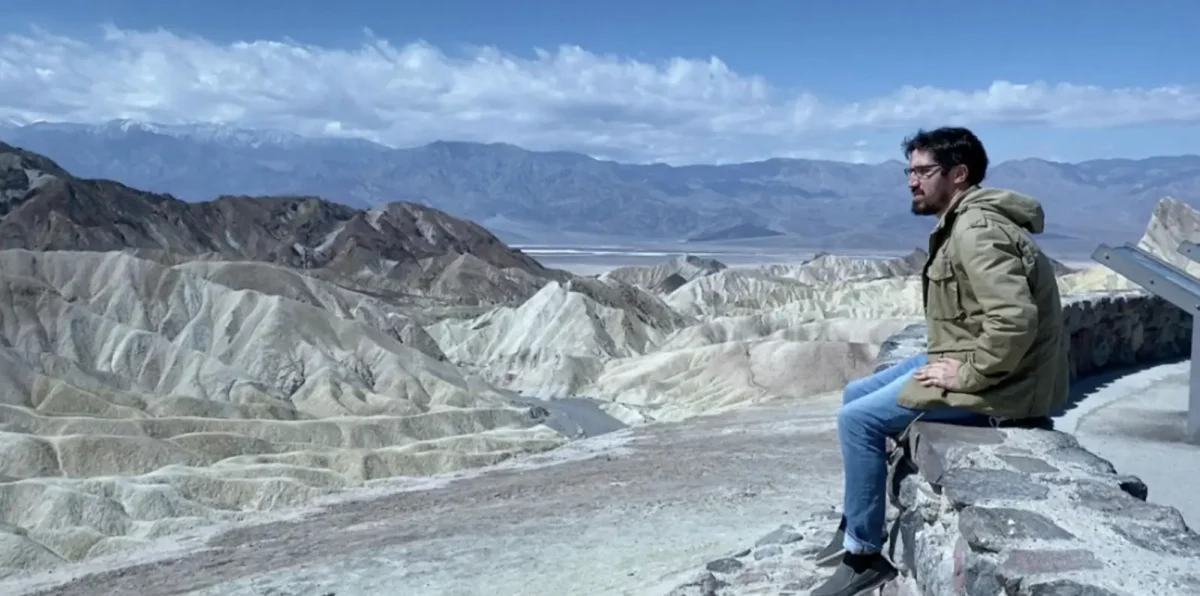
It’s hard not to find yourself firmly in writer/director Daniel Kremer’s corner in It’s a Zabriskie, Zabriskie, Zabriskie, Zabriskie Point. The documentary begins with a videotape of Kremer as a 12-year-old boy suffering from a chronic stammer. The footage was culled from a documentary on speech defects that he happened to appear in in the 1990s. In the clip, the young boy stands next to a shelf full of VHS tapes, and the interviewer asks him what his favorite film is. He hesitates, then reaches for Zabriskie Point. That’s impressive. I’ve seen a little Michelangelo Antonioni and am not much of a fan. I am a midwit who liked Star Wars when I was his age, so I instantly felt ready to be schooled.
Present-day Kremer narrates with no sign of a speech defect. This is endearing and inspiring. He explains his film is about Stanley Kramer’s madcap comedy It’s a Mad, Mad, Mad, Mad, World, and his beloved Zabriskie Point. Besides being set partly in deserts, there is little obvious to connect the two films. So far, so intriguing. The filmmaker promises there will be several mash-ups of them, and he leads with a pretty amusing one of Sid Caesar peeping over a desert ridge to spy on a bunch of buck-naked hippies cavorting in the sand.
“…[a mash up of] Stanley Kramer’s madcap comedy It’s a Mad, Mad, Mad, Mad, World, and his beloved Zabriskie Point.”
There are certainly contrasts worth exploring. It’s a Zabriskie, Zabriskie, Zabriskie, Zabriskie Point represents birth and death in Hollywood. It’s a Mad, Mad, Mad, Mad, World released in November 1963 as one of the last successful breaths of the dying beast that was the old guard. Zabriskie Point confidently represents the new order. From this point on, the focus slips.
Kremer casts his cultural net further until the witty title starts to weigh heavy. This is not an issue at first. He begins with some fascinating stories about Greed, identified as the first “location” picture, as it was shot for two agonizing (and deadly) months in 1923 Death Valley, like Antonioni’s film. The critical and commercially successful comedy took place in the other end of the Mojave. It struck me as odd that little attention was paid to Monument Valley, the source of the most iconic American images. Does Kremer not like Westerns? The film powers forward agreeably enough, but the more of it you see, the less it seems to be hewing to its theme.
Publisher: Source link





‘It’s Always Sunny in Philadelphia’ Finally Returns in First Season 18 Trailer
For over two decades, FX has enjoyed massive success and delivered countless laughs behind the team that makes It's Always Sunny in Philadelphia, one of the highest-rated sitcoms of the modern era. After releasing 14 hit seasons in consecutive years…
Jul 30, 2026

Nathan Fillion Confirms Current Status of Long-Awaited ‘Firefly’ Reboot
We can only imagine what could have been for TV shows that were cancelled too soon, many after just one season. Shows get canned for multiple reasons, but primarily because of declining ratings, high production costs, and network programming shifts.…
Jul 29, 2026
Netflix’s Best 10-Part Gothic Thriller Officially Getting New Remake
Netflix has been in the horror game virtually ever since the DVD rental service went all-in on streaming. Titles like House of Cards and Orange Is the New Black might have been the shows they used to highlight the platform's…
Jul 28, 2026
Netflix’s New 2-Part ‘Yellowstone’ Replacement Is One of the Biggest Shows on Streaming
Taylor Sheridan's Yellowstone helped to bring the western genre into the 21st century. Starring Kevin Costner as John Dutton, the series followed the Dutton clan as they ran a gigantic ranch and committed many, many crimes to protect it. The…
Jul 27, 2026