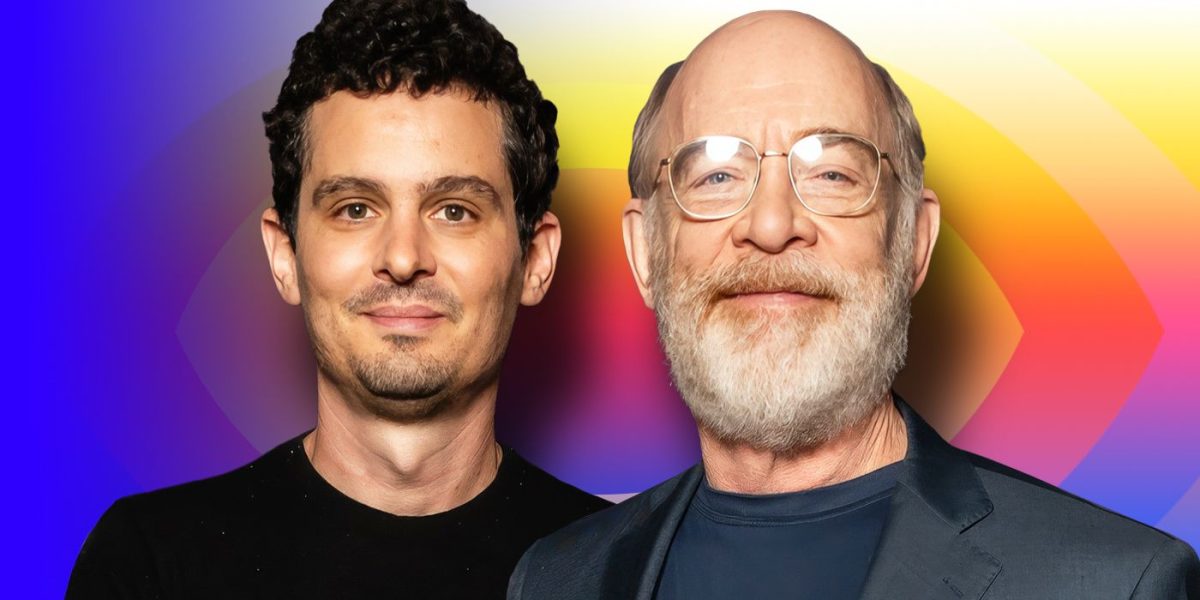
‘Whiplash’ 10 Years Later – Damien Chazelle and J.K. Simmons Discuss How They Made Their Masterpiece in Only 20 Days
Sep 15, 2024
On the final day of the Toronto Film Festival 2024, audiences celebrated the 10-year anniversary of Damien Chazelle’s Oscar-winning feature debut, Whiplash, with a special screening. Our own Steve Weintraub had the opportunity to sit down with Chazelle and J.K. Simmons, who played the formidable jazz instructor Terence Fletcher opposite Miles Teller’s fiercely driven Andrew Neimann, for an extended conversation about their whirlwind 20-day production.
Ironically, Whiplash is a tense study of the sacrifice and dedication necessary for greatness. Not that Chazelle’s rapid-fire shoot didn’t require sacrifice and dedication — that’s apparent in Simmons’ Oscar-winning performance — but to hear the two of them think back on the set, their experience was quite unlike the abusive relationship between Fletcher and Neimann. In fact, their five Oscar nominations and three wins were born of mutual respect and admiration, one first-time filmmaker’s unwavering vision in a “pressure cooker atmosphere,” Tom Cross’ percussive edit, and a very talented cast.
During this interview, the writer-director and co-star dig into their tight schedule, recalling their first-ever meeting (“I’m picturing Antoine Fuqua.”) and the “uphill climb” it took to get a “drama in a music conservatory” pitch-perfect. We find out what happens when you slap Miles Teller one too many times, how they pulled Whiplash off on a low budget, how terrified Chazelle was on set, what’s coming up next for the two of them, and more. Check out the full discussion in the video above or you can read the transcript below.
The Impact of ‘Whiplash’ a Decade Later
“It will endure because it’s brilliant.”
COLLIDER: A lot of times, movies come out, they’re popular for a little bit, and they fade. But once in a while, there’s a film that just explodes, and it’s one of those things that everyone sees, everyone loves, and it’s Whiplash . This is one of those films that’s beloved by so many people. What is it like being part of a film like that?
DAMIEN CHAZELLE: That’s very kind of you to say that. I’m sure I could quibble with aspects of that because I still think of it as a small little film, and certainly, that’s how it felt when we made it. I remember even when we were releasing the film, it felt like we were always fighting to get heard a little bit. It was still a movie about a jazz drummer, a drama in a music conservatory, so it always felt like we had a little bit of an uphill climb on that front. I remember being a little bit in shock that it got any audience at all and any sort of response at all beyond a very select sort of coterie, and have been surprised since then to see it have some staying power for certain folks. But yeah, it’s hard for me to think of it as anything but this little film that we did with not enough shooting days.
J.K. SIMMONS: Not enough money, not enough time, and it has endured. It will endure because it’s brilliant. It’s a brilliant piece of work, and I’m as proud of Whiplash as of anything work-related in my life. There hasn’t been a week that’s gone by, probably, unless I was in a cabin in Montana, that I haven’t had somebody come up to me and go on and on about the impact that Whiplash had on them. I’m tremendously proud to have been a part of it and really excited that it’s being re-released and people can see it in a theater again.
People like the movie.
CHAZELLE: I’m beginning to believe.
SIMMONS: It’s pretty good.
CHAZELLE: It’s very nice to hear.
There was a poll that was released of all the films at Sundance to premiere, and Whiplash won. Whiplash was listed as the number-one premiere of all of Sundance.
SIMMONS: And I, of course, wasn’t there. We were just talking about this. I was busy making a failed sitcom in LA at the time. But even from there, the impact when it landed at Sundance, the waves were crashing on the beach in LA. It was a phenomenon, and rightly so.
How Do You Shoot an Oscar-Winning Film in 20 Days?
“There wasn’t enough time to shoot it, not enough time to edit it, not enough time to mix it.”
Image via Sony
The thing for me that is the craziest part of this movie is that you shot it — for people who don’t realize, Sundance is at the end of January — in October.
CHAZELLE: We finished in October. I think you’re right. September shoot.
September into October, you’re then editing the movie — October, November, December, January . The thing about this movie is the editing is incredible, and you have this much time to cut it, you can’t overthink anything, and then you’re premiering at Sundance. What was that actually like for you when you finally had footage and you’re in the editing room and you know everyone wants to premiere at Sundance, you have like no time to cut, and yet you made something phenomenal?
CHAZELLE: Well, credit has to go to Tom Cross, the editor, who I’ve been smart enough to then sort of glom onto and do everything with him since then. But this was our first thing together. I mean, we did the Whiplash short together to try to raise money for the feature, but basically, Whiplash as a concept was the first thing we did together in the editing room. I remember it as a sort of constant triage situation. It was sort of how the shoot felt, as well. Whiplash was a movie where there wasn’t enough time to shoot it, not enough time to edit it, not enough time to mix it. I even remember the mix stage also being very, very crunched. I had to sort of have it itemized, how many hours we were gonna spend on what reel, and if we were still on a certain scene for more than two hours, then we were in trouble. It’s similar to shooting where we had to kind of know how many takes and when to sort of cut money.
SIMMONS: How many takes? Why?
CHAZELLE: Because J.K., as you probably know, just needs lots of takes.
It’s known in Hollywood.
CHAZELLE: No one wants to see the first take of J.K.
SIMMONS: We gotta be in the double figures at least.
CHAZELLE: So that’s hard on a 20-day schedule, which I wish they had told me beforehand.
I did a little research before talking to you guys and I read in some places it was a 19-day shoot and other places said it was a 20-day shoot.
CHAZELLE: It was 20. 19, I guess, got codified somewhere because it sounds better.
SIMMONS: Maybe because I only worked 19 days.
CHAZELLE: For those who didn’t have a day off, like myself, it was 20.
Before you started shooting, you were probably in stress mode, then through the whole shoot, you’re freaking out, and then you were freaking out every day after to try to deliver a movie for Sundance. So you are in that heightened adrenaline state for months. What was it like for you after that Sundance screening when you could finally breathe?
CHAZELLE: I don’t entirely remember. I guess I would just say that in terms of the making of it, that state of adrenaline certainly, looking back, was helpful in its own indirect way. The movie is about that kind of state in a way. So, not that it had to be made in that compressed time frame, but there was something about the running gun, not overthinking it, like you said, not second-guessing. Also, I know in myself, I’ve learned for myself, that I can fall victim very easily to the overthinking, second-guessing end of the spectrum, where you sort of hem and haw almost to infinity. There was something about the pressure cooker atmosphere of how Whiplash was made and edited and cut and mixed, every aspect of it, that I think maybe helped preserve it from some of that. It’s not an overthought movie. There’s some kind of a gut emotion that comes across that was there in its conception and when we shot it that we were able to preserve by not overcooking it, if that makes sense.
SIMMONS: And in the shooting of it, it was the ideal combination that doesn’t happen very often, from my perspective, of Damien and [DP] Sharone [Meir] and the whole team being immaculately prepared despite the fact that I’m sure pre-production wasn’t as long as it should have been and Damien always knowing exactly what he wanted, but always being open to whatever Miles [Teller] and I and whoever in the cast were bringing to any given moment, too. That was a rare gift that Miles and I have talked about. At the time, we talked about it, and off and on over the years. It happens sometimes. There are some other directors that I feel a similar way about, having that combination of immaculate preparation but openness to collaborating, and it was a beautiful thing.
Image by Photagonist at TIFF
I read that you knew exactly what shot you wanted, so you weren’t doing as much coverage as some people might do. Like, “I need this look, we’re gonna cut to this, we’re gonna go to this.”
CHAZELLE: Partly because I was so freaked out about our shooting schedule, I made sure to storyboard everything and anything that involved music. I cut my storyboards, which were mostly pretty bad storyboards — stick figures and stuff. It’s just what I could draw, but they were enough for me to know what I needed. I would cut those to the music and see. Then I could edit the storyboards based on the music and vice versa. Ideally, you’d wind up on set only shooting what you needed to shoot.
But to J.K.’s point, I remember it being a little bit of both. Yes, there were certain scenes where it was just this line of script or this measure of music, and we get this angle, and that’s it, but there was a lot of stuff where we needed it to feel a little messier and shot it in a messier way. I remember we would just be letting the camera roll, and Miles would just be drumming until eventually the sweat — we don’t have to spritz them with fake sweat because the sweat is real, and J.K.’s voice would actually be getting hoarse. At that point, like J.K. was saying, you need the actors to feel the freedom to actually just inhabit the space and make the scene their own rather than hemming them in too much with your preconceived notion.
So, I remember it being a little bit of both in a way where there was a little bit of that really regimented shooting approach, which is how I had in my head. I always imagined it had to be a movie that J.K.’s character would have made; it would have this metronomic kind of right angles sort of precision to it. But to make a bad metaphor worse, it’s also ostensibly a movie about jazz musicians, so within that codified structure, you need to have some room for improvisation, some room for play, some room for messiness, and that’s where you wind up really just relying on great actors.
Image via Sony Pictures Classics
SIMMONS: I can’t believe that’s the first time I’ve heard that metaphor. Of course.
CHAZELLE: It’s pretty bad, isn’t it?
SIMMONS: No, it’s absolute perfection. And it just occurred to me again how important it is to what this movie is that he, Miles, myself, and Tom Cross all have musical backgrounds. That was, I think, crucial.
CHAZELLE: Because we didn’t have time to rehearse, so the fact that J.K. actually conducted in his youth and Miles played drums.
When you were doing the short to raise money, I read that you were meeting with J.K. based on a recommendation.
CHAZELLE: [Producers] Jason [Reitman] and Helen [Estabrook] had put us in touch.
It was something to the effect of, “We can cheat you conducting.” Could you talk about that initial meeting and your background?
SIMMONS: Alright, I’m gonna tell the whole story. We got time, right? [Laughs] Jason Reitman sent me the script. He and I obviously had collaborated before, and Helen I met during this process. He sent me the short and the feature because, at that point, they already knew they were gonna make the short. The feature was written first, and then in order to generate funding, they thought, “We’ll make the short film as a proof of concept, take it to festivals, see what happens.” So, he sends me the script — I’m getting goosebumps by page two. It’s everything I ever hoped I could ever read in a screenplay, and I’m falling in love with it. So I go, “Yes, please. I would like to meet this guy.” They set up a meeting at a restaurant in Studio City. Because I’m an idiot, I’ve just read this genius screenplay about jazz, the quintessential American musical form, and primarily African American art form of American music, the guy whose name I’ve never heard before, who wrote it, is named Damien Chazelle — I’m picturing Antoine Fuqua. So I’m thinking, “I’m gonna walk into this restaurant, and there’s going to be this tall, elegant, Black guy with a beret or something.” I’m looking forward to meeting him and having this conversation, and I walk into the restaurant.
Image via Sony
I think I was right on time. You were a few minutes early. So you were there, and my recollection is that I basically looked right through him. He’s standing up, and I went, “Oh, wow. You’re Damien Chazelle. That’s what a Damien Chazelle looks like?” I had no idea. [Laughs] And then, after we did the obligatory, “I think you’re great,” “I think you’re great,” he quickly jumped into trying to alleviate my concerns about the musical aspect of it. He didn’t want me to be intimidated and was saying, “We can use doubles, and we’ll have a technical advisor and all this.” And I sort of looked blankly at him and went, “Did Reitman not tell you that I have a degree in music, and I thought I was gonna be Leonard Bernstein when I grew up?” That was my original plan. “I’m not a jazz guy, but I’m gonna be conducting these scores. I’m gonna learn this music. I’m not just gonna be some actor waving his hands up there.” And Miles, by the way, plays the drums, so go figure.
It was meant to be.
SIMMONS: It absolutely was.
Miles Teller Broke J.K. Simmons’ Ribs Filming ‘Whiplash’
“I mean, you did slap him.”
Image via Sony
Another interesting fact about the making of this film is that you got into a car accident, I believe, in the third week of filming. Talk a little bit about that and then the stress of knowing you can’t leave set, you need to keep going.
CHAZELLE: I remember hearing that the car accident sounded worse than it was. I wasn’t seriously injured or anything, but I guess there are certain things they have to do. When we were back on set the next day, there had to be a person there monitoring, a concussion expert or something, to see if I started sounding weird or something. It was the type of accident where you could have a concussion, but I don’t know if I actually had one, or if I did, it was minor. It’s actually not my main memory of the shoot.
SIMMONS: I had totally forgotten that. That was freaky.
CHAZELLE: Now, see, I’m remembering my own probably exaggerated version of what actually happened. Did you break something? I wanna say you broke a rib, and I know that didn’t happen.
SIMMONS: I did break a rib; Miles Teller broke my rib. He tackled me to the stage, so I spent the last two days of the shoot with two cracked ribs.
Is that true?
SIMMONS: Yeah.
I did all this research, and I never knew this part.
CHAZELLE: That’s the real story, much more than the car accident. Miles Teller sent this man to the hospital.
SIMMONS: When he attacks Fletcher, he flies over the drum set because he can’t take anymore and tackles me to the floor and gets dragged off. We actually did two whole takes of that and on take two…
Did you know immediately?
SIMMONS: Oh, yeah. It was actually the second time. I’ve had broken ribs four times. I’m very fragile. That was the second time, so I knew it was. And again, it wasn’t terrible. They weren’t displaced fractures. It wasn’t fun.
CHAZELLE: It seems like the only person who didn’t suffer on this shoot was Miles.
SIMMONS: We gotta do something about that.
CHAZELLE: I mean, you did slap him. So, there’s that.
SIMMONS: Whatever.
There’s so much about this movie that’s fantastic, but Miles really wanted to be slapped, and not every person wants that.
SIMMONS: No. And whatever Miles is into– I mean, we’re not here to judge anybody or anything. You be you. No, that was another part of the beauty of [Damien] being so prepared and knowing what shots he wanted. We didn’t have to get 17 angles of me slapping Miles, so I felt comfortable enough. And Miles was certainly gung-ho about, “Let’s not pull this and make it a stage thing. Smack me, and we’ll do it.” And I really enjoyed it! [Laughs] We couldn’t have done that differently. We could have, but it wouldn’t have been as effective to do that a different way. And we probably only did three or four takes.
Image by Photagonist at TIFF
The film is about a lot of things but it’s also about, “What does it take to be great?” When I was younger, I didn’t understand what you really have to do to be great at something, and I think this is one of those films where you really have to pay a price if you want to get to another level.
SIMMONS: Another thing that we talked about at that first meeting was how important that ambiguity at the end of the film is, that Fletcher is not a snidely, whiplash, evil, bad guy, and Neimann is not a 100% victim. That’s obviously the relationship — he’s an abusive, sadistic sociopath — but what is the price of greatness?
I got a friend who’s a classical orchestra conductor, Darko Butorac, who is one of the few people who, in the wake of the movie, because people were recognizing me and talking about the movie and going, “Oh my god, you’re so horrible and mean in that movie,” and Darko was like, “Yes! Finally, somebody gets it.” I was like, “Oh man!”
CHAZELLE: Disturbed you even more.
SIMMONS: When you are that level of musical genius, and you hear in your head what it can be, and you’re not hearing it, that’s what you wanna do.
A lot of people want to be great, but they don’t want to put in the work. This is the extreme, but you really have to work for it.
When you think back on the shoot, is there one day that always stands out during the filming?
SIMMONS: Ten days just went just flipped by. The studio band days were amazing, the opening scene with Miles. I mean, every moment I was blessed to do in this movie was a joy. The terrifying day for me, as a guy who was musically trained, but my hands just don’t connect to my brain, was the little 16 bars that I had to play on the piano in the jazz quartet scene in the bar later in the film when Miles happens across me in the bar, and we have that great scene at the table. Damien told me well ahead of time, “I’m not gonna do the hand double thing.” He goes, “For just these 16 bars here, I need to be able to go face, hands. Do whatever you want. You need to learn this.” It’s not difficult. For a pianist, it’s pretty easy. For me, I practiced hours on that thing, and it was so hard to stop my hands from shaking when we were shooting those scenes because it was so intimidating. I’m with Fou Fou, the drummer, these legendary LA jazz guys, and I’m, like, actor boy. In that way, that’s maybe the most memorable day on set for me.
CHAZELLE: I remember that day, but I don’t. You must have hit it. That’s a real actor here. You seemed comfortable to me. I definitely remember, because it was that same day, same set, him and Miles at the table having their long dialogue together. It was, like, week two of the shoot, I wanna say, or about a week in. It’s one of those things where you just kind of hope that two actors will click together, that there’ll be a certain kind of chemistry. But again, we didn’t really get to rehearse the film. The first week, we kept you guys separate. Either it was their first scene together, or it was one of their first scenes together. Once we started to get them together in the frame, you just started feeling that chemistry. You kind of knew, “The movie has a chance because there’s a heartbeat.”
There’s a heartbeat there that you can’t write on the page. You can’t conjure it out of thin air. It has to come from two human beings sharing a space within a camera image, whether there’s something happening under the words — because sometimes there isn’t, and you’re stuck with just filmed reproduction of the words, and that’s not what you want. But with J.K. and Miles, there was something there. The only time I’d heard them together was when we did one table read, which I felt very reassured by, even though I normally find table reads kind of horrible. Just getting to hear them speak to each other in some semblance of character, just getting to hear the two voices ping off each other, I could feel that there was some kind of relationship at the heart of this thing that was going to work, that was going to be resonant. But then, to have that affirmed on screen, whether it was when we did this scene or another scene around the same time.
Image via Sony
With the shooting schedule, because it was only 20 days and you had no money, were you able to have any control over what you were shooting that first week, or was it like, “This is just how it’s going to shoot?” Do you remember?
CHAZELLE: We had a brilliant production designer, Melanie Jones, and a lot of it was based on when you have that little time to shoot, it really becomes about, “How do you eliminate company moves?” There are actually a lot of little locations in this movie, and we had to make it all one location. So basically, we took over one building in downtown LA — I think it was the Palace Theatre — and every floor became something. It either became a place where Melanie built the set of their practice room, or it became Miles’ dorm, or it became J.K.’s apartment — I mean, that might have been a different building — certainly the theater, or one of the theaters. I just remember stairways, hallways. Even the jazz club where J.K. plays piano, where they have that dialogue together, was not actually an interior; that was actually just the walk-in entrance of the Palace Theatre that Melanie added a wall to and turned into an interior jazz club. It’s one of the only ways that we managed to actually make the movie in the amount of time we did is that we almost never had to leave. We were hunkered down in this one building, just going from floor to floor, and it’s like everything was rotated around us like a jigsaw puzzle.
SIMMONS: And then the way he and Sharone shot it, and the way it was lit and everything, we weren’t sitting around for an hour and a half waiting for them to light stuff. We got a lot of meat done every day.
CHAZELLE: Yeah, Sharone Meir, the DP, moves like a military unit, going in and figuring out the most efficient way to light things and shooting on the fly but trying to make it look as precise as possible. Nic Harvard, our AD, was also the one really keeping the train on the tracks. We were lucky to have people working at their top to make that a reality.
‘Whiplash’ Deleted Scenes Give a More Intimate Look at J.K. Simmons’ Character
“It was actually lovely stuff.”
Image via Sony
You made the film for a certain budget. If they had given you a little bit more money, was there something that you had in the script or an idea that you wanted to add to the film that you ended up not being able to pull off because of limitations, or was everything in the script exactly what you wanted?
CHAZELLE: I wouldn’t have changed anything except, you look back, and it’d be nice to not feel like there was a gun to your head every day. [Laughs] I guess I would add a little more comfort to the shooting of it, the editing it. But in terms of the actual concrete, no.
Did you have other scenes that you had to pull out because, “We have 20 days and we have $3 million and this is not gonna work?”
CHAZELLE: That’s a good question. No, I don’t think. Actually, it’s funny because there was a fair amount that we shot that wound up being cut out in the edit. I don’t recall cutting a ton of stuff from the script just to get us into shape for the budget. We must have done something here and there.
SIMMONS: I don’t remember much difference — I don’t remember much at this point because I’m old. [Laughs] But no, the script that Jason and Helen sent me when we met a year and a half before we shot the film, before we shot the short film, was very much the script that we ended up shooting. Then, as he said, they even found that we could have done it in 18 days because they cut a few things.
I can’t believe you have deleted scenes from the 20-day shoot. That’s not much time.
CHAZELLE: It was actually lovely stuff of J.K. alone in his apartment. There were all these scenes of Fletcher’s home life.
SIMMONS: By the way, he’s one of, I think, three directors who’s allowed me into an editing room. I wasn’t there much, but I spent an afternoon. Actors always go, “You cut my scene! I was good in that scene with my acting.” And shooting those scenes was great, but at the end of the day, the movie’s about Andrew Neimann’s perspective on everything, and Miles is in every scene of the movie. So, taking away the moments of Fletcher alone and Fletcher on the subway and Fletcher in his apartment, and seeing glimpses, none of that was important at the end of the day.
Have you released those scenes?
SIMMONS: It’s gonna be on the 10th anniversary VHS tape.
CHAZELLE: We got a great plan for it. We’re gonna pan and scan it.
Image by Photagonist at TIFF
[Laughs] Some directors, I’m gonna use Kubrick as an example, burned the negative so you could never see his deleted scenes and others will be like, “Here’s 30 minutes of the film that never made it. Take a look.”
CHAZELLE: I don’t know if on the original home video release there were any. Normally what I’ll do is I’ll look, and certain scenes will be the incinerator pile-type of scenes just by virtue of, I don’t think I did a good job, and then there’ll be other scenes where I feel like, in a vacuum, they’re quite nice and I’m okay with them being out there. But the more I learn, the more I feel like I understand that instinct that if it doesn’t make it into the film, then there’s a reason for it usually. You wanna sort of hide it. But in this case, certainly these scenes that J.K. is talking about, it’s a particular example where it would be nice for them to be seen because they were taken out for such a specific reason that had nothing to do with the quality of the scenes, at least as I see them, or presumably as J.K. saw them.
SIMMONS: Oh, I was fantastic.
CHAZELLE: It actually makes his performance much better. It’s really a shame. You could have gotten actual acclaim for this performance. You’ll get ‘em next time, buddy.
SIMMONS: Whiplash 2.
Electric Boogaloo, of course.
CHAZELLE: They are nice scenes, though, so I’ll see where they might be hiding.
SIMMONS: That just reminded me that we did a DVD commentary and Miles was too busy being a movie star so he couldn’t be here that day. We basically spent our DVD commentary just trashing Miles. At least, that was my main goal.
CHAZELLE: The irony with him and Miles is somehow their schedules never aligned, so this is sort of repeating itself. When we were initially releasing the movie, I guess I was always available, so it’d be me and J.K. or me and Miles — Miles and I were alone at Sundance, J.K. and I were alone at Cannes.
Image via Sony Pictures
You could also just tell the truth: They don’t like each other.
SIMMONS: We don’t like to be in the same place at the same time. I mean, he’s a nice guy. Whatever. [Laughs] You know what? This is one of the interesting aspects, too, of the whole shoot — I didn’t know Miles, and he had had a couple of indie films that he’d made a real splash in and people knew how good he was. That’s obviously why he was cast. I didn’t wanna watch those films. I hadn’t seen any of those. I didn’t want to see them because I wanted to play the scenes with the character, but Miles is an alpha, right? And for him to swallow that every day and just take this abuse and be the wimpy little Andrew Niemann character was some really fine acting. As soon as Damien said cut, Miles was like, “How about them Eagles? Wanna arm wrestle?” [Laughs]
I’m a really big fan of your work, and I’m just curious…
SIMMONS: He’s addressing me, by the way. Take a break.
He knows I’m a fan of his work. I’m just curious, though, what is the most nervous you’ve been before the first day of filming something? I’ll actually ask the same thing for you.
SIMMONS: Mine is probably my first feature film because I was a theater guy. I segued from music to musical theater to all kinds of theater. I was 40-ish before I started seguing into becoming a camera actor, so I don’t look like the new kid on the block. I look like I must be a seasoned veteran. My first day on a feature film set was with Ted Demme on a movie called The Ref. It’s not like it was super dramatic, it was just kind of a functionary little character that led us to a certain situation, but I was terrified. I didn’t sleep. It was in Toronto, actually. I flew up from New York. I was doing a Broadway show. I think I was doing Guys and Dolls on Broadway, got the two or three days off to fly up and do my little scene, didn’t sleep, and was just terrified. There have been things that have made me nervous in the meantime, but that was probably the most.
CHAZELLE: Similarly, it would be my first, the night before shooting. I would say Whiplash but probably specifically the short film of Whiplash. And to be honest, I don’t really remember the night before, but I vividly remember day one of shooting the short because that was my first time. I had done films before but student films, films with friends where there was no real schedule, where you get a little bit of money together to shoot on a weekend and then you wait to get the money to develop the film. That kind of stuff. So, very off and on kind of shooting. This was like, “Okay, we’ve got three days to do this scene. Someone’s paying for it and we’ve got X-number of people that we’re getting together on set.” It was what you call a “semi-professional shoot” and the first semi-professional shoot that I’d ever been on, and I was terrified, day one, working with an actor of J.K.’s stature. You’re welcome.
SIMMONS: He was terrified. It was hilarious.
CHAZELLE: I was gonna ask if you could you tell?
SIMMONS: Yes, I absolutely.
CHAZELLE: I tried to hide it. I was utterly terrified.
SIMMONS: Of course you were. I mean, come on. [Laughs] One of the most remarkable things to me was, first of all, how good that short film is. People who haven’t seen the short film should watch the short film. What is it? 20 minutes? Second of all, the 15 or 16 months, whatever it was, between that and shooting the feature, the maturity and the confidence that he had gained in the meantime. There was never ever a sense of that [fear] when we were shooting the feature. He always seemed like, despite the fact that he was a child, he was in command, and he was. Good acting.
Image via Sony
CHAZELLE: I learned some acting tricks from this guy, which I hadn’t quite mastered during the short because apparently my fear showed. I just remember feeling utterly out of my element and flailing about on day one. The short was kind of a trial by fire for me because it was three days, and each day I felt a little better than the day before. So by the end, I wouldn’t say I was feeling confident, but at least I had put on hold my immediate instinct to find another career path. Day one led me to a place of just total, “I’ll finish this day out and then I’m gonna go back to school, figure something else out.” It’s the old adage of, “you learn by doing,” and I learned by doing each of those days.
Certainly, I remember still having plenty of nerves when we were shooting the feature, which, by the way, I kind of have to this day. I always find some element of shooting stressful. It’s both stressful and exhilarating. The edit is more of my comfort space, where there’s not so much of a clock to your head and you can really just play with the images in front of you and you can be alone, or semi-alone with them. Shooting, there’s a kind of energy to it that can be both exhilarating and terrifying and it depends what the circumstances are. So, I still get butterflies to this day, especially at the beginning of any shoot. But you asked about the most intense butterflies I’ve ever had, and it would, ironically, be this three-day short.
That actually makes the most sense.
What Role Does J.K. Simmons Play in Clint Eastwood’s ‘Juror #2’?
I’m just about out of time with you, but I want to ask individual questions. I’m obviously a big fan — you know this — what are you working on right now? Do you know when you’re making another TV show or another movie?
CHAZELLE: No, I don’t know precisely. I’m working on stuff, writing stuff, and hopefully will be making something very soon, very shortly. I’m getting ready for that, but I can’t really say more beyond that as everything’s still fresh.
SIMMONS: I’ll say it. It’s Whiplash the Broadway musical.
CHAZELLE: We had the announcement ready for next week. Fuck.
SIMMONS: Oops.
CHAZELLE: It’s all just scenes of J.K. alone.
SIMMONS: Andrew Neimann’s not in it. Sorry, Miles.
You just worked with Clint Eastwood on Juror #2 . What was it like making that film with Clint?
SIMMONS: It was fantastic. When my wonderful agent sent it to me, he was like, “Eh, it’s not a great part, probably a pass.” I read it, and it’s a very nice medium-small, little supporting part in it, but I was like, “Are you kidding me? It’s a Clint Eastwood movie. Am I gonna not do a movie with Clint Eastwood?” It’s a great cast and good script, and so, yeah, it was an absolute no-brainer. We were in week three before the strike. First of all, we thought, “There’s not gonna be a strike,” and second of all, because I’m a naive idiot, I was thinking like, “They’re not gonna stop Clint Eastwood from making a movie!” Would you stop Clint Eastwood from making it? But then the strike came, and boom, everybody pulled the plug. That was in June and we didn’t go back to work until October and finished the film. We were shooting in Savannah, Georgia. It was a really wonderful experience. I haven’t seen the movie yet, but I’m excited about it.
You also recently worked with Nic Cage, I believe?
SIMMONS: No. We were in the same film. We still haven’t met. That’s the way so many people talk about Oz back in the day. They’ll say, “Hey, what was it like working with…?” People came and went so much on that show that there were a lot of people in it that I didn’t work with. But no, it’s Scott Haze who really conceived the whole idea and went to [David] Mamet and asked him to write it, who plays the lead character. It’s a little bit of an Alice in Wonderland-like journey because he has lots of intense scene work with Nic Cage and then me and then three or four or five or six wonderful actors playing very disparate characters. So, I’m excited that I’m in a movie with Nic Cage, but I still haven’t met the guy.
He’s very, very nice.
SIMMONS: So I hear.
I’m a huge fan of Invincible — hugely popular on Prime Video. At what point did you realize, “Oh, wait, this is turning out real good?”
SIMMONS: I didn’t know the source material. I’m not a big fan of that world on paper. They sent it to me, I read the script, and they actually originally asked me to play a different character in it. I read it and I thought, “Wow, this is really interesting for a genre that I personally am not a consumer of.” But at the end of the day, for a variety of reasons, it just didn’t feel — and it’s silly to say for something animated, but it didn’t feel like the right fit. Then they came back and asked me to play Nolan, and I was like, “Yeah, sure. Great. It’s a cartoon. It’ll be fun.” [Laughs]
Image via Prime Video
First of all, we got to actually record together, Steven Yeun and Sandra Oh and I, which you almost never get to do, some of those family scenes — not a lot, but a few days at least. That was a really good way to sort of establish the the tone and the vibe. But I didn’t really get it until it came out and people were stopping me on the street constantly for an animated show. It’s so well done and so well acted, written and everything. It’s become a real phenomenon, and I’m really excited to be a part of it.
Don’t miss out on a chance to see Whiplash when it’s re-released in theaters on September 20.
Special thanks to this year’s partners of the Cinema Center x Collider Studio at TIFF 2024 including presenting Sponsor Range Rover Sport as well as supporting sponsors Peoples Group financial services, poppi soda, Don Julio Tequila, Legend Water and our venue host partner Marbl Toronto. And also Roxstar Entertainment, our event producing partner and Photagonist Canada for the photo and video services.
Get Tickets
Publisher: Source link


‘Tracker’ Season 4 Officially Puts Its Biggest Mystery on Hold Despite Major Cast Comeback
Our fictional missing persons expert, Colter Shaw (Justin Hartley), has kept audiences happily on the edge of their seats ever since Tracker debuted two years ago, and Season 3 in particular left audiences with quite a major cliffhanger — all…
Sep 19, 2026
‘Reacher’s Action Thriller Spin-Off Gets Major Season 2 Update Following Premiere
For four seasons, Reacher has been one of the biggest TV shows on Prime Video. Based on the novels by Lee Child, the series follows former military police officer Jack Reacher (Alan Ritchson) as he wanders from place to place,…
Sep 18, 2026

One of CBS’ Longest-Running & Highest Rated TV Shows Is Coming To End After 30 Years
Along with countless scripted dramas, comedies, and action shows, CBS is well known for its impressive run of unscripted programs over the last 50 years. More recent years have included major competition shows like Survivor and The Amazing Race, along…
Sep 17, 2026

Prime Video Officially Launches New Deal That Changes the Streaming Game Forever
It seems like streamers raise their prices every day. At the end of August, Apple TV raised the subscription service price by $2, bringing it to $14.99 a month. Netflix, Disney+, HBO Max, Paramount+, and Peacock have all raised prices…
Sep 16, 2026