If You’re a Fan of ‘Scarface’, Rave Culture and not a Fascist, This Show Might Be For You
Sep 21, 2024
The Big Picture
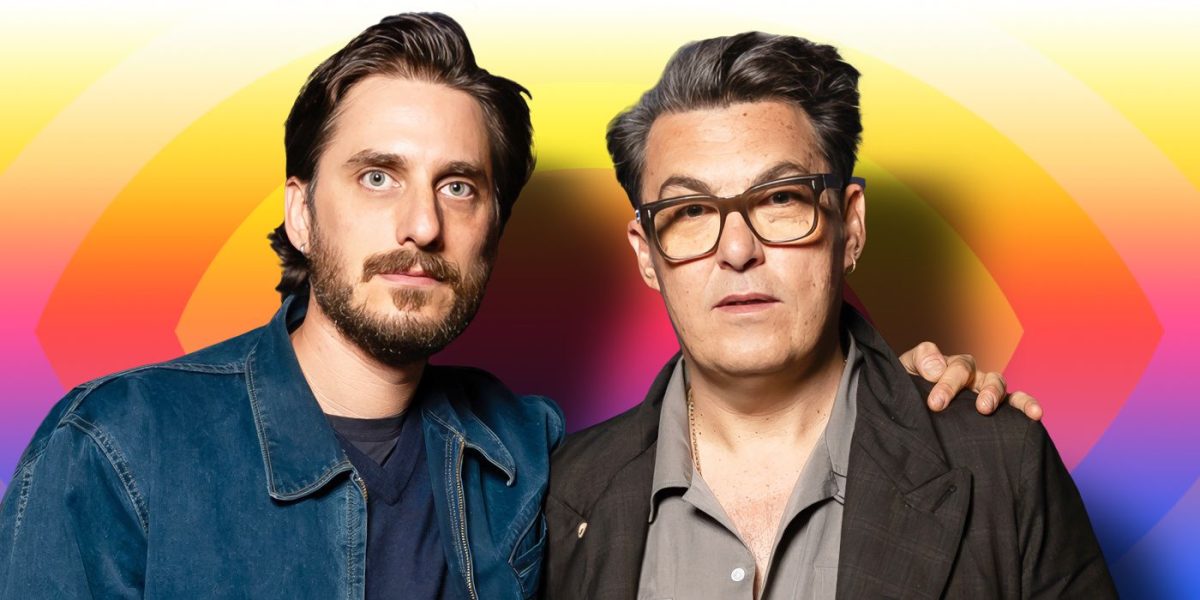
Collider’s Steve Weintraub speaks to Joe Wright and Luca Marinelli about
M. Son of the Century
at TIFF 2024.
Marinelli became unrecognizable as Mussolini, found the experience psychologically painful, and was surprised to learn about the dictator.
The crew teases upcoming projects, including
The Agency
and
The Old Guard 2
.
Adapted from Antonio Scurati’s novel of the same name, M. Son of the Century delves into the rise of right-wing, populist, and authoritarian ideology, specifically looking into Benito Mussolini, played by Luca Marinelli in the series. Marinelli irrevocably embodies his character, to the point that he is even physically unrecognizable, and often breaks the fourth wall and talks to the audience as he chronicles the rise of the National Fascist Party. Director Joe Wright has often portrayed notorious, polarizing historical leaders, and humanizing Mussolini is by no means an easy task, but as always, he casts light on why it is important to understand how this moment of history came to be.
At the Toronto International Film Festival, Wright and Marinelli talk to Collider’s Steve Weintraub about why they wanted to create a show about this political figure and how it feels to create something that transcends their own artistic ambitions. They reveal their surprise at learning how violent Mussolini was, and Marinelli expresses how difficult it is to step into his mind while suspending judgment. They also tease upcoming projects, including Wright’s The Agency with Michael Fassbender and Marinelli’s involvement in The Old Guard 2. Hear about this straight from the director and lead in the video above, or you can follow along via the transcript below.
Luca Marinelli’s Mother Didn’t Recognize Him On Set
“It was really painful for me.”
COLLIDER: I’ve seen some of your show. It is fantastic. It explains how the reviews out of Venice are so incredible.
JOE WRIGHT: The response of Venice was extraordinary. I think that the Fascist period in Italy is really a trauma that the Italians have never really faced. So, to have this show presented in that setting, it’s the festival that was started by the fascists in ’36, I think. To have that come back around and presented to them was an amazing thing.
Luca, I have to talk about your incredible work in this. For people watching, when they see the picture of you in the show, they are not going to think you’re the same actor; they’re gonna think it’s another person. I’m so blown away by your work in it. Talk about the physical transformation and what you went through to become Mussolini.
LUCA MARINELLI: It was a very big journey. It was also painful in a way because, as an actor, if you want to reach the character, I learned that you have to suspend judgment. For seven months, I suspended my judgment on him to try to understand him, and that was really, really, really painful. It was really painful for me. But the work with Joe was amazing. We create this character together. Of course, there was a physical transformation. I can tell you that one day, my mother was on set, and she didn’t recognize me. So, I passed in front of her, and that was also painful. [Laughs] It was a big journey, and I really have to thank Joe and his art.
Playing Mussolini Was Physically and Psychologically Challenging
“I couldn’t completely get rid of the character.”
Image via Sky
One of the things about the work is you break the fourth wall, and you’re talking at the camera, and as an actor, you’re trained to always avoid the camera. How long until you felt comfortable when the camera’s right there, and you’re talking at it?
MARINELLI: It was quite natural, because the eyes are always falling there in a way. In a normal movie, it’s an error, but for us, it was something that we were searching for. At the beginning, we had some questions — what is that? Why is he talking there? Who is he talking with? In the end, we said, “He’s talking with the present, with the audience, now, in this moment.” I don’t know how it is here, but in Italy we have a lot of politicians, and in Europe, that are using social media to reach people in their houses and their privacy. I was inspired by these people, also.
What is it like for you carrying an extra 45 pounds, and you’ve shaved your head? What is it like when you’re leaving the set and going home and having to literally carry that weight with you? What were you like around your family? Were you miserable? How were you feeling during the shoot?
MARINELLI: It’s different because normally you put on a mask, like a metaphorical mask, when you’re working, but I had some part of this mask that I had on me for seven months. It was different. It was completely different. Some things were different. I had to wear a hat for seven months. But that was part of the pain that I had because I couldn’t completely get rid of the character when I went back home. It was psychologically different.
I could not do what you do. There’s no chance. And to do it so brilliantly, 0% chance.
‘M. Son of the Century’ Isn’t Trying to Convert Anyone
“It was really important that this story reach a younger audience.”
Image via Photagonist at TIFF 2024
I love the camera work in this. It’s so good. You are doing this on a television schedule — I don’t know what your budget was, but you’re making it look so cinematic. Talk about the challenges of doing that with the limitations that you were given.
WRIGHT: Really, it just meant that one had to be more specific about what it was that I needed to tell the story. I couldn’t do any coverage, any kind of shots that I might need. I just had to be specific and confident in the choices that I was making and follow them through. I don’t really see much difference, especially the technology people have in their homes. I don’t really see much difference between film and television. I made it in the same way that I would a movie. With a little less time and a little more economy. In a way, I found it quite freeing. I found the process to be quite liberating creatively.
The aesthetic is a kind of mashup between Man with a Movie Camera, Dziga Vertov’s movie, Howard Hawks’ Scarface, and ’90s rave culture. The score is by the Chemical Brothers. It’s this kind of strange, kaleidoscopic aesthetic that I got really, really excited by.
Image via Photagonist at TIFF 2024
I have so many more follow-ups. Let’s talk about the soundtrack and how you got Tom Rowlands. How did you get Tom to agree to do this?
WRIGHT: I met Tom at my first rave in 1989 above a Saxon shoe shop in Islington in London. I’ve known him now for quite a long time. We used to do light shows for the Chemical Brothers concerts and so on. I’ve known Tom a while, and he did the score, obviously, for a movie I did called Hanna a few years ago.
Let me pause you there. A fantastic movie.
WRIGHT: Thank you. Looking at the fascist movement and looking at futurism, which was the artistic movement that was going on at the same time, it was all about energy and kinetic energy and momentum and movement and smashing the old, and quite revolutionary. It felt that techno was somehow the right feeling and mood for the times. If I’d used contemporary music of the period, it would have felt old-fashioned, but I wanted the audience to get a real sense of what it must have been like living through those times.
Also, I felt that it was really important that this story reach a younger audience. It’s not a piece for the converted. I’m not interested in preaching to the converted. I don’t think I’m ever gonna probably be able to convert a hardcore fascist out of fascism. There is a whole group of people in the middle, especially younger people who maybe haven’t thought about these things, haven’t really investigated the roots of fascism in the far right. Those are the people that I wanted to reach.
‘M. Son of the Century’ Is in Response to the Rise of the Far-Right
“I felt it was my responsibility to try and understand…what the implications of that worldview might be for us today.”
Image via Photagonist at TIFF 2024
You haven’t done television, I believe, in over 20 years. Was it a little weird going back? What was it about this material specifically that said, “Not only do I want to do this, but I want to give it a huge chunk of my life for two years, or whatever it may be?”
WRIGHT: When I last did television, it was before I’d ever made a movie. It was for the BBC. You had a budget of $3 million, and you didn’t have any streaming. It was a very different world. Now, television has kind of matured into something substantial and very, very exciting. I think it’s the right medium for this piece of work. As I say, it’s about reaching as many people as possible. It’s been really lovely to do a thing that is at the service of something greater than my own artistic ambition.
You’re making something important.
WRIGHT: Making something that’s about something bigger than we are. That felt incredibly good. We’re determined that it reaches as many people as possible. When I was a teenager, growing up in the ’80s, I used to go around going, “The police are fascists; Margaret Thatcher is a fascist; and my mum is a fascist for not letting me go out on a Thursday night,” without really understanding what the word meant. With the rise of the far right across the world, in Italy and in England and all over the place, I felt it was my responsibility to try and understand where that word comes from and what the implications of that worldview might be for us today.
Image via Sky Studios
For both of you, you obviously spent a lot of time getting in the head of Mussolini. What were some of the things that really surprised you that you hadn’t known before getting ready?
WRIGHT: I think there’s a terrible irony in the fact that one of his main mentors and lovers was a woman called Barbara [Margherita] Sarfatti. She was Jewish. When the racial laws came in the ’30s, she had to flee the country. I thought that was something that I certainly didn’t know, but there was a lot I didn’t know about him. He was, in Britain, a slightly clownish figure who made ridiculous speeches and threw his arms around. I didn’t really understand the fact that he had invented far-right populism.
MARINELLI: I was really surprised about my ignorance of that particular moment in history. M is based on a book. They made a script, an amazing script, but while I was reading the book, I was really surprised about my ignorance of all the facts that happened. Because I grew up as an anti-fascist, and I’m anti-fascist. I knew a lot of things, but I didn’t know how many things I didn’t know. So that was a big surprise. In a bad way, it was surprising how violent he was, how criminal he was.
Joe Wright Is Filming ‘The Agency’ With Michael Fassbender
Image via 20th Century Fox
I’m a big fan of your work. I know you’ve now wrapped on this and have had at least two weeks off. What are you working on now for the future?
WRIGHT: I’ve been shooting a pilot of a show with Michael Fassbender.
Is it called The Agency?
WRIGHT: It’s called The Agency. I’ve just done that, and I’m figuring out my next movie for next year.
Do you have scripts you’re looking at, or is there one specific one you’re hoping to do?
WRIGHT: There’s one specific one I’m hoping to do. There are a couple, but there’s one specific one I’m hoping to do. I’m quite enjoying the challenge of historical political drama at the moment.
You have a little bit of a history with historical characters. This series is so good, are you tempted to do something else on television again besides The Agency? Something that allows you to tell a story? With a movie, you really have to tell the story in two to two and a half hours, and with a TV show, you get six hours or seven hours to really expand on a character and pull back layers.
WRIGHT: It also means that you’re shooting for 127 days. I got really sick doing this.
By the way, people don’t talk about that. Directors work crazy hours, and you’re not taking a break.
Image via Photagonist at TIFF 2024
WRIGHT: No. I work 16–18 hours a day when I’m shooting. To do that for 127 days, at one point, I said to the producers, “Listen, I’m sick. We need to stop for a week or just give everyone a break.” And they said, “No, no, no, no. We’ll just send you a doctor.” And they pumped me with steroids. It was dreadful. It was worth it, but it was dreadful.
I’ve also spoken to filmmakers who, the day after they wrap on a big shoot, they just collapse and they’re in bed for two weeks because they’ve run on adrenaline for a while.
WRIGHT: Yeah, and adrenaline is poison. So, I love the creative challenge of doing an eight-part series. I think if you’re gonna have a sense of authorship of the piece, then you have to do all the episodes. However, the physical challenge and also the domestic challenge in terms of not really seeing your family is testing. Maybe next year I’ll do a movie and then maybe do some more afterward.
With The Agency, you did the pilot. I’m not sure if the show got picked up or not.
WRIGHT: Not sure yet.
If it gets picked up, would you do more?
WRIGHT: Yeah, but I didn’t do the whole thing. I did two episodes, so that’s a six-week shoot. That’s fine. That’s nothing. That’s a holiday.
Luca Marinelli Teases the Upcoming ‘The Old Guard 2’
Image via Netflix
Luca, I do have a question for you. You’re part of The Old Guard 2. I know you guys are doing some additional photography soon. Are you involved in that?
MARINELLI: Yes. [Laugh]
WRIGHT: [Laughs] “What can I say? What am I allowed to say?”
It’s been a while for it to come out. What can you tease people about the sequel? What are you looking forward to fans of the original movie seeing?
MARINELLI: I’m really looking forward to watching it. But what can I say? It’s really cool. I’m really looking forward to seeing it, to watching it, as the audience, I hope.
For everyone watching, absolutely seek [M. Son of the Century] out. When will it be on in America? Do you know?
MARINELLI: I’m not sure. We haven’t got a date for America yet. It has a small theatrical release in Italy and Europe in December. Then it’s out in Europe in the beginning of January. I’m not sure when it’s going to be out in America yet.
Special thanks to this year’s partners of the Cinema Center x Collider Studio at TIFF 2024 including presenting Sponsor Range Rover Sport as well as supporting sponsors Peoples Group financial services, poppi soda, Don Julio Tequila, Legend Water and our venue host partner Marbl Toronto. And also Roxstar Entertainment, our event producing partner and Photagonist Canada for the photo and video services.
Publisher: Source link


‘Tracker’ Season 4 Officially Puts Its Biggest Mystery on Hold Despite Major Cast Comeback
Our fictional missing persons expert, Colter Shaw (Justin Hartley), has kept audiences happily on the edge of their seats ever since Tracker debuted two years ago, and Season 3 in particular left audiences with quite a major cliffhanger — all…
Sep 19, 2026
‘Reacher’s Action Thriller Spin-Off Gets Major Season 2 Update Following Premiere
For four seasons, Reacher has been one of the biggest TV shows on Prime Video. Based on the novels by Lee Child, the series follows former military police officer Jack Reacher (Alan Ritchson) as he wanders from place to place,…
Sep 18, 2026

One of CBS’ Longest-Running & Highest Rated TV Shows Is Coming To End After 30 Years
Along with countless scripted dramas, comedies, and action shows, CBS is well known for its impressive run of unscripted programs over the last 50 years. More recent years have included major competition shows like Survivor and The Amazing Race, along…
Sep 17, 2026

Prime Video Officially Launches New Deal That Changes the Streaming Game Forever
It seems like streamers raise their prices every day. At the end of August, Apple TV raised the subscription service price by $2, bringing it to $14.99 a month. Netflix, Disney+, HBO Max, Paramount+, and Peacock have all raised prices…
Sep 16, 2026