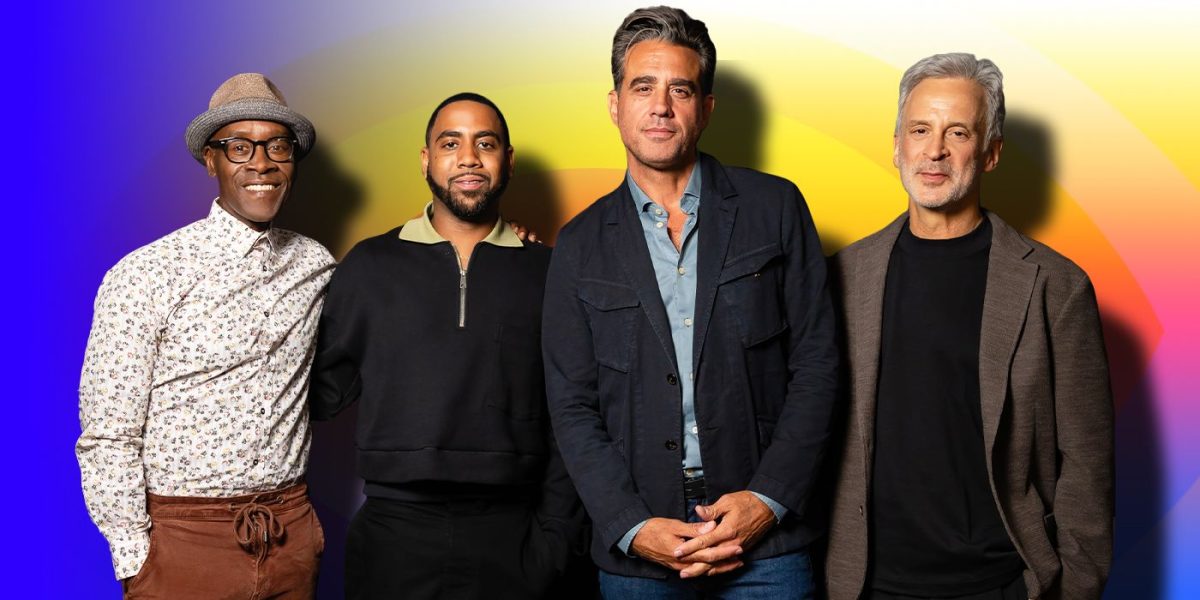
Don Cheadle, Bobby Cannavale, and Jharrel Jerome Explain Why ‘Unstoppable’ Is More Than a “Cookie-Cutter Sports Drama”
Sep 22, 2024
The Big Picture
Collider’s Steve Weintraub sits down with
Unstoppable
director William Goldenberg and co-stars Jharrel Jerome, Don Cheadle, and Bobby Cannavale at TIFF 2024.
Unstoppable
tells the inspiring true story of wrestler Anthony Robles, featuring a stellar cast.
Goldenberg, Jerome, Cannavale, and Cheadle discuss Robles’ story, joining the project, working together on-set, and upcoming projects.
Audiences have been watching the work of William Goldenberg for decades. As one of the great editors of our generation, Goldenberg has helped craft features by a number of well-known filmmakers. He’s been nominated for three Oscars and took home Best Editing for Ben Affleck’s Argo. After a star-turning editing career, Goldenberg turns his eyes on the director’s chair as he once again teams up with Affleck and producing partner Matt Damon for his feature directorial debut, Unstoppable.
Unstoppable tells the true story of Anthony Robles (played by Moonlight’s Jharrel Jerome), a young man born without a right leg with dreams of wrestling. Despite his struggles growing up in a volatile household, Robles aims to earn a place in a US Division 1 team and competes to win. Unstoppable is both a sports drama and a heart-filled family story starring Jennifer Lopez, Bobby Cannavale, Michael Peña and Don Cheadle, and the real Anthony Robles himself as Jerome’s wrestling double.
Goldenberg and stars Jerome, Cannavale, and Cheadle stopped by the Collider studio at the Cinema Center at MARBL to talk with Steve Weintraub after the world premiere at the Toronto International Film Festival. During this interview, they discuss why Unstoppable isn’t just a “cookie-cutter” drama, why villains must have dimension, and growing as a family while filming. Steve also asks the group about fan favorites like Heat, Marvel’s Avengers: Secret Wars, and the Spider-Verse trilogy. You can watch the full interview at TIFF in the video above or read the conversation transcript below.
From Oscar-Winning Editor To Director, Billy Goldenberg Learned From The Best
“I was cutting a scene with Robert De Niro and Val Kilmer and Al Pacino”
Custom Image by Nimesh Niyomal
COLLIDER: No one watching this will have seen Unstoppable yet, so how have you been describing the film to friends and family?
BILLY GOLDENBERG: It’s a story about overcoming incredible obstacles and a story about a mother and son and somebody who perseveres without fail and never takes no for an answer.
I have a ton of questions about the film and a ton of questions for you guys, but I have to start with what I think is something that everyone needs to know. You were one of the editors on Michael Mann’s Heat , which is incredible.
GOLDENBERG: It sort of changed my life.
Completely. It was very early in your career. What was it like being part of a film like that, and at the time, did you realize, “We’re making a masterpiece here?”
GOLDENBERG: It felt like something special while we were making it. I started in the middle of the film, and the first day I was on, I literally was hyperventilating so much that I could barely work. I mean, I was cutting a scene with Robert De Niro and Val Kilmer and Al Pacino, and I thought it would take 10 more years before I was able to do that. But then the footage was so good, and Michael is such a strong director that once I got in the groove of it, we had a great time.
I could drill on this for 20 minutes, but I just wanted to talk about how you’ve had a very big career as an editor. This is your first time making a feature. What did you learn in the editing room all through all the years where you’re like, “I will not do this when I step on set?”
GOLDENBERG: What I learned more of what to do. I worked with some of the best directors in the world. I’ve been really lucky. It was like going to the finest graduate school in the world. I just watched them, observed them both on set and in the editing room and tried to take the best of what they did and adapt it to the story I wanted to tell and use that. I can’t tell you how many times I would say when I was an editor, “What would Michael Kahn do,” who was my mentor? And now, I was on set and saying, “What would Paul [Greengrass] or Kathryn [Bigelow] or Ben [Affleck] do?” I had this incredible wealth of knowledge to draw from, so it was a big help.
‘Unstoppable’ Isn’t a “Cookie-Cutter” Sports Drama
“I was just taken aback by Anthony’s story, not only on the mat but off the mat.”
Image via TIFF
Jumping into the cast. You guys read the script for the first time — what’s your reaction, and what made you say, “I need to be a part of this?”
JHARREL JEROME: Before I read the script, I understood Anthony as a wrestler, and so as I was picking through the script, I understood it to be a wrestling film, and then as I got deeper and deeper along, it became much more than that. It became a film about family, it became a film about struggle. It’s almost like the meat and potatoes; it’s not just this surface-level sports drama that you’re used to, this cookie-cutter sports drama. There’s a lot of depth in it, and there’s a lot of lessons within it. So by the end of the script, I was just taken aback by Anthony’s story, not only on the mat but off the mat. I thought, as an actor, there’s nothing more exciting than a role like this to try to thread that needle and what it’s like to go through exactly what he went through, both in and out of the passions that he has.
BOBBY CANNAVALE: I got a message from Ben saying, “Hey, I’m gonna send you a script but read the book first.” Anthony Robles wrote this really great book about his life. Then I put it together that I had seen his speech at the ESPYs, and I remember being so taken by that speech that the excitement kind of built before I even read anything. By the time I had the book, of course, it was extraordinary. It’s just a terrific book about perseverance and commitment and all those great things, and family. Then I thought the script was just really on point and really great. I found out who was doing it, and it was an easy decision.
DON CHEADLE: I had a similar experience. Ben [Affleck] and Matt [Damon] called and said, “Hey, there’s this role. I think it’s something that you could do, and we really hope that you want to come on board.” I’m a fan of these guys. I didn’t get to work with Bobby on it, but Bobby and I have been trying to figure out something to do for a while. I had seen When They See Us, and I was a big fan of Jharrel, and when I knew he was gonna take it on, I wanted to be a part of it. Billy was an X-factor [laughs]. It’s the truth. You never know. But his bona fides as an editor and knowing that, nine times out of 10, he’s the guy that’s making the movie the movie at the end, and when we met and we spoke, I trusted after our meeting that his ability to take on the narrative was gonna be good
Then the story was incredibly inspirational. I had some cursory knowledge about Anthony before this because I saw his ESPY speech, as well. I had seen this match, this infamous, final match. I had just stumbled upon it before the film, and just everything — you just check the boxes and go, “Okay.” I mean, we never know for sure, but you just look at the pieces that are assembled and go, “Well, it’s enough to take a flyer.” I was just really pleasantly fulfilled once we got to do it.
Why It Was Important For Bobby Cannavale Not To Play A ‘Mustache-Twirling Villain’
“The movie is not good if it doesn’t have a bad guy.”
Image via Amazon MGM
Bobby, you play someone that the audience might not like at certain points in the film. Is it fun playing someone that the audience is gonna wanna possibly punch in the face?
CANNAVALE: I’ve had some experience playing those kinds of characters before. I have two little boys, six and eight, and they always say to me that the movie is not good if it doesn’t have a bad guy. From the mouths of babes, but in a way, they’re right. Those characters, yeah, you wanna punch them in the face, but they’re pretty complicated characters. They’re complex. I think one of the greatest performances I’ve ever seen — not that I’d call him a “bad” guy — was the first time I saw Don was playing Mouse in Devil in a Blue Dress, and Denzel Washington, maybe the greatest movie actor of all time, is in that movie and you can’t take your eyes off Mouse. So, I think those characters tend to pop in a way that is interesting to me. I think the onus is off you to have to carry the movie, and you can really color that character with a lot of different things. Then it’s up to who’s cutting the movie and what they keep in the movie, and I knew we were in good hands with Billy.
CHEADLE: To me, my favorite moment of your character is when you walk outside, and you hear the family laughing, and it sort of humanizes you in a moment. You’re like, “Oh, okay. I get it.” Or you mentioned in the car, “It’s more than I ever had.” It’s like, “This is a broken human being.”
JEROME: You have that other moment in the hallway, too, after the fight where you tell the kids to go to bed and kind of just put your hand on the wall like you’ve just given up.
CANNAVALE: You hope they keep that in. That’s directorial, though. That’s where Billy has done so many really great movies. He knows what he’s doing, and so you just sit back, and you just hope he’s gonna do the right thing, and he did. That gives the character some shades. That kind of helps the audience be a little bit conflicted about how they feel about the guy.
GOLDENBERG: It was incredibly important to us that Rick is not just like a mustache-twirling villain, that he was a three-dimensional character. And like Don said, he’s somebody who doesn’t have the tools, he’s not equipped. He wants to do the right thing, and he has, and that’s his way of loving them. My assumption was that he had a terrible childhood with bad parents himself, and he didn’t learn how to be a fully rounded human being. That’s what Bobby and I talked about that at length before we started shooting. I’m happy that people feel that way because it was important that he’s like a real human who’s actually trying to do the right thing but just doesn’t have the equipment.
One of the reasons I love talking about editing in all my interviews with directors is that five frames can make a huge difference in a character’s humanity or dehumanization. You didn’t edit this, you hired an editor. Did you ever think, “Do I want to edit this myself?” Talk a little bit about how this film might have changed in the editing room in ways you didn’t expect.
GOLDENBERG: I did think about editing it, and I did do a little time behind the Abbott, but my editor is Brett Reed, who used to be my assistant. He worked with me for over 25 years as a PA all the way up to my first assistant, and then he’s been cutting on his own for several years. I wanted somebody who I could trust and I wanted somebody who would be completely honest with me. If something was horrible, they would say, “It’s horrible. You gotta do this again.” I didn’t want somebody to just shine me on and tell me, “It’s great,” when it wasn’t. I knew he wouldn’t. We have a relationship where we can be 100% honest without hurting each other’s feelings.
At the end of the day, every director is an editor. I mean, when you’re working with a director as an editor, just because they don’t have their hands on the machine doesn’t mean they’re not editing. Ultimately, it’s storytelling and how to portray that story in the best way possible. Being in that other chair gives you an objectivity that was really valuable. Because I had shot all the material, it was nice to have a little bit of a distance from it, and he just did an extraordinary job. I remember watching the whole senior year final wrestling, all the way through the end of the movie, and I thought to myself, when I first saw it, “This is gonna take a lot of work. Be patient. It may not be in great shape.” I watched it, and I was just in tears at the end, just because of the movie. He did such beautiful work, and it was a spectacular moment for me because I was like, “This movie is gonna work.” I was relieved and happy.
The Real Anthony Robles Served as a Body Double
Image via Prime Video
A lot of people won’t realize Anthony is in the movie. Talk a little bit about having Anthony’s participation and filming those wrestling scenes because they’re very well shot.
GOLDENBERG: We always wanted the audience to be down on the mat with him, so everything was shot handheld — the whole film was shot handheld. We wanted to be very close and experience every grunt and groan and every moment on the mat because it’s such a brutal sport, but also a beautiful sport. We wanted to capture all that. But in my opinion, I wanted Anthony to be involved in his own story as much as possible, and I felt like just from a practical matter, having him do some of the wrestling would just enhance the film. But Jharrel trained for years for this, and he got so good at the wrestling that there are literally times, now that all the visual effects are done, I’m often challenged, like, “Is that Jharrel?” It’s so seamless.
They were both so good, but there are certain things that only Anthony could do because of his physicality, so we just filmed both of them doing everything. Depending on how tired they were or how many minutes in a row they wrestled, we’d say, “That’s time for Jharrel,” and I’d start bringing Anthony in. They just were right there on top of it, paying attention, so that they just dropped in and did another take. Their opponents were the same opponents and the choreography was so carefully orchestrated, and they both knew it so backwards and forwards because Anthony and his ex-coach, Brian Stith, did all the choreography. Everybody just had it to a T. So, we just switched them up back and forth based on what size the shots were and based on how exhausted they were.
Once people see the movie, they’ll be like, “How did they do this?” So you see the shooting schedule in front of you; what day do you have circled in terms of, “I cannot wait to film this?”
CHEADLE: I was excited about all of it, honestly. The first day that I came to the set was the wrestling rehearsal and seeing what was happening and seeing how serious it was. I was just really concerned because I was a neophyte to wrestling, I never really did it. I met Shawn [Charles], we talked, I met his assistant, one of the guys that coached with him, and we wrestled a bit. But the first day to show up, I’m like, “I’ve got to walk into this room and somewhat be the coach, and I’m a newbie.” So, it was very intimidating for me. And then to see how dialed in they were, I was like, “Wow, I gotta step this up. I gotta really be on my game because they’re so on point.” But every day after that, I was excited to get to work and, again, excited to work with Jharrel every day, and with Billy, and to continue to craft this thing that everybody was so careful with. To see Anthony all the time was also really inspirational and amazing. He’s just a great person to be around.
How The Cast of ‘Unstoppable’ Grew Into A Nice, Dysfunctional Family
“It was so real to the point where Anthony and Judy [Robles] stepped inside the arena, and they got emotional.”
Image by Photagonist at TIFF
CANNAVALE: I was really lucky. The way it was boarded was we got to shoot the whole thing in sequence, so we were in this house for two weeks straight.
GOLDENBERG: It was an intense two weeks.
CANNAVALE: It was pretty intense, and it was all in sequence, and I just looked forward to it every day. I mean, I’m with Don, and I couldn’t wait to work with Jharrel. I was a huge fan of Jharrel’s. He’s so great in Moonlight, he’s so great in all of his work, and he’s so exciting to see come up, and so I couldn’t wait to get there every day and shoot these scenes. The scenes are really dimensional. It’s a family life. I grew up in a working-class family, I know what it’s like to cook dinner for mom, get the rice cooker started, and start boiling the water because mom’s gonna be home any minute. It’s before cell phones and all that. Getting my little sister and my little brother ready, making sure my brother had a shower so that my mom didn’t have to — all that was really reminiscent for me. It brought up really nice memories for me, and we created a really nice thing in that family, even though it is a dysfunctional family. But I really had a good time with the family and creating that life.
JEROME: For me, it’d probably be all the major wrestling moments — the finals and the semifinals. It’s everything I worked up to. The next film, I’ll have dialogue and have to work with a scene partner or something else, but in the next film, I won’t be on the mat being slammed down because I’m not gonna do it again. [Laughs]
CANNAVALE: They’re not gonna ask you to do it when you’re our age. They won’t even ask you to take your shirt off.
CHEADLE: “Can you walk? Can you get to the set on your own?”
JEROME: This happens a lot. They get real reminiscent over here. But yeah, just the wrestling moments. I knew that this was what it was all coming down to. The way we shot it, too, was towards the end, we kind of saved all the wrestling moments for the last few weeks of shooting, so it was cool to finish the family dynamic and see what that side of the film was to inform a lot of the aggression and the passion that Anthony has on the mat.
It’s also just a big kudos to the set designers and the production design. It was so real to the point where Anthony and Judy [Robles] stepped inside the arena, and they got emotional, and they started to cry. They felt like they were actually in Philadelphia when we actually shot in a college in Cali somewhere. So, just the level of detail and care to the authenticity of the story was so moving, and I think it inspired everybody on set. First of all, how often can you just sit in a huge arena and just look around like, “Hey, we’re working in here?” And we were in there day after day after day. I remember being excited for those, and then when it came, it completely exceeded all my expectations.
CANNAVALE: Interesting that none of his exciting moments at work had anything to do with you and me.
CHEADLE: He didn’t mention either one of us.
JEROME: But I appreciate you guys for wanting to work with me. I got a list of actors I wanna work with.
GOLDENBERG: Also, we did all the wrestling during the Christmas holidays the way the schedule worked out. We had Christmas Day and New Year’s Day, so we all spent the holidays together, and I think that had something to do with it. Everybody gave up their holidays, gave up their vacations to finish the film. There was a feeling of camaraderie and spirit, I felt like anyway, because it was a holiday season and we were all there together. It just felt like a family.
JEROME: We also were shooting at the top of the year, and then the writers’ strike happened, and we had to take a pause and kind of wait in limbo. I think that also brought us all together during that wait because when we came back, we knew that we were finishing something even more important now, something that was Unstoppable. You know what I’m saying?
It’s An Honor For Jharrel Jerome To Be Part of the Spider-Verse
Image via Sony Pictures Releasing
You get to be part of the Spider-Verse. What is that like? What does that actually mean to you because the films are so beloved and so successful?
JEROME: It’s like a dream since I was a child to just be a part of that world in any way. Miles Morales is a specific, character as a Dominican from New York, that I’ve always dreamed of embodying and portraying. So just to even play the voice in the world that they’re creating is so incredible because what it’s doing for my people and our people back in New York — Dominicans, Puerto Ricans — it’s really shifting the culture for us in the mainstream in terms of animation and the superhero genre. For me to be a part of it is an honor.
The films are incredible.
JEROME: Yeah, they’re also just kickass films. Also, some people are like, “My son loves you,” or, “My daughter loves you.” Most of the stuff I’ve done has been very sad and for adults, and so it’s cool to kind of expand the fan base a bit and have kids like, “Oh my god, I love you!” Even though they lying because they didn’t see my face.
CHEADLE: It’s all hype.
JEROME: It’s just word of mouth for these kids.
CHEADLE: They’re trying to take advantage, for sure.
JEROME: They want my money.
Bobby Cannavale Talks Classic Broadway and Richard Linklater
Image by Photagonist at TIFF
Bobby, I read that you’re working with Richard Linklater.
CANNAVALE: Yeah, I just wrapped that.
I am a huge fan of Richard Linklater. What can you tease about the project, and what was it like working with him?
CANNAVALE: It was awesome. It’s my second time working with him, and it’s a movie called Blue Moon. It’s about the late Broadway songwriter Lorenz Hart, who was Richard Rogers’ partner. Richard Rogers and Lorenz Hart wrote a bunch of Broadway shows, Pal Joey and Boys from Syracuse, and a bunch of others before they broke up and Richard Rogers went and partnered up with Oscar Hammerstein. The rest is history. Lorenz Hart died in the street in New York; he was an alcoholic and he died pretty young. The movie takes place on the night that Oklahoma opens, and takes place at the bar at Sardi’s in one night. Andrew Scott plays Oscar Hammerstein, Ethan Hawke plays Lorenz Hart, and it’s myself and Margaret Qualley. I always joke, it’s a great movie, and it’s a very specific audience, let’s put it that way. But then again, it is Richard Linklater. It’s great performances and we shot it in Ireland and did that over the summer. I’m looking forward to it because he’s a great director.
He is criminally underrated. He’s a true American artist.
CANNAVALE: He totally is, and I don’t think you’ll ever have seen Ethan like this. It’s an incredible performance. I can’t wait for people to see it.
The second I can see that film. I think that so many of his films are, as I said, just so underrated.
Don Cheadle Has “No Idea” About a ‘Secret Wars’ Movie
Image via Marvel Studios
I definitely have to ask you an individual question. I thought about what I wanted to ask because your resume is incredible, and I just decided I’m gonna go with something in the future, which is, has anyone called you to save any dates next year for some Secret Wars movie?
CHEADLE: I’m not sure what you’re talking about.
Are you familiar with the Russo Brothers?
CHEADLE: I’ve heard of one of them. I’ve heard of a Russo Brother. There are two?
Unfortunately, yes.
CHEADLE: I always thought it was just one guy bouncing around changing costumes. [Laughs] You know I can’t talk about that stuff.
When did you find out about Robert [Downey Jr.] coming back, and what was your reaction for him playing Doom?
CHEADLE: I was like, “What the fuck?” I think that’s exactly what I said. But everything is clay right now. They’re rewriting, they’re reworking, and so I honestly can’t even tease anything.
CANNAVALE: Fired. Just for saying that.
CHEADLE: The red dot.
Image by Photagonist at TIFF
What’s really funny is Joe [Russo] is shooting or about to start shooting Citadel Season 2, so I know that they’re working on it, but it’s not being filmed until next year.
CHEADLE: You know more than I know. You’re giving me information.
He’s filming Citadel Season 2 right now through the end of the year.
CHEADLE: Congratulations, Joe. Whichever one you are.
[Laughs] Individual question for you, [Billy]. You did a great job with this. Are you already looking at other scripts? Are you thinking about, “Do I wanna continue editing?” What are you thinking about for the future?
GOLDENBERG: There is something. The thought is equity for hopefully next spring or this coming spring. My plan is to try and do both. I love editing. I love the relationships I have with the directors I work with, and I feel lucky to be able to work with these incredible artists. Like I said earlier, I learned so much from them, so I’m hoping to be able to flip back and forth. That’s my plan, and we’ll see how it works. But yeah, I wanna continue to direct and continue to edit.
CHEADLE: Are there parts for us?
GOLDENBERG: Always.
CHEADLE: I mean, you’re talking about this like we’re not sitting here. It’s just weird.
GOLDENBERG: [Laughs] I can’t say yet.
CHEADLE: Good dodge. You’re picking up on how to do this.
Special thanks to this year’s partners of the Cinema Center x Collider Studio at TIFF 2024 including presenting Sponsor Range Rover Sport as well as supporting sponsors Peoples Group financial services, poppi soda, Don Julio Tequila, Legend Water and our venue host partner Marbl Toronto. And also Roxstar Entertainment, our event producing partner and Photagonist Canada for the photo and video services.
Publisher: Source link



‘Tracker’ Season 4 Officially Puts Its Biggest Mystery on Hold Despite Major Cast Comeback
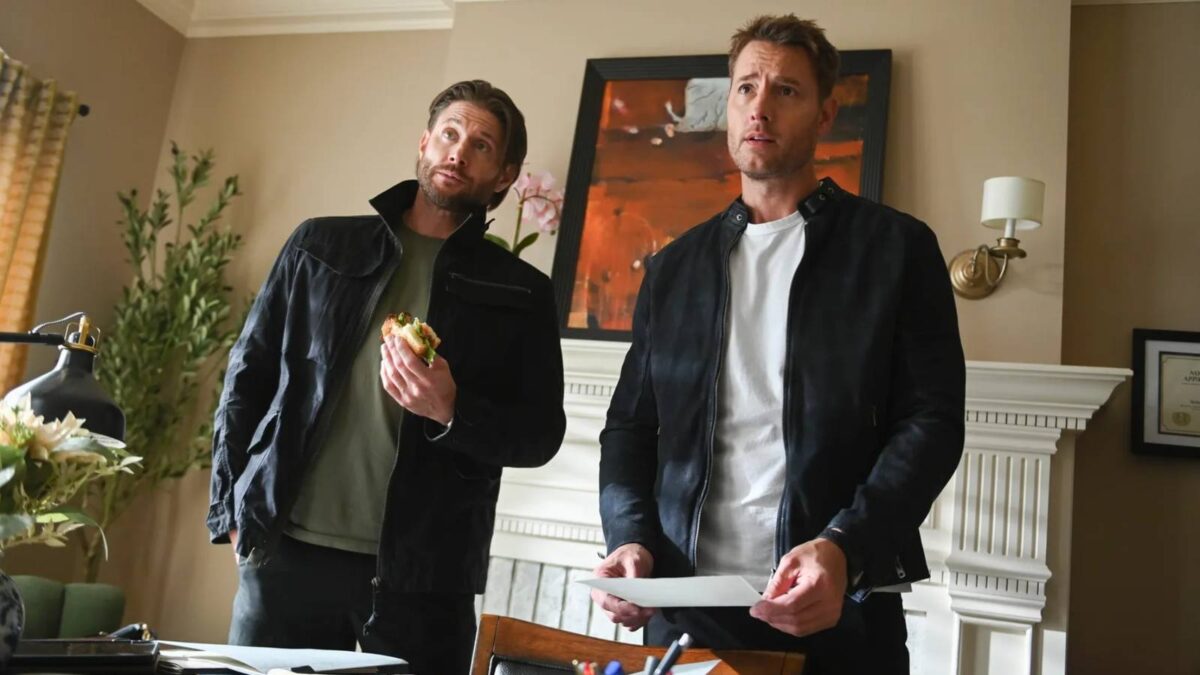
Our fictional missing persons expert, Colter Shaw (Justin Hartley), has kept audiences happily on the edge of their seats ever since Tracker debuted two years ago, and Season 3 in particular left audiences with quite a major cliffhanger — all…
Sep 19, 2026
‘Reacher’s Action Thriller Spin-Off Gets Major Season 2 Update Following Premiere
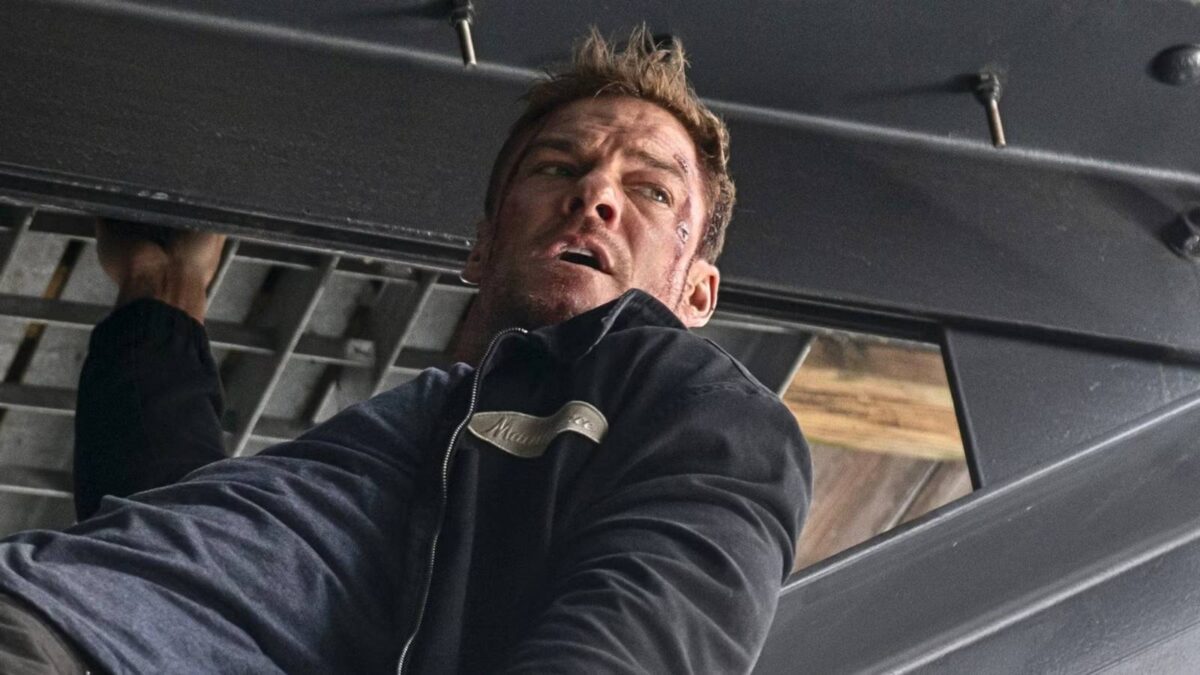
For four seasons, Reacher has been one of the biggest TV shows on Prime Video. Based on the novels by Lee Child, the series follows former military police officer Jack Reacher (Alan Ritchson) as he wanders from place to place,…
Sep 18, 2026

One of CBS’ Longest-Running & Highest Rated TV Shows Is Coming To End After 30 Years
Along with countless scripted dramas, comedies, and action shows, CBS is well known for its impressive run of unscripted programs over the last 50 years. More recent years have included major competition shows like Survivor and The Amazing Race, along…
Sep 17, 2026

Prime Video Officially Launches New Deal That Changes the Streaming Game Forever
It seems like streamers raise their prices every day. At the end of August, Apple TV raised the subscription service price by $2, bringing it to $14.99 a month. Netflix, Disney+, HBO Max, Paramount+, and Peacock have all raised prices…
Sep 16, 2026