‘V/H/S/Beyond’ – Dive Into Three Segments [Part 1]
Oct 4, 2024
The Big Picture
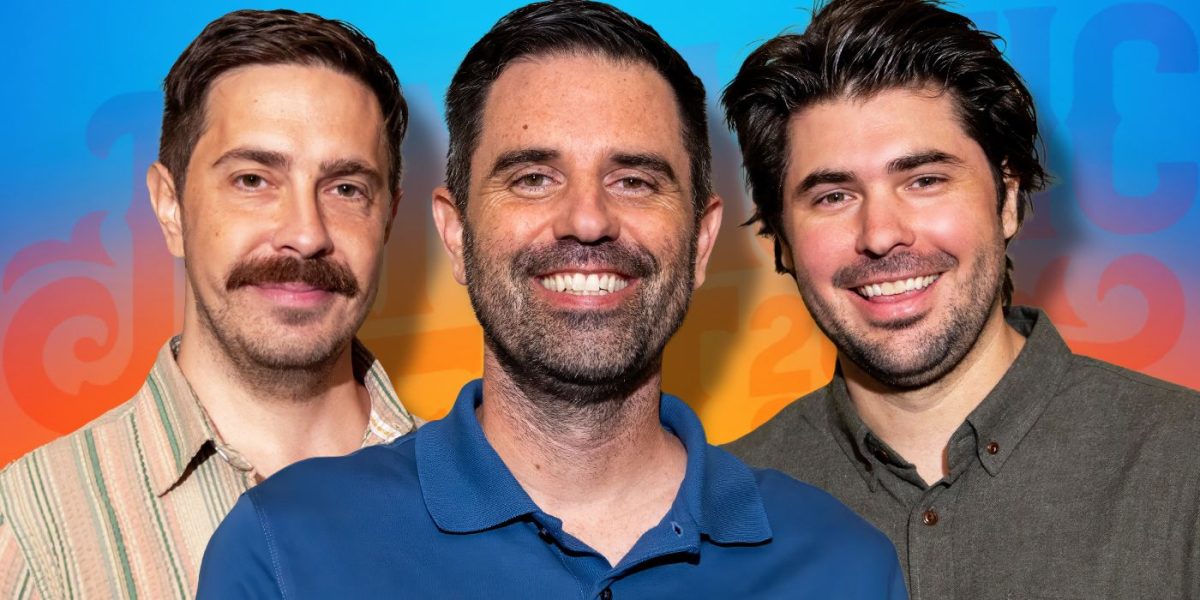
Collider’s Perri Nemiroff talks with
V/H/S/Beyond
filmmakers Jordan Downey, Justin Martinez, and Christian Long at Fantastic Fest 2024.
V/H/S/Beyond
explores sci-fi-themed horror with six new segments featuring new and returning voices.
During their interview, Downey, Martinez, and Long discuss the inspiration for their shorts, practical and visual effects, and more.
From producers Brad Miska and Josh Goldbloom, the V/H/S franchise is a horror lover’s dream. The anthology films have adhered to the found footage style since they first began, offering passionate filmmakers a chance to explore their favorite tropes and subgenres through bite-sized segments all threaded together. This year, the Fantastic Fest 2024 crowd got the first look at V/H/S/Beyond for its World Premiere.
Beyond recruits seven new and returning voices to the franchise, including Jordan Downey, the director of “Stork,” Christian Long, who co-directed “Fur Babies” with brother Justin Long, and “Live and Let Dive” director Justin Martinez, a V/H/S alum who worked on an installment with Radio Silence (Matt Bettinelli-Olpin and Tyler Gillett) and as a VFX artist throughout the series. In addition to these three, Beyond also features work from Jay Cheel (the wraparound), Virat Pal (“Dream Girl”), and Kate Siegel (“Stowaway”).
During this interview with the first V/H/S trio, Collider’s Perri Nemiroff sits down with Long, Downey, and Martinez to (sky) dive into each of their segments. The filmmakers discuss their collaboration with the V/H/S producers and take us behind the scenes, from concept art to practical effects, stand-out audition tapes, and how you craft the perfect blend of real footage and VFX. Enjoy the full spoiler-free conversation in the video above or you can read the interview transcript below.
The Bar Is Always Being Raised in the ‘V/H/S’ Franchise
“It was just such a singular experience for me in my life.”
PERRI NEMIROFF: Can you each tell me something about making a movie for the V/H/S franchise that made you feel like you could deliver your best work? Something about the process that you’re excited for more filmmakers to experience with future V/H/S films?
JORDAN DOWNEY: As a director, you’re trying to create an environment for the cast and the crew to do their best work, and for a producer, you’re hopefully trying to create an environment for the director and everyone beneath to do their best work. So, all credit goes to Josh Goldbloom, James Harris, Brad Miska, Studio 71, and Shudder because they were supportive from the start in terms of, “Here are some ideas. What are you thinking?” A little guidance, but honestly, just kind of like, “Cool, if that’s what you’re passionate about, Jordan, then let’s go do that.” I think the chaos of these V/H/S films is largely because of the lack of oversight, in that sense.
JUSTIN MARTINEZ: I would agree. The producers, Josh and Brad, and the support that we get in V/H/S is amazing. I’ve been a part of the franchise for forever, and I feel like there’s inspiration that comes. The bar is always feeling like it’s being raised on V/H/S . Each segment that comes out sort of defines the next movie, and it’s like, “What’s been done? How do we present something new to the audience that they haven’t seen?”
CHRISTIAN LONG: It was just such a singular experience for me in my life. It was a brand-new genre. It was the way it came together, the speed at which we shot, the speed at which it came together, and the speed at which we wrote the script. It was just fast, energetic, and fun. And I echo these guys, Josh Goldbloom and the whole team just could not have been more supportive and creative and smart and just such an asset, which is not the most common thing when you’re making content. It’s not always that way, and it very much was that way with this.
“Fur Babies” Was Originally Going to Be a Feature
Christian Long co-directed with brother Justin Long.
Image via Shudder
Christian, your piece of V/H/S is completely different from anything you and Justin [Long] have ever done before. Is there anything in particular about working in the horror genre right now that made you two think, “We have something to gain from this as directors evolving our craft?”
LONG: Oh, yeah! It was such a great opportunity. We were so, so lucky to get the opportunity. It was something that we had been wanting to do for a while. The idea for our segment was meant to be a feature, and when we got this opportunity, we tailored it to be a 17-minute segment for V/H/S. So, great opportunity. We would love to do more. I was talking to Justin about how bizarrely closely comedy and horror exist in terms of what makes it work. It’s all about timing, and if you really go into it with that sensibility, then, in a weird way, it’s not that different. The whole process of making this, like I was just saying, is different, but to achieve the result you want, it’s timing. It’s all about timing.
It’s also all about finding a perfect lead actor for your particular story, and I think you found that in Libby [Letlow]. Can you tell me about finding her and what the first thing you saw in her was that signaled to you, she’d be pitch-perfect in that role?
LONG: Oh my god, so I love talking about her because we are so fortunate that we found her. She’s such a gem. We saw so many tapes and some great auditions. Some great actors and actresses auditioned, but it was right away with her. She should give classes on how to do an audition tape because she shot the whole thing, she used her dog, she had props. It was such a brilliant audition that it was like it was such a no-brainer. She is so good and so authentic, and she just got exactly what we were going for, that sort of cheery sweet, but there’s something really sinister a little bit below. Could not have asked for a better actress.
Did you think that the role of Becky demanded someone who was an actual dog-lover in real life?
LONG: It definitely helped because she is such a sweet person. She would never mutilate human beings — that I know of. I’m assuming she would never do this. She brought her dog, Bruce, to set, who ended up being in the movie, and just the way she interacted with him, talked to him, we were like, “Oh my god, as if your audition wasn’t good enough, now you’re proving to have all the positive elements of this character just naturally in real life.” It was so perfect.
“Stork” Brings an Artist’s “Horrific and Freaky” Monsters to Life
Jordan Downey honors one of his favorite artists, Oleg Vdovenko, with his segment.
Jordan, I wanted to talk about finding Oleg [Vdovenko]’s work. When you saw his art, what was it about it that inspired you as a filmmaker, but then also, did you have a break story moment when working with it? Something that signaled to you, “I’m gonna take this imagery and make a whole narrative with it?”
DOWNEY: To back up, yes, being inspired by his artwork, that happened a few years ago. He does a bunch of series of stories. “Stork” is just one, but I highly recommend checking out some of the other things that he’s done. “Forest God” is this incredible little series that he has, as well. But Oleg is so good at capturing this freaky, horrific look of these monsters that his design is completely unique, but the way that he would draw them — and I don’t even know his style, honestly — was as if it was lit by flashlights, and it almost feels found footage in the way that he depicts the artwork. There was just something so cool about this group of badass cops who are armed to the teeth that go into this haunted house, and the way that he drew these freaky characters, and they had weapons coming out of them. In each frame he would draw, there was some little progression of the story.
So when we reached out to him about doing this, he was like, “Yep, I’m cool.” He was a big fan of V/H/S, so that helped a lot. But then we had to sit down to fill in the gaps, like you said. Like, he drew specifically bandages on the foreheads of some of these characters, and I asked him, I was like, “What was that all about?” He’s like, “I don’t know if I really like the idea, but it was like a stork bite. He was just like, “It’s a dumb idea,” and I was like, “I don’t know if it is a dumb idea. What if we can figure out a reason for the bandage is actually covering a wound that’s left over because the stork is slurping the brains, and birds feed food to their babies?” We just tried to be as truthful to his work as possible, but even he didn’t know some of the story things he was coming up with. We just tried to fill in the gaps and have fun.
Image via Shudder
I have to get into the actual stork design as well, because I have made one feature film in my life and one of my most vivid memories from that set is that we wanted to create a stork that actually looks a whole lot like this stork and we failed spectacularly. It was not good. You do it exceptionally well here and seem to know exactly how to photograph the work that was done, too. Can you give me one “do” and one “do not” for any other filmmaker out there who might want to do creature design as well as you do it here?
DOWNEY: Do trust the creature effects designer who’s going to make the monster because as soon as you start getting nitpicky about it, you don’t want to take away what it is that excites them about the process. If you start trying to put your stamp all over — they have to own that just the way that an actor has to own the character, so let them. In the case of this with Patrick Magee, he had the artwork to base it around, but then, of course, it was just like, “Now, do it.” I just had minimal notes about the overall shape. Also, Kevin [Stewart], who I wrote “Stork” with, in our case, having a great DP who knows exactly how to light it and help position the camera.
“Do not’s” — don’t show too much. That’s the big thing. And really, it’s actually more of a “do,” but it’s don’t be afraid of letting the monster dictate the shot because every monster, I feel like — practical effects, puppets, anything — they fold a certain way, they light a certain way, and it can’t be really planned, and that’s the beauty of practical effects. You’ve kind of just got to size it up and just go with the way that it feels best on camera, even if that goes against your original storyboards and your original plan.
“Live and Let Dive” – Those Skydiving Shots Aren’t All CGI
Justin Martinez also shares the secret to VFX aliens.
Image via Shudder
Justin, last we spoke, you were walking me through how you created the plane breaking apart. Now I’m curious to ask a little bit about what happens after. How much of the free-fall footage is footage shot from an actual dive, and how much is stuff you added in post yourself?
MARTINEZ: Great question. The first two shots that you see flying out of the airplane are CGI. Initially, when I thought about the idea, the pitch was based on two skydiving planes that collided, and the footage you saw was real as they fell down. It was far away, it was on fire, it looks so realistic, and that was what I was gonna do. I started doing the CGI, and it looked great to just fall out of the plane. It looked real. So I said, “I think we can do this.” So, those first two shots are CGI, and then after that, Josh Goldbloom, the producer, had an old friend. When we were trying to plan, “How are we gonna do this? How are we gonna pull this off?” I told him, “If you can get me real skydivers, I can fill in the gaps.” And so he reached out to an old friend who lived in Houston, and his name is Rory, and he was amazing. He did multiple jumps, and with skydiving, you only get like a minute. You’ve experienced this, right? You went skydiving recently. You don’t get much time before you have to pull that chute to get these elements. I knew I had a lot of action in it that I wanted to cover, so it was just multiple shoots by him.
Then the last portion, I knew that I didn’t want to pull a chute and then sit in the air for five minutes on the way down. I wanted to take it all the way to the ground, which is impossible to do for a skydiver — they would die — so I had to come up with a way for him to sort of get caught where I could cover the image and fake it to get as far down as possible before the chute opens.
Image via Shudder
Here’s another big question I really wanted to ask you. I don’t want to throw other movies under the bus, but it is something that I see quite often, where when they create something like a digital alien, the alien could look great, but then it doesn’t look right in a real-world environment. I think you do that exceptionally well here. What are some key things you like to abide by to make sure your digital creation feels right in the real world?
MARTINEZ: At this point, I feel like I have a lot of experience from Southbound, having to put the reapers in. I learned from Southbound that it’s really hard to convey realism in daylight. That’s why we love to do horror creatures at night because you can hide things, things feel more real. So, I came in with this knowledge, and I knew from the beginning that also, with VFX, most of the time it’s just not enough time put into the shot. So, these VFX artists, who will spend days… I sat down, and I spent two months just designing the alien down to, like, skin pores because I knew that at some point it was gonna be a close-up in the truck and that I was gonna get judged based on how real it looked, did it look practical? And so it was just time at the end of the day.
“We Could Have This Crazy Idea … and to Actually Then Execute It”
The filmmakers share their most joyful moments on set.
Image by Adam Martignetti
I wanted to make sure to end on this particular question for all three of you because it came up during the first interview I conducted at Fantastic Fest, and I quite like it. It was for The Rule of Jenny Pen , the movie that John Lithgow and Geoffrey Rush are in, and their director, [James Ashcroft], was explaining that, with these two acting legends, you can always see the joy they have on set and the pride they take in their work. For each of you, what was the single day that you experienced the most joy making your V/H/S segment and why?
DOWNEY: This was the most fun I’ve had making anything overall, just the entire experience. I think the stork day was the last day, and that was actually a little scary because there were a lot of spectators. A lot of people wanted to see it, and it obviously has to live up to the title of the movie. So I’d say day two, actually, when we did this crazy sequence. Basically, in the movie, when the cops first go through the house, and there’s this big, long stitched-together one take, the amount of stunts and practical effects that we had to pull off in that 12-hour day was insane. I saw doubt in people. When we did the tech scouts, I could just see the looks as I’m explaining, “We’re gonna do this, we’re gonna go through this door, and do this.” I could just see people being like, “Uh-huh. Yeah, good luck with that. We’re gonna get half of what you’re saying.” And we got more because everybody worked fast. So, I think just knowing that we could have this crazy idea of something to pull, and to actually then execute it? That’s very satisfying.
MARTINEZ: For me, it was supposed to be a five-day shoot, and on day four, we were in the plane, and that was with the full cast, and we were basically on a stage trying to fake being inside of an airplane. We got into a great rhythm, the cast was just giving a fantastic performance. I had lost my voice the night before because I went to the Abigail premiere for Radio Silence, and so I’m screaming directions through the window. Luckily, no one laughed at me, but it was just such a surreal experience.
Also, for me, I reflect on the day because I knew I had an extra day, but I got into such a rhythm that at some point I said, “I’m not doing that fifth day. I’m gonna finish it all today.” And so we did. We finished everything that day. The producers and everyone was like, “Are you sure you don’t wanna shoot anymore? I’ve never had a director not want more footage.” I was like, “I got everything I want. I don’t need another thing.”
LONG: You’re like Clint Eastwood.
MARTINEZ: Apparently! [Laughs]
LONG: I remember the least joyful day — not that it wasn’t joyful, but it was the hardest. It was really difficult and very stressful because it was a four-day shoot, and all the action stuff pretty much was crammed into one day. It was a lot to do, and everyone was stressed to get it done. So, I would say the day after was the last day, so that, I guess, would be the most joyful because we felt this real sense of relief that the really hard day was over, and then you could kind of enjoy and soak it in. There was time for actors to play around and improvise. I didn’t mean to leave with such a negative thing. It wasn’t a joyless day.
You got to the joy eventually!
LONG: It was hard but joyful.
Check out Collider for even more from Fantastic Fest 2024, including Perri’s conversation with the filmmakers behind V/H/S/Beyond’s other three segments. V/H/S/Beyond will be available to stream on Shudder on October 4th.
Publisher: Source link


‘Tracker’ Season 4 Officially Puts Its Biggest Mystery on Hold Despite Major Cast Comeback
Our fictional missing persons expert, Colter Shaw (Justin Hartley), has kept audiences happily on the edge of their seats ever since Tracker debuted two years ago, and Season 3 in particular left audiences with quite a major cliffhanger — all…
Sep 19, 2026
‘Reacher’s Action Thriller Spin-Off Gets Major Season 2 Update Following Premiere
For four seasons, Reacher has been one of the biggest TV shows on Prime Video. Based on the novels by Lee Child, the series follows former military police officer Jack Reacher (Alan Ritchson) as he wanders from place to place,…
Sep 18, 2026
One of CBS’ Longest-Running & Highest Rated TV Shows Is Coming To End After 30 Years
Along with countless scripted dramas, comedies, and action shows, CBS is well known for its impressive run of unscripted programs over the last 50 years. More recent years have included major competition shows like Survivor and The Amazing Race, along…
Sep 17, 2026
Prime Video Officially Launches New Deal That Changes the Streaming Game Forever
It seems like streamers raise their prices every day. At the end of August, Apple TV raised the subscription service price by $2, bringing it to $14.99 a month. Netflix, Disney+, HBO Max, Paramount+, and Peacock have all raised prices…
Sep 16, 2026