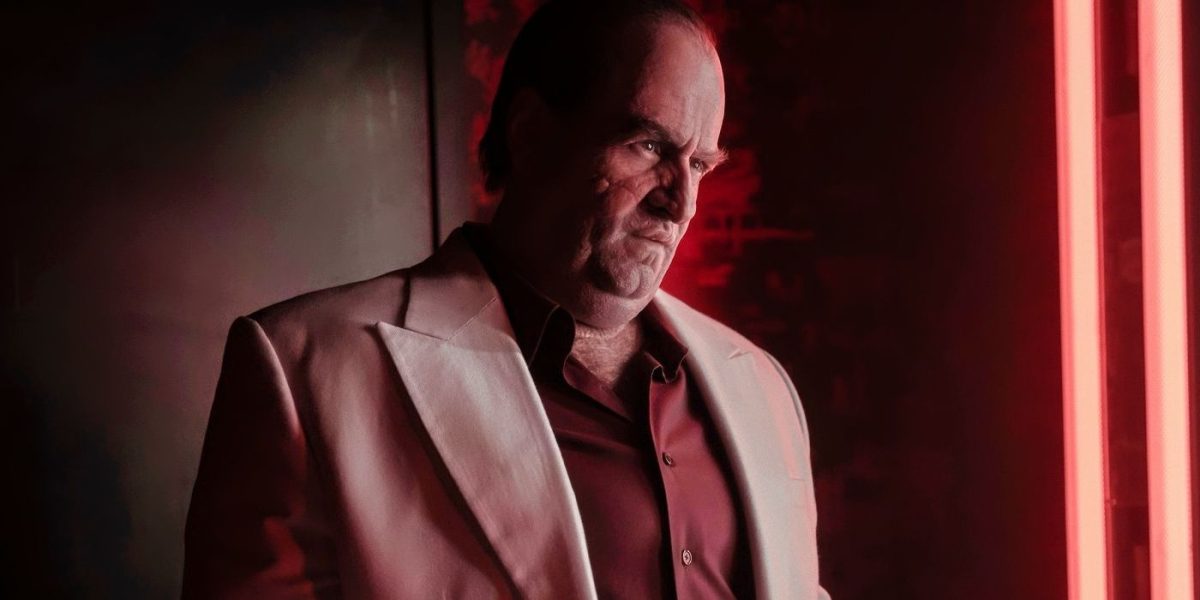
‘The Penguin’ Director Breaks Down Episode 3’s ‘The Batman’ Flashback and More
Oct 7, 2024
Editor’s note: The below interview contains spoilers for The Penguin Episode 3.
After three episodes of The Penguin, the stage has been set for the major players in Gotham and the power struggle that will undoubtedly play out. While Oz Cobb (Colin Farrell) might have been underestimated by the backstabbing Falcone mob family, he’s still being tracked under the watchful eye of Sofia Falcone (Cristin Milioti) — who reveals, this week, that she had an even bigger role to play in her late brother Alberto’s (Michael Zegen) mysterious plan than Oz initially realized. But the two are forced to become reluctant partners to enact the beginning stages of introducing the new drug, known as Bliss, to the streets of Gotham, and as the closing moments of the episode reveal, their tenuous alliance is already hitting some major snags.
Ahead of the premiere of Episode 3, Collider had the opportunity to sit down with Zobel, who directed the first three episodes of The Penguin, for a wide-ranging discussion about some of the biggest moments of “Bliss.” Over the course of the interview, which you can read below, Zobel discusses getting to revisit one of the most pivotal sequences of Matt Reeves’ The Batman, as well as which real-life ingredients were used to create Bliss and why Victor’s (Rhenzy Feliz) panic attack moment feels so immersive. He also breaks down the significance of that surprisingly emotional scene between Oz and Sofia, whether Oz can ever be considered completely trustworthy, and more.
COLLIDER: Delighted may not be the right word, considering what happens, but I was delighted to see the flashback opening to the events of The Batman. We’ve seen Riddler’s bombs go off before, but this is the first time that we really understand some of the immediate effects they had on someone like Victor, his neighborhood, especially his family. As a huge fan of the movie yourself, how excited were you to read the script, knowing that you would get to go back and revisit those events from this perspective?
CRAIG ZOBEL: Yeah, super excited. It was very interesting, getting to see how devastating that would be in so many different ways. This is where we truly were starting to talk about class, and it’s also just a scene [that] I feel like you don’t get to see in a superhero story very often. What these people are doing is affecting just normal, everyday people, and so, hopefully, that resonated. It was certainly also super interesting to figure out, really, what that would do in a practical way. It required a lot of studying, of [Hurricane] Katrina down in New Orleans, and we also looked at some floods in Germany, to just see what happened, physically, and how devastating they can be.
‘The Penguin’ Found the Perfect Real-Life Club Location for Episode 3
Image via HBO
This episode introduces the initial steps of the plan for this new drug that we’ve seen teased up until this point. Alberto had this plan, Sofia was clearly part of it, Oz is pretending that he was in on it all along. They go to the club that belongs to the Triads. Was that a set built for the episode, or was that a real location?
ZOBEL: That’s a club in New York, in Chelsea. We definitely brought stuff in and changed it, but the general shape of the club was already there. The fact that there was this upper level, I thought was great, because so many scenes revolved around people talking about the club, but not being down in the middle of the dancing. It made a lot of sense to me that, when we found that location, we should try to pursue that.
From a practical standpoint of creating a fake drug in a TV show, is there a difference between what we see in those little vials and then what actors have to, essentially, look like they’re eating or ingesting on camera?
ZOBEL: We experimented with a bunch of different things for it, and we experimented with a bunch of different ways. Should it be in baggies? How do we show this pretend drug? It’s a combination of rock candy and Pop Rocks sprinkled on it, and something else… maybe Fun Dip or something. There were ones that we really doctored and made to look perfect, but, ultimately, it’s Pop Rocks when you see them eating it down in the nightclub.
Image via HBO
The scene with Oz and Victor at the restaurant does feel like a turning point in their relationship, at least before the end of the episode. Oz reprimands the waiter for rushing Victor while he’s trying to order, and then later tells Victor, “Make them wait. Take up space.” To circle back to what we were talking about in Episode 2, again, it feels like he’s telling Victor something that he’s probably had to convince himself of.
ZOBEL: There is a pattern of Oz oftentimes talking to himself when he’s talking to Victor. I think that he is imparting something that he felt like he had to learn to do to Victor there. Oz is also a very canny guy in the fact that he is able to zero in on this kid’s dad being important to him. He gets a quick read of a person and uses that, at various times, later in the episode and in the show. For Victor, he really does take that as a kinship or growing friendship at the same time.
Later, at the club, there’s a light show, the music kicks in, and it sets off, essentially, a PTSD response for Victor. Some of that scene was certainly found in the editing, but what did you really want to make sure that you focused on from a director’s perspective of making it feel like we’re watching a panic attack?
ZOBEL: I hope that it comes off that he is having a panic attack, because everyone around him is doing drugs, and I didn’t want it to feel like he was doing drugs. It’s not that. It’s a different problem that he’s having. When people have certain trauma reactions, loud noise or something really can send them back in. They used to call it shell shock, where you would relive a moment of something dramatic, and that’s what’s happening to him in the scene. We did design shots so that when we were on the rooftop at the very beginning of the episode, we shot parts of that rooftop. We brought dancers up onto the rooftop, and the rooftop was a combination of being an actual practical location and a set, because we wanted to make sure that you understood where he was going, basically.
And the shot of the vials of the drug vibrating on the roof too, did you film that early?
ZOBEL: Yeah. In order to make the ground shake, we had to build a piece of floor that looked like the roof that we could shake just so that we could get that shot, actually.
In the bathroom, Oz has the realization that Victor may have wanted to leave and claims that he hasn’t been holding Victor hostage, that he could have walked away whenever he wanted. Do you feel like that’s completely true?
ZOBEL: I think Oz thinks that’s true. I think Oz genuinely is like, “What do you mean?” Oz would be shocked to realize that he wouldn’t want to be there. Oz felt like he was giving something to Victor — not that he was giving him his time and his life, even. Oz feels a little hurt and betrayed by that. For Victor, it feels very much different, and I think Victor is not lying either. Both of them have a wildly different interpretation of the same events, but Victor is being honest and saying, “Yeah, I like you, but …” He’s also been struggling since he got kicked in that grave. It’s like, “Oh, if I’m going to be in this life, what does it mean to really be in this life? There are parts of it that are great. I’m out there on the dance floor and interacting with this pretty girl out there.” He’s hanging out, and he is like, “This is cool,” but he does know that there is basically an element of danger constantly, that he is at the bottom of a totem pole and pretty expendable.
What’s really strong about that scene, is that they’re both coming from… for Oz, that’s a complete shock that that kid would say that, but Victor definitely feels it. It’s also nice because Oz, all of a sudden, is like, “Wait, I thought I was mentoring you. We were being friends.” So, he is a little vulnerable in that moment. You don’t get to see Oz vulnerable. He doesn’t let people see him being vulnerable very often, and that follows through to the end of the episode with him.
‘The Penguin’ Episode 3’s Most Vulnerable Scene Took Everyone by Surprise
Image via HBO
To continue with the scene when Oz and Sofia are talking outside the club, it does feel like the most vulnerable he’s ever been with her, to use that word again. He starts to tear up when he’s talking to her. She’s confronting him about this betrayal, and he says he doesn’t regret what he ended up with, but he still apologizes for what she went through. Was Oz meant to get that emotional in the scene? Was that the intensity of the moment coming through from Colin?
ZOBEL: That scene was a bit of a surprise to all of us, and all three of us were, by the end of it… it’s incredible that Colin Farrell, with that much makeup on, can still be that expressive. It really is amazing. I think that by then, Cristin and Colin had gotten to work and play together and do several fun scenes together and really were having fun with each other. They had the scene with Johnny Vitti in the hotel, and the first time that they go to the nightclub during the day, so we kept calling it the buddy-cop movie part of the show because they were able to be good partners together and were fun. I think that because we had shot those scenes prior to that, it did affect that scene. You never know how some of this stuff happens, but it was a cool night. It definitely was very memorable.
She’s very vulnerable in that scene too, and it’s great acting by both of them. But I really love the part where Oz says, “For a guy like me his was very hard.” At some point, he is actually, truly apologetic to her, and now he has also killed her brother and is a backstabbing person, but he can kind of hold both. There’s a world where he could have actually gone in a different direction, and they would’ve been good partners, and I think he knows that, and he, weirdly, can also hope that he could still do that, even though he has totally betrayed her.
He closes that scene with something along the lines of how he’s going to keep showing her that she can trust him, but then the Maronis roll in. Victor, who has decided to stay, comes screaming in with the car, sort of to the rescue. Oz’s first instinct is every man for himself, leaving Sofia behind to whatever fate she’s going to end up with after this episode. Is it safe to say that he’s never going to be a fully trustworthy character, no matter what he promises directly to someone’s face?
ZOBEL: Yeah, he’s pretty unreliable, but isn’t that kind of what you love about him? I think it would be different if, say, in the scene with Sofia before all of that happened, you didn’t believe that he was genuinely sorry. He is able to sell that so well that you’re constantly like, “Well, maybe he’s finally being truthful.” We all know somebody like that in our lives, who has been able to convince us more than once that they’re one way, and then they haven’t been. He’s such a fun character that way.
The Penguin is currently available to stream on Max.
Watch on Max
Publisher: Source link





‘Reacher’s Action Thriller Spin-Off Gets Major Season 2 Update Following Premiere
For four seasons, Reacher has been one of the biggest TV shows on Prime Video. Based on the novels by Lee Child, the series follows former military police officer Jack Reacher (Alan Ritchson) as he wanders from place to place,…
Sep 18, 2026

One of CBS’ Longest-Running & Highest Rated TV Shows Is Coming To End After 30 Years
Along with countless scripted dramas, comedies, and action shows, CBS is well known for its impressive run of unscripted programs over the last 50 years. More recent years have included major competition shows like Survivor and The Amazing Race, along…
Sep 17, 2026

Prime Video Officially Launches New Deal That Changes the Streaming Game Forever
It seems like streamers raise their prices every day. At the end of August, Apple TV raised the subscription service price by $2, bringing it to $14.99 a month. Netflix, Disney+, HBO Max, Paramount+, and Peacock have all raised prices…
Sep 16, 2026
Netflix’s 10/10 Thriller Series Returns After 3 Year Absence With Explosive New Trailer
Over the last five years, Netflix has expanded heavily into non-English content, with international series taking an even bigger focus for the streaming giant. One of the biggest driving forces in that effort is the French thriller series Lupin, led…
Sep 15, 2026