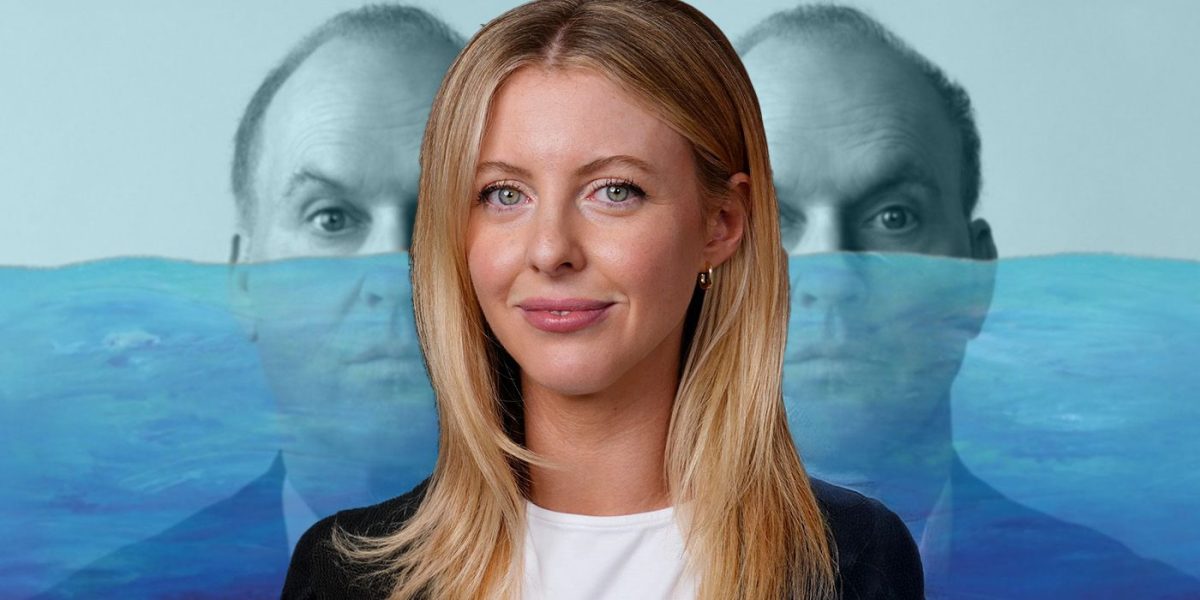
How Mila Kunis and Michael Keaton Pulled Off Their Newest Movie in Only 25 Days
Oct 22, 2024
The Big Picture
Hallie Meyers-Shyer’s film
Goodrich
stars Michael Keaton and explores the work-life balance for men, delivering an earnest character piece.
Shooting
Goodrich
in LA under a certain budget was easier, thanks to tax credits, and Keaton’s insistence on filming in the city.
Audience feedback during the editing process helped refine the film, ensuring that every detail mattered in the script.
In 2017, Hallie Meyers-Shyer entered the auteur filmmaking arena that made her parents legends in the industry with Home Again, starring Reese Witherspoon. With her own take on smaller-scale, emotionally-centered romantic dramas, Meyers-Shyer presents a new film in theaters, the earnest and warm Goodrich starring the inimitable Michael Keaton.
Goodrich is a full-hearted character piece from the mind of writer-director Meyers-Shyer. In the film, Keaton plays Andy Goodrich, a workaholic whose life is turned upside down when his wife enters a rehab program. While Andy is left caring for his young children alone, he soon finds himself leaning on his daughter from his first marriage, Grace (Mila Kunis), as she watches him become the father she never had growing up.
Collider’s own Steve Weintraub had the great fortune to sit down with Meyers-Shyer to discuss her new drama. Together they talked about the impossibility of making Goodrich without Michael Keaton, that Los Angeles is actually the best place to shoot independent films of a certain budget, and the massive importance of extensive classic film knowledge to a writer-director such as she.
Hallie Meyers-Shyer’s Had the Best Film Education
Raised by filmmakers Nancy Myers and Charles Shyer, this director was destined for moviemaking.
Image via Sandollar Productions
COLLIDER: Your parents put you in a bunch of movies when you were a kid. What do you remember from being on the set of Father of the Bride and The Parent Trap and stuff like that?
HALLIE MEYERS-SHYER: Well, I had no aspirations to act, so they just did it as kind of a fun Easter egg and a way for me to be close to my parents while they were shooting. I remember them doing a lot of takes and me being a kid and tired, saying, “Do we really have to do it again?” I was kind of the worst day player ever, complaining about “these pins in my hair.” I wasn’t a professional, let me put it that way. But it was always very fun. We had a great time.
You were on set as a kid, so when did you realize, “Wait a minute, I actually wanna work in movies?”
MEYERS-SHYER: It started for me in terms of writing. I’ve always really wanted to be a writer, so if it wasn’t gonna be film, I would wanna be a journalist or something. I’m a writer in my heart, and cinema is something I learned a lot about growing up. It was a big part of our upbringing. They would educate us on Sturges movies and Lubitsch movies, all of the masters, Billy Wilder. I really took to it at a young age and my parents noticed that, so they really encouraged it, and then they would start explaining things to me. There’s a language to film. I’m a parent now, and I notice if my kid is into music, then I start playing him Paul Simon. You want to encourage your kid’s interests, and my parents have a vast knowledge of the history of film, so they imparted that wisdom to me. Then, when I’d be on sets, they would show me things and explain them, “This is why we’re doing it this way.” When we would watch something, they would say, “You see how he did that? Do you see how the blocking of that was a two-shot, and then it pushed in and now it’s a single?” They would explain things to me. I can’t remember a time before I wanted to do this.
Related Mila Kunis and Michael Keaton Show Off Their Heartfelt Bond in ‘Goodrich’ Trailer The movie’s star-studded ensemble includes Carmen Ejogo, Andie MacDowell, Michael Urie, and more.
If someone has never seen a Nancy Meyers movie, what’s the first one they need to start with?
MEYERS-SHYER: Something’s Gotta Give.
Okay, same question for your dad, [Charles Shyer].
MEYERS-SHYER: Irreconcilable Differences. Start at the beginning.
In Filmmaking, “Everything Matters… and It Starts With the Script”
Sure. You made Home Again in 2017. What did you learn making that film that when you were writing this film or when you were standing on set for this film, you said, “I definitely need to keep doing this,” or, “This is something I did wrong,” if at all?
MEYERS-SHYER: I felt that there were endless lessons. Directing your first movie, you’re learning a lot as you go. But for me, the biggest challenge is it’s very hard to direct a movie without ever having edited one. So, of course, I learned a lot in the shooting process, but editing Home Again educated me a lot about what I need moving forward. So, next time I’m gonna make sure that I get two sizes of this, or on a day where we’re not moving around too much, maybe I’ll have a second camera. Just things that you don’t know the first time around that you learn. You’re always learning as a filmmaker.
You obviously spent time watching your parents, and they obviously taught you a lot, but are there certain lessons that really stuck with you in terms of the writing or being on set that they told you, you watched, you learned and you’ve really incorporated into the way you do things?
MEYERS-SHYER: I would say the biggest lesson is that everything matters. There’s no detail that’s too small, and it starts with the script. My parents would hammer into me that the script is the thing, so if that works, you’re starting off from a good place. Everybody knows what they need to do, and then you can explore and let some magic happen. But it really begins with the script. So, lots of drafts, making sure that everything is there for a reason, and really developing all of your characters and making them all very fleshed out, any side character. Also, something that I think they taught me is never have people be static, always moving, keep the energy, and that starts with the dialogue, how you can block it in the writing process.
Bringing A Smaller-Scale, Personal Movie To Modern Audiences
What was it about this story that said, “I want to spend a year or two or three, however long it was?”
MEYERS-SHYER: It’s a personal story for me. A lot of the time, as a writer, you can understand your life better by writing about it, and I think it’s a very human story. It’s very relatable. For me, that’s worthy of spending a lot of time on because I think it’s important for smaller, more intimate stories to be kept alive in today’s world. It’s an odd time for filmmaking.
This is a movie that doesn’t get made anymore, even though it used to be made all the time. How the hell did you get the money to make this?
MEYERS-SHYER: It’s really hard. We had a lot of false starts, as a lot of independent films have that happen. I’ll credit Michael [Keaton] for this, but he stuck with me, and he stuck with the project through a few iterations until we were finally ready to go. It takes people to really believe in your movie. You need a champion. Of course, you’re your own biggest champion, but it also takes people, financiers, producers, and those people, to believe in you. I really had that, starting with Daniela Taplin Lundberg, our producer, and Dave Caplan. They believed in his story, and they wanted stories like this to still get made.
Michael Keaton Was Pivotal to Filming in LA
Image via Ketchup Entertainment
What is it like writing a script for Michael Keaton? Because I believe you wrote this with him in mind. What the hell would you have done if he said no?
MEYERS-SHYER: I’m not sure I would have made the movie. I know that that’s an unhealthy thing to say because you can never get married to the idea of an actor that you do not have committed to your film in any way, but it just was him. It had to be him. And luckily, it’s him.
You shot in LA, and I know so many people who are struggling to film in LA because of the costs. As a low-budget movie, how did you manage to pull off filming in LA?
MEYERS-SHYER: Well, actually, the truth is, it’s easier to shoot under a certain budget level in LA. When it gets exorbitantly expensive is when you’re above a certain budget level. So, if you stay under a certain level, it’s not exactly as difficult, which is why smaller independent films can sometimes shoot in LA. We got the tax credit, which is great and helpful and very hard and rare, so I’m very grateful for that.
LA was an important part of this story, so Michael really championed that. He said, “This has to be shot in LA,” and the reason is because I feel, as a person who grew up in LA, I love it. I think it’s a city based around an art form, and that’s a really rare thing. I was excited at the idea of showing it cinematically on screen because I think with reality TV, we have this blown-out, really bright version of LA that we all see around the world now with all of these reality shows — Selling Sunset and the Kardashians and these things. I was excited to show a moodier LA, LA around the holidays, which is its own particular thing. That was why I really wanted it to shoot there.
‘Goodrich’ Explores The Work-Life Balance For Men Of A Certain Age
“Now, in 2024, there’s a different societal standard for men and for fathers and different expectations.”
Image via Ketchup Entertainment
One of the things that I really enjoyed about the script is that Andy, Michael Keaton’s character, is a really good person. He just happens to work way too much and is obsessed with work. I would like to think I’m a good person who works way too much. You’re probably the same thing. Everyone I know just works too much. Talk a little bit about that aspect, where he’s a really good person, but he prioritizes work over family.
MEYERS-SHYER: I thought it would be interesting to explore the idea of the work-life balance for men on screen because it’s talked about a lot for women. That’s why I wanted him to be a man of a certain age, because when he parented his first generation of children, which is Mila Kunis, there was a different standard for men. They could go off to work all day and come home for dinner, and that was a little bit excused in the ‘80s and even, I would say, up until recently, really. Now, in 2024, there are different societal standards for men and for fathers and different expectations. So, I thought if he had to parent then and he had to parent now, that would be comedic and interesting to dive into.
I’d like to think we’re reaching the point where no matter if you’re a man or a woman, it’s just really hard to balance work and life.
MEYERS-SHYER: It really is because when you love what you do, which is a really lucky thing in life — not everybody has that — you give it 100% of yourself. You do. And I think that it is interesting to talk about and think about the sacrifices you’re making in order to do that and what potentially the repercussions are of those choices. But I think the lesson of the movie is that it’s never really too late to reflect and maybe reevaluate.
Movies for generations have talked about or gotten into the balance of work and home life and balancing family, but from my own perspective, to get ahead in any job, you have to give it your all. It’s just a frustrating thing to try to be good at your job and to be good at home.
MEYERS-SHYER: It’s impossible. But I do think it’s different for men and women, really, because there are different standards, and there are different pressures, and there are different responsibilities, and there are different expectations. Mila’s character had accepted this. This is not a new wound for her. This is something that she was almost comfortable with. And honestly, she was more comfortable with the fact that he was repeating that pattern with the second generation of kids, so that was just him in her mind. But then, through the course of events in the movie, he changes for the second generation, and that’s where the pain happens for her.
For sure.
Michael Keaton Unintentionally Channels ‘Mr. Mom’ in ‘Goodrich’
“I love that, but we weren’t thinking about it or talking about it.”
Image via 20th Century Pictures
When I was watching it, and I spoke to Michael about the fact that I watched Mr. Mom when I was a kid, and seeing him with the young kids in Mr. Mom and seeing him with young kids in this, I thought there was a similarity. Did you see Mr. Mom growing up?
MEYERS-SHYER: Yeah, of course. It’s like a seminal film for me. Michael and I never discussed Mr. Mom. It’s coming up a lot now in the discussion of the movie now that people are seeing it. By the way, I’m not surprised. This movie bookends it nicely. It’s a little bit of a grown-up Mr. Mom, and I love that, but we weren’t thinking about it or talking about it. Sometimes I would make him tell me stories about John Hughes because I’m a big fan, but other than that, we were telling this guy’s story. The fact that Michael has such an incredible body of work behind him, it would almost be impossible not to draw some correlations between early Keaton and now. I just think it’s cool that he’s re-inventing himself, but also doing things that feel nostalgic in some way.
A lot of people don’t realize that John Hughes wrote Mr. Mom . It was like his first movie.
Related The 10 Best Movies Written by John Hughes, Ranked While John Hughes is a great director, he’s also a great writer.
So, you get in the editing room, you have a cut of the movie you’re happy with. Who are you showing it to for honest feedback, and what did you learn from those early screenings that impacted the finished film?
MEYERS-SHYER: I’m the kind of person that I would rather show something, at first, early on, to a smaller group of people who I really trust rather than a lot of people and get a lot of opinions. One of the great things about making independent films is there are notes and there are thoughts, but people really let you make the film that you intended to make, and that’s really rare. I’m very appreciative that that was my experience. I have filmmaker parents, so I’d be remiss if I didn’t show them and get their thoughts, and they give different kinds.
There are two kinds of notes I like to get; I like to get notes from filmmaker friends or filmmaker relatives and then notes from people who absolutely have nothing to do with Hollywood in any way and give you audience feedback and thoughts, like, “This was confusing. This part felt slow,” just as an audience member. You really learn a lot through screenings at a certain point, not early on. But once you’re more comfortable with it and then you show it to people, and you start noticing everybody’s laughing at this part, or you start seeing, “Oh, I thought they were gonna laugh there, and they didn’t. How can we make that funnier?” We make movies for audiences, of course, and I think that that is very valuable when you’re ready to do it.
Was there any change in the editing room that was unexpected because of audience feedback?
MEYERS-SHYER: Not really, honestly, despite just cutting a scene or two to keep the pace up and things like that. I think that because we shot in 25 days, I had done a lot of that chiseling to the script because there’s no time to shoot things that you think may or may not be in the film. So, I had tried to get that script down to what really had to be there. I know some directors kind of do in editing room, “What about if we put this scene here,” and something wacky. That’s not my style. I stick to the script, and the script is pretty much the movie.
Image via Ketchup Entertainment
I completely understand. It’s also tough when you only have a number of days to have the freedom to improvise in the moment or try a lot of things when you really have a limited time frame.
MEYERS-SHYER: It really is. People ask me that sometimes about my directing style, and I’m like, “Maybe next time.” If I had more days, I might play around more. But I knew the script worked, the actors knew the script worked, so we didn’t improv. We didn’t do that kind of thing. We found the magic and the fun in other ways. Michael is kind of incapable of a false move, and I find Mila is extremely raw and confident on screen, too. They acted so naturally, there would be times when I would have to look at the script and say, “Did I write that, or did they just say that?” Usually, I wrote it, and they would surprise me.
Only Mila Kunis and Michael Keaton Could Have Pulled ‘Goodrich’ Off In 25 Days
Image via Ketchup Entertainment
I really enjoyed the movie and one of the reasons is because the two of them are just so good on screen. I could watch Michael Keaton read the phone book, and I’d find it interesting.
MEYERS-SHYER: I agree.
He is almost like a cheat code in a video game; you put him in a movie, and you’re like, “Of course.”
MEYERS-SHYER: In this movie, he does something that not all actors can do. First of all, we shot in 25 days, like I said. He was in 25 out of 25 days. He is in every scene of this movie, and he shows you so many colors, so many layers, and takes you on this emotional journey. When people say, “Why did you want Michael Keaton?” Because who else can do that? It’s a rare group of people who can do that.
Related Watch This Criminally Underrated Michael Keaton Thriller Before It Leaves Netflix A lot can happen in New York City in just 24 hours.
So, you see the shooting schedule, you know you have 25 days. What day do you have circled because you can’t wait to film something, and what day is circled in terms of, “How the F are we gonna film this?”
MEYERS-SHYER: Oh man, you’re giving me PTSD. So the days that I was nervous about were the days that, on a longer shoot, you’d have multiple days to shoot. So, it was never about the content of it, but really, the semantics. The days I was so nervous about were like the scene when he goes to see the singer, Lola, because anytime you’re shooting a performance that’s involved, that’s difficult. You’re having to shoot, it’s a hard day on set, and we had to do that all in one day. So, that was really hard. The breathwork scene was a day that I was really nervous about because it’s also a lot of setups and all in one day. We didn’t have the location for longer than a day.
Those are the days that made me most nervous when I knew we had a lot to pack into one day. But interestingly enough, some of those are also my most fun days on set, like the breathwork. Shooting that sequence was the most fun we had on set. Everybody was fun, loose, and the extras were amazing. It was just a great day. We all had a lot of fun. One of the scenes I was most looking forward to was the scene where Mila really lets loose on Michael’s character. She really blew me away with her performance that day again.
How Researching Classic Films Helped ‘Goodrich’ Production
Image via Paramount Pictures
In the movie, Michael shows the kids Casablanca , and they’re obviously a little too young for that movie. What did you see when you were way too young?
MEYERS-SHYER: A lot of things. I remember my parents showing me a film called The Miracle of Morgan’s Creek. I don’t know if you know that movie. I think a studio had maybe talked to them about remaking it, and they gathered our family around to watch it, and it’s not exactly a family movie that you would make your kids watch. But it’s also things like that that make my parents unique and my childhood unique, so that’s something I wanted to put in the movie.
What shot of the film ended up being the toughest to pull off and why?
MEYERS-SHYER: The opening was tough because we shot it a lot in one. Like we said, when moving quickly, you have to get inventive, right? I studied a lot of Mike Nichols’ movies because I think they’re blocked most exquisitely. I did a lot of research on how can I maximize these shots and get essentially coverage just by moving the camera. I studied certain Woody Allen movies where he does that really well — people keep moving in and out. A pet peeve of mine is when I see some independent films and they don’t have the coverage and no one’s moving, and I get it. I relate to it because it’s just sometimes you gotta shoot it and you wish you could have coverage, and it’s just one shot. So, in order to not feel like a movie that really shot on a small budget in a short period of time, my DP and I, Jamie Ramsay, talked a lot about moving the camera always and thinking about how we can maximize this, who can cross a room, how can this two become a single and then get closer? That kind of stuff.
One of the shots that I was most proud of, which came out of a situation, like it always does on a movie, where you have a plan, and the plan goes awry, was I write very long dialogue scenes, and Michael and Mila have a scene where they get in an argument outside of his house after she babysits the kids. It’s a really long scene, and we had mapped it out that he’s gonna walk her all the way from inside the house, outside the house, to her car. So, we had them moving the whole time. It rained, and we could not reschedule, so Michael and I got together, and we kind of acted it out in a small space and thought, “Where would we naturally stop?” And we kind of worked around that. And Jamie, being the talented person that he is, kept having them move closer and closer to camera. It unnerved me at the time to do something that we weren’t planning, but it ended up being my favorite shot in the movie.
What’s Next For Hallie Meyers-Shyer?
Image via Ketchup Entertainment
Oh, I like that. You’ve mentioned you like writing. Do you have a desk full of scripts or ideas? What are you writing right now?
MEYERS-SHYER: I’m working on something that I’ve been playing around with for a while. I sort of feel like I have to release Goodrich into the world before I can fully move on to something else because I really immerse myself in the thing I’m writing. I listen to the same song over and over and over again; I create a soundtrack in my head; as we’ve established, I start making unrealistic casting choices in my head. So, before I can fully immerse myself in it, I need this movie to come out. But I don’t have a million ideas, I just fully get consumed by one, and then I give it all of myself.
Goodrich is in theaters now.
Andy Goodrich’s life is upended when his wife enters a rehab program, leaving him on his own with their young kids. Goodrich leans on his daughter from his first marriage, Grace, as he ultimately evolves into the father Grace never had.Release Date October 18, 2024 Director Hallie Meyers-Shyer Runtime 111 Minutes Main Genre Drama Writers Hallie Meyers-Shyer Character(s) Andy Goodrich , Grace Expand
Buy Tickets
Publisher: Source link







‘Reacher’s Action Thriller Spin-Off Gets Major Season 2 Update Following Premiere
For four seasons, Reacher has been one of the biggest TV shows on Prime Video. Based on the novels by Lee Child, the series follows former military police officer Jack Reacher (Alan Ritchson) as he wanders from place to place,…
Sep 18, 2026

One of CBS’ Longest-Running & Highest Rated TV Shows Is Coming To End After 30 Years
Along with countless scripted dramas, comedies, and action shows, CBS is well known for its impressive run of unscripted programs over the last 50 years. More recent years have included major competition shows like Survivor and The Amazing Race, along…
Sep 17, 2026

Prime Video Officially Launches New Deal That Changes the Streaming Game Forever
It seems like streamers raise their prices every day. At the end of August, Apple TV raised the subscription service price by $2, bringing it to $14.99 a month. Netflix, Disney+, HBO Max, Paramount+, and Peacock have all raised prices…
Sep 16, 2026
Netflix’s 10/10 Thriller Series Returns After 3 Year Absence With Explosive New Trailer
Over the last five years, Netflix has expanded heavily into non-English content, with international series taking an even bigger focus for the streaming giant. One of the biggest driving forces in that effort is the French thriller series Lupin, led…
Sep 15, 2026