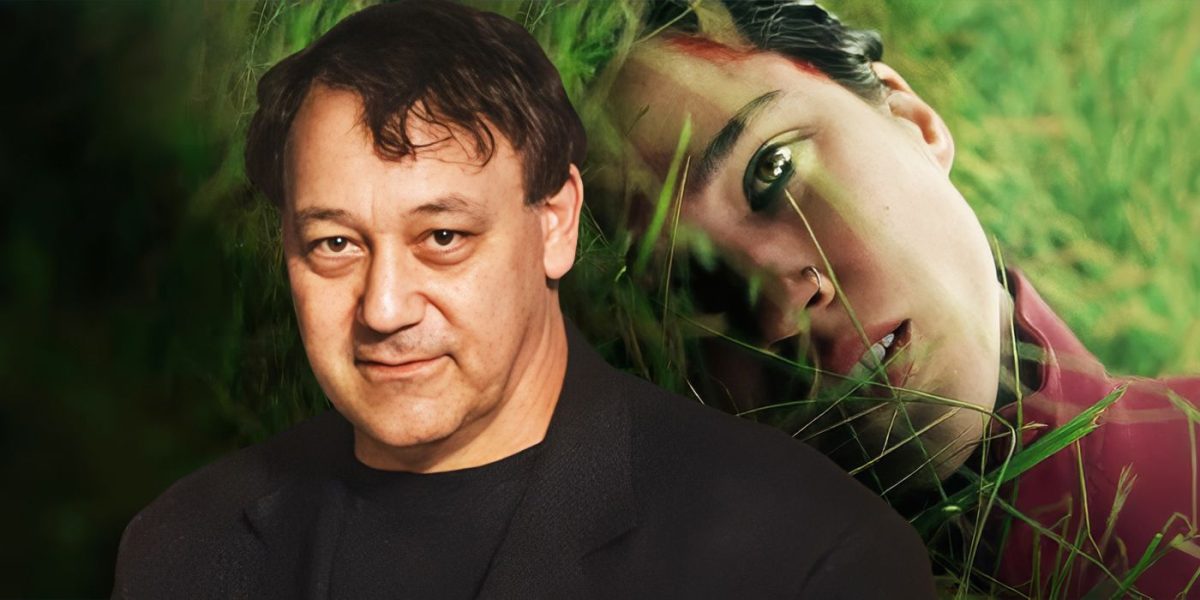
‘Don’t Move’ Directors Reveal How Horror Icon Sam Raimi Helped Improve Their New Netflix Thriller
Oct 27, 2024
The Big Picture
Collider’s Steve Weintraub sits down with
Don’t Move
co-directors Adam Schindler and Brian Netto ahead of the movie’s Netflix premiere.
Starring Finn Wittrock and Kelsey Asbille, Don’t Move follows a woman injected with a paralytic agent by a killer, forcing her to fight for survival.
In this interview, Schindler and Netto discuss their seamless directing process, working with producer Sam Raimi, and crafting a unique horror-thriller.
Sam Raimi may be best known for his direction, helming massive Marvel blockbusters like Spider-Man (Tobey Maguire Edition) and creating the timeless Evil Dead horror franchise along with his creative co-chin-spiritor, Bruce Campbell. But Raimi has also produced some of our very favorite horror films of the past few years — flicks like 65, Crawl, and the Poltergeist reboot, among many others. For his latest production, Don’t Move, Raimi takes directors Adam Schindler and Brian Netto under his wing, introducing audiences to a new, terrifying generation of horror filmmakers.
Don’t Move is a tense and thrilling tale of cat-and-mouse following a grieving woman (Kelsey Asbille) who has been given a paralytic agent by a seasoned killer (Finn Wittrock). Now, she must fight, hide, and run before her body completely shuts down, giving up on her.
Ahead of the movie’s Netflix premiere, Schindler and Netto sat down with Collider’s own Steve Weintraub to discuss the contagious enthusiasm of producer Sam Raimi, shooting in the “godsend” forests of Bulgaria, and how decades of friendship and collaboration created their unspoken directing shorthand. You can watch the full conversation in the video above or read the transcript below.
Crafting a Horror Movie in Broad Daylight
“It was a challenge to ourselves more than anything.”
Image via Netflix
COLLIDER: Who has the fear of the woods? Because I think this film does a great job of reminding you: just don’t go in.
ADAM SCHINDLER: That’s funny. We’re from Minnesota, and as a lot of people know, that’s all wilderness. So, we had wonderful childhoods growing up in the forest. It’s just us creating that fear, doing the things that we didn’t really experience growing up. We were on the lakes and fishing and all that kind of stuff when we grew up. It’s very much based on our experience. My grandparents had a cabin that they built on a lake. I spent a lot of time in the woods.
BRIAN NETTO: Even when the lighting is beautiful, the sky is beautiful, even then we wanted to create something where you could pull some terror or some horror situations out of it. That was a big thing for us. When we first met with the team and the producers that came aboard to make the film, we kept saying, “This has to be gorgeous.” It has to be a destination where she goes for this particular reason, and then we want to turn it into a horror movie, but we want to do it all in the daylight. That was really purposeful. It was a challenge to ourselves more than anything.
That’s one of the things I really liked. A lot of times, this material would be at night to try to amplify it. Again, this is why I’m not going to the woods. It’s just like the ocean in Jaws — f that. I’m out.
‘Don’t Move’ Directing Duo Share Their Co-Directing Secrets
Brian Netto and Adam Schindler have been working together since they were young.
Image via Netflix
When it’s two people working together, what is it really like on set? Do you each have strengths and weaknesses? Are you like, “I know you’re better at this than I am, or I’m better at this than you are.” How does that work?
SCHINDLER: We’ve been friends since fourth grade, so we have a secondhand by this point. In our other movies we’ve done, people have been like, “I don’t understand. How does the relationship work?” Then they get on set the first day, and they’re like, “Oh, okay. I see how it is.” We just have this unwritten thing where I look at Brian, and he’s like, “Yep, I’m already on it.” One of us doesn’t handle the camera, one of us doesn’t handle the actors. We do it all. Any of the discussions as to what the process is gonna be, that’s all handled in pre and early, early on, so we’re in lockstep from day one when we step on set.
NETTO: It’s because we grew up together, and this is the only way we know how to do it. When we were making films when we were young, it was just the two of us. Sometimes he’s on camera, sometimes I’m behind, and vice versa. It’s something that we grew accustomed to. We don’t know any other way to do it.
SCHINDLER: It’s hard to explain to somebody how it works.
NETTO: If we disseminated duties, it would be weird for us more than anything. It’s just natural. It’s just over years and years of practice.
SCHINDLER: And working closely…
NETTO: …on movies that no one will ever, nor should they ever, see.
Image via Netflix
I would imagine that when two people analyze something together, there must be so many times when you catch something, when one person sees something the other doesn’t. It’s almost like an “emergency stop,” if you will. Does that make any sense?
NETTO: It makes sense. But again, we’ve never done it any other way. That’s the thing, truly. When we met, we picked up a camera and started running around. It wasn’t like we were two directors that decided to team up. We learned this process. We learned and we grew our love for this together, so we don’t know any other way. I would imagine you’re right.
SCHINDLER: Having two brains on set probably doubles the opportunities to pick up on something that the other person’s not really focused on, I guess. But to us, it’s second nature. It’s hard to break down exactly how our process works that way. We’re always there. We’re always backing each other up. It’s the director’s job to have a 30 to 40,000-foot view of everything that’s going on. Sometimes he’s at 20,000 feet, and I’m at 40. Sometimes he’s at 40, I’m at 20. It just kind of works that way.
The ‘Daunting’ First Day Of Shooting ‘Don’t Move’
Image via Netflix
You see the shooting schedule in front of you. What day do you have circled in terms of, “I can’t wait to film this,” and what day do you have circled in terms of, “How the F are we gonna film this?”
SCHINDLER: Day one. [Laughs] Because we shot in Bulgaria. We shot on basically a mountain, on the backside of a castle — we’re shooting the opening scene of the movie. So, that was exhilarating to be in this spectacular landscape. It was daunting because you’re standing there trying to shoot the scene; it’s noon, and the sun is way up, there are no clouds.
NETTO: It’s coming and going. But it’s also your first day of filming and it’s such a pivotal sequence. When they see it, they’ll understand. It really sets the tone for where this film is gonna go emotionally, where we start and then where we end. That was exciting. It’s your first day. The first day you’ve got the nerves, you’ve got the excitement, you’ve got all those different things going on, and then we were only there for a day. We really just had to nail it. More than anything, we said, “If we can nail this and the crew can see what we can accomplish in a single day, that really will set the tone for where we go after this.” Of course, it didn’t get any easier, but it allowed us to pat ourselves and go, “Okay, great. We got this thing down. Now, this is where our characters are going to begin.” Because it really is the beginning of the film, and then it set the tone for where we went after that.
Was ‘Don’t Move’ Shot In Sequence?
I don’t know if you filmed in order, but how much did you want to film in order? What was it actually like shooting with the line producer, figuring it out?
SCHINDLER: We would have loved to shoot everything in order. You wanna probably do that with every movie, but it’s kind of impossible with the way you move crews around and such. We shot a decent chunk of it, 60% of it, in order. There are sequences in the movie in which we were at a certain location. It’s shot mostly in the forest — a couple of locations, a couple of builds. A couple of those were week-long shoots or close to it, where we were able to sequester ourselves there and be like, “Okay, we’re gonna be here. We got this space for four days. We got that space for five days.”
The rest of it, you have a day here, you’re a day there, and you’re a day there. You try to schedule it out so the locations you’re shooting at are close to each other, you can set up all the crew to a specific place, and you’re not moving people around, you’re just going to a specific location. Luckily, in Bulgaria, Nu Boyana Studios’ back door walks into the forest, and they’re allowed to shoot in the National Forest behind there. So, it gave us all the looks we really needed in close proximity, which was a godsend.
Working With Sam Raimi Was A Bucket List Moment For ‘Don’t Move’ Directors
“He is so influential on us as filmgoers, first and foremost.”
Talk a little about Sam Raimi.
NETTO: We worked with him before. We did an anthology series called 50 States of Fright, and he did an episode there as well. He is so influential on us as filmgoers, first and foremost. So, working with him was one of those bucket list moments. More than anything, I think the biggest thing we took away was his level of enthusiasm. However many years into the game, he’s still in it. He still gets excited. But more importantly, he gets excited for you. He wants you to win, too. It’s genuine. It just comes from a genuine place.
Then, he still gets excited about genre. He loves the genre. He wants to see and promote new people working within the genre. When we had an opportunity to get this project to him, I think he remembered our experience we had on the previous show and was just like, “I love these guys. Let’s give us another shot.” It’s a totally different film than what we worked on in that series. His hands-on approach, his mind…
Related ’50 States of Fright’ Trailer Reveals Sam Raimi’s Horror Anthology Series for Quibi The ‘Evil Dead’ mastermind takes you on a spine-chilling road trip around the country.
SCHINDLER: He gave us the greatest script-to-screen notes that we’ve ever received. He’s very involved. We sit down, we read the entire script line-by-line with him, asking questions — How are we shooting this? What’s the meaning of this? What’s the meaning of this line? What’s the meaning of this action line? Do we need this? How do we plan to do this? His whole thing is: What’s the audience going to feel from this? What are you doing to get this audience to feel that? It really was illuminating, and we adopted that into our process now to figure it all out. They say don’t meet your idols, but not in the case of Sam Raimi.
It’s like being in graduate school, if you will.
NETTO: Yes. Very much so.
‘Don’t Move’ Allows the Film To Live In Suspenseful Moments
Image via Netflix
You get in the editing room and you show it to friends and family. What did you learn from those early screenings that impacted the finished film? Any big changes?
NETTO: That it was working, more than anything. Obviously, for people who see the film, they’ll realize that her body is slowly losing mobility and then there’s a period of just stasis, and then it comes back. In those moments when the film is with her in this period of immobility, and then the tension that comes with that, the concern was, are we going to be able to look at these moments and this is still going to be the suspense that we want? What we got is that the audiences were leaning in, they were excited, they were living and dying with every little victory or loss that she was suffering over the course of the film. So, more than anything, I think we came away going, “It’s working!” People are really invested in her and her journey.
SCHINDLER: It’s letting things breathe, too, and giving yourself an opportunity to really live in these suspenseful moments. You can’t create suspense in 30 seconds by zipping through a scene. You’ve got to live in these moments. Especially in this film, where she’s immobile for a great portion of the film, it was really important to us to live in those. It’s a very kind of POV-type of film in that way, where you live in these moments with her, be with her, see what it would feel like. Sam also pushed that with us, and when he saw it, he was very supportive.
NETTO: He was supportive of staying in that mindset and said, “Just take chances, and let’s try something unique.” That was great. That’s what you want. You want someone to gift you that opportunity to try something different or try something that might feel counterintuitive to what people are watching now. That was great.
Don’t Move is available to watch on Netflix now.
It follows a seasoned killer as he injects a grieving woman with a paralytic agent. She must run, fight and hide before her body shuts down.Director Brian Netto , Adam Schindler Runtime 92 Minutes Writers T.J. Cimfel , David White
Watch on Netflix
Publisher: Source link



‘Reacher’s Action Thriller Spin-Off Gets Major Season 2 Update Following Premiere
For four seasons, Reacher has been one of the biggest TV shows on Prime Video. Based on the novels by Lee Child, the series follows former military police officer Jack Reacher (Alan Ritchson) as he wanders from place to place,…
Sep 18, 2026

One of CBS’ Longest-Running & Highest Rated TV Shows Is Coming To End After 30 Years
Along with countless scripted dramas, comedies, and action shows, CBS is well known for its impressive run of unscripted programs over the last 50 years. More recent years have included major competition shows like Survivor and The Amazing Race, along…
Sep 17, 2026

Prime Video Officially Launches New Deal That Changes the Streaming Game Forever
It seems like streamers raise their prices every day. At the end of August, Apple TV raised the subscription service price by $2, bringing it to $14.99 a month. Netflix, Disney+, HBO Max, Paramount+, and Peacock have all raised prices…
Sep 16, 2026
Netflix’s 10/10 Thriller Series Returns After 3 Year Absence With Explosive New Trailer
Over the last five years, Netflix has expanded heavily into non-English content, with international series taking an even bigger focus for the streaming giant. One of the biggest driving forces in that effort is the French thriller series Lupin, led…
Sep 15, 2026