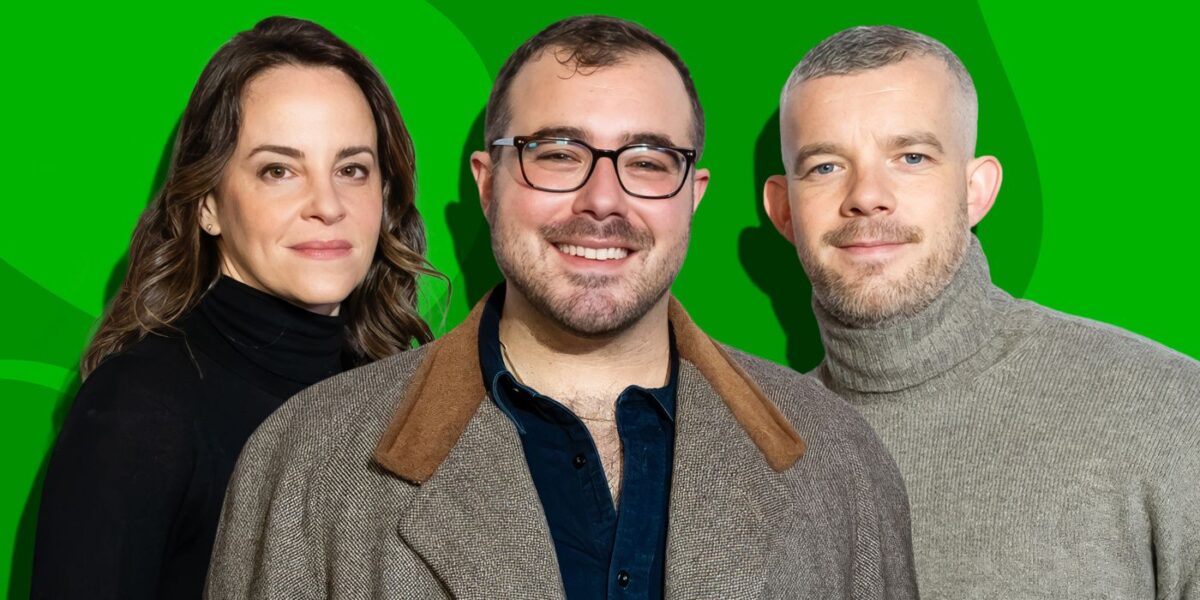
Tom Blyth and Russell Tovey’s Queer Thriller-Drama With Romance, ‘Plainclothes,’ Shouldn’t Be This Relevant Today
Feb 1, 2025
Summary
Collider’s Steve Weintraub sits down with Plainclothes writer-director Carmen Emmi and co-stars Russell Tovey and Maria Dizzia at the 2025 Sundance Film Festival.
Plainclothes is a thriller-drama with romance about an undercover police officer in the ’90s.
Emmi, Tovey, and Dizzia discuss the real-life inspiration for the movie, filming Hi8 footage, the struggles of the queer community in the 1990s, and more.
“If you wait long enough, the world moves in circles.” At this year’s Sundance Film Festival, first-time feature writer-director Carmen Emmi debuted his drama Plainclothes. In his own words, the film is “a thriller-drama with romance,” inspired by an L.A. Times article, as well as his own coming-out experience in the 1990s, a time when the queer community was ostracized—a time not unlike today.
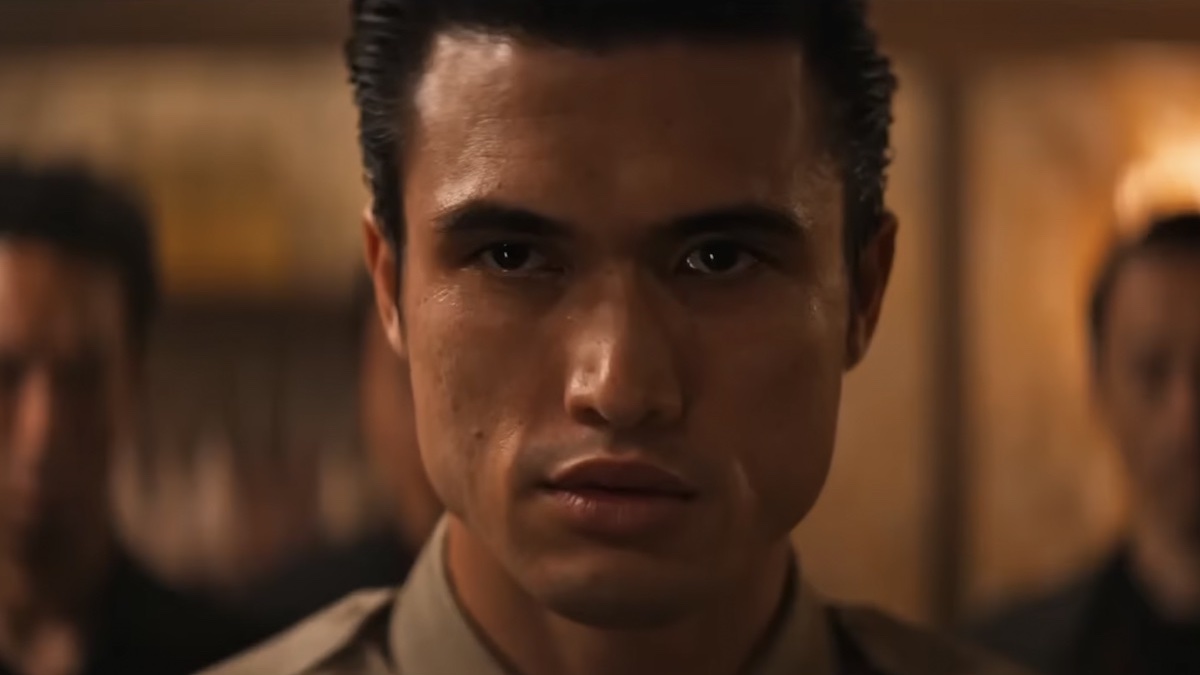
In the movie, Tom Blyth (The Hunger Games: The Ballad of Songbirds & Snakes) plays Lucas, an ambitious young police officer assigned to undercover work luring and arresting gay men. Struggling to fulfill his duties while also contending with his own repressed feelings, Lucas finds himself enamored with his target, Andrew, played by Russell Tovey. To round out this intimate and talented cast, Orange Is the New Black’s Maria Dizzia co-stars as Marie.
Emmi, Tovey, and Dizzia stopped by Collider’s interview studio at the Rendezvous Cinema Center, where they sat down with Steve Weintraub to discuss the film. In this interview, Emmi shares his own personal experiences that helped break the story of Lucas and Andrew and talks about the importance of the time period and the significance of his use of Hi8 footage. Tovey and Dizzia also talk about what it was about this first-time filmmaker’s script that drew them to the project, crafting intimate scenes, and how they prepared for their characters. Check out the full conversation in the video above or you can read the transcript below.
‘Plainclothes’ Is a “Thriller-Drama With Romance”
“He wove the three genres together so well, so expertly.”
Image by Photagonist
COLLIDER: People watching this will not have seen this yet, so how have you been describing the film to friends and family?
CARMEN EMMI: I’ve been describing it as a thriller-drama with romance, honestly. It’s about a police officer in the ‘90s. His job is to lure and arrest men who are cruising in a public bathroom—hooking up in a public bathroom—and it’s about what happens when he falls for someone that he’s supposed to arrest.
For both of you, what was it about the script and the story that said, “I need to be a part of this?”
MARIA DIZZIA: For me, when I first read it, it was actually what Carmen just touched on was that he wove the three genres together so well, so expertly. It opened, and it’s a thriller, and then you realize that there’s this family drama that’s dropped in these little interstitial scenes, and then the whole thing that’s carrying it through is this romance. What I was so surprised by was that was so legible on the page. So I wanted to be a part of it, and I wanted to meet the mind that was able to keep all of those things going in a way that made good on their promise in the end.
RUSSELL TOVEY: I think for me, it was that period of history I find fascinating. The dialogue between the characters and the relationship between myself and Lucas, who Tom Blyth plays, there was something so fascinating and nuanced and captivating about it that as soon as I read it, I was like, “I want to be in that world.”
‘Plainclothes’ Is Inspired by an L.A. Times Article
Emmi also drew from his own personal experiences.
Image by Photagonist
I know this is a very personal story to you, so talk a little bit about the inspiration and why this was such an important story for you to tell.
EMMI: I got the idea in 2016 when I read an article in the L.A. Times about police officers who were dressing in plain clothes and luring men into a Long Beach park bathroom, and around that time, I had just come out. I knew I wanted to write a film, but I didn’t know what it was going to be, and that article just kind of sparked something in me, honestly. It really did move me. My brother, at the same time, was becoming a police officer. So, in conversations I had with him and processing what I was going through at the time, this character was born through free writing. It was a very therapeutic experience, honestly.
I’m always fascinated by what you first start writing and what ends up on the screen. Was there a big change along the way? How did you get to where it was all going to go?
EMMI: This was my first screenplay, so I hadn’t written a feature before. I was reading all the screenwriting books, and I had this narrative that was going from A to B, and something wasn’t clicking for me. I just kind of had this moment where I was lying on the floor in my studio in Brooklyn, and I realized I didn’t have to tell a linear story because when I was reflecting on my coming-out experience, I didn’t think about it in a linear way. So, I approached it as if Lucas was thinking back on his coming-out experience, and in my mind, it looks like this shattered mirror, almost. I used that image of a shattered mirror to structure it, but also, it influenced the filming of it, ultimately, which I realized while I was filming Russell through a prism on set.
TOVEY: Oh, yeah! I didn’t think of that, the shattered mirror. The way that the footage cuts in there, it’s prismatic.
EMMI: Yeah.
TOVEY: Well done. [Laughs]
Related
‘Ballad of Songbirds and Snakes’ Star Tom Blyth to Lead Queer Drama Opposite Russell Tovey
‘Plainclothes’ is set in the ’90s and is based on true events.
You have a very interesting aesthetic, and you’re using a Hi8 camera at times, and I guess it’s like a childhood camera. Talk a little bit about why the Hi8 versus a different video camera because that’s such a specific image when you’re contrasting it with the digital camera or film.
EMMI: When I finished the script, and it took me a bit of time to raise the financing, for a long time, I thought I would have to do it all on my own, and I had a Hi8 camera and I had my iPhone. So, that’s where it really came from. Honestly, it was like, “Oh, this is Hi8. If I don’t have a lot of money, this will immediately make it feel like the ‘90s,” because it’s that aesthetic. Then, I shot three proof of concepts, and the idea of it being an extension of Lucas, that’s how it all came to be. Luckily, I didn’t have to shoot a whole movie on it, but I do feel like there is a version of it where that happens, and it’s still okay.
I actually think it would be very interesting if the whole movie were like that. It would just be an aesthetic choice. It would be another version of the story. But I do think that the way you intermix works really, really well.
EMMI: I really was inspired by Dogme 95 filmmaking, especially with The Celebration.
DIZZIA: I love that movie so much.
EMMI: It just feels like something’s crawling at you when you’re watching that aesthetic, and I feel like that helped the feeling of anxiety that I wanted to get across, as well.
Unfortunately, There’s No Better Time to Watch a Film Like ‘Plainclothes’
“We’re back in that world.”
Image via Sundance Institute
I think modern audiences or younger people who are going to watch the film are not going to know what it was like in the ‘90s for people. It was just a different world, and I think that your film does a great job of capturing that. Can you guys talk about the world in the ‘90s? It was just a different world in terms of being able to talk about your sexuality.
TOVEY: You say it’s a different world, but is it not the world we’re in again now? If you wait long enough, the world moves in circles. You look at that, and it feels like it should be a period piece and we’ve moved on so much, but in just the last few days, things have shifted dramatically, and we’re back in that world. So, a movie like this feels all the more important to show that visibility, to make sure that that’s there.
Unfortunately, you’re 100% correct. I just live in a different world. Mentally, I’m in a different place.
TOVEY: That’s movies. They can send you to that place, and you can escape. The importance of this film feels about visibility and representation, and that’s why you wrote it. That’s why it’s important for you to say this.
EMMI: I agree. I set it in the ‘90s because that was the first time that I felt like I suppressed my feelings as a boy. It was specifically 1997, and that’s also the year my second favorite movie came out.
What is it?
EMMI: Titanic. [Laughs] Buckle up, everyone. It’s a small indie film.
So that’s your second favorite film. What’s your first?
EMMI: Wizard of Oz.
DIZZIA: Fantastic!
Did you see Wicked?
EMMI: Yeah.
Did you like Wicked?
EMMI: Oh, yeah. I saw it three times. [Laughs]
‘Plainclothes’ Crafts “the Most Beautiful, Poetic” Intimate Scenes
“You are incredibly vulnerable.”
Image via Sundance Institute
For all three of you, you see the shooting schedule in front of you; what did you have circled in terms of, “I can’t wait to film this,” and what did you have circled in terms of, “How are we filming this?”
TOVEY: For me, there’s intimacy—there’s really intense intimacy in this film. For those days, you do circle those, and you build up to that. We were working with an incredible intimacy coordinator, and they came in, and it was like the most beautiful, poetic choreography of these sex scenes. But as an individual, you feel an apprehension building up to those. You [Emmi] feel the same because you feel the responsibility for us, and we feel the same because we wanted to do something, but also, you are incredibly vulnerable in front of a group of people. So, those days, for myself, are quite dramatic.
DIZZIA: For me, the day that I circled was day one. Because on day on, I was making fun of Carmen, imagining his conversations with his producer, saying, “Hear me out. We’re going to do the climax on the first day.” But really, it was actually great because being thrown into the depths of the relationship with Lucas actually paid such dividends, I feel like, in the smaller scenes that we have later, getting to do the revelation. I don’t want to say.
EMMI: Yeah, we don’t want to spoil too much.
TOVEY: Maria and I only met today. We’re both in the same film, but the scenes never cross.
Image by Photagonist
There’s big climactic stuff in the third act—I don’t want to spoil it. You were filming that stuff on the first day?
DIZZIA: Well, the rising action to it, yes, we were filming on the first day.
EMMI: The bedroom scene.
DIZZIA: Yeah. But then shortly after that, a few days after, for me, it was my whole world, but for you, it was just the beginning of shooting. So, yes, we did all of that stuff, but it was wonderful.
EMMI: It was wild.
DIZZIA: It made us feel like family very quickly. It was great.
EMMI: Being in the bedroom with Maria, that was the first day where I was like, “Okay, this what directing is.” It was one of my favorite moments from the shoot, honestly, sitting there with you in front of that closet. We had to shoot that first because Tom’s hair had to be long because we’re going back and forth in time, and it’s later, and we had 18 days to shoot. So, I had the whole 18-day shoot circled—to answer your question.
With good reason.
EMMI: That was another reason why the Hi8 really helped; because in between takes, I could get more footage. In between takes, I would just be shooting on the Hi8, and that really helped paint the world.
DIZZIA: Something I was going to say about the Hi8, also, is that it’s so interesting that the way it functions so much in the film is to create anxiety, but the way that it functioned for me when we were shooting was it created more intimacy. It was so nice. Carmen would just sweep in between things, and we would just improvise and talk to the camera, and actually, it helped to flesh relationships out. It was really playful.
Image by Photagonist
TOVEY: I had no idea that it was going to be in the film. I just thought you were doing it as a research thing or just playing around with the camera and getting ideas for shots. But when seeing the cut, it was like, “This is so dynamic.”
EMMI: I was discovering how it was going to be.
DIZZIA: I think that was nice not knowing how it was going to be used. I felt like it was part of the freedom and the playfulness of it.
TOVEY: But you knew you wanted it in.
EMMI: I knew I wanted it in the film, and I knew I wanted it to be what Lucas saw, but it kind of grew. With Erik [Vogt-Nilsen], the editor, we really made it about his anxiety and what he saw and what he saw inside.
Maybe I’m wrong about this, but in the first act, when you’re mixing in the Hi8 footage, there’s more chaos with the frame. In the third act, there’s less chaos with the cutting, and it’s almost like as he’s accepting of sexuality, the anxiety slows down. But maybe I’m just reading too deeply into this.
EMMI: No, it’s a beautiful read. That wasn’t intentional, to be honest. I suppose that that could be true. I love that interpretation, truly. That’s cool. I suppose that that could be true.
I’m really wondering if it was just something Erik did. Maybe I’m reading too deep into it.
DIZZIA: I also think there are certain things that a person doesn’t necessarily have in the front of their mind when they’re doing something, but that their subconscious drives when something just feels right. So, I think that whatever someone’s interpretation is when they see that is right.
Next time you watch it, what it the way I saw it, which is in the beginning, the camera moves a lot. The Hi8 footage and the chaos is a lot more prevalent. As he figures out his sexuality in the third act, it’s much less. It’s almost like he’s not nervous anymore. He’s more confident. I rarely read this deep into films, but that’s what I got.
DIZZIA: That’s so nice.
EMMI: That was certainly the approach with sound, I would say. Certainly, I want it to feel very chaotic in the beginning, and as he gets closer to Andrew, it’s kind of like that sound melts away, and there is a sense of calmness.
Mall Culture Plays a Huge Part in ‘Plainclothes’
“I was exploring what happens beneath the surface.”
Image by Photagonist
One of the other things that people who are younger won’t realize is in the ‘90s, mall culture was just a different world. In the ‘80s and ‘90s, malls were everything. Talk a little bit about putting it in the mall and trying to get permission to film the mall. Was it complicated?
EMMI: It’s a really great question. We were supposed to shoot in a mall in my hometown. I actually shot the proof of concept in there. And when it came time to shoot, we actually didn’t get permission to shoot in the mall. That was, I would say, six years of my life dreaming about it being in that mall. So I think it was like a month before production; I was looking at a new space, and it was awful. But it was such a blessing in disguise because I needed to feel safe while I was filming, and if that other mall didn’t want me to film it there, I wouldn’t feel safe. So this new space that we got was amazing. It has the same tile as the other mall, and it really was a great exercise in you plan, plan, plan, and then you have to throw it all away and rely on your instincts. I mean, my crew, it was shattering when that happened, but they all helped me put the pieces back together. I honestly can’t imagine the film another way.
But I wanted to shoot in a mall because that was another memory growing up. I would go to the movies with my brother in our childhood mall. The sounds, the smells of, like, the pretzels, that all informed the setting for me. It was great.
Again, for younger people, everything’s online. They don’t really understand the significance of “the mall” where I grew up on the East Coast.
DIZZIA: Me too! I’m from New Jersey. Yeah. That’s my natural habitat.
Mall culture is completely a thing. Watch Kevin Smith.
TOVEY: You used to plan to go to there, and you’d all be there. You wouldn’t have phones or anything. You’d go, “We’re meeting there at that time,” and your friends would suddenly be there at that time.
DIZZIA: Yeah, you can’t take a selfie, so that’s where you were going to be seen.
Also, with your friends, when you’re in high school, there’s nowhere to go there in suburbia. It’s like, “Let’s waste time.” You have no money. “Where can we go and waste time?” Let’s go to the mall.
EMMI: And that’s just where a lot of men would connect. Through this film I was exploring what happens beneath the surface, through the cracks. For men in my community, that was the place where they could quickly meet someone and have a connection in that way, and then go about their life, go to a department store, and just walk back out to their car. That was just how it worked.
Image via Sundance Institute
I’m fascinated by the editing process, and I am curious, how did the film change in the editing room in ways you didn’t expect going in?
EMMI: I didn’t change that much. There were just two scenes that I flopped in the third act.
There’s a movie theater in this film, so talk a little bit about that movie theater specifically because it’s like a movie palace.
EMMI: Yeah, it’s a Landmark Theater in my hometown. Again, we used to go on field trips and watch plays as kids, and I always wanted to shoot that space. I just thought it was such a beautiful backdrop for these two men to connect in. I don’t know, the Landmark is just kind of a place that feels so sacred. It just felt like the right location for that moment.
I love talking to actors about how they get ready for something. Say you start filming on Monday for this project; where are you in the weeks leading up to that first day of filming in terms of getting in your headspace and figuring things out and being ready for the the first day of filming?
TOVEY: Well, I’m playing an American in this, so normally, when I work in America, I end up talking in an American accent until I bump into someone from the UK who knows me, and they’re like, “Why are you talking in an American accent?”
You stay with the American accent the whole time?
TOVEY: I try to, yeah. I try to get the sound in my head so that I can be in it. That’s important to me. And I think just live with the character—how they walk, how they breathe, how they hold themselves, and try and give them their instincts. I think it’s part of the process so that when you turn up on the first day, you’re not so much finding it; you’re able to explore within the parameters that you give yourself for that character.
To get a little bit more specific, is it like two weeks before you’re stepping on set that you are turning it all on in your head? Is it like a month before? I’m really curious about the process of when you are really turning it on in terms of getting ready for that Monday.
TOVEY: I don’t think I had a month.
EMMI: I don’t think you did.
DIZZIA: One of the things about doing independent films is that the scheduling is like trying to land a plane on the highway or something. [Laughs] You’re not even sure if you’re doing this thing or if it’s starting. I felt like I had the good fortune to read the script well before we started. So I do think sometimes you read the story and it, like, sits somewhere in the back of your head. You pick up little thoughts, like a collage, in some way. But then you hit the ground running. We had one day of rehearsal, which was nice that we got to interact. But I think so much of it has become so instinctual and flying by the seat of your pants.
TOVEY: You’ve got to trust your instincts.
DIZZIA: Yeah, totally.
EMMI: And I feel we had so many of our conversations in the beginning. Russell and Maria brought so much of their personal lives to the characters in some ways. I don’t know if that would help in the process, but when they came to set it just felt like the characters were already so lived in, and that was beautiful to see.
Russell Tovey Teases a “More Indie” ‘Docor Who’ Spin-Off
The project is titled The War Between Land and Sea.
Image via BBC One
I do have an individual question if you don’t mind. A lot of people at Collider are very excited for the Doctor Who spin-off. What can you tease about it? What was it about the project that said, “I want to do this?”
TOVEY: Well, it’s Russell T. Davies, who I’ve worked with a couple of times now. The last time was years and years ago, and I worked with him on Doctor Who when David Tenant was the Doctor. Again, the scripts and the dialogue and the character. That’s all you can go on. For me, dialogue is paramount to whatever project I pick up. I can normally tell, for myself, when I read a script within, like, two or three pages of that character’s words that I want to play that part. It can be a simple back-and-forth of someone going, “How are you?” “I’m fine. How are you?” “I’m good!” And I’m like, “I want to say those words.” It’s really simple. I don’t know what it is, but you get an instinct in your gut that goes, “I know how to do this, and I want to play this part.” This script is huge. The War Between the Land and Sea—the title is crazy long, it doesn’t trip off the tongue—is brilliant. It was a really wonderful job. I finished that just before Christmas.
For a Doctor Who fan, how does it compare to the Doctor Who that they know? Is it the same kind of tone?
TOVEY: It’s more indie, and I’m not just saying that because we’re at Sundance. It feels like a more indie vibe, and that’s what I was really excited about. [Writer] Dylan Holmes Williams has directed a couple of episodes in the last season of Doctor Who, and he was brought in. He was here at Sundance a few years back with a short, [The Devil’s Harmony], and it was really well-received. I saw that, and I was really compelled by his tone. So, tonally, it’s part of the Whoniverse, but it’s its own special creation.
Do you know when it comes out?
TOVEY: I don’t know when it comes out, but I would assume towards the end of the year, I hope.
Special thanks to our 2025 partners at Sundance including presenting partner Rendezvous Capital and supporting partners Sommsation, The Wine Company, Hendrick’s Gin, neaū water, and Roxstar Entertainment.
Plainclothes
Release Date
January 26, 2025
Runtime
95 minutes
Director
Carmen Emmi
Writers
Carmen Emmi
Producers
Arthur Landon
Publisher: Source link



One of CBS’ Longest-Running & Highest Rated TV Shows Is Coming To End After 30 Years
Along with countless scripted dramas, comedies, and action shows, CBS is well known for its impressive run of unscripted programs over the last 50 years. More recent years have included major competition shows like Survivor and The Amazing Race, along…
Sep 17, 2026

Prime Video Officially Launches New Deal That Changes the Streaming Game Forever
It seems like streamers raise their prices every day. At the end of August, Apple TV raised the subscription service price by $2, bringing it to $14.99 a month. Netflix, Disney+, HBO Max, Paramount+, and Peacock have all raised prices…
Sep 16, 2026
Netflix’s 10/10 Thriller Series Returns After 3 Year Absence With Explosive New Trailer
Over the last five years, Netflix has expanded heavily into non-English content, with international series taking an even bigger focus for the streaming giant. One of the biggest driving forces in that effort is the French thriller series Lupin, led…
Sep 15, 2026
Original ‘Yellowstone’ Dutton Favorite Officially Confirms ‘Marshals’ Return Interest
Yellowstone jump-started a generation-spanning story that has so far spawned four spin-offs that are all interconnected by the Dutton bloodline. While creator Taylor Sheridan has since branched outside that saga with Tulsa King, Landman, Mayor of Kingstown, The Madison, and…
Sep 14, 2026