‘Yellowjackets’ Sophie Nélisse Reveals What She Was Able To Explore in ‘Two Women’ That She Can’t as Shauna
Feb 1, 2025
Summary
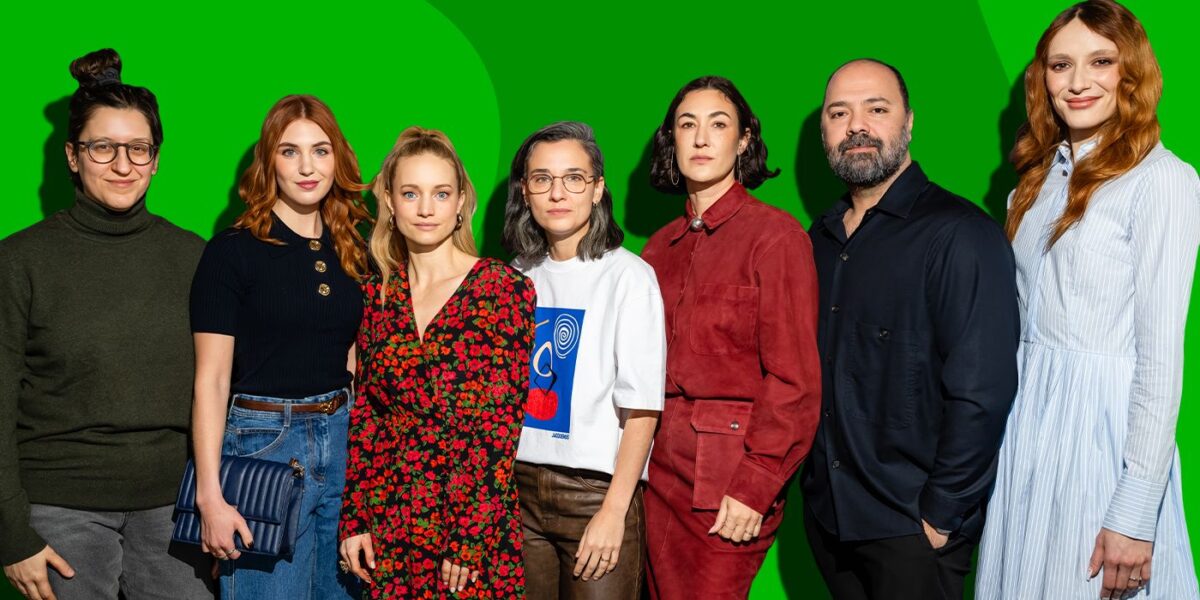
Collider’s Perri Nemiroff sits down with the cast and creatives of Two Women at the 2025 Sundance Film Festival.
Starring Laurence Leboeuf and Karine Gonthier-Hyndman, Two Women is about neighbors who find themselves searching for something more.
Writer Catherine Léger, director Chloé Robichaud, and stars Leboeuf, Gonthier-Hyndman, Sophie Nélisse, Juliette Gariépy, and Mani Soleymanlou discuss their on and off-screen relationships, crafting intimate scenes, and finding their characters.
In playwright Catherine Léger’s feature adaptation of Two Women, Violette (Laurence Leboeuf) and Florence (Karine Gonthier-Hyndman) are two neighbors who begin to question their seemingly happy lives while they’re both on leave from work. The movie, which explores “sexuality and freedom” from the perspective of women, is crafted into a dramedy of misadventures that brings the original 1970s film, Two Women in Gold, into a contemporary world.
At this year’s Sundance Film Festival, Collider’s Perri Nemiroff caught up with the cast and creatives at our media studio at the Rendezvous Cinema Center in Park City to discuss. In addition to Léger (Babysitter) and co-stars Leboeuf (Transplant) and Gonthier-Hyndman (Falcon Lake), director Chloé Robichaud (Days of Happiness), Yellowjacket’s Sophie Nélisse, Juliette Gariépy (Red Rooms), and Mani Soleymanlou (Connexion en cours) share their experience on set, how the intimacy of the film built interpersonal relationships on and off-screen, depicting nudity and sex scenes through the eyes of women, and the importance of adapting this story now. With Yellowjackets Season 3 right around the corner, Nélisse also compares working on a hit series to filming independent movies and discusses Shauna’s “unpredictable” headspace in the upcoming episodes.
‘Two Women’ Gives the Female Perspective on “Sexuality and Freedom”
The movie is an adaptation of the 1970 French film Two Women in Gold.
Image by Photagonist
PERRI NEMIROFF: Huge congratulations on your movie. I’m so excited to dig into it! Clearly, I know what Two Women is, but because it’s a festival debut, our audience might not know yet. Catherine, can you give us a brief synopsis of your film?
CATHERINE LÉGER: It is the story of two women, two neighbors, who are, for different reasons, bored at home. One is on leave from work, and the other one is on maternity leave. They feel that they’ve been trying to do the right thing to be happy — yoga, taking care of themselves, all these things — and then, in the end, they’re not sure it’s working. They’re waiting for the payoff, which is not quite coming, and they decide to rebel a bit by just starting to have fun and flirting with the delivery guys.
Digging into crafting the story now, this movie is based on a play you wrote, which is based on a 1970 movie. Can you tell me something about that original movie and this film that stays the same, that will still appeal to a modern audience, but then also, can you tell us something you had to evolve for contemporary viewers?
LÉGER: Well, both movies are from the woman’s point of view on sexuality and freedom, so that’s the same from the ‘70s movie and today. I think it’s interesting to dig into what’s expected from women from the ‘70s and today, like, where does the pressure come from? Is it from us? Is it from society? So that’s what we dig into in this new version.
Looping you in now, Chloé, I was reading your director’s statement, and I know the two of you were very much in line with the story and the themes that you wanted to explore, but what was it about her script that made you say, “I see space in this idea that I could bring my own unique voice as a storyteller to?”
CHLOÉ ROBICHAUD: You know, what’s funny is I’ve known Catherine for a while. She’s an amazing playwright, and I’ve seen her plays, and I was always asking, “If you have something for me, please call.” One day, she called, and she said, “I’m adapting Two Women. Would you do it?” And I just said yes. I didn’t even read the script. Then I was like, “Oh, but what if it’s not good?” But I read the script and the tone of it was just so unique. She has a unique voice. The dialogue is just so precise, the humor is so strong, and so I felt I could contribute because I always like complex women, and these are just beautiful, complex women. So this is the kind of story I like to tell. I think it was a great fit.
The Intimacy of ‘Two Women’ Built Strong Friendships
“There’s always going to be a net where someone’s going to catch you.”
Image via Sundance Institute
Karine and Laurence, this movie basically hinges on your chemistry with each other, so what is the first thing you saw in the other that made you think, “Yes, you are the Florence to my Violette,” and vice versa?
KARINE GONTHIER-HYNDMAN: Well, to be quite honest, I would say, first of all, physically, we’re so different. I know it looks a little superficial, but it’s not. Physically, there was something very interesting, I think, in the fact that she’s small, I’m tall, she’s blonde, I’m brown. Correct me if I’m wrong, but I do think that in the movie, the character of Florence is kind of the engine. She is like the one pulling, trying to get out of her boredom, and her character kind of leans on me, Florence’s character, and decides to bloom in the same way that Florence did, I think.
LAURENCE LEBOEUF: Totally. I see our differences are also what brings us together in a way. And I thought for sure Karine’s humor is such a fine comic and such an intelligent one, so I thought that she was beautiful to watch when we were shooting. I think my character was a bit more into her nostalgia and in her solitude and in her own world, and then she meets her and blooms because of her and because of them together. They’re just so different, but that makes them shine.
So, great chemistry on screen, but then I also feel like chemistry behind the scenes is really important. Chloé, in our press notes you said, “It’s funny to make new best friends at 36,” and then you went on to say, “I think it comes from the fact that we had to be very vulnerable with each other during the making of this film.” For each of you, do you remember the first time that you looked at each other and thought to yourself, “We’re not just good creative collaborators on this film, but I also just met a best friend?”
ROBICHAUD: I don’t think they know that I’ve said that. [Laughs]
GONTHIER-HYNDMAN: I didn’t even know you considered us as friends!
ROBICHAUD: I don’t know when that happened, but I think I would say very early in the process.
LEBOEUF: The first dinner we had.
ROBICHAUD: Yeah, we went to dinner before filming, and it was just complete chemistry all the way, and we wanted to tell the story the same way. I think we were just driven by the same fire.
Image by Photagonist
GONTHIER-HYNDMAN: Very quickly, we were into, like, “How are we going to make this?” Very quickly, we were into the art, I would say, like constructing the movie, the characters, how she was going to shoot, how she was going to shoot the sex scenes, the nudity, everything. Those were very important things to us, and so I think that got us closer quickly. But then the drinks and the food, and everything that comes with it. [Laughs]
LEBOEUF: The time we spent on set, you know? The time that you shoot, you feel so comfortable to exchange with a lot of people like all of us that were so open. They’re collaborators, and you feel free to propose things and to take a chance on what you’re proposing. There’s always going to be a net where someone’s going to catch you, and I felt that with both of them and with everybody, really. That makes you feel free.
ROBICHAUD: And the film is filmed inside apartments a lot — inside bedrooms, small rooms — and since there are sex scenes, it’s a limited crew. It needs to be a closed set. So I think it also brought us together to always be in those little rooms. I’m also thinking about Juliette [Gariépy]; it was always in hotel rooms, and we were all just talking all together in a way, and it brought us closer, I think.
‘Two Women’ Takes a Unique Approach to Depicting Female Desire
“To see women feeling completely free and in possession of her body and connected to her body, that’s pretty damn sexy to me.”
Image by Photagonist
I’ll stick with the three of you for a moment longer to follow up on something else mentioned in our press notes. Chloé, you said that the three of you and your cinematographer, Sara [Mishara], had fascinating conversations about the representation of female desire. Can you walk us through some of those conversations and what you discovered about depicting it that other movies aren’t doing but maybe should consider?
ROBICHAUD: Well, it’s a film about women that look at men, and sometimes in film, when that happens, we still look at women’s bodies. So it’s like, “Okay, no, we’re in the point of view of the filmmaker looking at the women,” and that’s not what I wanted to do. I wanted to be in their point of view, of their object of desire. So we’re kind of looking at the man, actually, and a woman, too, but we’re looking at them, and we’re really into their point of view. Also, I wanted to play with the nudity because I know people expect nudity in the film. I knew that because of the previous film, and I was like, “Okay, you want to see nudity? Sure. We’ll have a close-up on breasts, but it’s going to be like when she’s pumping milk,” you know? So, can we play with that? And in the sex scenes, it’s mostly the sensation that I wanted to bring closer. That’s what they’re lacking in their lives — connection. Not sex… Yeah, sex, but connection. Another human being. So, those sex scenes are really taut in that way, how they connect.
GONTHIER-HYNDMAN: Quickly, we thought about the nudity thing. We thought it was really interesting to have nudity outside of the sex scenes. I actually think that there’s something even sexier in that, to see women kind of free, living in their houses, walking naked. For me, sensuality really comes from those scenes more than the actual sex scenes. To see women feeling completely free and in possession of her body and connected to her body, that’s pretty damn sexy to me. So we had that conversation about it, too. And also all the details, like, are they shaved or not? And if yes, why? And if not, why? What should it look like? We really went into the details, and that was that was a lot of fun.
Indie Filmmaking Offers Sophie Nélisse Something ‘Yellowjackets’ Does Not
“I love the intimacy.”
Image by Photagonist
Sophie, you obviously know I’m a massive Yellowjackets fan, but one of my favorite things that you have been doing recently is you are on this super popular show, but then I get the opportunity to see you on the film festival circuit. Can you tell me what it was about Irena’s Vow and now this that made you think, “This would really complement my work on Yellowjackets and help me continue to grow as an artist while working on that series?”
NÉLISSE: Indie movies are so core to me. It’s how I grew up, and it’s how I started, and it’s what made my career possible abroad. There’s just something very intimate about smaller film crews, and there’s this sense that because it’s a limited budget, people are really there for the right reasons and are very committed to the art space of it. People are just so committed, and I love the intimacy. Especially shooting back home in Montreal, it’s people that I’ve seen before, that I’ve worked with before, and there’s a sense of familiarity. It just feels very familiar, and it feels like home.
There’s also just less pressure, and so sometimes, for me, it’s fun because I get to explore a bit more and to take more risks and to not feel so intimidated by doing so. So this was the perfect opportunity. I’ve never really been able to explore comedy. This is a comedy, but it has a darker side to it, and it’s emotional and it’s touching, as well, and it has a lot of different facets to this movie. It was fun for me to play a character that’s a little more on the caricature side and to explore that comedic sense that I’ve never really been able to play before.
Given what you go through on that show, I like having that release for you.
NÉLISSE: It’s definitely fun to be a little lighter!
Related
‘Yellowjackets’ Standout Sophie Nélisse’s New Film Further Confirms She’s a Movie Star
Nélisse is the beating heart of ‘Irena’s Vow,’ the true story of a woman who risks her life to shelter a dozen Jewish men and women.
Juliette, I’ll come your way next. Your character has limited screen time, but her perception of the situation is very impactful. Did you have an “aha” moment when prepping to play the character? Something you thought of that could speak to why she understands and feels so invested in his situation with his wife?
JULIETTE GARIÉPY: Oh my god, yes! Actually, when I first read my scenes for the casting, oh my god, I was fascinated. At first, I thought, “Oh, she’s kind of like me!” It reminded me of my girlfriends and the conversations we have, and how we stalk, and how we witness some very intimate things online nowadays. Of course, with Me Too, I feel like everyone has the freedom to speak up more. But my character, I think it’s fascinating how she’s using her “boyfriend” as a tool, as a complete object, and there’s no question about it. I think that’s really funny because we all do it! We all do it, and saying it out loud like this, it’s funny, it’s beautiful.
When I prepped for my audition, it was this scene where I tell him, “I don’t want to go out with you because I don’t think you’re that hot. I just think you’re pretty ugly, and that’s exactly why I want you.” And it makes sense. There’s also this scene where we share about how this world is so clean, and everyone wants to look good, but deep down, we want to disrupt. We want dirt! I feel like that, and so I thought, how fun to play something that’s close to me, but that’s also, I don’t know, dangerous. She could ruin everything when she’s at the hospital with them. She could just spit it out, like, “Oh, we’re having an affair.” She has no boundaries. I love this freedom, and it was truly such a blessing to have this crazy character.
Image by Photagonist
Mani, I’m just going to highlight the obvious – you’re sitting at this table in the middle of a bunch of wonderful female artists, which is just the coolest thing ever. What does it mean to you to be a part of a project that focuses on female desire? What does it mean to you to support them, and also, what did they give back to you?
MANI SOLEYMANOU: It was great. They’re all artists that I respect, that I admire, that are friends from a long time ago, so it was great for me to be a part of the story. It’s also great to make sure that we’re relatable, that the men in this film are relatable, that they’re not cliche. We try to make the script that’s brilliantly written relatable. So, it’s great to try to support it as much as possible, and to try to also make sure that when men see their equivalent on screen, they can relate. So it was a lot of listening, a lot of respect, a lot of time for what it meant for them to go where they went physically, in regards to nudity, and also respect of where we’re at. So it was a lot of listening and a lot of respect, and mostly just based on the craft, based on the script, based on Chloé’s vision, and always making sure everyone is happy and comfortable. We make sure that what’s on the paper is what we’re trying to get the closest to.
Image by Photagonist
Before we have to wind down, Chloé, I really wanted to ask you about the choice to shoot on 35mm. You said it’s a choice that comes with a high cost in today’s production landscape, but that you approached the budget creatively to make it work. Having done that, what would you recommend to another filmmaker who wants to shoot on 35 but is worried that their budget won’t be able to handle it?
ROBICHAUD: You need to make sure that 35 is the right medium for the film. For this one, I was just sure it was. I could feel it in my gut, you know? It was like, “I need to do it. I need to do it.” But you need to make sacrifices because it comes with a cost. Well, it does for us in Quebec. It’s depending, also, where it comes from and the labs and stuff. So, yeah, our producers were open, so I could look at the budget and see, “Okay, well, maybe we can go with less money on that. I think we can do it.” They were open so that I could have a conversation with them about that to make that happen.
Sophie Nélisse Says ‘Yellowjacket’s Shauna Is “Kind of Unstoppable” in Season 3
“She’ll be very unhinged and very scary, very unpredictable.”
Image via Paramount
Sophie, I have to ask you about Yellowjackets. I know we’re going to get to talk about it a lot in the coming weeks, but our viewership and readership want it now. What can you tease about Shauna’s headspace in Season 3? How does it differ from what she was like in Seasons 1 and 2?
NÉLISSE: It’s been really fun. She’s had such a beautiful arc every season. I think Season 2 really showcased all of the grief, and she’s undergone so much loss, and I think she’s kind of isolated herself from the group. So now, we find her in Season 3 at a place in her life where she’s got nothing else to lose. She is in so much pain, but she can’t handle it herself, so I think she needs to let go of that anger on other people. So I think she’ll be very unhinged and very scary, very unpredictable, and like I said, nothing to lose. So, she’s kind of unstoppable this season.
Special thanks to our 2025 partners at Sundance including presenting partner Rendezvous Capital and supporting partners Sommsation, The Wine Company, Hendrick’s Gin, neaū water, and Roxstar Entertainment.
Two Women
Release Date
January 25, 2025
Runtime
100 minutes
Director
Chloé Robichaud
Writers
Catherine Léger
Producers
Martin Paul-Hus
Laurence Leboeuf
Violette
Karine Gonthier-Hyndman
Florence
Publisher: Source link



One of CBS’ Longest-Running & Highest Rated TV Shows Is Coming To End After 30 Years
Along with countless scripted dramas, comedies, and action shows, CBS is well known for its impressive run of unscripted programs over the last 50 years. More recent years have included major competition shows like Survivor and The Amazing Race, along…
Sep 17, 2026
Prime Video Officially Launches New Deal That Changes the Streaming Game Forever
It seems like streamers raise their prices every day. At the end of August, Apple TV raised the subscription service price by $2, bringing it to $14.99 a month. Netflix, Disney+, HBO Max, Paramount+, and Peacock have all raised prices…
Sep 16, 2026
Netflix’s 10/10 Thriller Series Returns After 3 Year Absence With Explosive New Trailer
Over the last five years, Netflix has expanded heavily into non-English content, with international series taking an even bigger focus for the streaming giant. One of the biggest driving forces in that effort is the French thriller series Lupin, led…
Sep 15, 2026
Original ‘Yellowstone’ Dutton Favorite Officially Confirms ‘Marshals’ Return Interest
Yellowstone jump-started a generation-spanning story that has so far spawned four spin-offs that are all interconnected by the Dutton bloodline. While creator Taylor Sheridan has since branched outside that saga with Tulsa King, Landman, Mayor of Kingstown, The Madison, and…
Sep 14, 2026