Rachel Sennott Can’t Get Enough of ‘Bunnylovr’ and First-Time Director Katarina Zhu
Feb 2, 2025
Summary
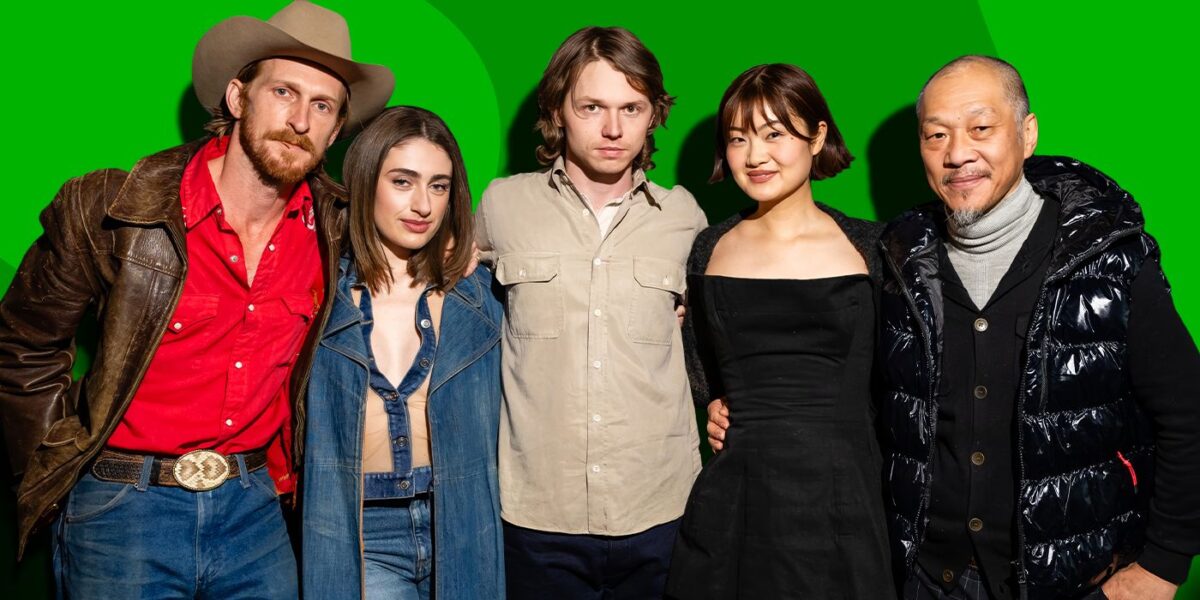
Collider’s Perri Nemiroff talks with the cast and crew behind Bunnylovr at the 2025 Sundance Film Festival.
Bunnylovr explores the world of cam girls, including toxic relationships, emotional well-being, and cultural taboos.
In this interview, writer-director Katarina Zhu, actress and producer Rachel Sennott, and co-stars Austin Amelio, Perry Yung, and Jack Kilmer discuss Zhu as a first-time director, Sennott’s role as a producer, and working with the eponymous bunny.
Relationships are tested in Katarina Zhu’s directorial debut Bunnylovr. The Asian-American experience is vast and constantly evolving with the times. From the ‘90s staple The Joy Luck Club to the more recent, Internet-age Dìdi, these films not only break stereotypes associated with the community but also continuously redefine what it means to navigate separate cultures in a foreign land. However, with advancing technology, the unifying power of social media, and a renewed focus on reclaiming cultural roots, today’s generation of Asian Americans differs greatly from those who arrived in the past. The former are often at the forefront of culture and trends, while the latter arrived with little prior knowledge of what America would be like.
In Bunnylovr, Chinese-American cam girl Rebecca (Zhu) is fleeting in both the virtual landscape and real life. Her yearning for connection eventually lands her in a toxic relationship with one of her clients, putting her safety and emotional well-being on the line for what she perceives as human intimacy. Outside of the computer, Rebecca encounters her estranged father, William (Perry Yung), in an unexpected reunion, only to discover that he is dying and doesn’t have much time left. A delicate look into the world of Rebecca’s risky profession—considering sex still remains a taboo topic in the Asian context—Bunnylovr seeks to bring out the humanity in what others may deem provocative. Most important of all, it is an exploration of what today’s world regards as genuine authenticity in relationships.
At the Collider media studio at the Rendezvous Cinema Center, Perri Nemiroff had the opportunity to chat with director Zhu, producer Rachel Sennott, and fellow cast members Austin Amelio, Yung, and Jack Kilmer at the 2025 Sundance Film Festival, sharing Zhu and Sennott’s first encounter at NYU’s Tisch School of the Arts, how the project resonates on a personal level, and what’s it like working with an adorable bunny.
Katarina Zhu Was a Force on the Set of ‘Bunnylovr’
Zhu wrote, directed, and starred in her feature debut.
Image by Photagonist
Related
‘Bunnylovr’ Review: This Intimate Feature Debut Heralds a New Up-and-Coming Visionary | Sundance 2025
Katarina Zhu writes, directs, and stars in this Sundance standout.
PERRI NEMIROFF: I have the wonderful opportunity to welcome and congratulate the team behind Bunnylovr. So good across the board. [To Katarina.] Feature debut! How?
KATARINA ZHU: Thanks to these wonderful, incredibly talented, generous actors, and my amazing crew, my producers. This would not have been possible if I had not had such an amazing support system behind me. That’s just the truth.
I’m a big believer in that, but also recognize all the talent that exists in you because it’s very much visible on the screen. Clearly, I know what Bunnylovr is, but when celebrating a film festival debut, our audience is likely first learning about the film now. Would you mind giving a brief synopsis of your movie?
ZHU: The film is about a young Chinese American cam girl. She is going through a very painful breakup, and this leads her into a toxic relationship with one of her cam clients. At the same time, she’s reunited with her estranged, dying father. So she’s sort of just navigating all of these different relationships with the men in her life, and also with her best friend, which Rachel plays, and just trying to figure it out as a young woman in her mid-20s living in New York City.
Again, feature debut here. I want to make sure our audience gets a chance to get to know you a little bit. I was reading about how you studied acting at Tisch. Can you tell me what inspired you to study acting and at what point you realized, “In addition to acting, I have what it takes to also write and direct, and have to pursue that?”
ZHU: Oh gosh, I feel like I still don’t know if I have what it takes to write and direct. But I loved movies growing up. You watch a movie, and you want to be involved in them. The thing that you see are the actors; I didn’t even realize that screenwriting was a job. I think if I had, I probably would have gone that route because I love routine, I’m a creature of habit, I really like to be alone, and I feel like screenwriting is really conducive to that.
Anyway, I went to acting school, which is where I met Rachel. I was auditioning professionally in my sophomore year of college, and I was going out for a lot of stuff that I really was not resonating with. I wanted to be playing roles that were true to the Chinese American experience—that’s my experience. I also wasn’t booking anything, so even if I wanted to be in these things… I had a bunch of friends in the film program, and they were like, “Well, why don’t you just write something and direct it, and we can help you make it? We can shoot it. I can teach you to edit it.” That’s how I transitioned more to the writing and directing. Now, I love doing each in equal measure, and I wanna keep doing each in equal measure moving forward.
Katarina Zhu and Rachel Sennott Go Way Back
“All you have are your friends.”
Image by Photagonist
I had a feeling you two met at NYU. Can you each recall the first thing you saw in the other that made you say to yourself, “That right there could be a good collaborator for me one day?”
ZHU: My first memory of Rachel, which I’ve told her, like, 20 times, is we were at a Q&A for an Abrams [Artists Agency]. An Abrams agent came to NYU and was doing a Q&A about internships. I remember he gave a spiel,and then he was like, “Alright, any questions?” And Rachel shot up. She was the first person. She was like, “How do you…” I think it was a question about how you could get an internship at Abrams, but I was like, “Wow, that girl is like so…” I would have been petrified to ask a question. I was like, “That’s so brave.” She had such a clear ambition, determination, and passion.
RACHEL SENNOTT: We were in Stella Adler [Studio of Acting] together, and I said this earlier today, but basically, we did this exercise really early on in acting school where each actor would sit in the center of the room, and everyone would say words that came to mind when they looked at them. Katarina’s energy, I was like, “Oh my god, she’s so cool. She’s so beautiful and smart.” I literally was, like, loser vibes. We were going around giving words, and I was like, “Queen, a princess, an angel!” I thought she was so cool.
All the love to our acting school, but some people were weird. I was like, “Who’s gonna be my friend?” Then I asked Katarina to go on a run with me because I would run on the East Side Highway, and we started doing these runs together. There’s this thing, I think, with a lot of people in the arts, where people are afraid to say that they want something or are afraid to try, and I felt like I could always share with Katarina, like, “This is my dream. I wanna try and do this.” Katarina’s so smart, caring, and nonjudgmental. We connected immediately, and then we lived together. Katarina taught me so much about being a woman, honestly. We went through so many things together! She introduced me to Angel Olsen, thank god. We’ve always sent each other our art. So, anytime I wrote a script, I would send it to Katarina. Any time I wrote a tweet, I would be like, “Is this funny?”
ZHU: On the runs, she would be trying out her tweets.
SENNOTT: I would be running out of my stand-up jokes. Katarina would come to all my shows. When Katarina sent me Bunnylovr, I had seen her shorts before. I’d read other scripts, but I was like, “This is amazing. I would love to be a part of this in any way.” I feel so lucky to be a part of it and to be a small role in it, too.
I feel like every single time we talk, I learn about another extension of your filmmaking family. You surround yourself with the best people. It makes me so happy.
SENNOTT: I literally would be dead without my girlfriends. I’m not kidding you because all you have are your friends.
ZHU: Yeah, but I also think one of Rachel’s talents is her ability to uplift and support the people around her. She’s not a gatekeeper. She’s so generous and so willing to support in any way she can.
Katarina Zhu Ran Her Set Like a “Zen Monk”
“Directors set the tone, and it was very mellow.”
Image by Photagonist
Clearly, I love Bunnylovr. There is no doubt in my mind that, if this is what you want to do, you’re going to go on to direct many more features and also star in them. For the rest of you, can you each tell me something you saw Katarin do on set as a director and as a leader that you appreciated, and you’re now excited for even more actors to get to experience on her future films?
AUSTIN AMELIO: She really had quite a lot to do. She was acting, she was directing, she was dealing with the bunny, and she was like a zen monk the whole time. There were times when I was like, “Man, I would get really frustrated if I was in her position, having to deal with the bunny and redoing a take.” There was just a lot going on, and she was just cool as a cucumber the whole time. It was empowering because you’re like, “Oh yeah, we’re gonna get it. We’re gonna do our thing.” Directors set the tone, and it was very mellow. There was a ton of shit going on, and she handled it very well.
One of the best qualities to have on a movie set, seriously.
AMELIO: The best.
Image by Photagonist
JACK KILMER: I came on the last day of their shoot, and normally, as you know, movies are pretty hard to make, and everybody’s exhausted, and they just wanna sleep for a month after they make a movie or go home to their families. This crew was sad that they couldn’t come back in the next day, and I’ve never experienced that before. So, they were doing something right, you know? The vibe was very cool, and it did feel special.
PERRY YUNG: Everything they said, 100%. Katarina set the vibe. Once I stepped on the set, there was a vibe of control, of trust, of generosity. Then I saw her switch all these hats, from director to costuming choices, and things like that. She was skillfully directing me in scenes that I thought were really generous. Suddenly, it was her scene, and she was like, “Oh, can we just move the things we don’t need in front of me so I can do my scene?” It was amazing to see all the switches that she had to go through to do what she did, and she was a woman. So, it was amazing.
AMELIO: It was also really important, some of the best directors I’ve worked with who have been doing it for a really long time tend to give control over to the set and to the actors, and to the people involved. She wasn’t white-knuckling anything. She’s letting you have your scene and letting you do what you want, which is hard to do because you want to have control over what the actor is doing. She’s very generous in that way.
I wrote something down that one of your producers, Tristan [Scott-Behrends], said in an interview. He was emphasizing a quality of you as a leader on the set that he really appreciated, and it was “not being afraid to ask questions and ask for help,” which is so important on any film, but I feel like, in particular, that could be a very scary thing for a first-time feature filmmaker. But, ultimately, if you have the courage to do it, it makes the end product better. Can you give us an example of a time when you had to ask a question, and the movie was better off for it?
ZHU: I mean, every single day. There were just too many. A huge part of the job of a director is surrounding yourself with people who are experts at what they do and know more than you know, surrounding yourself with incredible, talented people. I’m so lucky with the crew that I had because they were all so professional, generous, and talented. I think specifically, actually, through the post-production process, there were a lot of blind spots that I had. Even when it comes to sales and distribution, I have no idea what any of this means and what you’re supposed to want. Also, even with pre-production, the points on the backend system, l had to get a crash course on all that stuff. I feel like I was constantly asking. I’m very nosy in that way.
We Need More From Rachel Sennott, the Producer
“My dream is to be able to keep producing and basically make movies that I couldn’t make, but I would wanna see.”
Image via Sundance Institute
Another follow-up I had was for you, Rachel. [Katarina], you emphasize that she lifts people up, and I see you doing that more and more lately as a producer. Before, it was as an executive producer, and this marks your first producing credit. You’re hitting a point in your career when your voice has great weight as a producer, and you can help something get made that might not otherwise. What does it mean to you to have that power, and what are some goals you have for yourself in terms of how you’re going to wield it?
SENNOTT: That means a lot for you to say that. I’m so lucky to be sent to script from a friend that I love so much. My dream is to be able to keep producing and basically make movies that I couldn’t make, but I would wanna see. This movie is so specific to Katarina’s point of view. Her style as a director is so unique and special. That’s a dream to keep doing that. I remember seeing the first cut, and texting. The opening, I really was like, “Ahh!” and texting her. I love movies, so to be able to be a part of that is really special.
‘Bunnylovr’ Explores the Bittersweet Nuances of Father-Daughter Relationships
“It’s a really deep and difficult story to tell.”
Image by Photagonist
Katarina, you emphasizing how personal this movie was to you is making me want to jump to you, Perry. I know not everything in this film is rooted in Katarina’s truth, but I know one particular thing that is is her connection with her father. Perry, what was it like working with a writer-director who has such a strong personal connection with the character you’re playing and a willingness to share him with you?
PERRY YUNG: That’s a very special position to be in, and it was a gift for me. When Katarina offered it, I went, “That’s a really unique role to play.” It’s like you’re given a job, but that job is personal. It’s a very personal story for somebody, and you don’t want to mess that up. It’s such a delicate story, and it’s such a story that’s important that people need to hear about family trauma. The movie’s about love and all these different facets, but our particular story, father and daughter love, is problematic, right? But here’s an opportunity to repair this fractured situation, and both parties can move on if we learn to be kind and forgive each other. It’s a really deep and difficult story to tell. It’s difficult to tell that story. We think we can just say the words that have intention, but it has to have a really deep resonance in how we understand the material. So, I looked at my children and what I wanted to impart with them—in real life, I have children—and I took what Katarina’s real-life experience was and imagined, if I were her father in real life, what would I do? I shed some tears when I read the script, and that’s not often.
It’s a very powerful aspect of this story.
Addressing the Bunny in the Room
“You really, really have to relinquish all control.”
Image via Cece Chan
I got the wrap signal and I can’t end this conversation without asking about the bunny. I’m an animal lover, so I am just immediately drawn to any film that includes some sort of animal, ultimately, an animal that I leave the film saying, “I want one.” I shouldn’t have one, I travel too much, but the bunny is adorable. How did you settle on a bunny specifically as the animal, what was it like finding your bunny actor, and what challenges did you have, as some already alluded to, working with it?
ZHU: I don’t know when my love for bunnies started. They’re so innocent and so kind of helpless. I think in a similar way that Rebecca starts off sort of helpless in this way. It was pretty easy to find the bunny because there’s only one animal agency in New York that offers this specific breed of bunny. But the challenges, we were talking about how when you’re working with animals or working with kids, you really, really have to relinquish all control because they do what they want to do. Even if an animal is trained, if on the day they don’t want to do something, they’re not gonna do it. There was a very steep learning curve to working with the bunny. By the end, I wanted to get a bunny.
SENNOTT: They were deeply connected.
ZHU: We were deeply connected.
SENNOTT: Katarina was, like, locked in with the bunny.
ZHU: We had to look at each other, and I had to keep petting the bunny to keep it calm. I would hold the bunny to my chest to sort of calm it, and the sound person said, “It’s so interesting hearing the heartbeat of the bunny when you hold it close to your body. It starts to slow down. I’m hearing it slow down,” and that was really cool. But the first day that we worked with the bunny, it peed on the laptop that we’re using, and it short-circuited it. So, it was not without its challenges, but it was worth it.
But bunnies, and all animals, are adorable, so nothing they do is wrong!
ZHU: Exactly, exactly.
Special thanks to our 2025 partners at Sundance including presenting partner Rendezvous Capital and supporting partners Sommsation, The Wine Company, Hendrick’s Gin, neaū water, and Roxstar Entertainment.
Bunnylovr
Release Date
January 25, 2025
Runtime
86 Minutes
Director
Katarina Zhu
Writers
Katarina Zhu
Producers
James Graham, Molly Conners, Rachel Sennott, Tristan Scott-Behrends, Rhianon Jones
Publisher: Source link




One of CBS’ Longest-Running & Highest Rated TV Shows Is Coming To End After 30 Years
Along with countless scripted dramas, comedies, and action shows, CBS is well known for its impressive run of unscripted programs over the last 50 years. More recent years have included major competition shows like Survivor and The Amazing Race, along…
Sep 17, 2026

Prime Video Officially Launches New Deal That Changes the Streaming Game Forever
It seems like streamers raise their prices every day. At the end of August, Apple TV raised the subscription service price by $2, bringing it to $14.99 a month. Netflix, Disney+, HBO Max, Paramount+, and Peacock have all raised prices…
Sep 16, 2026
Netflix’s 10/10 Thriller Series Returns After 3 Year Absence With Explosive New Trailer
Over the last five years, Netflix has expanded heavily into non-English content, with international series taking an even bigger focus for the streaming giant. One of the biggest driving forces in that effort is the French thriller series Lupin, led…
Sep 15, 2026
Original ‘Yellowstone’ Dutton Favorite Officially Confirms ‘Marshals’ Return Interest
Yellowstone jump-started a generation-spanning story that has so far spawned four spin-offs that are all interconnected by the Dutton bloodline. While creator Taylor Sheridan has since branched outside that saga with Tulsa King, Landman, Mayor of Kingstown, The Madison, and…
Sep 14, 2026