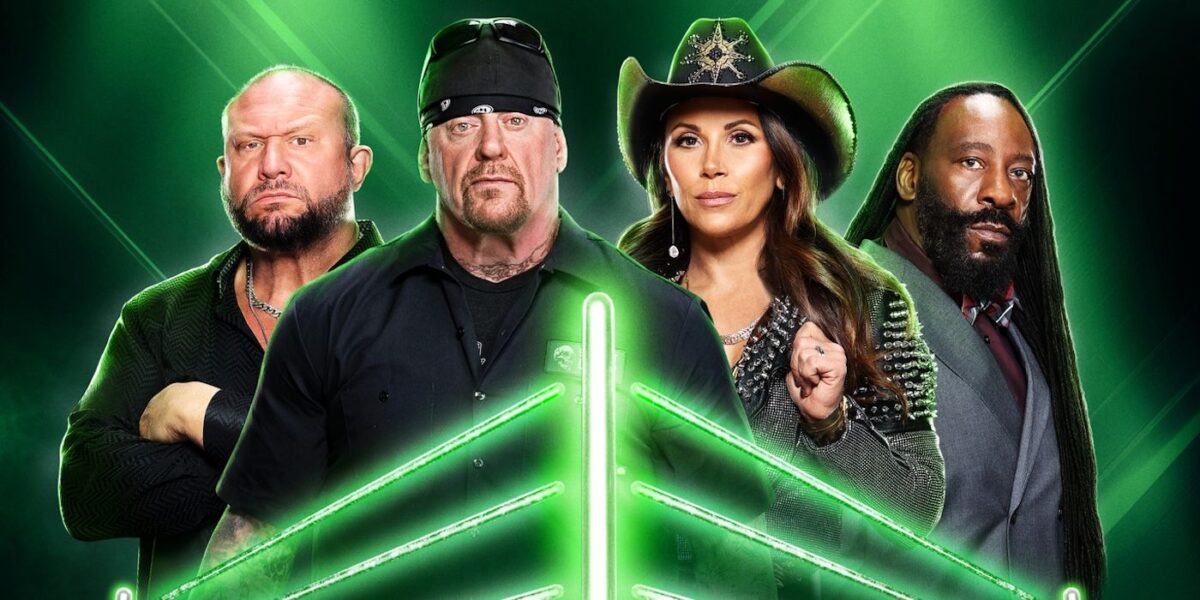
The Undertaker on WWE’s New Superstars and His ‘LFG’ Experience
Feb 14, 2025
When you think of WWE Superstars, few people will go much further than thinking of The Undertaker. For over three decades, the Deadman was the icon of WWE, a certified Mount Rushmore member as he terrified and captivated the WWE universe with towering presence, eyes rolled to the back of his head, and sheer aura. Whether it was his legendary WrestleMania streak, his rivalries with icons like Mankind, Kane, Shawn Michaels, and Triple H, or his ability to reinvent himself across generations, The Undertaker became more than just a wrestler, he became an institution in the world of pro wrestling.
Even in retirement, his presence still looms large over the industry. Now, he’s stepping into a new role as a mentor on WWE LFG (Legends and Future Greats), a reality series from A&E that puts 16 hopefuls through the most grueling trials of their careers in pursuit of a WWE contract. Ahead of the show’s premiere, Collider had the chance to sit down with The Undertaker to discuss the biggest mistakes young wrestlers make, the evolution of in-ring psychology, and why Gunther is his current favorite in the business. And yes, we even asked if he would have made the cut on LFG.
The Undertaker Feels Too Many Rookies Copy Wrestlers Rather Than Training to Become One
COLLIDER: I love the concept of the show—it reminds me of Tough Enough back in the day, with young wrestlers trying to break into WWE. What do you think is the biggest mistake that young wrestlers make when they’re trying to make a name for themselves?
UNDERTAKER: Great, great question. And I talk about this quite a bit with my kids. I think the biggest mistake—and let me just kind of backtrack here a little bit. A lot of times now, we’re getting athletes that are coming from different sports, and not all of them were fans of wrestling. A lot of times, this is just something they think they might be good at, or they want to give it a shot. So I think the biggest mistake a lot of times is when these kids watch our programming, and then they try to go in the ring and act like wrestlers instead of being wrestlers. They try to emulate what they’re seeing, and it comes off disingenuous to the fans and to people who really know the business. It looks staged. You have to be able to dive into something inside of you and bring it out to set yourself apart. That’s probably the hardest thing for new wrestlers to grasp—not to act like a wrestler, but to actually be a wrestler.
You worked with legends and with rookies throughout your career. How different is this generation of wrestlers from when you started? What are the key differences, aside from athleticism?
UNDERTAKER: Yeah, I mean, the athleticism is off the charts. It’s crazy what these guys are physically able to do. And I think that’s a good thing… but sometimes, I think it’s a bad thing. I always go back to video games.
I think these guys grew up playing video games and doing all these crazy things, and now they’re trying to bring that into the ring. The things they do now? I couldn’t even imagine doing some of that stuff back in my day. But I think this era kind of relies too much on that athleticism. Not everyone, obviously—there are great storytellers out there too—but I think some guys fall back on big moves instead of focusing on the storytelling aspect of what we do. They’ll hit a double backflip off the top rope onto the floor and get a big reaction, but once your audience sees that a few times, it’s not as impressive anymore. That’s the challenge: they’re constantly pushing the envelope to get those reactions instead of learning to slow down and focus on the story they’re telling.
The Undertaker Thinks Ring Psychology Is The Key to Making It
That actually brings up a good point, because in LFG, you have a lot of really good athletes. They can pull off these big moves, but there’s a law of diminishing returns. Do you think the biggest thing they need to learn is how to master psychology over just physicality?
UNDERTAKER: Yeah, that’s exactly it. These guys are going over their matches, and it’s like, “Okay, I’m going to do this, then this, then this,” and then once you add the nerves and pressure of being on the show, they go from zero to fifth gear in an instant. It becomes a track meet instead of a wrestling match.
Nothing means anything. You might get a couple of pops for athleticism, but they haven’t grasped the idea of letting things breathe. Why should I let this moment settle in? Why should I take a step back and let everyone absorb what just happened? If I’m a heel, why wouldn’t I just stick my thumb in my opponent’s eye instead of jumping off the top rope for a crazy move? They’re so athletic, and they want that instant reaction, but they don’t trust themselves enough yet to slow down and let the story develop.
The Undertaker Believes Gunther is the Best Wrestler in the Business
Image via WWE
I’ve watched wrestling for 25 or 26 years, and even when I was younger, I always thought the “less is more” approach made for the best matches. If I have friends who are new to wrestling, I tell them to watch Gunther because I think he’s the best in the business at doing the most with the least. What matches would you recommend to these rookies if they wanted to learn the art of storytelling?
UNDERTAKER: It’s not about the least amount of effort—it’s about not doing things that aren’t necessary. I don’t usually do this, but if you want a masterclass in psychology, in storytelling, in what wrestling is supposed to be, go watch WrestleMania 25—Shawn Michaels vs. The Undertaker. That match is the closest to perfect I’ve ever been. And despite the dive where I almost killed myself, that match still holds up. The psychology, the pacing, the storytelling—it’s all there. There are so many others. Eddie Guerrero was a master. He could work any style and tell a compelling story. And I’m glad you brought up Gunther because he’s my guy. Gunther could have worked 10 years ago, 20 years ago—hell, even 30 years ago—and he still would’ve been successful. He doesn’t waste movement. Everything he does means something. And you’re going to see that on LFG. He brings that same energy to the show, to the point where even the coaches are affected by it. That’s what makes him so special.
I’ll just wrap up with one last question. This is a fun one—if LFG had existed when you first started out, do you think the Undertaker would have made the cut?
UNDERTAKER: That’s interesting… No, I think so. I’ve always bet on myself. I’ve always been extremely confident in my abilities, even when people told me I wasn’t very good. I knew I would be good. But man, the things we’re asking these 16 rookies to do on LFG are insane. The pressure is unreal. When I had my first match, it was in front of 20 people at a Knights of Columbus Hall. These guys? They’re performing in front of me, Booker T, Bully Ray, Mickie James, and the entire world—with a WWE contract on the line. I’m telling you, the pressure is real. You feel it from week to week, and I can’t wait for people to see it.
WWE LFG premieres Sunday, February 16 at 8PM ET/PT on A&E.
Publisher: Source link



One of CBS’ Longest-Running & Highest Rated TV Shows Is Coming To End After 30 Years
Along with countless scripted dramas, comedies, and action shows, CBS is well known for its impressive run of unscripted programs over the last 50 years. More recent years have included major competition shows like Survivor and The Amazing Race, along…
Sep 17, 2026

Prime Video Officially Launches New Deal That Changes the Streaming Game Forever
It seems like streamers raise their prices every day. At the end of August, Apple TV raised the subscription service price by $2, bringing it to $14.99 a month. Netflix, Disney+, HBO Max, Paramount+, and Peacock have all raised prices…
Sep 16, 2026
Netflix’s 10/10 Thriller Series Returns After 3 Year Absence With Explosive New Trailer
Over the last five years, Netflix has expanded heavily into non-English content, with international series taking an even bigger focus for the streaming giant. One of the biggest driving forces in that effort is the French thriller series Lupin, led…
Sep 15, 2026
Original ‘Yellowstone’ Dutton Favorite Officially Confirms ‘Marshals’ Return Interest
Yellowstone jump-started a generation-spanning story that has so far spawned four spin-offs that are all interconnected by the Dutton bloodline. While creator Taylor Sheridan has since branched outside that saga with Tulsa King, Landman, Mayor of Kingstown, The Madison, and…
Sep 14, 2026