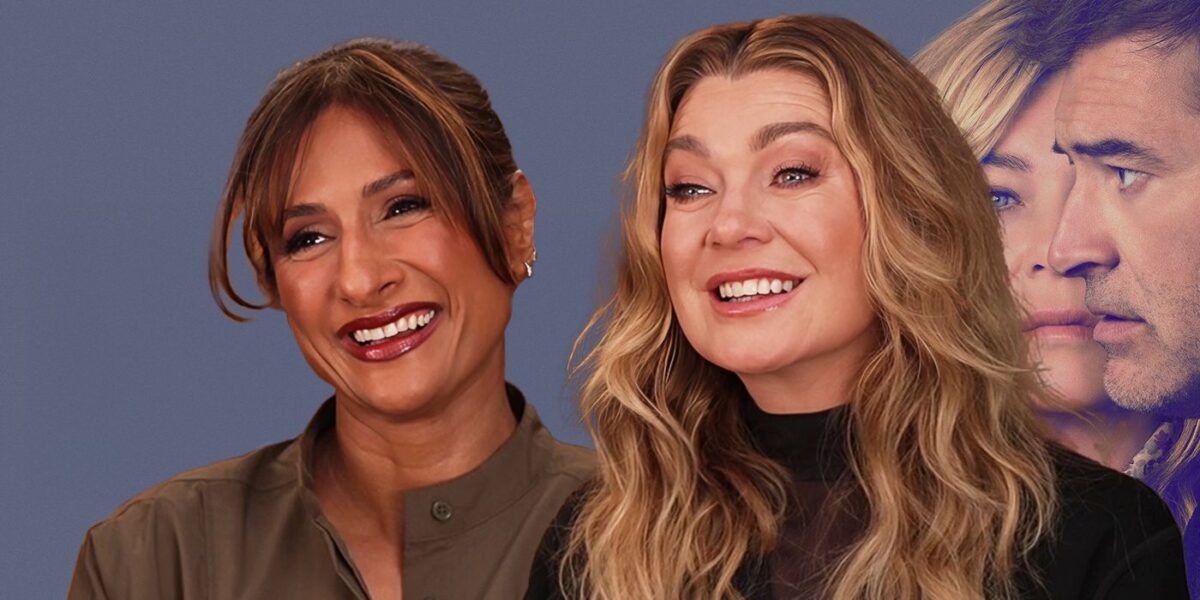
Ellen Pompeo Talks Moving From ‘Grey’s Anatomy’ to ‘Good American Family’
Mar 20, 2025
Summary
Ellen Pompeo reveals why Good American Family was the perfect follow-up to Grey’s Anatomy.
Pompeo and Sarayu Blue break down the complex dynamic between Kristine and Valika.
Blue discusses advocating for more intersectionality on television and shares how Good American Family was one of the “warmest sets” she’s ever been on.
Ellen Pompeo is an absolute TV legend, having played Meredith Grey on Grey’s Anatomy for over 20 years — a role which earned her a Screen Actors Guild Award, a Golden Globe nomination, and a prestigious place in television history. For the first time in two decades, Pompeo is switching gears by taking on the role of controversial matriarch Kristine Barnett in Good American Family, a fictionalized version of the Natalia Grace story.
If you haven’t seen the three-season true crime Max documentary, I highly recommend you do that, but the basics are the case are as follows: an Indiana couple by the names of Kristine and Michael Barnett (Mark Duplass) adopt a Ukrainian orphan with dwarfism named Natalia (Imogen Faith Reid). When she begins to have behavioral issues, however, the Barnetts suspect she might not be telling the truth about her age, leading to a dark standoff. Like Ryan Murphy’s Monsters: The Lyle and Erik Menendez Story, various perspectives and points of view about what actually happened are presented onscreen, and luckily, showrunners Katie Robbins and Sarah Sutherland handle the subject matter with care, never shying away from addressing the child abuse and cruelty that occurred.
Rounding out the cast is Christina Hendricks as Cynthia Mans, Dulé Hill as Brandon Drysdale, and Sarayu Blue as Kristine’s wealthy friend Valika. Blue is one of television’s best secret weapons, turning in excellent performances in everything from nuanced dramas like Expats to hilarious comedies like Medical Police. Good American Family is no different, with her expertly playing off of Pompeo and enabling Kristine’s controversial actions — until she doesn’t.
Collider got the chance to speak to Pompeo and Blue about the series. During the conversation, Pompeo reveals why Good American Family felt like the perfect follow-up to Grey’s Anatomy and reflects on Shonda Rhimes’ impact on her life; Blue discusses how she worked with the showrunners to highlight her character’s South Asian identity and how she views the complex dynamic between Kristine and Valika.
Ellen Pompeo Reveals Why She Followed ‘Grey’s Anatomy’ Up With ‘Good American Family’
Image via Hulu
COLLIDER: First of all, congratulations on this show. I know people obviously love you as Meredith Grey, but I think people are going to be really excited to see you in something totally different from that. Why did this project feel like the perfect thing to follow that up with? And how do you feel like your two decades on that show prepared you for this?
ELLEN POMPEO: I think that the character of Kristine is someone I could disappear into. [She’s] completely different in every way — different sounding, different looking. As an actor, that’s what you hope for, right? Someone who dresses different, looks different, sounds different, has different emotions. So that part was right there all on the page, and then we all came together and created this character. And then…sorry, what was the second part of your question, Taylor?
How being on a show for that long prepared you to step into another role.
POMPEO: Oh, girl! I was so excited! It prepares you because you’re like, “Please, let me do something else. I love Meredith, I love Grey’s Anatomy, I love all the fans, but please let me do something else. Let’s see if I still have it. Let’s see if I can.”
You absolutely do, let me reassure you.
POMPEO: [Laughing] Yes! Thank you!
Ellen Pompeo and Sarayu Blue Break Down Kristine and Val’s Complex Friendship on ‘Good American Family’
Image via Hulu
I have to say, something I really love about Val is she’s not just the stereotypical best friend role. There’s a lot of really interesting dynamics between the two of you simmering under the surface with fame and finances and things like that. I’m curious how you approached your dynamic.
SARAYU BLUE: That’s part of what was so fun about it. Valika comes from privilege — I keep calling her Valika, but yes, in the show, she’s Val. I had a fun, great conversation with the showrunner early on. I had a conversation with her, and I said, “I’m South Asian. Let’s make her South Asian. But let’s make her a South Asian, but she calls herself Val.” There’s already a story that tells. She’s Vallika, but she goes by Val to keep it easy to stay in that same American world.
That, in and of itself, tells a story about Val, and then we see that she’s a woman of privilege, and we see that she comes from money. And there’s this moment that you see Kristine doesn’t have money. And Kristine has really helped her navigate her relationship with her neurodivergent daughter, and now comes this intense friendship, which there’s this history, there’s this…foundation. That’s the word. There’s a foundation of, “I want to pay you back.” And then from that wanting to pay her back builds this blind devotion, and you really watch what that turns into. It’s a really interesting dynamic to watch over the years, and I love that we got to build that and watch it unravel.
POMPEO: And for Kristine, I think that Val represents everything she wants to be. She wants to have money, she wants to be polished and look so successful. And you know, she’s so glamorous. They represent, for each other, their best version of what they could be.
BLUE: Totally.
POMPEO: “If I could only be that. If I could only have that closet.” We had a lot of fun filming the scene where she’s letting her borrow clothes in the closet, and that was sort of the crux of it right there — she’s getting to wear her clothes, and she is everything she aspires to be.
BLUE: It’s, like, projection the whole time.
POMPEO: Yeah. Mhm. Yeah.
Ellen Pompeo Discusses How She Tackled “Tricky” Role in ‘Good American Family’
Image via Hulu
It’s so juicy, and there’s so many things in this. Another point I wanted to bring up is there’s so much intergenerational trauma here, which I find really fascinating. Obviously, we see Kristine and Michael falling into these dynamics that they saw in childhood and sort of perpetuating these things. I’m curious how that helps you understand your character because it feels like a very enlightening part of her.
POMPEO: It’s enlightening and tricky subject matter all at the same time because the truth is, in having three kids of my own, you really can mess your kids up. A few wrong moves, you can really mess them up. We have so much responsibility. Everything we say, everything we do — they watch everything, they absorb everything. I think that that’s an incredible message of this show: we bring our childhood trauma into our children’s lives, and so many people who hurt have been hurt. I think more empathy is always a good thing for human beings — less judgment, more empathy — because a lot of people who hurt have been hurt. That’s why it’s really important to try to keep our kids safe and unharmed.
I’m curious about that, too, because you do go home to kids at the end of the day, and I imagine playing some of these scenes probably does take a toll on you — even though it is, obviously, fictional. How did you make sure to keep that separate or take care of yourself through filming some of this stuff?
POMPEO: Yeah, it was pretty intense. And again, I think that I relied heavily on my actors — my co-actors. We really got along great, and we really were there for each other because all of us — regardless of whether we had super tricky scenes or not — we were very aware of the story that we’re telling, so we relied heavily on each other and supported each other and were there for each other and trying to find light moments when we could find light moments.
Right before we started filming, unfortunately, a good friend of mine passed away very suddenly, and I was so mad and sad and all of the things. I remember at the table read, I was just trying not to cry. He had just passed away, and it was a situation where I tried to get to him, and it just didn’t need to happen. There’s so much of, “Why did this happen?” It shouldn’t have happened. I’m a doctor, for Christ’s sake! [Laughs] So I was carrying a lot of emotion with me — very raw, fresh emotion — walking into the filming of this show. So that did help me.
Ellen Pompeo Reflects on Shonda Rhimes’ Leadership and Influence on Her Life
Image via Hulu
Final question for you: this show has a lot of female talent behind the scenes, which is really exciting — between the creators and the showrunners and the executive producers, which, obviously, Ellen, you take on that role as well. I’m curious, for both of you, what it’s like working on a set that is so female-forward. And what do you think the importance of that is? Because it is, unfortunately, still so rare nowadays.
BLUE: I mean, it’s great. [Laughs]
POMPEO: I will say, I’ve learned it because I have been witness to it in Shondaland. Shonda taught it to me. I don’t know that I would have known it without her. Shonda set the example. That’s my life — that’s our life on Grey’s — is inclusivity and a lot of women everywhere. I’ve always brought my children. My daughters have come to set and seen all the female directors and the female camera people and everything. So again, going back to what our kids experience or what we experience then we pass down to our kids, the same goes for our experiences in Hollywood. Whatever we are able to learn from other people — whatever good experiences we have and we learn from — we’re then able to bring those into other jobs and other sets, and we sort of mimic what we see. I’ve been really, really lucky to have incredible people — Shonda Rhimes, Debbie Allen — around me, and so I can’t really take credit. I’m just, I guess, a good student. But also listening to people and what’s important to people — communicating and listening to people. We had this great conversation — [to Sarayu] I hope it’s okay if I share.
BLUE: Mhm. I don’t know which one, so sure. [Laughs]
POMPEO: Well, about co-stars.
BLUE: Oh, yeah.
POMPEO: There is no show without all of the actors, so it’s always about lifting everybody up and seeing everybody as equal. Because sometimes, in the media or whatever, certain people get all the love and attention, and that doesn’t really serve anyone.
BLUE: Yeah, and to that point, that’s what I will say I really appreciate about Ellen. Also, I do think it’s paramount to me to be on sets where there are more women, and I want to talk about intersectionality as well. I think it’s really important — inclusion. We had disabled actors who were very well supported and cared for. I don’t want to speak for them. I hope that is true for them — that’s what I saw. But I will say that, all around, seeing more intersectionality is really important to me, and I do see it more and more, and I want to see it more.
It was one of the warmest sets I’ve ever been on, and I consistently told people that. I was like, “What the fuck? This is fucking great. Like, what?” I can be like, “Hey, can I just have a minute to myself?” They’d be like, “Take 15.” I’d be like, “What the fuck?” There was kindness, there was conversations, there was an ability for me to start the show and say, “Hey, I know I’m South Asian, but let’s make Valika South Asian.” And that was met with an, “Absolutely.” There was no pause. There’s no hesitation. There’s an, “Oh, of course — yeah. What feels right? How do we do that?” The more sets I’m on where that conversation is welcome is what I’m always looking for. I’m gonna have the conversation, whether it’s welcome or not.
POMPEO: As you should. As you should.
BLUE: But what I appreciate are the environments where it is welcome. And I can say, wholeheartedly, every single day on the set, I felt valued. I felt respected. I felt like I was treated as a full cast member — not like there was some sort of hierarchy. And as someone who’s been doing this for 20 years and has been treated quite horribly in certain instances, as we all have, it always makes my heart so full and brings some tears to my eyes because the gratitude I feel for those moments is immense, and I will always fight for more of those moments for everyone.
Well, on that note, what a great way to end.
POMPEO: Ladies and gentlemen, Sarayu Blue!
I’m so inspired being in the room with you two! That was such a wonderful conversation, and I’m so excited for everyone to get to see this show.
New episodes of Good American Family premiere every Wednesday on Hulu.
Watch on Hulu
Publisher: Source link



One of CBS’ Longest-Running & Highest Rated TV Shows Is Coming To End After 30 Years
Along with countless scripted dramas, comedies, and action shows, CBS is well known for its impressive run of unscripted programs over the last 50 years. More recent years have included major competition shows like Survivor and The Amazing Race, along…
Sep 17, 2026

Prime Video Officially Launches New Deal That Changes the Streaming Game Forever
It seems like streamers raise their prices every day. At the end of August, Apple TV raised the subscription service price by $2, bringing it to $14.99 a month. Netflix, Disney+, HBO Max, Paramount+, and Peacock have all raised prices…
Sep 16, 2026
Netflix’s 10/10 Thriller Series Returns After 3 Year Absence With Explosive New Trailer
Over the last five years, Netflix has expanded heavily into non-English content, with international series taking an even bigger focus for the streaming giant. One of the biggest driving forces in that effort is the French thriller series Lupin, led…
Sep 15, 2026
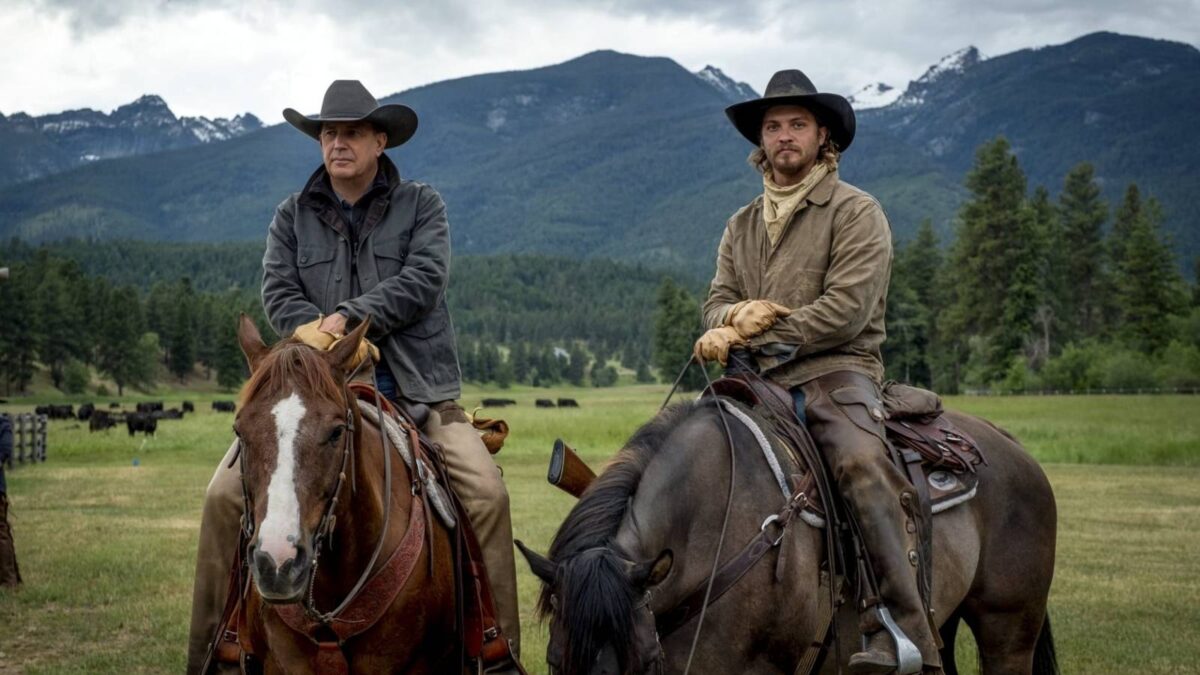
Original ‘Yellowstone’ Dutton Favorite Officially Confirms ‘Marshals’ Return Interest
Yellowstone jump-started a generation-spanning story that has so far spawned four spin-offs that are all interconnected by the Dutton bloodline. While creator Taylor Sheridan has since branched outside that saga with Tulsa King, Landman, Mayor of Kingstown, The Madison, and…
Sep 14, 2026