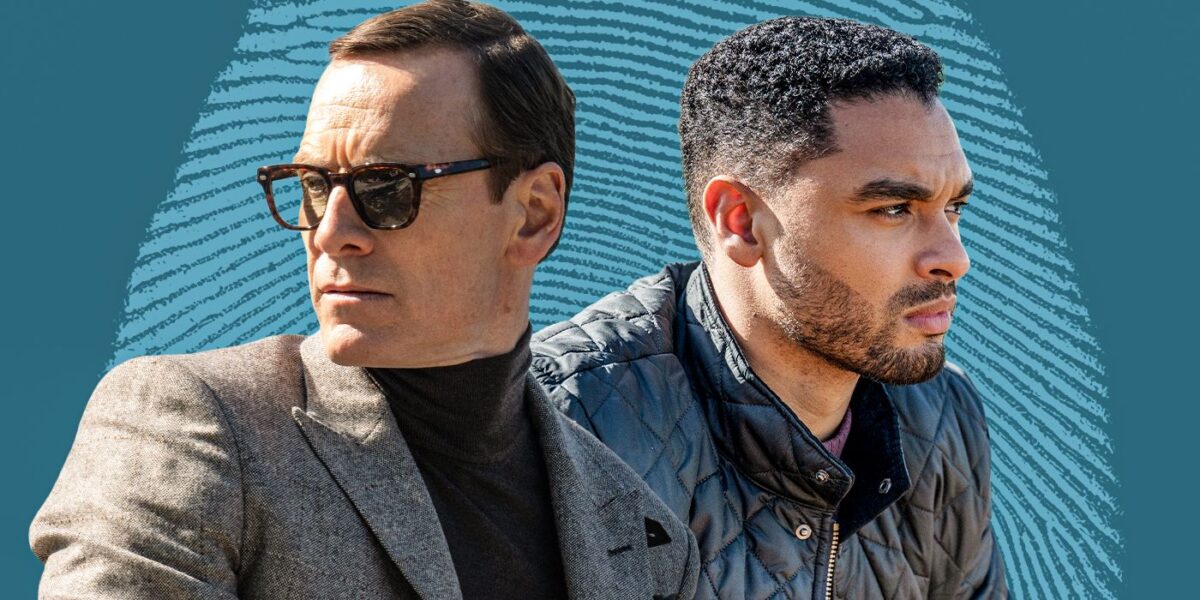
Michael Fassbender Compares Working With Soderbergh on ‘Black Bag’ to Tarantino on ‘Inglourious Basterds’
Mar 23, 2025
[Editor’s note: The following contains spoilers for Black Bag.]
Summary
‘Black Bag’ is a spy thriller directed by Steven Soderbergh testing suspects to uncover a mole, adding tension with urgency to stop a cyber worm.
Michael Fassbender and Regé-Jean Page discuss working with Soderbergh, script quality, and character depth in the film.
The actors praise Soderbergh, detail-oriented prep methods, impactful wardrobe choices, and love for the craft of filmmaking.
From director Steven Soderbergh and screenwriter David Koepp, the spy thriller Black Bag follows top British intelligence officer George Woodhouse (Michael Fassbender) as he tests a list of five suspects, including four friends and colleagues and his own wife Kathryn (Cate Blanchett), to discover a mole. With urgency looming over the need to stop a destructive cyber worm, things get tense as he gets closer to the truth.
During this interview with Collider, co-stars Fassbender and Regé-Jean Page, who plays Colonel James Stokes, patient and lover of Dr. Zoe Vaughan (Naomie Harris) talked about their experience working with a filmmaker like Soderbergh, why they loved the script, what makes it a signature Soderbergh movie, how they each approach preparing to play a character, and shooting the dinner scenes. Fassbender also shared the similarities between Soderbergh and Quentin Tarantino, as well as making the Korean thriller Hope with director Na Hong-jin, while Page revealed what he looks for in a project and what led him to sign on for a Butch Cassidy and the Sundance Kid TV series with Glen Powell.
Related
‘Black Bag’ Review: Steven Soderbergh Enlists Michael Fassbender and Cate Blanchett for a Intricate, Sexy, and Fun Spy Thriller
Fassbender and Blanchett star in his twisty spy film that is one of the year’s most gripping films so far.
Collider: When a Steven Soderbergh project comes your way, is it an automatic yes, or do you actually want to read a script first?
MICHAEL FASSBENDER: I just got the email from him saying, “What’s up? Take a look at this and tell me what you think.” And I just got back to him the next day and I was like, “I’m in.” It was a very short correspondence. It was very quick. I had such a great time with him, working on Haywire. He’s just such a unique filmmaker. He’s a master. It was a very quick yes for me, for sure.
REGÉ-JEAN PAGE: Steven is efficient in all things. He communicates efficiently on set. He communicates efficiently before the cause. It didn’t hurt that it was a David Koepp script that was an incredibly well put together piece of writing from someone who absolutely knows how to do this. The combination of Steven and Koepp is a very powerful one.
Steven Soderbergh’s ‘Black Bag’ Blends Something Familiar With Something Brand New
“It’s a very signature Soderbergh movie.”
Michael, is it cool just to be playing a spy, or is it even more cool when they tell you that you’re going to be investigating your own wife and that that wife will be Cate Blanchett?
FASSBENDER: To be honest with you, I wasn’t thinking, “This is a character I really want to play.” I just loved the script. I loved all the characters when I was reading it. David writes in such a way that I could see all the characters on the page and the script just moved. It was an easy read. You know straight away, when you just go through a script fast. There was a flow to it. There was an intelligence to it and a humor. So, it was the piece itself that really drew me in. And then, for me, there’s the doubt of, can I play this sort of person? I haven’t played somebody like this before, so that’s going to be exciting. But it was just the piece itself, and then the idea of how Steven was going to present it visually. David Holmes, who did the soundtrack, has been partnering with Steven for a long time, as well. It’s lick and stylish and sexy, and the tension is there.
PAGE: It’s a very signature Soderbergh movie, in that way. You hear the soundtrack kick in and you feel like you’re coming home. You feel like you’ve been adjacent to this world before. But he’s so good at innovating, even on his own work, that it has that balance of something brand new and also something familiar if you’re a Soderbergh fan.
Regé, I read that when Steven spoke to you about this role, the first question he asked you was, “Are you okay with playing an irredeemable asshole?” But did you actually see the character as either or both of those things?
PAGE: Oh, I think the characters certainly don’t see themselves as irredeemable, but a few of them would quite proudly wear the term asshole. I don’t think they’d be particularly ashamed of that. But no, I don’t think anyone’s irredeemable, least of all these characters. None of them consider themselves irredeemable, and that’s where you find the real meat of the character work in this piece. Finding out where people’s line is, when it comes to the whole tag line that’s developing with, what would you do for your relationship? Would you serve your country or your wife? Where do your loyalties lie? That applies to every character in the piece. That was one of the strengths of that first read. It’s not just that the story’s propulsive, but then every character – the leads, of course, but also just every character in this ensemble – has multiple layers to them, examining when they’re lying to each other as much as when they’re lying to themselves. That’s where that irredeemable word comes in. All of them think they’re redeemable, but also probably that they don’t need redeeming. They’re just so right that they do what needs to be done, and they are the arbiters and judges of that rightness. Where that line is drawn is where we really find the interesting pieces of them.
Michael, how does Steven Soderbergh’s work as a filmmaker now compared to who he was when you worked on Haywire? Does he feel very much the same? Does he feel like he’s evolved in any specific ways?
FASSBENDER: I think it would be more about how I would see myself change. From walking on the set of Haywire to walking on this set, it felt like it had only been a week apart. It felt the same. He’s super-precise and laser-focused. He’s so experienced that when he walks into a room, he looks around the room, scans it, and then he’s like, “Okay, camera here.” He has an understanding of angles and geometry of how to film something. We moved at a fast pace back then, and we did on this. It’s one, two, three takes, and there’s a very relaxed atmosphere on set, which permeates off of him because he seems to be so in control of the vision of what he wants and what the film is. And then, he also has hardly really any notes for the actors. There’s a real confidence in his casting. He’s just quite curious to see whatever you present and doesn’t necessarily want to interfere in that, which is quite interesting.
PAGE: One of his greatest tricks is that he feels like he has such a soft touch, and it really frees up actors because he has such a bag of tools to draw on. You know that you’re in safe hands and you know that he knows what he wants to do with the camera. I’ve never met a director who loves making movies as much as Steven Soderbergh does, and I think that attitude permeates not just the cast, but also the crew. You’re walking into an environment that is primed for you to do your best work, which is really a skill of his.
Related
Michael Fassbender and Cate Blanchett’s 96% Rotten Tomatoes ‘Black Bag’ Finally Reaches Another Box Office Milestone
Steven Soderbergh’s film was critically praised, but audiences aren’t turning out.
Michael, because of what your character is trying to uncover, the little details are really important. Are you someone who typically likes to focus on those small details as you’re figuring out and building a character? Is that something that really is important to you, in the way it is to your character?
FASSBENDER: I’m very different to George, in terms of the meticulousness and his intelligence levels. I prepare a lot before I come on set, as much time as is given to me, because I just feel like if I work a lot in the prep, then I can really have fun in the doing of it on set. So, I’m very good at focusing and doing one thing, and I will give that a lot of energy. George is very OCD, and I have a little bit of that, but not to the extent that George does, that’s for sure.
Regé, not to put you on the spot or embarrass you, but when you were on Kimmel, you said that Michael had been a hero of yours for years. What did you notice or learn about him, as an actor and a scene partner? When you’re in scenes together and you’re working with someone who you have admired the work of, what’s that like?
PAGE: I had an immense lack of disappointment. Michael’s everything that you expect him to be. He’s an incredibly intense performer. That hyper-focus that Michael just described giving a lot of energy to, that one thing on set that happened to be was his performance and his work, and you get a feeling of that incredibly quickly and viscerally. If it’s in between takes, Michael’s thinking about his work and working on his work, or he’s telling stories and connecting with people. It’s a relief and a joy all around because, he doesn’t need to hear this again, but he’s good at this, and that makes everyone else’s job easier. When you’re working with someone who’s working that hard, being so generous with their work, it only lifts everyone around you.
FASSBENDER: That’s so sweet to say. The first thing that I shot in this, where I was actually interacting with somebody, was our scene together, and I was just like, “Wow, Regé nailed this character.” He really dialed into it. One of my favorite scenes in the movie is the scene between [Regé] and Naomie [Harris]. It’s so funny and it seems so real. Credit to David Koepp because he writes it in a way that, when I’m watching that scene, it seems like you are making stuff up, like you’re responding and ad-libbing to one another. It’s such a great scene.
PAGE: It feels like it’s happening in the moment. When the writing is that strong, when the director makes you feel that safe, and when the actors are giving that much, it feels natural, and Naomie and I found that. We actually did have a lot of fun with that scene, so I’m glad that came across. I have a similar feeling about your scene with Marisa [Abela]. The vulnerability she finds because of what you’re giving her, that scene is a gorgeously real human interaction. We all get that from each other in those big dinner scenes. Talk to any actor, and any director, 12 pages sitting around a table having dinner should be a nightmare. You should be dreading that with all your might. And we were coming in ready to go every day because it was so much fun.
FASSBENDER: That was a piece of the puzzle for Steven. Those two dinner scenes were the one thing that we did actually rehearse, so he could figure out where he was going to put the camera and where to find differences between those two scenes to really accentuate the tension in those scenes. It’s six actors sitting around a table, and he had to keep that interesting and alive and dynamic.
PAGE: I read that differently. I thought Steven relished it. When I saw him come in to work for those rehearsals, he was almost rubbing his hands with glee that he got to shoot this like no one else has shot at before.
FASSBENDER: I rub my hands when I’m nervous, as well. He did say to me, “This is the scene that I need to get my head around. This is the trickiest thing to shoot.” But none of us had any doubts that he would. And then, he was coming up in the middle of the table, coming through with the lens. It was a real joy to then see those scenes for the first time and see how he did realize it all, and when he chooses to stay on a character’s face, even though the other person’s talking. How he makes those cuts is brilliant.
Michael Fassbender Shares the Similarities He Sees in Steven Soderbergh and Quentin Tarantino
“It’s that detail that elevates projects and stories to the next level.”
Image via TWC
Those scenes harken back to another great, exciting, memorable scene sitting at a table that you had and Inglourious Basterds. Did you have that thought, at all? Does anything compare between the two for you?
FASSBENDER: We rehearsed it, as well. We rehearsed that scene for two weeks. I always just remember being scared to be a part of that film. And I remember August Diehl, the guy that comes out with the big boot of beer. He was amazing. From day one in the rehearsals, he was off-book and I just thought, “Wow, I’ve got some work to do to keep up with this guy.” And then, having somebody brilliant, like Quentin [Tarantino]. It’s funny, when Regé was saying he doesn’t know any other director that loves filming as much as Steven, I immediately thought of Quentin because he just lives, eats, and breathes it. When I read that script, I didn’t think about it. My dad’s German, and I immediately thought about him in the kitchen, counting things out and how he would always start with his thumb. That’s the detail that he has. It’s that detail that elevates projects and stories to the next level. Steven is a devil for the detail and for how to do it correctly. When we enter into the offices, what the security protocols are was very well presented by him and researched.
Michael, I’m not surprised that you’d want to work with your wife, Alicia Vikander, because I think she’s a great actor, as well. But how did you end up doing a Korean thriller together? What was that experience like?
FASSBENDER: We’re big fans of Korean cinema and director Na [Hong-jin] is one of our favorites. We’d both seen The Wailing, which is amazing. So is The Chaser and The Yellow Sea. Alicia actually reached out to him. She’s really good at that. And then, they started a correspondence and he just came to us with this film. We were like, “Great, we get to work together again. That’s fantastic.” But because of the scheduling from Black Bag and The Agency, we didn’t actually do the scenes together. We’re in those scenes together, but we didn’t film them together. I was working with a stand-in, and she was working with my stand-in. But it was a fantastic experience, and I’m really excited to see the outcome of that. He’s a real talent, and all the actors, as well. They’re a very, very talented bunch.
Related
The 12 Best Michael Fassbender Movies, Ranked
Fasscinating films.
Regé, so many people became aware of you because you did the quintessential romance with Bridgerton, and you’ve played such an interesting variety of characters since then. What do you look for in a script and project?
PAGE: It’s the quality of the material and the quality of the people that you’d be working with. It’s putting yourself in an environment where you will grow and where you get to do good work. Sometimes that’s who you get to work with, it’s who you get to learn from, and who you get to surround yourself with. I think that’s why Michael and I are so keen to talk about how much Steven likes making movies and the way he makes movies because that’s a huge value add to choosing to work on something. And then, other times, it’s just what you get to do because of how well it’s constructed, how strong the script is, how strong the character is, how much fun you’re going to have, and fun can be expressed a hundred different ways. It can be comedy. It can be the depth of the psychological threat of this thriller. It’s just the quality of the work and the quality that people, always.
And then, you decide to do a Butch and Sundance TV series with Glen Powell. How does that happen? What led to that moment, and can you sign me up now for multiple seasons?
PAGE: That’s people coming together. That came out of working with the Russos on The Gray Man. We got talking about the other things we wanted to work together on, and we put a couple of things into development. I think that Glen and I enjoy each other’s company. It’s a story that feels like a great place to hang out, so it was a no-brainer.
Michael Fassbender and Regé-Jean Page Had Different Ways of Approaching Their ‘Black Bag’ Characters
“It makes total sense, finding that physicality through the feet.”
Image via Focus Features
When you guys are playing characters for whom appearance and the way they present themselves to others is very important, did the wardrobe also help in shaping that for you?
FASSBENDER: For me, it’s the last piece of a character. I don’t like to tell a costume designer too much about how I would see what the character wears because I like to see their interpretation. That’s the great thing when all these different departments are reading the script. They might give me something that I didn’t think of. Ellen [Mirojnick] is incredible and so talented, and she had been working closely with Steven. And I know Steven had a very clear idea about what the look was that he wanted to present. The only thing that I was really going back and forth with Steven about was what glasses I would be wearing. That was the only thing we really talked about, character-wise. When I start to put the clothes on, I find that last skin of the character, which really helped, in terms of how they move.
PAGE: Oddly enough, I like to get into the clothes as early as possible because I like to try to start building characters physically as much as psychologically and I think that your clothes affect your body language hugely. I’ll go to the costume designers because it’s lovely to be surprised, but the effect that has, particularly with the shoes. How people move and whether their clothes are restrictive or freeing is in how the character express themselves. Part of that will make them express themselves differently, so I find what the character is wearing a hugely useful tool to building who the character is, as we go along. I come at it from almost the other end of the spectrum as Michael.
FASSBENDER: But it makes total sense, finding that physicality through the feet. It’s cool that you do it from the beginning and find it that way. I think that’s a really useful tool. I might start doing that. When I put it on at the end, it’s that last little bit for me.
PAGE: I’m terrified of that. If I put it on at the end and I’m like, “Oh, shit,” and it’s everything I wasn’t prepping, I don’t know what to do. Ellen and I have done it before. Ellen dressed Bridgerton, so she was familiar with how I like to work. I walked into the first fitting and she was like, “You want the shoes.” We have a language with that.
Black Bag
Release Date
March 14, 2025
Director
Steven Soderbergh
Writers
David Koepp
Black Bag is now playing in theaters. Check out the trailer:
Publisher: Source link




Prime Video Officially Launches New Deal That Changes the Streaming Game Forever
It seems like streamers raise their prices every day. At the end of August, Apple TV raised the subscription service price by $2, bringing it to $14.99 a month. Netflix, Disney+, HBO Max, Paramount+, and Peacock have all raised prices…
Sep 16, 2026
Netflix’s 10/10 Thriller Series Returns After 3 Year Absence With Explosive New Trailer
Over the last five years, Netflix has expanded heavily into non-English content, with international series taking an even bigger focus for the streaming giant. One of the biggest driving forces in that effort is the French thriller series Lupin, led…
Sep 15, 2026
Original ‘Yellowstone’ Dutton Favorite Officially Confirms ‘Marshals’ Return Interest
Yellowstone jump-started a generation-spanning story that has so far spawned four spin-offs that are all interconnected by the Dutton bloodline. While creator Taylor Sheridan has since branched outside that saga with Tulsa King, Landman, Mayor of Kingstown, The Madison, and…
Sep 14, 2026
Netflix Officially Cancels Its 2-Part Taylor Sheridan Replacement Western
Netflix Published Sep 12, 2026, 10:30 AM EDT Omar is an experienced editor and writer who sees life and storytelling as one and the same — there’s always a story to tell. He’s helped shape features, headlines, and coverage across movies,…
Sep 13, 2026