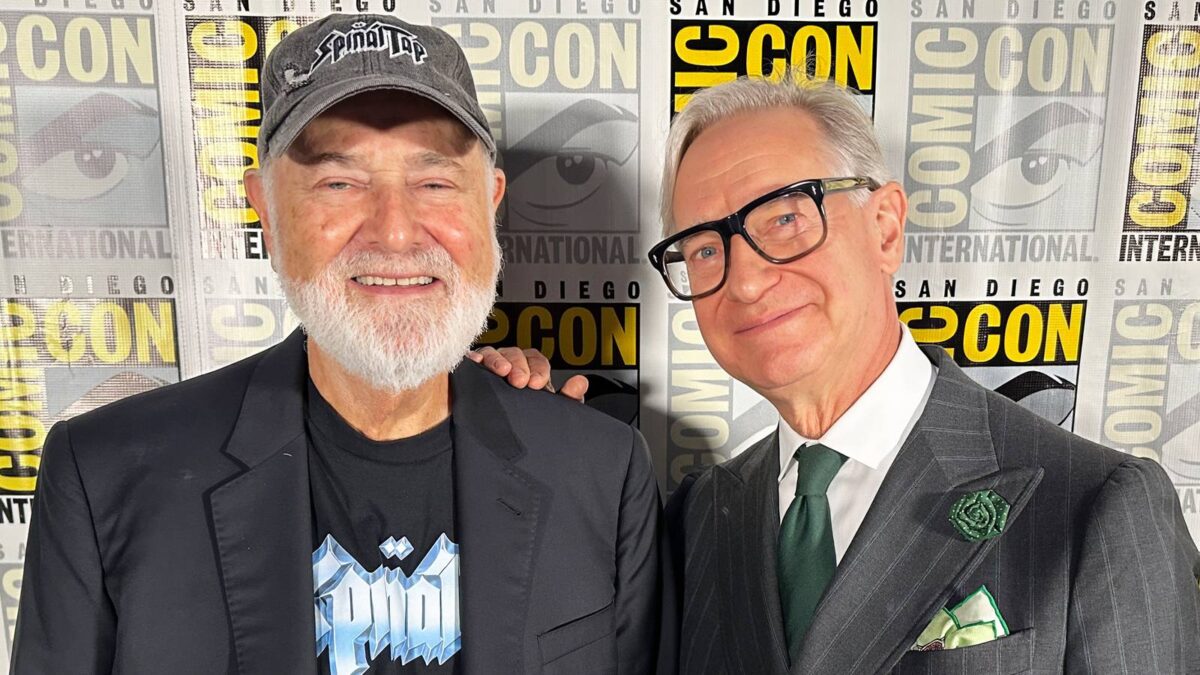
In Honor of Rob Reiner, Look Back at His Incredible San Diego Comic Con 2025 Panel in Hall H With Paul Feig
Dec 22, 2025
Summary
Collider’s Steve Weintraub moderated our Directors on Directing panel with Rob Reiner and Paul Feig at San Diego Comic-Con 2025.
Reiner and Feig hit Hall H for an in-depth conversation about what it’s really like as a director in Hollywood.
They share stories from the set of iconic films and television, sharing emotional moments and hilarious memories, and answer questions from fellow directors and actors.
Over the summer, Collider’s Steve Weintraub had the great pleasure of moderating our Directors on Directing panel at San Diego Comic-Con, where, for years, we’ve invited some of the industry’s most creative voices to hit the stage of Hall H and hang out with movie and television fans for an in-depth, behind-the-scenes conversation. This year, that panel strikes a whole new chord, as our esteemed guests were filmmakers Paul Feig and the beloved and late Rob Reiner, and we’re honored to be able to share that with you now. From the outside looking in, Hollywood productions can sometimes look like impersonal, big-budget machines. Talking with Reiner and Feig, however, that couldn’t be further from the truth. To hear them tell it, each individual on set is a master of their work, and every person’s contribution is of equal importance, with all that expertise being funneled through the director’s vision. At SDCC 2025, their discussion helped demystify the process, as they shared their personal stories from the sets of unforgettable classics like The Princess Bride, Bridesmaids, Stand by Me, Freaks and Geeks, and many more. In addition to chatting with Collider, many fellow directors and actors sent in their own questions for Reiner and Feig, including George Miller, Billy Crystal, Shawn Levy, Logan Lerman, David Goyer, Noah Centineo, Gore Verbinski, and Christopher McQuarrie. You can watch the full panel in the video above, or read the transcript below, where they share their experiences, how iconic scenes came to be, and open up about unexpected surprises and failures throughout their careers, with Reiner calling it “a privilege to fail.” Celebrate the life and legacy of esteemed filmmaker Rob Reiner, whose movies and shows have touched our hearts, made us laugh out loud, and left a lasting impression on the world, as he and comedy king and ever-stylish fellow actor-turned-director Paul Feig regale the Hall H crowd with untold stories about what it’s really like in the director’s chair.
Rob Reiner and Paul Feig on What Being a Hollywood Director Is Really Like
“Are you aware of the silent schmuck?”
Custom image of Rob Reiner and Paul Feig for SDCC 2025 Directors on Directing panelImage by Jefferson Chacon
COLLIDER: I think people from the outside are very curious about what it’s really like in Hollywood being a director, so for both of you, what do you think would surprise people to learn about being a director in Hollywood? ROB REINER: That you will be a parent, a psychiatrist, an acting teacher. It takes in everything. I’ve said this many times — and I don’t know if you feel this, because you’re a great writer and you’ve done, obviously, great work — I’m not great at anything. I’m a good actor. I’m a good writer. I have a musical ear, and I have a sense of the visual. But put it together, and it becomes something better. So, that’s the key. Herb Gardner once said this to me — Herb Gardner, I don’t know if you know who that is. He’s a playwright who wrote A Thousand Clowns, and he’s a great, great writer. He directed a film, and he said, “Are you aware of the silent schmuck?” And I said, “The silent schmuck? What is the silent schmuck?” And he says, “Well, they will come up to you, and they’ll say, ‘Where do you want the camera here… schmuck?’” And the reason they’re saying that is because everybody in the company is better at doing what they do than you, but you have an overall vision of what this thing is going to be, so you may make a decision based on what you see as the overall, but they just see their own areas. So, at some point in time during the making of the movie, everybody who’s not the director thinks the director’s a schmuck. So, you have to weather that. You’re not part of the cast, and you’re not part of the crew, so you are living in a separate place to look and see the overall. That, to me, is what people don’t understand about it. But I don’t know. You can add more, probably. PAUL FEIG: No, I agree. It’s all about the people that you work with. When you’re a director, you’re a ringmaster who has a vision, but you have to be able to not compromise the vision, but to change the vision, because you want people weighing in. There’s nothing worse than the writer-director who’s like, “Just say the lines exactly like I wrote them.” You hire talented people for a reason, and so you want those people to add their take on things. The other thing about being a director in Hollywood is I always have to laugh because you’ll see a picture of a director, and it’s always standing by the camera. That’s the fun part of the job, and you only get to do that about 10% of the time. The rest is scheduling, dealing with the studio, dealing with agents, dealing with all the problems around the set. I always say to aspiring directors, if you’re going to be a director, buy a really nice watch because you’re going to be staring at it all day, because all it is, is, “Oh my God, what? Two hours have gone by?” REINER: You make a great point, which is that everybody brings something to the table, and you want to be able to have a great playground where everybody can have fun and play. I did a few episodes of the show The Bear that’s on now, and this guy, Chris Storer, who’s the writer and the main director, he does very much what I do, which is you make a sandbox that everybody can feel comfortable playing in, and what you ask people to do is, “Bring what you can bring to the party,” knowing full well you want them to do the best they can possibly do and make them feel comfortable that if it’s not exactly the way they want it, it’s okay. Because if they’re perfect, it’s knocking something out of whack over here. But he’s great, and I like working the same way. Anybody has a good eye. If a prop guy says, “Hey, what if you did that?” I’m like, “Oh, that’s a good idea!”
Rob Reiner in The BearImage via FX
FEIG: Because we get credit for it. [Laughs] Our name’s on it. Why not? No, it’s so true. I always say that’s our biggest job, if we’re doing it right, is to create a safe environment where actors feel they can try anything. Because I was an actor and you were an actor. We both started that way. There’s nothing worse than getting a direction and knowing it’s wrong, and then it ends up in the thing, and then you get bad reviews because they go, “He was terrible in that.” And you’re going, “I didn’t want to do that!” REINER: You said something interesting, and I’ve said this for years: Actors, if they become directors, make the best directors because they know what it’s like to be in that position. I would never ask, and I’m sure you would never ask an actor to do something you couldn’t do. FEIG: Yeah, exactly. REINER: You know, make a transition or something. If I know I can do it, then I can feel comfortable saying to an actor, “I know he’ll be able to pull it off.” Even Marty Scorsese was an actor! You look at all the greats — Orson Welles, Sydney Pollack, whoever you’ve mentioned — they’ve acted so they understand that process. FEIG: It’s a good thing to know, also, if you’re a writer, too, a writer-director. If you’re a writer, you have to be able to say the lines. You can’t write these complicated lines and go, “I guess they’ll be able to say them.” If you can’t get it out of your mouth, nobody’s gonna get out of their mouths. REINER: A lot of actors don’t like line readings; some of them don’t mind it. I find that the ones who are the most comfortable in their skin are okay with it. I’m okay with it. Jack Nicholson always said, “Tell me how you want me to say this,” or Tom Cruise would say, “How do you hear this?” Because there’s a music. There’s some music, especially comedy. FEIG: But have you found this? I know what I want it to sound like, but when I do it, it sounds terrible. And I’m like, “Oh, just what you were doing is fine!” REINER: [Laughs] Yeah, well, I do the same thing. They do it better. But when I was doing that scene with Meg Ryan and Billy Crystal at the deli, when she fakes the orgasm, she didn’t do it right the first couple of times. She was very nervous about it because she was in front of the crew, there are extras there, and she didn’t go all out. So I said, “Look, Meg, this is what I’m looking for,” and I sit down opposite Billy, and I’m going, “Yes! Yes!” And I’m realizing my mother, who delivers that line, “I’ll have what she’s having,” I’m having an orgasm in front of my mother. I realize. FEIG: Please tell me that’s on film. REINER: [Laughs] But then when Meg does it, it’s better than anything, obviously, that I could ever do. FEIG: Yeah, they plus it up. A few people have sent in some video questions, and the first one is from someone named David.
For the Greats, Failure Is a Privilege
“You learn from failures.”
Close-up of Narrator in a pink bunny suit, talking to someone off camera.Image via New Line Cinema
DAVID GOYER: Hello, Comic-Con, and hello, Rob and Paul. I’m a big fan of your collective works. David Goyer here. I have a question. I read a quote once from Kevin Costner who said that failure was underrated, and I was just curious if you’d ever had some kind of personal or professional failure in your lives that sort of unexpectedly led to something transformational? Thanks so much. Bye! REINER: That’s a great question, because it’s a privilege to fail. It is a privilege because it means that you’re trying something that maybe is beyond what you attempted to do, but those are the things you learn from. You learn from failures. Success, you don’t learn as much from success as failure, and I find that the best teaching tool. FEIG: I think more angst comes from success. When you have a successful movie, it’s like, “How am I going to top this?” REINER: “What do I do next?” FEIG: Yeah, exactly. The business is so crazy now. I always feel bad if they give a young filmmaker a first shot at a feature, and they haven’t had enough experience. If they fail, suddenly you get blackballed, which is terrible. It didn’t use to be that way. But failure really is where you learn, like you said. REINER: And Lord knows we’ve had them, and you learn from them. I remember I made a movie years ago, it was called North, and it was based on this little book. It was a fable kind of thing, and I thought, “Oh, it’ll be cute. A kid is looking for new parents because he doesn’t like his parents.” And this is the review that I got from Roger Ebert, I’m not exaggerating: “I hated, hated, hated, hated, hated, hated, hated this movie.” Seven “hateds.” So, you learn. The next movie, I was shooting for six “hateds.” Do you have any projects that got really close to filming that fell apart that you want to share? FEIG: I’ve had ones where development was going, but they never got close to shooting. Well, actually, one got saved, because my movie, A Simple Favor, we were all set; Fox 2000 was going to do it. We were nine weeks out. We had the schedule where Anna Kendrick had to do it in this window. We had no play, and we had no wiggle room, and then we had a crew. Right at the last minute, they said, “We don’t wanna make the movie,” and we were completely screwed. But it was Lionsgate at the time, Erik Feig, who is a distant relative of mine. Fortunately, he came in, swept in, and saved us, and we got to go. Otherwise, it’s just been things in development that don’t get to go. REINER: For me, that’s the reason I started Castle Rock, because I wanted to be able to make the movies I wanted. You know how difficult it is to go to studios. To give you a little story, I had made This is Spinal Tap, and I had made a little movie called The Sure Thing, and I was going to make Stand by Me next, but I didn’t get to that point yet. But after these first two movies, I get in a meeting with Dawn Steele. She was the head of Paramount at the time, and she says to me, “What do you want to do next?” Because she liked these movies. And I said, “Well, I have something I want to do, but I don’t know that you’re going to want to do it.” She said, “No, no, I want to do what you want to do.” And I said, “No, you probably want me to do something that you have and you want.” “No, no, please. I want to do what you want to do.” And I said, “Well, I’d like to make a movie out of The Princess Bride.” And she said, “Anything but that.”
Westley stands on guard with his sword while Buttercup stands behind him in The Princess Bride.Image via 20th Century Studios
So, you learn. That’s why I started the company, so I could get a chance to make movies that don’t fit into categories sometimes. That way, you get lucky. But the only one that I wanted to do that I didn’t do, and I’m glad in a way that I didn’t, because I wound up meeting my wife who I’m now married to for 36 years, was I was asked to do Rain Man, with Tom Cruise and Dustin Hoffman. I was getting When Harry met Sally ready, and I couldn’t quite do it. I said, “I’m sorry, I can’t do it now.” Obviously, Barry Levinson did. He did an incredible job and it’s a great movie. But like I said, if I had done that, I wouldn’t have met Michele [Singer Reiner], because I met Michele on When Harry met Sally. She was introduced to me by the director of photography, Barry Sonnenfeld. So, that’s a big thing. I’m glad I didn’t get to. FEIG: Thank god you made When Harry Met Sally. That’s all I’m going to say. One of the greatest movies of all time.
Related
‘When Harry Met Sally…’ Review: Friendship, Orgasms, and a Timeless Love Story
As Collider looks back on this rom-com classic, we’ll still have what she’s having.
Relinquishing Creative Control to Spur-of-the-Moment Magic
“You have to let people breathe and allow something to have its own life.”
Rose Byrne as Helen Harris and Melissa McCarthy as Megan Price and Maya Rudolph as Lillian Donovan and Kristen Wiig as Annie Walker and Ellie Kemper as Becca and Wendi McLendon-Cove as in Bridesmaids Image via Universal Pictures
GORE VERBINSKI: Hello, Comic-Con. My question is for Rob and Paul and has to do with intention versus discovery. Let’s be specific and say post-screenplay, shot construction, and edit. Whether you storyboard a sequence or not, you know when you’re going to cut to the poisoned chalice, right? If you think of Hitchcock and Kubrick, they had this very precise shot construction. Even Hal Ashby. I mean, he was an editor, and he knew how a scene was going to cut while he was shooting it. So, through intention, you have language; through language, you have the point of view of the storyteller, and without it, you get this kind of “all colors are brown” thing. But it’s also going to cost you something. Too much intention can blind you to gifts along the way. It can shackle the scene. So, my question is, can you give very specific examples of when you’ve benefited from intention and when it has screwed you? Similarly, when have you abandoned intent and relied on discovery and had that process fail you or surprise you, and what blend of the two best suits you? FEIG: My goodness. Wow. REINER: Boy, that’s an essay question, if ever there was one. I need another blue book for that one. But those are great questions. What about you? Do you have intention? FEIG: Well, when I went to USC film school, we were all really into Hitchcock, and the whole thing about Hitchcock was he would storyboard so heavily that he would only shoot the storyboard because he didn’t want anybody to mess with his editing. We were all like, “Well, that’s the way to do it.” So, I started trying to do that, and what I realized early on is that I got so hamstrung by my storyboards. I did a movie called I Am David, which Jim Caviezel’s in, and I was working with Dame Joan Plowright. My first feature I do, and I’m with this legend. So I had this all storyboarded out, and it’s them sitting at a table, her and the boy, and so we rehearse it, and she goes, “I get up, and I walk over here, and then I’d go over here, and he’d come over with me,” and all I see is, “There are a million setups. I’m never going to make this.” And it’s also not my storyboard. So I go, “Well, Joan, actually, I think you’d sit here,” and she goes, “Well, I think I’ll go over here.” “Well, I actually think you’d sit here.” And she goes, “If this is going to be a rehearsal where you want the input of actors, I’ll keep going. If you just want me to sit there and talk, then tell me.” I was like, “Oh my god, I just got yelled at by a legend.” But actually, she was right. We found that this détente of her going over to this one area worked really well, and coming back. Then the last time I really learned the lesson was when I was doing Arrested Development, and those scripts would come in, like, the day before. Sometimes I’d show up, and they’d go, “Here’s the script.” So, I was like, “I don’t have my storyboard.” You were just in the moment, and it freed me up, and I haven’t done storyboards since. REINER: The only thing I’ve ever storyboarded was a sequence that was an action sequence, like in Stand by Me, when the boys are being chased by the train. Because you have to decide what is a visual effects shot, what’s shot real, what’s done with doubles. So, I had to do those kinds of things. But other than those kinds of really intense action sequences, I don’t storyboard anything because it hamstrings me in a way. Especially with comedy. You can’t storyboard comedy. You have to let people do what they do. Like in This Is Spinal Tap, in the movie I just made, which is a sequel called The End Continues, Spinal Tap 2, it’s all improvised. The whole film is improvised. There’s no script. I have a storyline, but the dialogue is all improvised. You have to let people freely do what they want, and then you discover the film. You discover the dialogue in the scenes, in the film, in the cutting room, and you’re writing with the pieces of film. So, you have to let your actors, you have to let your cinematographer, you have to let people breathe and allow something to have its own life.
Custom image of Michael McKean, Christopher Guest, and Harry Shearer for Spinal Tap 2Image by Jefferson Chacon
But if it’s an action sequence, like for Misery, I’d never made a thriller. It was the first one, and maybe the last I’ll ever do, but I studied Hitchcock. I studied every thriller I ever saw to see, “What is the grammar? What is the film grammar for thrillers?” Cut to the insert of the key going in, and the foot hits the ground. So, those kinds of things I studied. But I don’t like to storyboard too much. FEIG: No. Especially since we do comedy. Or even when we’re doing things that aren’t comedy, they’re still comedic in their intent. You really cut off all this input. I’m not brave enough to do a completely improvised one, but for us, it’s like, get the best script you can, and then when you get to the stage, let people play. REINER: Listen, you’ve worked with so many great comedians, and they love to improvise. I guarantee that Melissa McCarthy probably came up with stuff in Bridesmaids. So you have to allow people who have those improv chops to be able to do it. FEIG: My favorite thing in the world is when we’ve exhausted everything we think we’ve done, and the crew wants to murder me because it’s been going on for 30 minutes of one scene, and then somebody goes, “Oh, I have an idea.” And it’s like, “Great!” And it’s usually that idea that’s used by the end. It’s fantastic.
Building a Filmmaking Family You Can Love
Reiner shares his “no-hire-an-asshole rule” when prepping a team, and Feig reveals the non-negotiable criteria for his sets.
Image via MGM Studios.Image via Studio Canal
NOAH CENTINEO: What’s going on at Comic-Con? How are we? Steven, thanks for the opportunity. Rob, Paul, it is an honor. My question is, when you’re building a team around you on a set that is hiring a DP, a first AD, and a line producer, what are the qualities that you’re looking for in these team members? Is there one quality specifically that you look for across the board? Also, if there is a quality, does that apply to actors and a cast that you’re putting together for a film, or is that a different rubric, so to speak? Alright, take care, guys. REINER: First of all, the people who come to see you, they’re all qualified. They’re all professionals. They do what they do. I look for somebody that I want to see every morning. I’m serious. FEIG: It’s true. REINER: Because you’re living with these people for hours on end, days on end. You want that family. You want to create that family. “Oh! I get to see that guy today. Hey, how are you?” You want that. It’s basically the no-hire-an-asshole rule. FEIG: Exactly. To me, there are two criteria: talent and no drama. Please do not bring drama onto the set. Don’t be a screamer. Don’t be a yeller. REINER: Let us do that. [Laughs] No, no. FEIG: Having been an actor, I can’t work on a tense set, especially for doing comedy. I remember when I was a TV actor, and occasionally we’d have a director, and I’d try something, and they were like, “No! What are you doing?” They’d yell. REINER: You want to have a pleasant experience, because at the end of the day, when you finish a movie, that movie is for you guys to watch. We had the experience of making the movie. People ask me, sometimes, “Do you watch the movie when it comes on television?” To me, it’s like home movies. I don’t watch the movie, I watch, “Oh, that was the day that he hurt his foot!” It’s like watching home movies. So, that’s the experience I have, and I want it to be a pleasant one so that when I’m looking through the picture book, the family photo album, you want to say, “Oh, that’s good. I like that guy. He was a good guy.” FEIG: Because we attach so much to every shot. We know what was behind the scenes. My editor says he never wants to visit the set because he doesn’t want to know how hard something was to shoot. Because you’ll go in the editing room, and be like, “You can’t take that shot out. It took us two hours to do that,” and he’s like, “It doesn’t work for the movie.” REINER: But let me ask you this question, because I’ve had this. This is that sometimes you have to kill your darlings thing. I had a shot in Misery — I don’t know if you ever had this — and it was a crane shot where it twisted up off the ground, and it went up high, and it turned around like this. It took half a day to set this shot up, and when I put the film together, in one second, “Take that out,” because you just know what the rhythm of something is.
Annie Wilkes (Kathy Bates) excitedly showing Paul Sheldon (James Caan) an item in Misery
FEIG: And it just sticks out like a sore thumb. There’s nothing worse than when you see something, like, “Oh, it’s the film school moment.” Like, “Oh, I got really fancy with the camera.” If it fits the emotion, that’s great, but when I was at USC, the directing coach’s whole thing was if the audience notices the shot, you failed as a director. REINER: Yes. My feeling is the audience shouldn’t notice the camera. They shouldn’t notice the music unless it’s about music, and you want them to hear. They shouldn’t notice the acting, and they shouldn’t notice the writing. It should be this kind of seamless thing that just happens, and that you get swept away by it. FEIG: Rob, I don’t know how you work. I don’t rehearse because I’m very much about an actor’s first instinct. So, we kind of say, “Okay, you’ll be here. Hopefully, we can cross-shoot it so we get both people on camera at the same time.” Then it’s like, I want to see what their initial thing was. I know what I want to get to, and for me, it’s like, “Okay, what they did is not at all what I want, but I know I can get here. But let me incrementally move them towards that.” What I always find is that when I get to what I wanted, it’s not usually what I wanted. It’s usually somewhere between the first and the fourth take that was them with a little bit of coaching. REINER: That’s interesting. Yes. I mean, I agree with you. You let them have their head. There are some actors that like rehearsals and others that don’t. Like in Misery, Kathy Bates loved to rehearse, and Jimmy Caan said, “I just want to be free.” So, we rehearsed more than he wanted and less than she wanted, but we found a way. But I’m with you on that. You want to see what their instincts are going to be. FEIG: And like you say, you don’t want people to notice the writing and stuff. It’s like when we did Bridesmaids. The opening scene, where Maya [Rudolph] and Kristen [Wiig] are at the coffee shop talking about the date and all that stuff, we just set up two cameras, shooting each one of them, and said, “Let’s just dive in.” We went for, like, three or four hours of just, “Try this. Imitate a penis.” And they were just making each other laugh. So, that scene, you didn’t need, “Oh, Annie, we’ve known each other for 25 years…” You just saw that chemistry.
Three friends look at a wedding dress in a store in ‘Bridesmaids’ (2011)Image via Universal Pictures
REINER: Yeah, that’s great. The thing that we mentioned before, of something you take a long time to set up, and maybe you don’t use: William Goldman is a great screenwriter — All the President’s Men and Princess Bride and Marathon Man and the first draft of Misery. He said something that I’ve never, ever forgotten. He said, “There’s a spine to this film, and every scene has to attach to the spine in some way. Either it pushes the plot forward, or it develops the character more, and you don’t want to deviate from the spine unless you have the greatest tap dance that ever lived.” Then you can stop the movie, do that, but then get right back in. But unless you have the great tap dance or whatever, you don’t stop the movie. You keep it on the spine. FEIG: Any writers here, if you haven’t read William Goldman’s book, Adventures in the Screen Trade, it’s seminal. REINER: It’s an amazing book.
Write What You Know
Reiner and Feig discuss the purity and creativity of just starting out as filmmakers.
CHRISTOPHER MCQUARRIE: Hey, everybody at Comic-Con, this is Chris McQuarrie with a question for Rob and Paul. Looking back on your career, is there one thing that you know now that you wish you had known then? And is there one thing that you may think you’ve lost, that you wish you could recover? FEIG: I like the question about what you think you’ve lost. When we all got into the industry, we didn’t know that much about the politics of the industry. When I created Freaks and Geeks, I was an actor. I was just like, “Who wouldn’t love this?” Not thinking, like, who would buy it or whatever. There was some kind of purity of, like, that was just your spirit coming out. The more you’re in the business, the more you’re like, “We know studios want this, and they say marketing can’t do this.” It makes you second-guess all these original ideas. REINER: Which really hurts creativity. It really does hurt creativity. It’s unfortunate, but you do factor all that stuff in your head. FEIG: But that’s what I love about Comic-Con, is all the stuff that you guys are way into is stuff that feels left field, and it’s the stuff that you’re discovering, and things that are coming from either independent filmmakers or coming from, like, Cartoon Network or places that are taking chances. Then suddenly, that becomes IP, and everybody starts to copy it. So, if you’re a creator out there, stick your guns. All you can bring is your original ideas. REINER: My father used to say, “Write about something where only you stand,” and then it’s going to be honest and real, and hopefully other people will connect with it and relate to it. But you can only write about the thing where you stand. You can’t write about what you think somebody else wants. FEIG: There’s been a lot of talk about AI, especially for writers, and being afraid of it. I don’t worry about it because all AI can do is recycle what has happened already. Your personal experience, everybody in this room, could thrill us with some crazy-ass story that happened to you, whether it’s tragic, whether it’s funny, whether it’s romantic, whether it’s weird. That is yours. If you’re writing a story, and you’re looking to do a script, pull from that. You don’t have to set it where it happened; turn it into a sci-fi thing. But if the germ of it is something that’s unique to you, then tell it however you want to tell it. REINER: That’s interesting. I’ve been asked this a million times: Do you find that when either a script comes to you or you have an idea that you, Paul Feig, have to feel somewhere personally, emotionally connected to that to be able to tell the story? FEIG: 100%. If something comes in, and I’m like, “This would be really cool, but I have no connection to this,” if I really want to do it, I’ll find my way in and kind of rewrite it for that. But no, it has to come from you. Also, because it’s picking a spouse. We make a movie, and it’s at least a year of your life, 24/7. It’s all you dream about. It’s all you think about. It’s just all-consuming. Which is why it’s so great when you get a shitty review. REINER: [Laughs] Now things are edited very quickly. Because it’s all done with the advent of Avid and all of the programs that they have to edit films, things happen very quickly. But when I started, it was done on film. You had to cut the piece of film, stick it together, look at it. Does that work? Undo it, and put the other thing in. You’d spend months. Months! And I said one time, to the editor I work with, Bob Leighton, “Do you realize that we spend more time in a darkened room than I do with my wife?” So, you’d better like that person.
FEIG: And that was back when editors smoked, too. REINER: Oh, God. Really? You had that? FEIG: No, my editor had that. He worked for a few. REINER: That’s terrible. FEIG: Well, let me ask you a question. Because of Avid versus film cutting, I feel that movies have changed with the advent of Avid because we’re able to do much faster cutting, but we’re also just able to try so many different things. You’re not looking for the two frame, the trim. REINER: I first resisted it because I thought, “Well, I’m not getting enough time to really mull it over in my head.” But then I came to really like it, because you can say, “Oh, does that work? No. Let’s try this. Nope.” Spielberg, years ago, said, “I’ll never do anything except on an upright movie.” Oh, I’m sure he’s moved on. I’m hoping he did. FEIG: When I was at film school, we got taken to see the first edit droid, which was a non-linear thing that was all laser discs. It was a wall of laser discs, and they all fed into this thing. REINER: But I don’t mind it. I’m okay with it. FEIG: I think it’s great. They used to derogatorily call Avid another version instead of decision, but I actually think I’d rather try four different versions in quick succession. Because you talk about music, and that’s all my editor and I are doing is the rhythms. It’s all about music. REINER: It is. The scripts are music. Bob Leighton taught me something that I learned early on, especially in an improvised film: The audience doesn’t mind so much when there are visual incongruities. What they do have this knee-jerk reaction to is when the audio does a weird thing. They’ll go, “Oh, what was that?” So, if you can get an audio track that works and that the dialogue is flowing from one place to the other, you’ll accept a lot of mismatches and things like that visually. FEIG: That’s amazing the things you can get away with. Like Marty Scorsese, I know he doesn’t even care about continuity. REINER: No, no. I know. He said it’s for sissies. “Continuity is for sissies.”
Directors Don’t Like Casting Either
“When you get rejected, it’s horrible.”
Kathy Bates and James Caan in ‘Misery’.Image via Columbia Pictures
LOGAN LERMAN: Hey, Comic-Con, Logan Lerman here to ask two of my favorite filmmakers of all time a question. Now, the common thread in both of your filmographies for me has been brilliant casting. You’ve introduced me to actors I’ve never heard of that I’ve fallen in love with from your movies, or showed me a different side of an actor that I didn’t know that they were capable of. What is your casting process like? Do you enjoy the casting process, and do you have some good casting auditions stories? Thank you. REINER: Thank you, Logan. And Logan, do you have another picture you’re about to do? Because I have a part maybe you could do. Oh, but we’ll talk later. I don’t love casting. A number of actors will come in for a part, and obviously, you can only pick one, so that means all the other actors are not going to get chosen. So what I say to them is, “Enjoy this. You’re acting now. If you love to act, you’re acting now. So, take that as the fun thing to do.” Because it can’t be about, “Oh, I better get this part,” because then it’ll be incredibly disappointing. Personally, I don’t love that because I know from the other side. You, you were on the other side. When you get rejected, it’s horrible, and I’ve been in that position, so I don’t want to put another actor there. I remember when Kathy Bates came in for Misery. She was not a known film actress. She had done theater. Bill Goldman recommended her, and I said, “Yeah, she’s great. I’ve seen her on stage. She’s terrific.” But I had to have her come in, and she came in, and she sat. I said, “Well, we have a scene,” and I read it with her, and she read the first two lines. I said, “Oh, that’s fine, that’s fine.” She thought I was rejecting her. I said, “No, you can do it. You have the part.” She said, “What do you mean? I only read two lines.” I said, “Yeah, but I can tell you can do this.” She said, “Really?” I said, “Yeah.” She said, “Can I call my mother?” So I said, “Yeah, you can call your mother.” Now, this is an interesting thing because we’re in that situation where people put their auditions on tape, so you can sit there, and you’re not feeling like you’re rejecting them right to their faces. But I don’t know if that’s as good as when they come in. You can get more feel for the person. How do you feel about that? FEIG: Well, you want to find out if somebody’s directable. That’s the biggest thing. But I’m the same. I mean, I went through so many years of bad auditions and just being made to feel like crap by people that I overcompensate. Judd Apatow always said, “Everybody leaves one of your auditions thinking they have the role.” REINER: I’m the same way. FEIG: It’s like, “Oh my gosh! That’s terrible.” The minute they walk out, you’re like, “No, they’re not right.” But any actors out there, you’ve got to realize, it’s not that you don’t get cast because your talent wasn’t right or your read wasn’t right. Sometimes there’s just something we’re looking for. So, I always say, “Just do your best.” We don’t forget. Two movies down, I go, “Oh, remember that one guy that came in, or that one woman that came in? Let’s just hire them for this because they’re really funny.” So, just do your best and don’t take it personally, like I used to do and want to kill myself after every audition.
Related
Kathy Bates’ Best Performance Is Exactly What You Think It Is
We love to hate her.
Rob Reiner on How Billy Crystal Improvised Comedy Gold
“He came up with some of the biggest laughs in the picture.”
BILLY CRYSTAL: Hi, this is Billy Crystal. I have a question for Paul. Paul, would you ask Rob what it’s like to direct friends? FEIG: [Laughs] Rob, what’s it like directing Billy Crystal? REINER: Oh my God. By the way, I’ve directed lots of friends over the years, just people that I’ve known. With Billy, to be honest with you, and I’m not telling you anything that I haven’t talked to Billy about and I haven’t talked to the press about, because Billy and I were like best friends at that point, and we played on the same softball team together. We did all these things together, and I love Billy. So I thought, “What if it doesn’t work?” That’s a terrible thing. I actually looked at other people before I talked to Billy, before I said, “Okay, let’s take a roll with this. Let’s see if this is going to work.” I got lucky. I got really lucky because Billy not only is great in the part, but he came up with “I’ll have what she’s having.” He came up with some of the biggest laughs in the picture because he’s a writer, too. So, when I did Princess Bride, I broke up. I had to walk out of the room when he says, “To love,” he says, “It’s the greatest thing in the world, except for a nice MLT — a mutton, lettuce, and tomato sandwich — when the mutton is nice and lean, and the tomatoes are ripe. I love that sandwich!” He improvised that whole thing, and I’m gone. I’m gone. But he’ll give you those little gifts. In Spinal Tap, he said, “Mime is money.” I mean, he gives you gifts, so you get that, but then I was nervous the first time with him. I went, “Oh geez, what if he can’t do it?” FEIG: It’s scary. I’m very nervous about hiring people in front of the camera and behind the camera who I’m friends with, because there’s that moment of, like, “What if I have to fire you?” Which is terrible because sometimes somebody just shits the bed. Yeah, it’s terrifying.
Rob Reiner on Why ‘Stand by Me’ Is the Most Personal Film He Ever Made
“I just loved my dad so much, and I wanted to be like him.”
River Phoenix as Chris consoles his upset friend, Wil Wheaton as Gordie, in the woodsImage via Colombia Pictures
SHAWN LEVY: Hey there, Comic-Con, Shawn Levy here, coming at you from Pinewood Studios in front of basically the only non-spoiler background I could find while we prep our movie, Starfighter, here in London. First question, which may or may not be for you, Paul Feig, is how have you achieved this sort of double-headed triumph? On the one hand, changing the face of film comedy while at the same time always looking so fucking stylish? Most of us mortal directors, we dress for comfort to do our job. You seem to dress for maximum fabulousness. The commitment to the suits, the ties, I envy it. I’m a little scared of it, but mostly I want to understand it. The other question, maybe for you, Rob Reiner: Your body of work is almost without compare. So many movies, so many classics. Which hit has meant the most to you, and which failure has taught you the most? REINER: Okay, the first thing is, when we’re walking in, I said to Paul, “Oh, this is sartorial splendor here.” I mean, look at this guy. FEIG: Why, thank you, thank you! REINER: Do you wear this on the set? FEIG: Yeah. I’m always in a suit and tie, in prep, on the set. Anytime I’m working. REINER: Wow. Barry Sonnenfeld always wore a tie, even as a DP. He always wore a tie. So, that’s a throwback to the old days of Hollywood. FEIG: That’s what it is. I love pictures of Old Hollywood when the director would be in a suit and tie, and you’d see the guy up with the light, and he’s got a tie on. I like that. There’s something to me about when I watch a movie, and I go, “Oh, I hope the director wasn’t wearing sweatpants during the scene.” [Laughs] I just kind of wanted to have old glamour, and I find that the crew likes it because I’m the captain of the ship, and I always say, “If I got on a ship and the captain was wearing sweat pants, I’d get off the ship.” REINER: [Laughs] And so you wear a suit. That’s fabulous. FEIG: Yeah, but I’m comfortable in it. Thank you, Shawn, for that.
Paul Feig standing in room with high ceilingImage via The New York Times
REINER: The movie that means the most to me is not necessarily the one that everybody loves the most, but it was Stand By Me. The reason for that — and it was the third movie I made — was because coming as Carl Reiner’s son, it carries a lot of weight on the son to live up to. My parents told me this story; I don’t remember it, but they told me that I did this when I was eight years old. I went up to them, and I said, “I want to change my name.” And they thought, “Oh my God, this poor kid. He’s worried about being in the shadow and having to live up to…” They said to me, “Well, what do you want to change your name to?” And I said, “Carl.” I just loved my dad so much, and I wanted to be like him, and I was worried I could never live up to him. So, the first movie I made, which was This Is Spinal Tap, is a satire. My father had trafficked in satire most of his life with Sid Caesar, and they did take-offs of movies and satire of things. The second one was The Sure Thing, which was a romantic comedy, and my dad had done romantic comedies with Doris Day and James Garner, and those kinds of things. So, when I did Stand By Me, it was the first time I did something that was very different from anything my father would ever have done. It had humor in it, but it had nostalgia. It had melancholy drama in it. It was a mixture, basically, of my personality, and so I said, “This is the first time I’m making something that is a real extension of me in a way.” I wrote the scene where they find the body, and Gordie is sitting there at the log with River Phoenix, who plays Chris Chambers, and he starts to cry, and he says, “My daddy didn’t love me.” Chris Chambers says, “No, no, he loved you. He just didn’t know you.” And that was pretty much the way it was with my dad. He did love me, no question about it, but he didn’t get me the way he got the people in his orbit. So that film, because it became successful, validated that. It said, “You can do a mixture of things, and it can be something that people will accept.” FEIG: I just have to say, your dad, who was a titan of comedy, one of the great geniuses of comedy, directed one of my favorite comedies of all time, The Jerk. REINER: The Jerk, yes. He did four movies with Steve Martin — The Jerk, Dead Men Don’t Wear Plaid, All of Me, and A Man with Two Brains. All of Me was great at the time. They have these top ten lists at the end of the year, and it was on a bunch of top ten lists. This Is Spinal Tap came out that same year, and I was in a bunch of top ten lists, and I thought, “Wow. Wow. When does that ever happen with a father and a son who have two films out that are both considered top ten?” I looked it up, and it was never. That was an interesting thing. So, we’re tied together in a lot of ways. FEIG: Are you selling that Reiner DNA? Can I create a child out of that? REINER: [Laughs] Our stars are next to each other on the Hollywood Walk of Fame. Then there’s the ground at the Chinese, and the two of us put our hands and feet at the same time. So, he’s my dad, and I love him. I look up to him. To this day, I still think, “I hope my dad would like this.” I’m fighting to live up to him.
Why Comedies Get Overlooked for Awards Season
“There’s nothing worse than a sweaty comedy.”
Steve Carell as Michael Scott sitting at a desk in ‘The Office’Image via NBC
GEORGE MILLER: There are no short answers to this, but I’m asking anyway. If making movies is like the high diving competition in the Olympics, and comedies that stand the test of time are the dives with the highest degree of difficulty. Now, both of you are great masters of this, and I really need to know any tips. REINER: Oh, man. I don’t know. I don’t think we can give George Miller any tips. FEIG: I know. Exactly. Show me how to shoot an action scene, please, George. We’ve covered a lot of this. I think the key is hire the best, most talented, funniest people you can, who are great actors, and don’t get in their way. REINER: Yeah. And have a script that works, a story that works. I mean, you can have a lot of funny people, but you gotta hang it on something. There has to be that great structure and a great story. But he’s right about the high dive. I mean, to make something that stands the test of time that’s a comedy? Traditionally, comedies don’t win the Oscars. I mean, that’s rare. I think Woody Allen with Annie Hall. I don’t know too many. FEIG: That and Shakespeare in Love, you could say. REINER: Yeah, but it’s not a classic. It’s tough. FEIG: Well, here’s how I break down why we never win awards. It’s because to do comedy effectively, the best way, it has to look effortless and easy. It can’t look, what we call in the comedy business, “sweaty.” There’s nothing worse than a sweaty comedy, like everybody’s working so hard, they’re trying to be funny, and all this stuff. But you make it look so easy, and people go, “Well, they just showed up and were funny.” The thing that drove this home for me was that I worked on The Office for so many seasons, and Steve Carell never won an Emmy. He never won an Emmy for playing Michael Scott. I would talk to people, and they’d go, “Oh, well, he just shows up and he’s crazy, right?” It’s like, no, first of all, Steve is one of the most serious, thoughtful guys I know, but he makes it look so easy. REINER: That’s really the thing. It doesn’t look like you’re doing anything. Ed Wynn, the famous actor, said on his deathbed when they asked him about dying, he said, “Dying is easy, comedy is hard.” That was his line.
Why Rob Reiner Finally Made a ‘Spinal Tap’ Sequel
He shares what convinced him after years of refusing.
Rob, you have a certain sequel coming out in about two months. REINER: Yes, I can’t wait. It’s a sequel to This Is Spinal Tap, and it’s called The End Continues. It comes out September 12th in a theater near you. And IMAX. REINER: Oh, yes, in IMAX. We’re going to have a special IMAX showing on the 10th. Then on the 10th, we’re going to have not only the screening of the film, but I’m going to do a Q&A after the film as Marty DiBergi, and I’ll be asking the three guys who will be seeing the film for the first time to see what they think about it. Now, Chris [Guest], Harry [Shearer], and Michael [McKean] have seen the film, but Nigel, David and Derek have not seen the film. I’m so excited to see this. If you’ve never seen Spinal Tap, for the love of God, watch Spinal Tap. I’ve seen it at least 50 times. REINER: I was surprised at how good Paul McCartney was. It was all improvised. He came up with that line. And so was Elton [John]. Elton was great, too. It was fun. There are some good laughs in there. Rob, how much had you guys been talking about doing a sequel? How long have you been thinking about it, and why was now the perfect time to do it? REINER: Well, we made the film 41 years ago, and everybody would come up to us and say, “You’ve got to do a sequel.” We said, “Nah, nah, nah. We’ve done it. It’s over. Let’s let it go.” Then, over the years, it got accepted into the Library of Congress, put in the National Film Registry, and they played Glastonbury and Royal Albert Hall and Wembley and everything. It was like the real world started wending in on it. We didn’t own the rights. Harry Shearer, luckily, because of playing 18 or 19 roles on The Simpsons, had enough money to sue to get the rights back. We got the rights back a couple of years ago, and then we said, “Well, now that we have this, what do we do with it?” So, we met, and we said, “Oh, I don’t know.” Then, as we talked, we came up with this idea, and it came out of something very real, which is that they hadn’t played for 15 years. We said, “Okay, it’s a band that has some bad blood. We don’t say what it is, but something’s going on. What causes them to be forced to have to play again?” So, we have the daughter of Ian Faith. Ian Faith was their manager, and he passed away — the actual actor, Tony Hendra, died — and his daughter gets the contract. She says, “It’s worthless. What’s the point of this?” They haven’t played. Nobody talked about them. Then we have a special guest appearance by a big music star, I’m not going to say who, and he’s screwing around at a soundcheck, and he starts to sing “Big Bottom.” Somebody catches it on an iPhone, throws it up on TikTok, it goes viral, and all of a sudden, they’re back in the world. So they say, “Maybe we can have that concert now.” That’s the premise of the film. There’s a lot of fun in it. FEIG: That’s fantastic.
Related
Marty DiBergi Discusses His Masterpiece ‘This is Spinal Tap’ and Hoping the Band Would Kill Each Other While Filming ‘Spinal Tap 2’
The documentarian opens up about working with rock legends Spinal Tap on their return, what it’s really like behind the scenes, and more.
Paul Feig Teases ‘The Housemaid’s “Twist and Turns”
The movie is based on the novel by Freida McFadden.
Amanda Seyfriend screaming in The HousemaidImage via Lionsgate
Paul, you have a movie coming out later this year. I believe it’s on Christmas Day. FEIG: Yes, Christmas Day. It’s called The Housemaid, starring Sydney Sweeney and Amanda Seyfried. Anybody here read the book, The Housemaid? It’s a great book. It’s a thriller, but it’s also very extreme. It’s nuts and fantastic. It’s just a fun story to tell. I wasn’t allowed to bring much, so what I was able to bring is just the first introductory scene, where Sydney and Amanda’s characters meet each other. This kind of sets the tone. It’s also probably the most normal scene in the movie, but you’ll get a feel for it. If you know the book, there are great twists and turns. I don’t want to give anything away. We’ve also got Brandon Sklenar, who you might know from 1923. This cast turns in the most amazing performances in the movie. REINER: They’re great together, the two of them. FEIG: I couldn’t love the two of them more. We just had so much fun, and I can’t wait for you to see it. It’s not what you think it will be from that scene. That’s all I’m going to say.
No One Knew What to Do With ‘The Princess Bride’
“I don’t want to be another Wizard of Oz.”
Image via 20th Century Studios
Rob, I definitely want to go back in time. One of my all-time favorite films is The Princess Bride. At what point in the making of that film did you realize, “This might be something special?” And at what point did you realize, “This is a masterpiece, a classic that generations are going to love?”
REINER: Never, never, never. I mean, we just made this movie. When I first met Bill Goldman to talk about this, he said, “This is my favorite thing I’ve ever written, and I want this on my tombstone. What are you going to do with it?” Basically. I told him I wanted to be very faithful to the book as much as I could. We had no idea. I mean, it’s an oddball movie when you think about it. It’s got romance, it’s got swashbuckling, it’s got satire. The same movie that has these great sword fights has a guy saying, “Never get involved in a land war in Asia.” So, it’s a very weird, odd mix of things. So, we never thought. When 20th Century Fox released it, they didn’t even know what to do with it. They didn’t have a trailer, they didn’t have a one sheet. They had nothing. We didn’t know what to do. I was really concerned because we had screened it for audiences and they went nuts over it. You know, you have those screenings, and we had 94% top two boxes, whatever that is. Barry Diller was the head of Fox at the time, and I called him up, because I remember that when The Wizard of Oz came out, it was a disaster. It was a bomb. It didn’t do well. It got bad reviews. People hated it. Over years, it’s The Wizard of Oz. So, I called Barry, and I said, “Barry, we got this really good film and nobody knows what to do with it. We don’t know how to market it.” I said, “I don’t want to be another Wizard of Oz.” He said, “Don’t let anybody ever hear you say that.” So, the point is, we never knew. Then, over the years, people pick up on it. FEIG: You know, another famous bomb was It’s a Wonderful Life. Bankrupted the studio. REINER: Yes. It’s a Wonderful Life was a very big bomb. It was a big bomb. It’s my favorite. FEIG: That’s the great thing about movies. That’s a great thing about recorded medium, if you will, is that it exists forever. It’s just so nice. That’s another thing I love about Comic-Con is that everything finds an audience. Some of you are into such niche things that are so cool, and because of you, I gotta look that up and go, “Oh, that’s great!” But that’s what’s so great. You’re not just going for big IP. Obviously, we like that, too, but I love that you’re going after all this other stuff and helping those of us who don’t know it discover it. So, kudos to you for that.
Paul Feig Revisits Cult Favorite Series ‘Freaks and Geeks’
“We never compromised anything on that show.”
The main cast of Freaks and Geeks (1999)Image via NBC
Paul, I want to ask you, you created Freaks and Geeks. FEIG: I love Freaks and Geeks! That’s what I call a perfect season of television. At the time, looking back, were you wanting to do Season 2 and Season 3? Did it really hurt when it didn’t get to continue? And is it like, “We made a perfect season of television,” and now it’s maybe gotten a little easier? FEIG: It became that. I mean, when you’re making a show, all you care about is you want it to be a hit on television, especially back then when it’s 22 episodes a season, which seems so insane. REINER: How many episodes? FEIG: We only did 18. I remember we got an order for 13, and then they would slowly dole out, “We’re going to give you one more. We’re going to give you two more.” We had terrible scheduling. They had us on Saturday night at 8:00, which was the death slot. I wanted it to keep going because, and movies are the same way, but with TV, you create a family, and when you get canceled, it’s like your family dies. Those characters are gone. But the irony that happened to me is, like, two days before we got canceled, my mom died in real life, and so I kind of got knocked off the center that when Judd called me just completely distraught that we got canceled, I was like, “I can’t even react to this.” But then it was in the week after that, the grief that hits you… But then over the subsequent years, because people wanted me to bring it back all the time, I’m just like, “You know what? We kind of got away with it.” There’s something great about something that just worked, that we got to do everything we wanted to do. We never compromised anything on that show, even though some people in charge wanted us to. We stuck with it. It’s like Berlin Alexanderplatz. REINER: It’s an original. It’s one of those things that stands up. I’ve seen it a number of times, and it holds up. We were talking earlier about how many people came out of that. FEIG: Well, it’s sad that the cast didn’t do well. [Laughs] Whatever happened to those guys?
People Hated ‘This Is Spinal Tap’
“Maybe they weren’t geniuses.”
The band members of Spinal Tap performing on stageImage via Embassy Pictures
Rob, something I want to touch on, which I don’t think a lot of people in this audience are going to know, is when Spinal Tap first came out in ‘84, a lot of people who went to see the movie didn’t realize this was a made-up band. They really thought this was a real band. Can you talk about what it was like when Spinal Tap first came out and what people thought? REINER: Well, when it first came out, the first screening we had was in Dallas, Texas, and this was interesting because they have these cards they hand out. There’s never been a movie that’s gotten a lower hatred for the movie. They hated it. They didn’t understand. People came up to me at the end, and they said to me, “I don’t understand what you’re doing here. You’re making a movie about a band that nobody’s ever heard of, and they’re not that good. Why don’t you make a movie about the Beatles or the Rolling Stones or something?” I said, “No, it’s a satire.” Peter Smokler, who shot the movie, had shot a lot of rock n roll documentaries. We started, and he said, “I don’t understand what’s funny about this.” He said, “This is what they do. They don’t do anything.” I said, “But it’s a little bit bent.” It took a long time. There’s a classic line in Broadway: “Satire closes on Saturday night.” People just didn’t get it. But they send you these cards back, and I looked at the cards, and the only thing that I felt good about is I found that there were five different ways to spell the word “movie,” and that made me feel better. There was m-o-v-i-e, there was m-o-v-e-y, m-o-v-y, m-o-v-e-e, and my favorite one: m-o-v-e. So I said, “Okay, maybe they weren’t geniuses.” [Laughs] FEIG: Rob, that is so funny. You’ve probably been to test screenings where they used to hand out cards, and now they do it electronically, so everybody types. I liked it back then, because you could tell if the feedback you were getting was from somebody who couldn’t spell the word movie. God bless people. There you go. [Laughs]
Paul Feig Thought ‘Bridesmaids’ Was a Box Office Bomb
“We’re just sitting around kind of licking our wounds.”
the cast of bridesmaids all standing on a wall togetherImage via Universal Pictures
Paul, Bridesmaids is just a gem of a movie. It’s so funny. Same question for you. When you were making it, did you realize you were making something special, and what was it like when it came out and just people freaked for it? FEIG: Well, you don’t set out to make a bad movie, but you also go, “Well, I hope this works.” When I’m shooting, the studio’s usually happy with the dailies and stuff and everybody’s really excited. When I’m there, I’m like, “Oh, this is so great!” Not to them, but I say to my team, “I just hope it adds up.” Because great moments don’t make a movie. Sometimes you string all those great moments together and then an audience sees it and is like, “What the hell is going on?” REINER: I want to ask you something about that, because I’m noticing that when I’m making a comedy, and we’re shooting out of sequence, and you do something, a moment, and the crew laughs hysterically… FEIG: I know you’re going to say. It’s never in the movie. REINER: It’s not going to be in the movie. They’re laughing at something out of context that isn’t in the flow of it. So, it’s like what you say, the studio heads are looking at it… FEIG: Well, also, I made the movie Spy. We shot it in Budapest, and we would do these 30-minute takes of just riffing and all this stuff, and that crew, they probably didn’t speak English, but the ones that did, they sat there like we were torturing them. I would end a take, and all I know was they would all run over to the boom operator and console him because he was standing there for 30 minutes with his boom. [Laughs] But no, we knew we were getting good stuff, but then we strung it together, and it took, like, 10 test screenings to get it right. The dress shop scene that we all know now, we shot a lot of extra stuff for that, and it was kind of like, “Do we go too far? Do we not go far enough?” And so we finally found the balance, which worked. But the thing was, we weren’t tracking well, and then we tested fine, and then opening weekend, it was like they said you have to make $20 million opening weekend or the movie will be considered a bomb. So, all I kept hearing is, “Well, we’re tracking around $15.” I was like, “Oh, fuck.” Then they did a midnight screening, which was ridiculous. Why would you do a midnight screening of basically a wedding movie? It didn’t do well. So, all the calls coming in Friday morning were like, “Well, they’re projecting $13.” So, I was walking around like a dead man walking all day. Melissa McCarthy came over for dinner with Ben [Falcone], her husband, and we’re just sitting around kind of licking our wounds. Then these techs started coming, “It looks like $15. Well, it looks like $17. It looks like $19.” Then it was like, “Looks like $20, and $21…” We were like, “Get in the car!” So we got in the car, drove to the old ArcLight downtown in Hollywood, and walked into a packed theater. Rock concert. It was the greatest feeling in the world. REINER: Well, Kristen Wiig, she’s one of the most brilliant comedians I’ve ever seen.
Image via Universal Pictures
FEIG: 100%. So natural. I mean, that airplane scene was just me going, “Go again!” And like, “How drunk is she going to come through this time? What are you going to do this time?” I will say one thing to any potential cinematographers here, if you want to thrive in this business, learn how to cross shoot. Don’t poo-poo it. When I say “cross shoot,” it means, if Rob and I are talking, I have a camera here on him, and I have a camera here on me, and we’re doing the scene at the same time. For comedy, it’s invaluable, because then it’s in the moment. Like I said, the coffee shop scene, they’re surprising each other. Most DP’s don’t like to do it because they can’t get the lighting quite right. I’ll take 10% less great lighting for an amazing, hilarious scene. REINER: And especially because you’re getting the right reaction to what the person is saying right then. FEIG: Well, yeah. They say something the first time, and they’re surprised, you got it. It looks great. You guys have both made tons of stuff. Which of your projects changed the most in the editing room in ways you didn’t expect? REINER: Well, with Spinal Tap, we edited with the pieces of film, and the first cut was four hours long and didn’t include three hours of interview footage that I had done. So, I would say that one probably changed the most. [Laughs] FEIG: I mean, I almost hate to mention the name of it — I love it, but I know it’s controversial — Ghostbusters. Our first cut was three and a half hours long, and I had to get it down to under two hours. So, it’s the only time I’ve ever done a movie where I released a, I hate to call it “the director’s cut,” an extended cut that was two hours and 15 minutes, just because I thought there was things in the theater that were missing.
Related
‘Ghostbusters’ Review: ‘Bustin Will Make You Feel Good
While the plotting can be a bit uneven, the new ‘Ghostbusters’ is consistently funny, surprisingly scary, and genuinely heartfelt.
Can I actually ask you, you said three and a half. Was that an assembly cut or was that a cut you were really happy with? FEIG: It was a cut I was kind of happy with it. But then you go, “Oh, man, I’m so screwed, because I’ve got to get two hours out of this.” This actually goes for both of you. When you end up cutting out this much footage from Ghostbusters or this much from Spinal Tap, do you manage to keep a copy of all this cool footage that you shot or does it go in the studio vault and you don’t know where the hell it is? REINER: Well, luckily, we have the Criterion Collection. They used to have laser discs, and all kinds of things, and you keep them because you get those bonus scenes. FEIG: Please bring back something like DVDs and Blu-rays so we can put out extra content! I’m going on a soapbox right now. My last three movies were streamers and they will not do extra content. They say they don’t do it. I’m always told, “Oh, they’re going to be a special feature that people can click on.” They don’t do it. I mean, we used to pride ourselves on having hours worth of extra material, deleted scenes, behind-the-scenes videos, the making of, funny sketches. We work with such funny people that that stuff is really hard to take out of the movie if nobody’s ever going to see it. But if you can put it out there for everybody… So, demand from studios, everybody. We want physical media! First of all, I I totally agree. But I also agree with what you’re saying. I don’t understand. For a streamer, it’s just a button to add deleted scenes and you can put them there. FEIG: I know. There’s just a feeling that people won’t go to it. Here’s what it is: They want you to finish the movie — I’m not shitting on the streamers, they let me make three movies, so they’re great — but it’s all about, “Watch this thing and go right to the next thing.” So, that’s why. You get two seconds of end credits, and then the next thing. REINER: Don’t you feel like…? I mean, you make comedies. You want them to be seen in the theater. FEIG: Yes. REINER: So that the people are having a shared experience. It’s not the same when you put it on [streamers]. FEIG: And thank god theatrical is coming back. Everybody, please keep seeing movies in theaters.
Publisher: Source link



Netflix’s 10/10 Thriller Series Returns After 3 Year Absence With Explosive New Trailer
Over the last five years, Netflix has expanded heavily into non-English content, with international series taking an even bigger focus for the streaming giant. One of the biggest driving forces in that effort is the French thriller series Lupin, led…
Sep 15, 2026
Original ‘Yellowstone’ Dutton Favorite Officially Confirms ‘Marshals’ Return Interest
Yellowstone jump-started a generation-spanning story that has so far spawned four spin-offs that are all interconnected by the Dutton bloodline. While creator Taylor Sheridan has since branched outside that saga with Tulsa King, Landman, Mayor of Kingstown, The Madison, and…
Sep 14, 2026
Netflix Officially Cancels Its 2-Part Taylor Sheridan Replacement Western
Netflix Published Sep 12, 2026, 10:30 AM EDT Omar is an experienced editor and writer who sees life and storytelling as one and the same — there’s always a story to tell. He’s helped shape features, headlines, and coverage across movies,…
Sep 13, 2026
Jason Momoa’s Epic Historical Action Thriller Officially Getting New Release
Apple TV has established itself as a rising force in streaming entertainment. From Silo and Dark Matter to Pluribus and Ted Lasso, there is something for everyone, and not only that, but a ton of huge star power at the…
Sep 12, 2026