
âRed is Always Surprisingly Challenging on Focusâ: DP Caleb Heymann on âStranger Things,â Season Five
Dec 25, 2025
Anthony B. Jenkins in Stranger Things
The fifth and final season of Stranger Things required a full calendar year of production in Atlanta, a marathon of 240 shooting days that will bring the beloved Netflix series to a close with eight super-sized episodes. A job of that scale and duration is an arduous undertaking that could rightfully intimidate any crewmember. For Caleb Heymann, it’s kind of his thing.
The cinematographer has spent much of the last five years shooting color contrast-laden Netflix feats of endurance in Georgia. That association began with the 100 days Heymann toiled on the trio of Fear Street films that the streamer picked up. Then came his introduction to Hawkins, Indiana in season four of Stranger Things, which boasted a similarly sprawling triple-digit shooting schedule. In the interim, Heymann spent a few breezy-by-comparison months in Atlanta on Agatha All Along for Disney Plus.
With the newest batch of Stranger Things episodes arriving on Christmas Day and the series finale making its bow on New Year’s Eve, Heymann spoke to Filmmaker about the difficulties of shooting in red light, using FPV drones for Demogorgon POVs and finishing off the show with a new sensor.
Filmmaker: With the runtimes of the episodes in this final season of Stranger Things, it’s almost like you made a half dozen features. How long were you in Atlanta to shoot this?
Heymann: 12 months from January through December of 2024. In all, it was 240 shooting days, so yeah, it was a big one. We started prep in 2023 and there were a couple months of prep in the spring, then we got shut down for the strike. We started up again in late fall so we could start shooting in January. It was similar to the scope of season four, which was absolutely massive.
Filmmaker: So, basically, you did the five episodes directed by series creators the Duffer Brothers and Brett Jutkiewicz shot the other three?
Heymann: Yeah, I did every single Duffer episode. Every day they were on set, I was on set with them. For this season, that meant the first two episodes, episode four and then episodes seven and eight. The Duffers shared episode seven with Shawn Levy, so Brett and I shared a DP credit for that one.
Filmmaker: On a normal TV schedule when you’re alternating DPs, you might get a week off between episodes to prep. With this extended schedule, did you get like a full month between blocks to prepare your next section?
Heymann: It would vary. I think the longest period of prep that I got in between blocks of shooting was maybe four weeks, but it was all juggling around based on the availability of the cast and the sets that we were shooting. So, it was constantly in flux, as were the blocks themselves. It was never quite as distinctive as, like, “We’re only shooting episodes one and two.” Because of a lot of logistical factors, there were always other pieces of other episodes getting thrown in there. The schedule was a very dynamic thing.
Filmmaker: And just as the core group of kids are finally over 18 and have less work restrictions, the Duffers add a new batch of 12-year-old characters to the mix.
Heymann: Exactly. The Duffers say that they switch off the practical production part of their brain when they go write, but sometimes I wonder if they’re in fact being masochistic. [laughs]
Filmmaker: You shot a bit of season four in New Mexico. Did you venture outside of Atlanta for the new episodes?
Heymann: This time around it was 99 percent Atlanta. There were two days of shooting in New Mexico, I think. Some of the action that takes place in Vecna’s mindscape was a combination of real exterior photography in New Mexico and then the cave interior, built out on set in Atlanta. We wanted that mindscape to have a different look to it from everything else. It’s this somewhat surreal dream world that wants to be more colorful and poppy. We were using certain elements of Technicolor in there, but also the season is different [in that memory world]. So, we wanted it to be full foliage on the trees, whereas everything else [in the real world] is taking place in November. That ended up being another element of how we scheduled things, so we could get the trees to look right. We needed to come back at the end of the year and film the remaining exterior woods work and wherever the trees were very prominent so that they would have the right look for the story taking place in early November, then the reverse of that for Vecna’s memory world so we could have full foliage.
Filmmaker: I guess that’s the advantage to shooting for a calendar year. You have options.
Heymann: Yeah, you get two bites at the apple. [laughs] It also means that the lines get blurred very quickly in terms of distinctive blocks of episodes. Within the first two or three months of filming, we were already having to film parts of later episodes. Even something like an actor getting sick and being unavailable can blow up the schedule and you have to roll with it. It definitely keeps everybody on their toes.
Filmmaker: For season four the show moved away from the Red/Leica combination of the first three seasons to the Alexa LF with vintage rehoused primes from the 1960s. Did you go with a similar package for season five?
Heymann: We changed cameras to the Alexa 35 this time around. The Mini LF and the Alexa LF that we used for season four were great, but I’d become accustomed to working on the Alexa 35 through Agatha All Along. I just really loved the dynamic range of that sensor and the incredible highlight retention. That enables me to be even bolder with the lighting and through very contrasty scenes, where you can rely more on practicals and really hot lights coming in through windows, then letting that bounce in the environment and maximizing the interactive lighting that you get through flashlights and things like that. Through testing, we all agreed that the Alexa 35 had the best look, then we had to recreate our LUTs based on that camera for the season. Funny enough, every season of Stranger Things has been shot on a different sensor
Filmmaker: That’s right. All three Red seasons were different versions of their sensor and now the Alexa 35 has a different sensor than the LF.
Heymann: Yeah. There’s something invigorating about letting the look of it evolve and not being overly beholden to what we did last time. The other factor is that we move the camera so much on the show that having a little bit more depth of field is actually a good thing. We have so many fast camera movements that when we were on a bigger sensor like the Alexa LF, we typically were having to light to a slightly deeper stop to counteract [the shallower depth-of-field of large format] just to give the focus pullers a chance. So, we were lighting to maybe a T2.8 or a T2.8/4. On the Alexa 35 that’s the same depth of field as if you’re shooting at a T2 or a T2/2.8. It means that you can work with slightly lower light levels and still give the focus pullers a chance.
Filmmaker: Did you use the Alexa 35’s Enhanced Sensitivity [ES] Mode?
Heymann: I actually found that incredibly helpful for certain scenes, like inside the Upside Down military base when we have all the flashing red lights. We used 3200 ES mode, where basically the camera does a really good job of internal noise reduction so that even at that high ISO it’s remarkably clean. In that case it was, again, to give the focus pullers a chance. It’s hard enough shooting in so much red light, so you want to give them a slightly deeper stop with all that action happening.
Filmmaker: I’ve heard that before about shooting in red light. Why is it so hard to get sharp focus with that color?
Heymann: Yeah, it’s tricky. You actually can’t use pure red light. You need to mix in a little bit of blue and green or white light. You can’t just have red at a hundred percent and everything else at zero because of the way that the sensor is designed. It has a Bayer pattern and if you’re not giving the blue and green photosites any light, then you’re effectively at a third of your normal resolution. So, part of it has to do with that. Then I think also part of it is just perceptually [too much red] can feel a little mushy. I tried to always bring in some color contrast, even when we’re in a very red world. When the red alarm lights are flashing in the Upside Down base, I had these outside searchlights coming in that are cool to offset that.
Red is always surprisingly challenging on focus. On [the Netflix-released horror trilogy] Fear Street we had the same thing where we had all that ultraviolet light, and learned that we couldn’t just go full super blue. You had to mix in the other channels too just for the apparent sharpness of it. It was similar in the Upside Down. It’s a little less saturated [than what we did on Fear Street], but also quite monochromatically blue. I always love having color contrast in the image and this time around we were going to spend a lot of time in the Upside Down. So, it was important to make a distinction, where everything that the military and our characters bring into the Upside Down would retain its color and then everything that was there when the Upside Down was created years ago has the monochromatic blue look to it. That distinction allowed us to have a lot more color contrast and a richer color palette within the Upside Down world than we’d ever seen in the past.
Filmmaker: How did going to the Alexa 35 affect your lens choice?
Heymann: We used the Cooke S4s, which are very beautiful the way that they render skin. They have a very subtle roundedness to the edges and a subtle fall-off of focus. It’s not as extreme as anamorphic, but it’s still there. They’re less clinical than certain lenses, but also able to handle all the practicals that were going to be flickering, sometimes very brightly, in the frame. We also didn’t want the flaring to be so intense that it would become overwhelming, visually distracting or cause too many flares over actor’s faces. So, we tested lenses and ended up going with the good old S4s, which thankfully covered the 2:1 extraction of the Alexa 35 sensor with enough of the look-around and headroom that we needed to protect for. Then we also used some MasterBuilt Classic lenses when we needed to be able to get to a 1.4 shooting stop. We used them for some very low light night exterior work and most of the flashlight work, and that was a combination of wanting the extra stop to get the most out of the flashlights where we were in environments like the tunnels and needed the flashlights to really do the heavy lifting of the lighting, and also because the MasterBuilt Classic have really cool flares. Being on the Alexa 35 [instead of a large format sensor] also gives you a lot more options for zooms, like the Optimo zooms that we used that I think pair very nicely with the look of the Cooke S4s. They have very similar qualities.
Filmmaker: What did you use for the Demogorgon POV that’s introduced this season?
Heymann: That was the first time on the show that we used First-Person View (FPV) drones. We used [the Sony] FX6 on FPV drones with a narrower shutter for what we called “Demo Vision” so that we could go very fast and very low to the ground, but also get closer to actors—often, stunt performers—and then be able to turn on a dime and have this real kinetic energy. Being on the FX6 also meant that we could push the ISO up to 12,800. The only day-for-night photography that we had in the show was for certain “Demo Vision” shots. For instance, when we’re approaching the Wheeler house by the big pylons, you can see for half a mile. It didn’t really make sense to light up that huge swath just for what’s ultimately going to be a two-second shot. By using the FX6 we could have a longer dusk window and do that dusk-for-night, because dusk suits the look of the Upside Down where there’s this sort of ambient skylight that’s more than you would get on a normal night. The rest of the Upside Down stuff was all night-for-night.
Filmmaker: Does the FPV drone require a specialty operator as opposed to a normal drone guy?
Heymann: Yeah, we had an incredible drone operator, Blake Sams, who was an FPV racing champion. He was actually able to simulate the gallop of the Demogorgon because we didn’t just want that POV to race low to the ground. We wanted that undulation of the galloping POV, and it was just incredible that he was able to do that in a very convincing way. That was one of the first things we talked about in prep and as soon as we went out and tested it with him, we were so excited to feel like we found the language and technology for how to bring those shots to life.
Filmmaker: Episode four features a big Demogorgon-versus-military attack with a oner as Mike leads a group of kids through the battlefield. Tell me about putting that shot together.
Heymann: That was such a fun sequence to work on. There was just so much incredible stunt choreography and a lot of lighting going on. Because of all the stunt rigging that needed to be in place and the fact that we weren’t doing it with digi doubles—it was real stunt performers, close to a hundred of them in that scene—we had to split that shot up into three parts.
Filmmaker: Were the different sections shot on different camera platforms?
Heymann: For the first part of it we came in from up high on a Technocrane with a mimic on there that allows it to feel handheld. The rest of it is all handheld, but on a device called the ZeeGee, which basically uses the arm of the Steadicam rig in a handheld fashion. It takes enough of the footsteps out so that you can run around with characters, and you don’t have to feel all the hip movement of running getting translated. With the ZeeGee, our incredible A Cam operator Nick Müller could dial in as much of that handheld feel as we wanted for the shots. We knew that we didn’t just want it to be Steadicam, but we knew that handheld could get overly distracting with all the running that was happening, so the ZeeGee was the perfect balance of those two things. We also decided to shoot it at a 45-degree shutter so that it would have this very visceral feel. For me it feels like you’ve got adrenaline surging, like everything is super crisp and sharp, and it also was great for reading all the detail of the stunt work happening in the background as opposed to it getting lost in a sea of motion blur. We shot [all three pieces] on an 18mm, which is wider than we generally go on the show, but we wanted to have a little bit more depth of field and to be able to take in as much of the action as possible while being up close [to the actors] and really feeling the immediacy of our actors in the foreground. On a longer lens it’s easier to create the seams (to stitch the shots together), but on an 18mm where you see everything, you really do have to make sure that the frame and the parallax is exactly the same where one shot ends and the next one begins. It’s so much fun to shoot those type of shots because it really does bring everybody together. Every single crew member has to bring their A-game and when you nail it, it’s this incredible feeling.
Filmmaker: Tell me about the Super 8 look for the flashbacks at the end of episode four.
Heymann: It was very important for us to find a way to make those memories feel very intimate. We decided to go with 8mm after testing 8mm and 16mm. We also used a Red Komodo on a wide lens stopped down so that it would have the same depth of field [as the 8mm], so that just in case VFX needed to adjust the face of the young actors, they would have the higher resolution to work with.
Filmmaker: Did you rig the two cameras together and shoot both passes simultaneously?
Heymann: No, we would shoot the first couple takes on 8mm, then when we were happy we would go over to the Komodo.
Filmmaker: There’s a generation or two of filmmakers who grew up making Super 8 movies as kids, but those generations are a bit older than you. Had you ever shot 8mm before this?
Heymann: Actually, my first camera was a Hi8 camera.
Filmmaker: Really?
Heymann: Yeah. The first documentary that I shot in 1999 was on Hi8. So, the camera we used for Stranger Things was the digital equivalent of that [though it still shot on Super 8 cartridges]. I think the Duffers] first camera that they were given in high school or middle school was a Hi8 camera as well. The lo-fi aspect of it was very fun to lean into. I was wondering if we would want to go maybe 12mm, where you can shoot on 16mm but frame for 12mm within that, but as soon as we saw 8mm in our tests we were like, “No, let’s go full grit here” and I’m glad that we did.
Filmmaker: What specific camera was it?
Heymann: We used the new Kodak 8mm camera. It was brand new when we were shooting that stuff in the second half of 2024. The nice thing about that is that you do have a flip out screen and an HDMI output, so you can actually send a picture wirelessly.
Filmmaker: Is it a fixed lens?
Heymann: It takes any C-mount lens, and we mostly used the Angenieux 8-64mm T1.8.
Filmmaker: Anything favorite scenes we didn’t talk about yet?
Heymann: I’m very happy with the Upside Down military base set. It was built on stage, but it was challenging figuring out how to light this big translucent box. We had to black out the whole outside of it but also make it feel like there was a military base out there. We put up a bunch of practicals on stage that you only see as highlights getting refracted through the corrugated plastic walls of the set. We had a lot of fun working with art department to find these rotating alarm lights that are the red flashers almost like a cop’s cherry roller that spins. That allowed us to create some very dynamic energy in there. Combined with the searchlights coming in, I wanted to recreate the feeling that you get from watching Aliens where there’s this incredible texture to the dynamic lighting. Then there were challenges like the radio station rooftop at sunset. We didn’t shoot that on stage because we had the rooftop out on location. The exterior of the Squawk was actually built at the top of this hillside, which mimicked an actual radio station in Indiana. Of course, when you shoot a sunset scene that’s four and a half pages, you need half a day to do it. So, you have to start at 1:30pm and go until the real sunset at 7:30. We shot all the [tighter] coverage first and already had the track laid for the dolly shot so that we were able to pop back and get that at the end of the day as the sun set. At the start of our day, we had to kill all of the actual sun, then create our own warm sunset look that overpowers the natural light and create enough negative fill so that we have enough contrast. Then we popped out and shot the real sunset at the very end. Thankfully, I feel like it worked. It certainly would’ve been a lot easier to just shoot it all on stage, but it’s great when you can pull it off with lighting and grips and shoot it on location.
Publisher: Source link



Netflix’s 10/10 Thriller Series Returns After 3 Year Absence With Explosive New Trailer
Over the last five years, Netflix has expanded heavily into non-English content, with international series taking an even bigger focus for the streaming giant. One of the biggest driving forces in that effort is the French thriller series Lupin, led…
Sep 15, 2026
Original ‘Yellowstone’ Dutton Favorite Officially Confirms ‘Marshals’ Return Interest
Yellowstone jump-started a generation-spanning story that has so far spawned four spin-offs that are all interconnected by the Dutton bloodline. While creator Taylor Sheridan has since branched outside that saga with Tulsa King, Landman, Mayor of Kingstown, The Madison, and…
Sep 14, 2026
Netflix Officially Cancels Its 2-Part Taylor Sheridan Replacement Western
Netflix Published Sep 12, 2026, 10:30 AM EDT Omar is an experienced editor and writer who sees life and storytelling as one and the same — there’s always a story to tell. He’s helped shape features, headlines, and coverage across movies,…
Sep 13, 2026
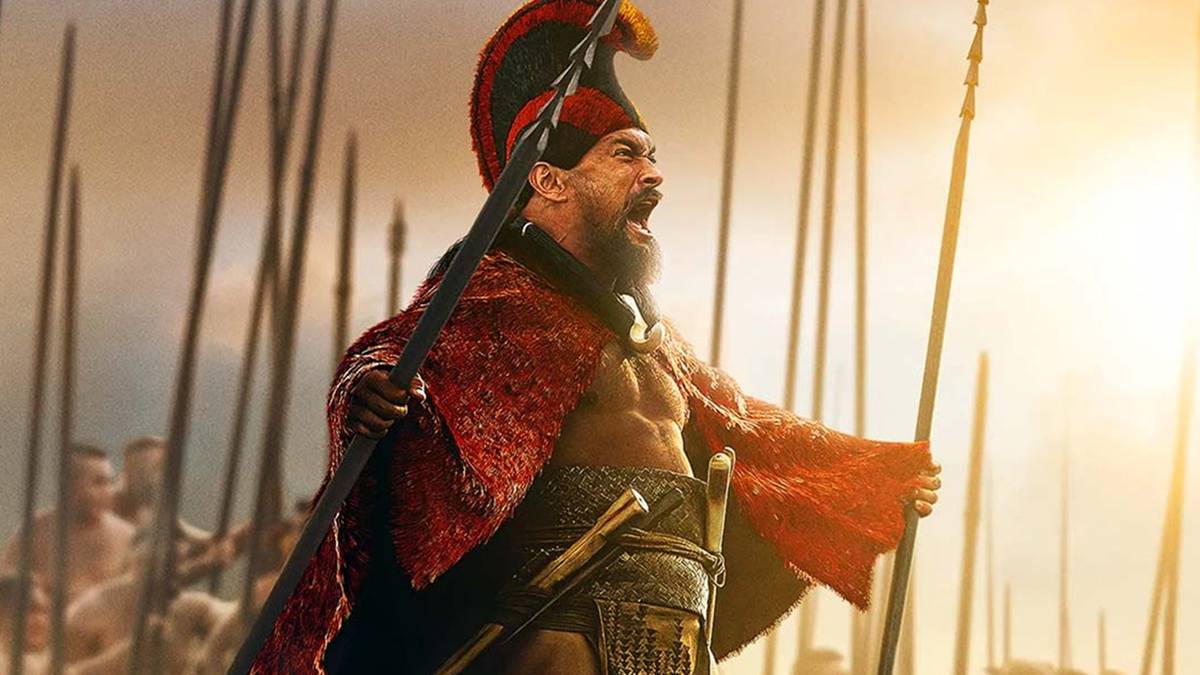
Jason Momoa’s Epic Historical Action Thriller Officially Getting New Release
Apple TV has established itself as a rising force in streaming entertainment. From Silo and Dark Matter to Pluribus and Ted Lasso, there is something for everyone, and not only that, but a ton of huge star power at the…
Sep 12, 2026