
âFungi Dictated the Structure of the Movieâ: Otilia Portillo Padua on Daughters of the Forest
Mar 14, 2026
Daughters of the Forest
For generations, Indigenous women in Mexico have understood the vast power of mushrooms—medicinal, culinary, spiritual, toxic. Their knowledge has been calibrated and passed down matrilineal channels, not unlike the mycelial network that connects individual mushrooms to one another underneath rich soil.
In Daughters of the Forest, Mexican filmmaker Otilia Portillo Padua documents two specific women, Lis and Juli, who reside with their families in these verdant enclaves. While they both possess a wealth of ancestral knowledge about mushrooms, Lis and Juli hope to distinguish themselves within academia. But there is no tension between homeopathy and science here. Instead, the women understand that by enmeshing themselves in a “legitimate” field of study, they can better achieve recognition for the strides their communities have consistently made in the study of mycology. But this is an uphill battle, to say the least. Illegal logging practices, institutional discrimination, and the loss of Indigenous languages almost make their efforts feel futile. Yet throughout the film, Padua is careful to gesture toward a future that is, against all odds, rife with possibility.
The mushrooms themselves are even given as much agency to tell their story as Padua’s subjects are. Through an unconventional “sci-fi” lens, the filmmaker gives these organisms a voice of their own, which they use to meditate on their own existence. “Transforming death into life,” they whisper about their divine purpose. If this sounds like something that someone who recently consumed magic mushrooms would say, you’re not entirely wrong. One of the film’s most electrifying sequences occurs when Juli consumes a psychedelic “holy mushroom,” which she trusts will provide her with the same guidance that it did for her late father many years ago.
Daughters of the Forest simultaneously premieres at SXSW and Copenhagen’s prestigious non-fiction festival, CPH:DOX, on March 13.
Filmmaker: You have an architectural background. Has this imbued your work with a certain perspective?
Padua: Both architecture and film are incredibly collaborative practices. We tend to create this idea of auteurist cinema, but [filmmaking] requires concessions. Somebody mentioned the other day that I make films that are a little bit like ecosystems. It’s not something I intended to do, but maybe it just happened naturally because of the way I understand how we situate each other in spaces.
Filmmaker: Mushrooms are very structurally interconnected as well.
Padua: Mushrooms defy a lot of conventions. I wanted to see what would happen if we made the invisible visible. Whether they’re spores, a web under our feet—all these forces at play that we just don’t look at, but are always there. The storytelling had to be in congruence with how mushrooms are, so fungi dictated the structure of the movie. Rather than me trying to impose a linear, very traditional hero’s journey or three act structure, the fungi was going to guide.
Filmmaker: When did you first become fascinated with this specific world of mycology?
Padua: Paula [Arroio, one of the film’s producers] and I were considering making stories about the relationship with the natural world, and she mentioned foraging. It just coincidentally happened that during COVID, everybody was talking about wanting to forage mushrooms. There was talk about mushrooms saving the planet, of them being better than antidepressants. But it was always a very capitalistic thing, like how do they serve us? So we became less interested in mushrooms and more so the people that take care of them. Indigenous women in Mexico have had a relationship with mushrooms for generations. For many years they couldn’t speak their own language and there was a lot of racism and poverty, so they were eating mushrooms. We were lucky to find them through academia, where Indigenous students from different parts of Mexico study agricultural sciences, including mycology, and then bring them back to their communities.
Filmmaker: Was it immediately clear to you that women tend to pass down this knowledge?
Padua: No. I mean, there was a lot of mentioning of grandmothers. Grandmothers evoke a lot of emotion. Ursula K. Le Guin was once asked who she would send to space and she said a grandmother. I made a film many years ago about my great aunt, so I’ve always been fascinated by elderly women. It felt like there was a very intimate community of women that foraged together. But those are things that I started discovering during the process of making the film.
Filmmaker: The film has a psychedelic slant, like visualizing a “holy mushroom” trip and giving the mushrooms themselves a voice throughout the film.
Padua: In terms of visuals, nothing is 3D-generated. Those spores were filmed in my garage. It’s all 2D composites—layered, projected, and then confined to this 3D space. We always had this idea of taking the journey of the spore. We storyboarded it and tried to film it from the spore’s point of view. We made many attempts over many years and there were a lot of failures in the process.
The mushroom’s voice was a controversial thing for some people. On the one hand, you don’t want to anthropomorphize mushrooms, but the human voice has this emotion that an abstract sound could have never given us. Another beautiful thing is that the holy mushroom talks to you [during a trip]. I guess it’s your own voice, so that’s why we decided that there would be multiple voices [laid over each other]: Juli, her grandmother, brother-in-law and sister.
Filmmaker: Did you do an interview with Juli after she consumed the holy mushroom that helped you translate the experience?
Padua: We did an interview two days afterwards, in which she described certain things. From those descriptions, we took certain creative liberties in order to translate that into a visual language in a much more abstract way. There was obviously this revelation she had about her kid, then she said, “Whatever else the mushroom told me, I’m not gonna say to you.” But when Juli saw the movie she was like, “That’s exactly what my journey was like! How did you know?” That was validating. Maybe it’s just broad enough where there was space for her to read into it.
Filmmaker: I’d like to hear more about categorizing this film as a science-fiction work of sorts.
Padua: We live in a very strange world right now where it’s very dystopic, cruel, difficult, and violent. What sci-fi presented to me was the possibility of rethinking the present and the future. We think sci-fi is one thing—driven by machines and dystopic. But sci-fi represents the possibility of rupture, of imagining. There [are theorists like] Donna Haraway and Adrienne Maree Brown who are talking about futurism and speculative fiction as a device to rethink the world. It’s not that there aren’t things that are difficult—it’s not all a shiny utopia. I’m very cautious when people say it’s “magical realism,” because I don’t see it that way. I was reading Indigenous sci-fi and African futurism, and it’s not necessarily about technology. It has to do with other forms of knowledge. I felt like there was a lot of potential here to use that. We knew that was a risky thing to do, because some people expect a particular documentary. But the beauty of cinema is that it enables you to put yourself in another perspective—even a non-human perspective.
There are people actively building different futures relating to the environment in different ways, doing very small—like a spore—actions and then transforming their environment around them. If a girl ever saw this film and thought, “I believe in the holy mushroom but I also want to be a scientist and those two things can coexist,” I think that would be very beautiful for me. We have just got to imagine other alternatives.
Filmmaker: Can you share the most interesting thing you learned about mushrooms during this process?
Padua: You know the white amanita mushrooms that they eat? They are dangerous because they look like one of the really deadly ones. While it is edible, however, it’s still toxic. It’s how you cook it that makes it edible. At some point, we actually tried it, but without a lot of knowledge of what we were trying. A scientist then told us that maybe we shouldn’t have, because [these Indigenous people] are more used to them than we are. Some of those mushrooms are really bad for the liver. I realized that I was eating something that was…I don’t know if lethal, but definitely poisonous. It struck me that a lot of people might have died for this knowledge. I don’t think I would eat a white amanita next time, even if I’m offered it by someone I trust. But the generations that it took for them to get this knowledge is the line between life and death.
Publisher: Source link



Netflix’s 10/10 Thriller Series Returns After 3 Year Absence With Explosive New Trailer
Over the last five years, Netflix has expanded heavily into non-English content, with international series taking an even bigger focus for the streaming giant. One of the biggest driving forces in that effort is the French thriller series Lupin, led…
Sep 15, 2026
Original ‘Yellowstone’ Dutton Favorite Officially Confirms ‘Marshals’ Return Interest
Yellowstone jump-started a generation-spanning story that has so far spawned four spin-offs that are all interconnected by the Dutton bloodline. While creator Taylor Sheridan has since branched outside that saga with Tulsa King, Landman, Mayor of Kingstown, The Madison, and…
Sep 14, 2026
Netflix Officially Cancels Its 2-Part Taylor Sheridan Replacement Western
Netflix Published Sep 12, 2026, 10:30 AM EDT Omar is an experienced editor and writer who sees life and storytelling as one and the same — there’s always a story to tell. He’s helped shape features, headlines, and coverage across movies,…
Sep 13, 2026
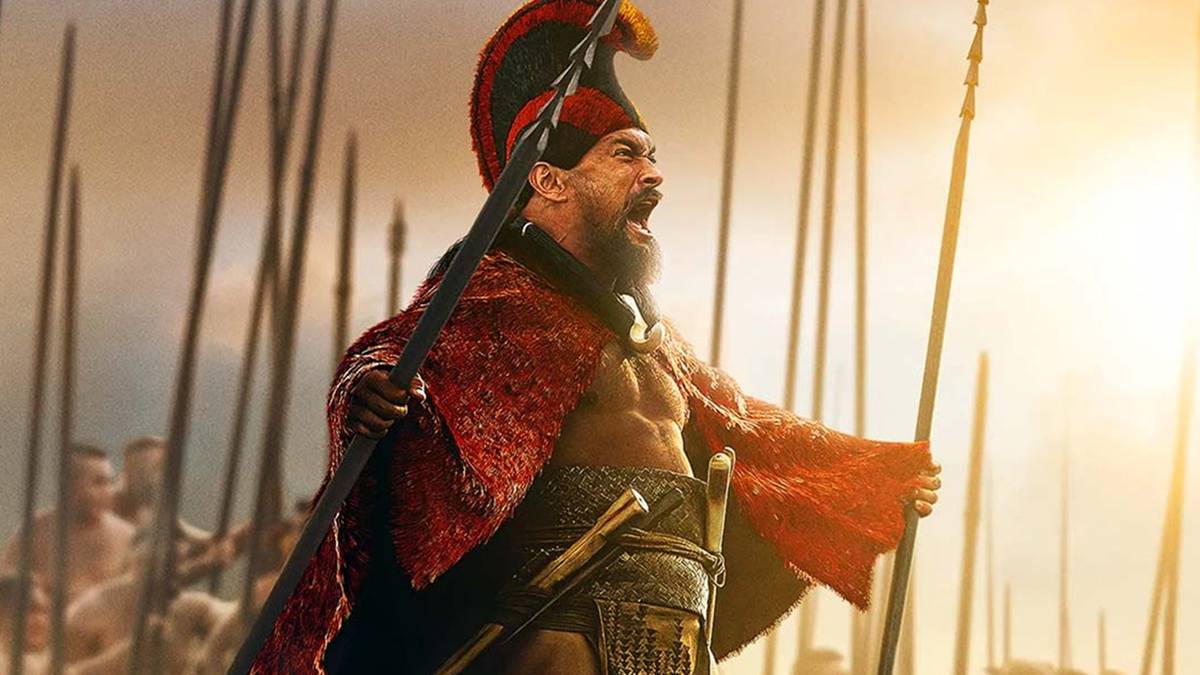
Jason Momoa’s Epic Historical Action Thriller Officially Getting New Release
Apple TV has established itself as a rising force in streaming entertainment. From Silo and Dark Matter to Pluribus and Ted Lasso, there is something for everyone, and not only that, but a ton of huge star power at the…
Sep 12, 2026