
âA Growing Sense of Freedomâ: Sho Miyake on Two Seasons, Two Strangers
May 25, 2026
Two Seasons, Two Strangers
Amidst a surge of interest in contemporary Japanese cinema in the West, Sho Miyake is not yet a household name—but his reputation is only growing. Since graduating from the Film School of Tokyo, Miyake has been building a body of quietly considered dramas. In 2012, Miyake released his first two low-budget features, Playback, an Alain Resnais-ian dive into memories of youth, and Good for Nothing, about a group of high-school boys working at a security company in Miyake’s native Hokkaido. His character-driven works often explore group dynamics, like his exceptional summer romance And Your Bird Can Sing. Miyake’s most recent work, from 2022’s Small, Slow But Steady, a rhythmic and gentle film about a deaf female boxer, and 2024’s All the Long Nights, following a pair of lonely workers at a science toy company, suggest a great director refining himself into a master.
Miyake’s latest, Two Seasons, Two Strangers—which won the Golden Leopard at last year’s Locarno Film Festival, and more recently played Lincoln Center and MoMA’s New Directors/New Films—is a diptych adaptation of two stories by cult manga figure Yoshiharu Tsuge, “A View of the Seaside” and “Mister Ben of the Igloo.” Miyake realizes these works through the eyes of screenwriter Li (Shim Eun-kyung), whom we first see trying to put pen to paper before we slip into the world of her movie, which follows two young people as their lives intersect at an island resort. Right as the film climaxes, we cut to a classroom, where Li and the film’s director conduct a Q&A. Struggling with her writing, Li departs for her own travel inspiration, heading for a snowy town with little planning and high expectations and winding up at a dilapidated inn run by the brusque Benzo (Shinichi Tsutsumi). With a delicate mise-en-scène, at once recalling Tsuge’s comics as well as the singular staging of Ozu, Miyake elegantly crafts a breezy film to watch that is endlessly complex to reminisce on.
Ahead of the film’s run at Metrograph (and another screening this afternoon at 3:45), I talked to Miyake over Zoom about his influences and work on Two Seasons, Two Strangers. Our conversation was translated by Monika Uchiyama.
Filmmaker: To start, I wanted to ask about your relationship to Yoshiharu Tsuge’s work. Not much of it has been translated into English, but I understand it has been quite influential in Japan.
Miyake: The first time I encountered his work was when I was a university student. An older classmate of mine gave me one of his books and said, “You’re not gonna be able to understand it.” His manga are not really considered mainstream. If anything, they’re considered subcultural. But I think that he’s very legendary, and has a big fanbase among people who match the tastes of his works.
The first time I read him, I was struck by how different he was from any manga artist I had ever read. And, of course, there were many people who were influenced by him and followers of his work that made things that are similar. But I think when he was writing and making his manga, he was really trying to find his own unique way of expressing through the artform, and that kind of ambition also made me want to find a new form or expression through filmmaking by adapting his work.
Filmmaker: Tell me about the decision to adapt his work through the frame of a screenwriter.
Miyake: Tsuge’s protagonists are often mangaka (or manga artists) like himself, and so he had a way of projecting himself onto his own protagonists. Learning from that technique, I thought making the protagonist someone close to myself would allow for, instead of a surface-level adaptation, a more core-level adaptation of the work.
Filmmaker: During the Q&A scene, the director talks about there being some autobiography to his use of location in the nested film, which takes place on a small island that he grew up on. I know that you were born in Hokkaido, and I was wondering if that sense of autobiography applies to you as well.
Miyake: Well, for this work, I don’t think my experience growing up in Hokkaido is reflected at all. But that line he says about growing up on a small island is actually borrowed from the actor’s experience, because he himself had grown up on one of the smaller islands of Japan. And I think that kind of experience—of growing up on a small island—is different from the perspective of a person growing up in Tokyo. If Tokyo is considered the normative experience, then growing up in a place like Hokkaido is just different in the sense that you come from the outer prefectures or the islands.
Filmmaker: There’s the teacher character, as well, that talks to them during the Q&A. I was wondering if this character is perhaps influenced by your teacher, Shiguéhiko Hasumi.
Miyake: I want to say “no,” so we’ll leave it at “no.” But Tsuge had a younger brother who was also a manga artist. Although I didn’t get to meet either of them, I was interested in and kind of drew from this idea of siblings who have the same profession.
Filmmaker: I bring up Hasumi because I did want to ask you about the essay film you worked on with him, John Ford and Throwing. I’ve noticed that you’re interested in gestures, and I was wondering if working on that project affected your filmmaking at all.
Miyake: Yes, absolutely, I was influenced by him. In fact, prior to even our collaboration on something like John Ford and Throwing, I’d been reading his writing since I was in my teens, and I would say that everything I know about film history I really learned from him. I think that, not just limited to the idea of gestures, but everything about my foundational understanding of films came through his writing.
Something I find very interesting about his criticism is that, even if we’d been watching the same film, his writing shows me that there was so much that I overlooked. When I go back and watch the films again, everything that he’s written about is evidenced very clearly in what we see, and it’s never about an abstract idea or concept. So I think that I didn’t learn so much about how to make films or the art of filmmaking through Hasumi, but I learned how to love films and to watch and see them truly for what they are.
Filmmaker: The nested film that you start with, versus the back half with the second story, are very subtly contrasted. Obviously, there is the contrast of the seasons—the warmth of summer, the snowy winter—but the film-within-the-film it’s ever so slightly more romantic; the colors are a bit more vibrant, everyone who inhabits the space is a young person. And then when Li goes traveling by herself, she finds something a bit more down-to-earth and realistic. The inn that she stays in is lived in to the point where it doesn’t even look like an inn. Could you tell me a little about that contrast?
Miyake: I wanted to depict a lot of different kinds of contrasts. For instance, this is more in the details, but in the summer sequence, we see a dead fish. I think that the dead fish there might feel like an ominous foreshadowing for some people watching it. But in the winter sequence, we see a fish being grilled in the fire pit, and I think [that scene] is quite humorous. I think it’s interesting how it’s the same dead fish, but in certain situations we can see it as something that’s eerie or something that’s funny. I wanted to depict things as having these dual meanings. Even the film itself can be interpreted through various meanings, and I think that shows the richness of film expression.
Filmmaker: Making that film-within-the-film, does that give you a little more freedom to be stylistic?
Miyake: I think as a result, yes, there was a little more freedom there, but it wasn’t something that was intentional. When I approached the film-within-a-film, it was the same way that I approached the film overall, with the same level of attention to detail. But I think that I work differently depending on who I’m working with. So if my actors are different, the film is going to be different. If the location is different, then I am going to adapt to the location. So I think that kind of work style results in a growing sense of freedom.
Filmmaker: Having watched many of your films, I noticed that characters often meet through circumstance, like how in And Your Bird Can Sing they all work at a bookstore, and then in All the Long Nights they work at the science toy company together. But in this film, the characters seem to be seeking each other through happenstance, and are in certain sense more directly lonely, because they are all moving by themselves as they travel. But they’re trying to create these circumstances to find other people. I wanted to ask why you wanted to make a film that way this time?
Miyake: I think in my previous films, one of the bigger themes was trying to understand groups—how people living or working cooperatively might find moments of happiness together. And with this film, it’s a bit of a more challenging situation because of the story revolving around travel and tourism. You can go on a trip and meet no one. Or, you can also meet people, but have only very shallow interactions your entire time. So with this film, instead of people knowing each other through working at a book store or a science toy company, is it possible for people who meet each other in this kind of happenstance way while they’re traveling to share very special and deep moments together? That was my challenge to myself, to see if that was possible.
Filmmaker: I like how when Li is staying at the inn, she is asking [the innkeeper] about all the details in his house—who painted the mural? Inns are often run by families, but he doesn’t have a family. And he responds saying, basically, “You’re asking a lot of questions about a stranger’s life.”
Miyake: Yes, that’s just an example of these awkward conversations that can happen with people who meet in these situations. It’s very different from a typical, frictionless conversation. It’s very difficult to parse. And that is something that is in Tsuge’s work. That’s the source of the humor that’s in a lot of his work. So having my actors perform these lines in a very serious and earnest way was fun for me to watch.
Filmmaker: Do you ever work in that way, using travel as a starting place for your films? Like Li in the film, she feels like she has to travel to do her writing. Do you ever do the same?
Miyake: I wouldn’t say I’ve travelled in the same sense as the protagonist has in the movie, but I do make it a point to walk a lot. A few years ago, I moved from Tokyo, where I had been living for a very long time, to a much more rural area. I think changing where I lived was a very pivotal, great life choice for myself. It’s not quite travel, but it was in a sense changing my environment.
Publisher: Source link



Netflix’s 10/10 Thriller Series Returns After 3 Year Absence With Explosive New Trailer
Over the last five years, Netflix has expanded heavily into non-English content, with international series taking an even bigger focus for the streaming giant. One of the biggest driving forces in that effort is the French thriller series Lupin, led…
Sep 15, 2026
Original ‘Yellowstone’ Dutton Favorite Officially Confirms ‘Marshals’ Return Interest
Yellowstone jump-started a generation-spanning story that has so far spawned four spin-offs that are all interconnected by the Dutton bloodline. While creator Taylor Sheridan has since branched outside that saga with Tulsa King, Landman, Mayor of Kingstown, The Madison, and…
Sep 14, 2026
Netflix Officially Cancels Its 2-Part Taylor Sheridan Replacement Western
Netflix Published Sep 12, 2026, 10:30 AM EDT Omar is an experienced editor and writer who sees life and storytelling as one and the same — there’s always a story to tell. He’s helped shape features, headlines, and coverage across movies,…
Sep 13, 2026
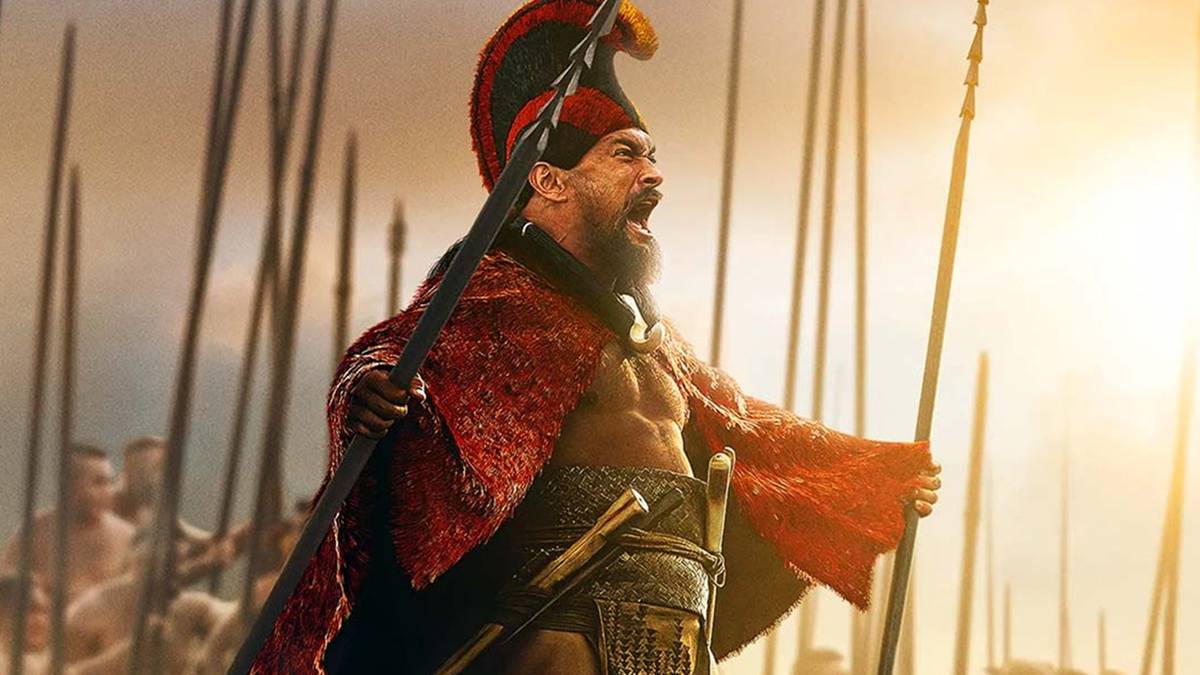
Jason Momoa’s Epic Historical Action Thriller Officially Getting New Release
Apple TV has established itself as a rising force in streaming entertainment. From Silo and Dark Matter to Pluribus and Ted Lasso, there is something for everyone, and not only that, but a ton of huge star power at the…
Sep 12, 2026