
âThe Comedy of Man Begins Like Thisâ: On and with Terry Zwigoff
Jun 22, 2026
The aspiring artist seeking an inspiring avatar in the corpus of Terry Zwigoff has set themselves up, to put it mildly, for a fair bit of consternation. It’s not that, to invoke his Daniel Clowes adaptation Art School Confidential (2006), the “narcotic moment of creative bliss” is totally impossible—Crumb (1994), his documentary about the eponymous underground cartoonist, is littered with such moments rendered with the commonplace flick of a pen, even if bliss is comparatively rare—only Zwigoff’s cadre of enfants terribles, male pathetics, and fringe art-makers wryly observe how a collapsing capitalism and an ever-accelerating corporatism have come to define modern American life. But then, this is how Zwigoff’s cinema moves: in opposition. Inaugurated by the string-band music-man doc, Louie Bluie (1985), and perfected in Crumb, Zwigoff’s cinema represents a peculiarly American agita. In the narrative fictions that followed—Ghost World (2001), Bad Santa (2003), and then Art School Confidential—the upstanding business of being an American is forsaken for its junk-drawer tendencies, its refuse as tightly clung to as Melville’s ever-refusing Bartleby adheres to his infamous “I would prefer not to.”
Curious about his contemporary assessment of the state of the art, I typed Zwigoff an email, an appropriately musty method of communication, given his penchant for untrendy, mostly vanished American styles (after all, his filmic output began around the launch of Netscape Navigator and tailed off the year of Twitter’s birth). When I suggest that his version of Clowes’s Ghost World feels especially prescient in its anxiety over art and life coexisting in the new millennium, his response feels emblematic of his protagonists: “That’s probably because I’ve always been a deeply anxious person.” The grave material situations confronting working artists in 2026 are not wholly different from those in 2001—though at least then, artists like Zwigoff were still finding backing to make movies.
“I haven’t sat through the picture in decades,” Zwigoff confesses about Ghost World. Of whether or not the state of artmaking has been degraded in the ensuing years? “Yes, I’m sure it’s way worse now.” Indeed, Zwigoff’s kiss-off image of art-making in Art School Confidential, his last feature (to date—there’s always a somewhat foolhardy hope that some philanthropic Fat Cat comes to their limited senses in the coming years) is of the artist locked behind bars. Given the choice between rank favoritism and low standards in the academy and a radically grisly “authentic” alternative—which is to say, committing and then depicting actual murders—Jerome (Max Minghella) opts for the careerist path of merely pretending to be a murderer to sop up the public’s (and market’s) hunger for the spectacle of the week. “I don’t even want to submerge myself in the endless stream of shit going on now,” Zwigoff wrote in his e-response, sounding not exactly dissimilar from a few of his ornery central characters. “The greed, cruelty, stupidity, and corruption is just staggering.”
Well…isn’t it? Returning to Ghost World in 2026 (as many will as part of Film Forum’s weeklong Zwigoff series, kicking off today) risks a weird nostalgia for when American discombobulation was merely dizzying rather than totalizing in its stupidity. Watching Enid (Thora Birch) and Seymour (Steve Buscemi) rage against suburbia’s dying light in a cocktail of misanthropic heckling and cheerily reckless romancing activates a dormant, joyous angst, familiar to anyone who used to be young, who used to hold a young person’s idea of living up against even the cruelest American world. This liberatory sensation, embodied by Enid’s ecstatic and iconic solo-shaking to “Jaan Pehechan Ho,” has always been the inoculating agent in Zwigoff’s cranky cinema: buried in all that gunk, some bliss in spite of it. Even in the brute gleam of the 21st century, Zwigoff detects in niche spaces the potential for art: “One genre left open to more filmmakers these days is horror—it has the potential to be done on the cheap and make a lot of money. Many talented independent filmmakers figure out a way to build a film that interests them within the confines of this and succeed, like the guy who made Weapons (2025).”
Even Robert Crumb, who spends the bulk of the film that bears his name bemoaning humanity itself, reserves some slim hope in encountering fugitive human emotion smuggled into cultural objects—one assumes he wouldn’t draw if he didn’t retain this possibility. “When I listen to old music,” Crumb confesses to Zwigoff in the film, “it’s one of the few times when I actually have a kind of love for humanity. You hear the best part of the soul of the common people, you know.” Zwigoff has spoken frankly over the years about how tricky it was to shoot Crumb, who would sometimes clam up over needing to repeat something he’d previously said for the sake of a take, and this double tension—us watching the Crumbs, Robert watching us watch—gives the documentary its peculiar, unapologetic lyricism. This brief scene, though, feels reverent in a manner rare in Crumb, a braided freak-out of a family drama pitched as the darkest comedy. Something in the music (in this case, Geeshie Wiley’s “Last Kind Words Blues”) taps bliss, no matter how improbable it is.
When I asked Zwigoff if he still played music himself, he said that he did, with friends at home. “I think filmmaking, like music,” he wrote, “has a lot to do with taste. There’s certainly a lot of great technicians in both fields, but very few great films or great musicians around. It doesn’t matter much if you don’t have the taste.” If music frequently provides Zwigoff’s cinema its pressure release from total despondency, his taste and instinct for pure comedy facilitates a similar effect. In one particularly zesty review of There’s Something About Mary (1998), Jonathan Rosenbaum wrote about W. C. Fields’s “unforced feeling for lower-middle-class disaffection,” a phrase that could do double-duty as a logline for Zwigoff’s Bad Santa. “Fields’s films portrayed middle class home life in a way that seemed much more relatable and truthful to me than what you’d see in Ozzie and Harriet or Leave it to Beaver,” Zwigoff wrote. “They were a breath of fresh air to me when I discovered them as a kid on TV. Finally something I had a connection with—and not to mention, funny too!” If the image of baby Terry huddled before a staticked box, beholding a fuzzy Fields, is a too-easy point of connection for the Seymours, Enids, and Crumbs of the world, it’s worth noting too that there is no self-loathing in Fields. The mean spirit is a means, not an end. “I think I was initially drawn to W. C. Fields and Crumb and Louie Bluie because those people all had a very idiosyncratic manner of speaking that appealed to me—it was very infectious,” Zwigoff writes.
It’s unsurprising, then, that attunement to “voice” consistently distinguishes Zwigoff’s work, whether in the folk portraiture of Louie Bluie or even the Bay Area–accented eighties pot romp, Budding Prospects (2017), a shelved pilot Zwigoff made with his wife, Melissa Axelrod. In the Zwigoff mode, there is as much dignity in feeling alienated as there is in responding to that feeling with bawdiness, vulgarity, even criminality. Bad Santa perhaps best represents this urge, as it reproduces Ghost World’s generation gap through a very different (and platonic) collision of voices, between a criminally depressed alcoholic and an optimistic young boy. There is as much good to be done in taking a wrecking ball to Christmas corporatism as there is in remembering that goodwill isn’t so bad as an operating principle. Zwigoff told me that, for him, Fields and Crumb were “like a jolt of fresh air after sitting through every single Evening News Broadcast affecting the same voice. It was more original, colorful, less bland and predictable than what surrounded me.” For many (this writer included) such a descriptor applies to Zwigoff as well.
Terry Zwigoff needs no re-canonization as a hope-monger. Rewatching Art School Confidential in preparation for this piece, I was struck by how bracingly acidic, unstable, and frankly sick that film’s mood is. It’s increasingly rare to feel that level of intentionally provocative queasiness from a cultural object in 2026, let alone an object made and distributed by major players, populated by movie stars, and unleashed into multiplexes. When I suggest to Zwigoff that bad taste doesn’t get its due anymore, that it feels as if something has shifted in the calculus of who does or doesn’t get to be an auteur—and which auteur does or doesn’t get to make their movie—his answer is, like his art, bracing. “It’s not a question of bad taste. It’s a question of walking into a pitch meeting with something commercial. The bottom line is getting financing for your film and unless the gatekeepers find your idea or script potentially profitable, and largely profitable, they’re going to pass.”
I think about where Jerome ends up, about how Zwigoff hasn’t made a feature film since 2006, about the fictional Albert Brooks’s crack-up realization in Real Life (1975): “What are they going to do, put me in movie jail? It’s a fake jail!” Maybe like Father John Misty, another would-be crank-nihilist with a terminal romantic strain and a penchant for yesterday’s jazz, it’s only in showing and shaping everyday despair that it’s possible to carve out—and reveal to others—a moment of relief. To quote Crumb once again (as always): “How perfectly goddamned delightful it all is, for sure.”
Publisher: Source link



Netflix’s 10/10 Thriller Series Returns After 3 Year Absence With Explosive New Trailer
Over the last five years, Netflix has expanded heavily into non-English content, with international series taking an even bigger focus for the streaming giant. One of the biggest driving forces in that effort is the French thriller series Lupin, led…
Sep 15, 2026
Original ‘Yellowstone’ Dutton Favorite Officially Confirms ‘Marshals’ Return Interest
Yellowstone jump-started a generation-spanning story that has so far spawned four spin-offs that are all interconnected by the Dutton bloodline. While creator Taylor Sheridan has since branched outside that saga with Tulsa King, Landman, Mayor of Kingstown, The Madison, and…
Sep 14, 2026
Netflix Officially Cancels Its 2-Part Taylor Sheridan Replacement Western
Netflix Published Sep 12, 2026, 10:30 AM EDT Omar is an experienced editor and writer who sees life and storytelling as one and the same — there’s always a story to tell. He’s helped shape features, headlines, and coverage across movies,…
Sep 13, 2026
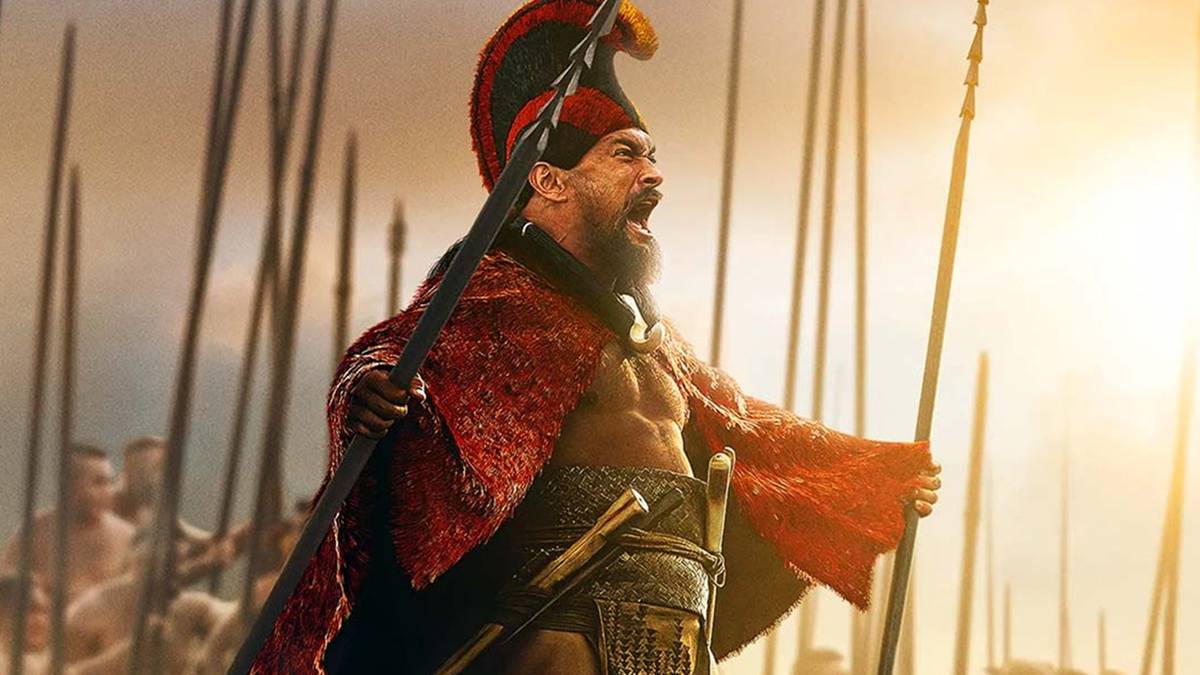
Jason Momoa’s Epic Historical Action Thriller Officially Getting New Release
Apple TV has established itself as a rising force in streaming entertainment. From Silo and Dark Matter to Pluribus and Ted Lasso, there is something for everyone, and not only that, but a ton of huge star power at the…
Sep 12, 2026