
âYou Have to Adjust the Sails to the Windsâ: Graham Parkes on Wishful Thinking
Mar 20, 2026
Wishful Thinking
Love is one of the most powerful forces in the universe. It’s been the subject of some of the best films ever made for good reason, as it’s something that can grab hold of not just your desires, but your very soul as you search for meaning in a life where it can otherwise be lacking.
In American filmmaker Graham Parkes’ feature debut, Wishful Thinking, this is made literal as it paints a portrait of a couple, Lewis Pullman’s Charlie and Maya Hawke’s Julie, whose life in the beautifully-shot Portland, Oregon is about to be upended by the discovery that their relationship can alter the very fabric of the world around them. After a visit to a strange couples therapy summit unlocks a power in them that neither of them knew they had, they’ll find that they can now manifest wonderfully positive outcomes or tragically painful ones—it just depends on how they’re feeling about their relationship. If things are going great, the world will reflect that. But if something is not going so great? Everyone best buckle up for the destruction they may bring.
While Charlie and Julie have their own aspirations for themselves, they’re still doing all they can to make their relationship work. Both of them have agency over their destinies just as they also fall prey to their own suffocating anxieties, deep desires, and often diverging natures. The film, which recently took the top Narrative Feature Prize at SXSW after its March 12 premiere, builds on this lo-fi, science fiction element, making use of exciting split-screen just as it cuts deeper into the hearts of this troubled duo that are trying to make everything work like the world depends on it (because it does).
Filmmaker spoke with Parkes shortly after his film debuted in Austin, covering how he initially came upon the idea of manifesting, making use of split-screen, and the state of modern love.
Filmmaker: Your film has a supernatural, science fiction-esque conceit. What was the first spark of that idea for you?
Parkes: I was actually going down a late-night YouTube rabbit hole, and came across The Secret, the Rhonda Byrne self-help classic. It was sort of the original progenitor of the whole manifesting idea. It’s not my thing, but I find that stuff really fascinating. The movie version is pretty funny, pretty corny, but I was struck by this idea that they keep saying: if you’re in a bad mood, you’re not going to find parking. If you’re in a good mood, you’ll suddenly get a promotion and the weather will be better.
They keep talking about that as though that’s a really uplifting and empowering idea, but as somebody who struggles with anxiety and doesn’t always feel in control of my moods, what made me laugh is that actually is such a terrifying concept. It could almost be a comedic horror film, where if I’m in a bad mood, I could cause a plane crash. Plus, as we all know, if you are really putting all this pressure on being happy, it’s harder and harder to be happy. I thought there was just something very funny, in a dark way, about how we always talk about manifesting as though it’s this great and empowering thing, but, if taken literally, would be quite terrifying.
I was kicking that around for a few days and then I was going through things in my past relationship. I was going through a somewhat similar phase to what the movie ended up being. It then kind of clicked, “Well, what if it’s a couple?” Once I said that it’s not just one person, but a couple’s moods and the relationship together that is causing those things, it had all the humor and I also saw the vague shape of what the whole story would be. The first impulses were the comedic ones, but then as I got into writing the story, the more dramatic and romantic elements started to emerge. I’ve found, for whatever reason, that my ideas normally start as a joke—but then the ones that I stick with are the ones that, the more I think about them, the less that they feel like jokes.
Filmmaker: The film makes fascinating and beautiful use of split-screen at key moments. What were the conversations you were having with your DP Christopher Ripley about deploying that?
Parkes: Me and Chris, we’re close friends. He had read the first draft of the script and we had years where we were bouncing ideas around, a lot of which didn’t end up in the movie. But I think that split-screen thing came on pretty early. I’m just a fan of split-screen. I’ve always liked it and it’s a filmic element I feel has been underexplored. I’m always looking for little ways to use the form in a one-to-one way with the narrative. That’s the stuff that really excites me and I always wanted the movie to be a true two-hander. It was important that it didn’t feel like it was from one person’s perspective. We are locked in these two people’s perspectives, we never have a scene outside of them. I wanted the movie to not be more Charlie’s or more Julie’s, but half and half, so split-screen was natural. It’s about the sharing of perspective, so we even have a POV shot from one and the other next to each other.
Chris thought of a really cool thing where, the first moment of that split-screen, there are double exposure images where one moves one way and the other moves another. That was a whole Chris Ripley construction that I think is so awesome as a way to enter into the split-screen. Then we got to this idea of skies and split compositions of skies. We got weirdly lucky with one set of clouds where they lined up compositionally. I was like, “Oh, that’s so cool.” Most of those are then VFX shots, but we tried to make them look as found as possible. I feel like a lot of the best things in this movie are happy accidents where something happens and you try to lean into it.
Filmmaker: When it comes to happy accidents, you worked with so many of your collaborators before, like Lewis Pullman in your short films, but I’m curious when Maya Hawke came into the picture? They have such chemistry that it feels like she was part of the crew from the very start.
Parkes: We were really lucky with that. I now can’t imagine the movie without her. We had Lewis on and we got Matt Smith and Dan Gedman, our producers. I was aware of Maya, but they actually brought her up, so I went home and did a deep dive. I very quickly realized, “Oh, this is Julie.” We all realized she is who we have in our heads for this role. Talk about wishful thinking, I got really lucky because, three years prior, I was on a plane ride from L.A. to New York and it had to refuel somewhere. I ended up striking up a conversation with the person sitting next to me, and it turned out to be Maya Hawke’s manager. I knew she was a manger, but I didn’t know she was Maya’s. So then when we offered it to them, she reached right out and was like “Oh, it’s you!” I do think that it really helped because we had had a good connection. It did feel fated and expedited things.
Me and Maya instantly spoke the same language. She’s so funny, so honest and engaging. It just felt good from the beginning and stayed that way. She was working a lot, so we didn’t get many rehearsal days with her. I think she was basically there for a day before we started shooting. But I actually think that weirdly helped, just because you couldn’t overthink it. Maya and Lewis just had a really intuitive understanding of each other and just enjoyed acting with each other. There was also no time to think because we had so many pages to do every single day. I’ve called the way I like to shoot “Supermarket Sweep.” It’s about getting as much as you can. I’m not a perfectionist; I direct for the edit. I like to just keep rolling and always, both with the camera and the actors, never get the same thing twice. I like to explore the margins, get a lot, then have them improv and improv their way out of scenes. Maya would make fun of me for that.
Filmmaker: Where you had said before that the story was drawing from some of your own life and experiences, did it feel cathartic to work through some of those real emotions via this film?
Parkes: Yeah, I think it did. It’s definitely a very personal movie, but it’s by no means autobiographical. I was careful in writing it to disperse myself amongst the two characters. I always feel like you need to put a good amount of your personal vulnerability in and write about things that you haven’t made your mind up on yet. I tend to think the stuff that works best is when you’re coming from a place where you know it’s something that’s really emotional and vulnerable, but don’t even know what it is you have to say.
I do think that the more the film grew, the more that we brought people on, and the more that we just started talking about them as characters, it got further and further away. In a great way, the personal, even in the process of making it, was becoming universal. There were so many great conversations with Maya and Lewis—but also everyone—about their own relationships. I think that was probably the most cathartic point. It was just realizing that a lot of what I was writing, that was personal to me, was a universal experience and that everyone could really access it.
Filmmaker: You said you haven’t made up your mind about some of these things, but after the experience of working on this film, what are your thoughts on modern love and relationships?
Parkes: It’s so funny, these are the questions I need to get better prepared for. I don’t feel there is one thesis statement that I’m coming at it with, but one thing that I do feel personally is that it’s a movie about being pragmatic about who you are and accepting that. You have the ambition—or lack of ambition—you have. You have the temperaments and moods that you have. You can work on all of those things, but there also is an inherent nature. You have to adjust the sails to the winds, but you can’t change the winds, you know?
I see the first half of the film, which Chris and I talked about as using longer lenses and being more chaotic, as this escalating panic attack. Then we hit this moment where the movie suddenly slows down and the characters have to breathe for a moment. When you’re in such high anxiety, you can’t look around. This is a film about two characters who need to slow themselves down so the truth of who they are can emerge. It ends up being something sad that emerges, but it’s something that’s inevitable and doesn’t have to be the end of the love they have for each other.
Publisher: Source link


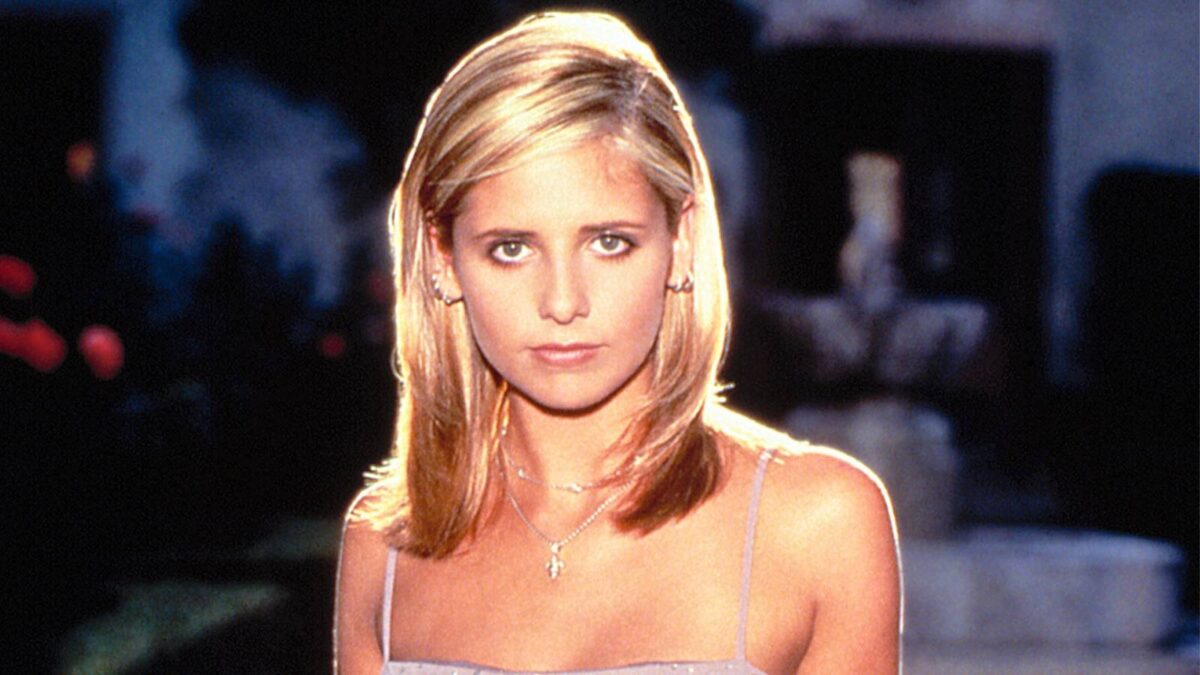
Sarah Michelle Gellar Urges ‘Buffy’ Fans to Avoid Reading Leaked Reboot Scripts
Buffy the Vampire Slayer fans have had a rough few days after Hulu officially pulled the plug on a revival of the series, which would have brought star Sarah Michelle Gellar back as the titular heroine. Described as a continuation…
Mar 20, 2026
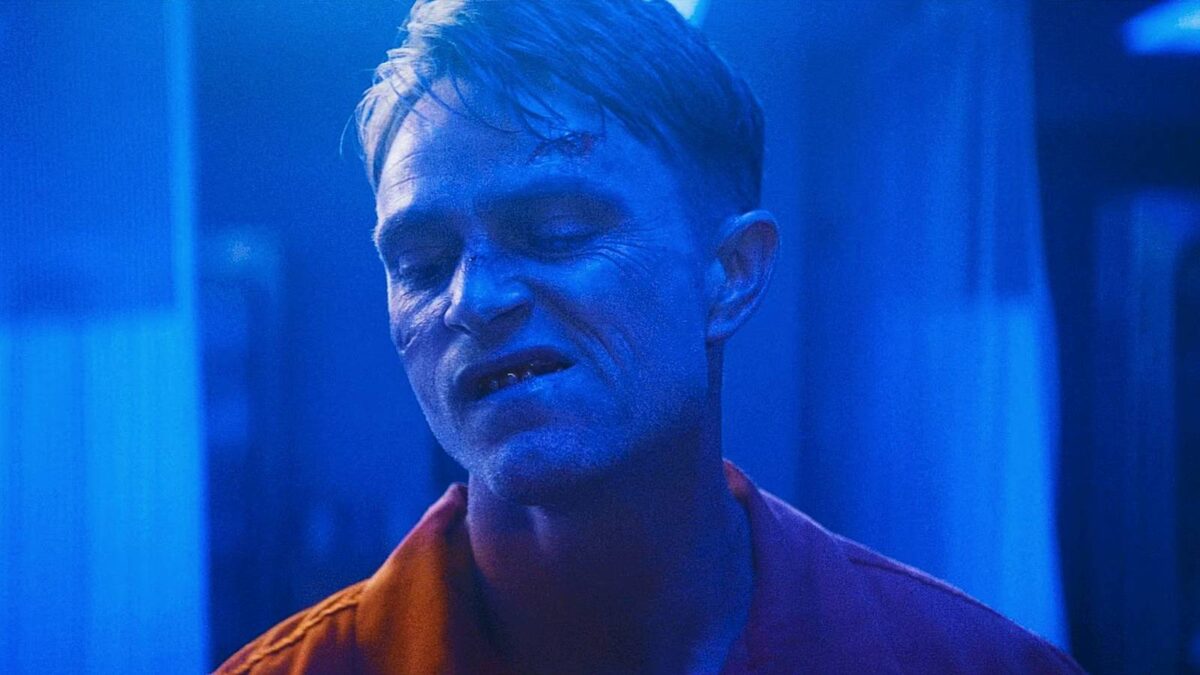
Born Again’ Stars Explain Why Bullseye Is So Dangerous in Season 2 [Exclusive]
Along with Charlie Cox's Matt Murdock and Vincent D'Ofnorio's Wilson Fisk, Daredevil: Born Again Season 1 brought back one of The Man Without Fear's most notorious villains: Wilson Bethel's Benjamin Poindexter, better known as Bullseye. Not only was he back…
Mar 19, 2026
![Born Again’ Showrunner Confirms ‘Avengers’ Character Is Key to Street Level MCU [Exclusive]](https://www.filmibee.com/wp-content/uploads/2026/03/Born-Again-Showrunner-Confirms-Avengers-Character-Is-Key-to-Street-1200x675.jpg)
Born Again’ Showrunner Confirms ‘Avengers’ Character Is Key to Street Level MCU [Exclusive]
Ahead of the Avengers' return to the big screen later this year, Marvel Studios will return to street-level storytelling with the second season of Daredevil: Born Again on Disney+. Along with making the show canon to everything that happened in…
Mar 18, 2026
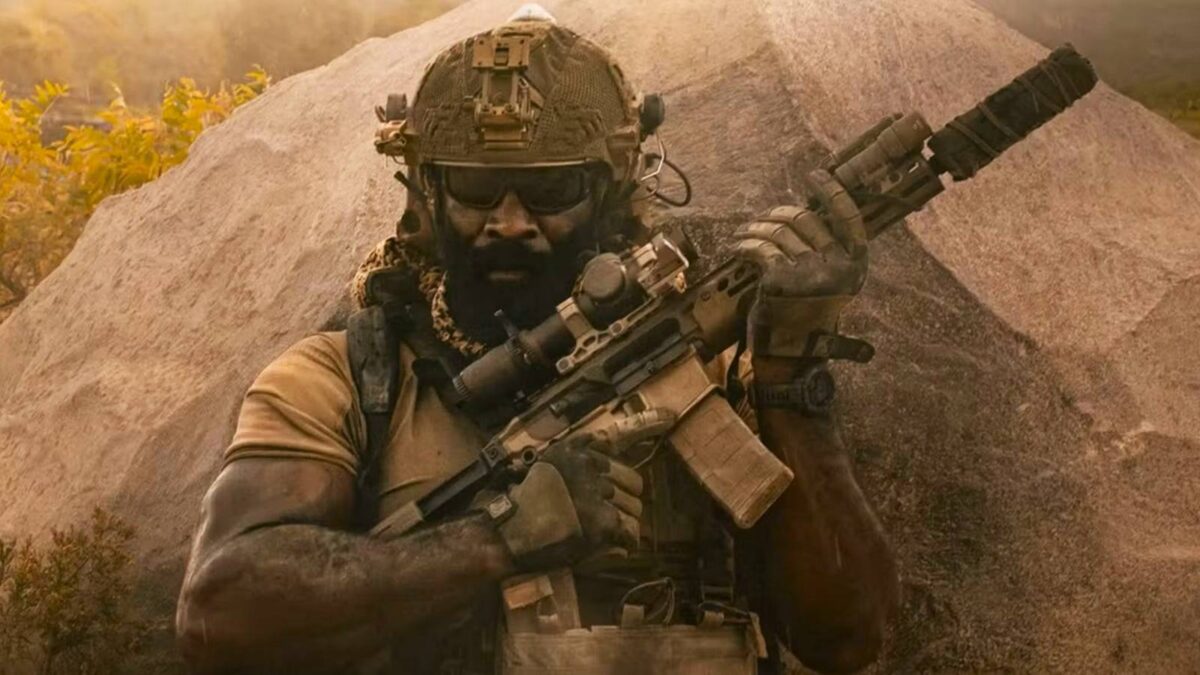
Taylor Sheridan’s Underrated Action Thriller Series Roars to Streaming Success
It’s now been two years since we last saw anything from the underrated action thriller series created by Yellowstone’s Taylor Sheridan, but having finally had some promising word about the new season, the show has now shot up the streaming…
Mar 17, 2026