Barry Keoghan’s ‘Bring Them Down’ Is ‘The Godfather’ “With a Load of Sheep”
Sep 15, 2024
The Big Picture
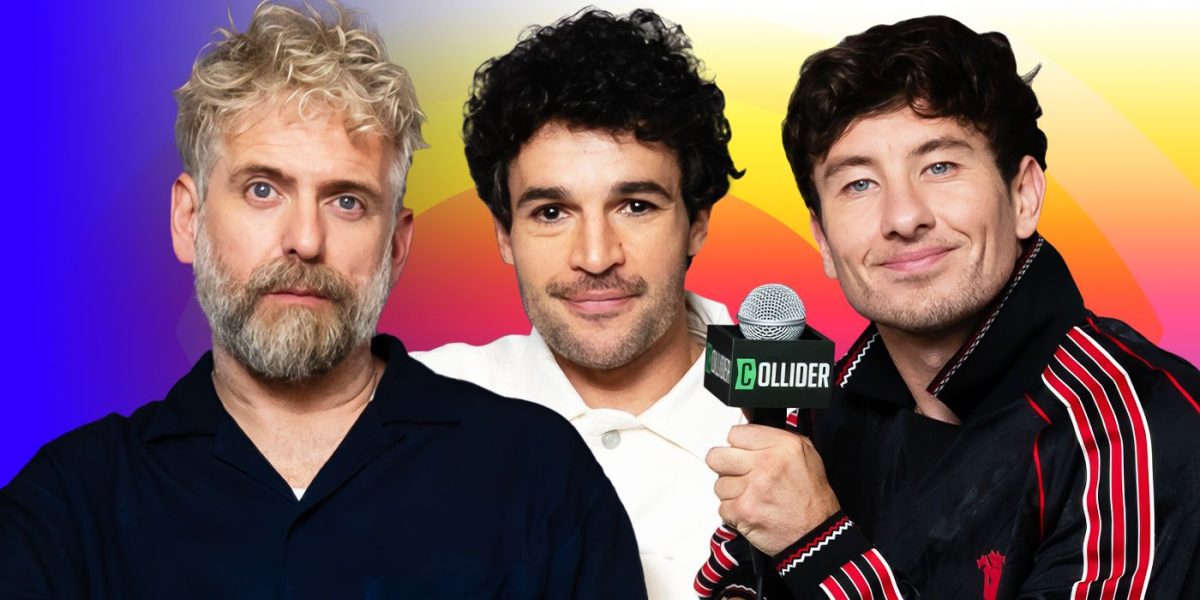
Collider’s Steve Weintraub talks with writer-director Chris Andrews and stars Barry Keoghan and Christopher Abbott for
Bring Them Down
at TIFF.
Bring Them Down
explores generational trauma and toxic masculinity through warring families in Ireland.
Andrews, Keoghan, and Abbott discuss their castmates, challenging sequences, performing with little dialogue, and tease upcoming projects like Matt Reeves’
The Batman Part 2
and
Kraven the Hunter
.
First-time feature director and co-writer Chris Andrews came out swinging at the Toronto International Film Festival with the world premiere of Bring Them Down. The Irish “mafia-esque” drama stars Oscar-nominee Barry Keoghan and Christopher Abbott as two warring families set against a cold, pastoral mountainside. This “violent and brutal” debut is packed with talent in a quiet, simmering allegory for the ruthlessness of war.
In Bring Them Down, Michael (Abbott) tends his family’s sheep farm for his disabled father, played by Colm Meaney. Harboring guilt for the death of his mother and a secret, Michael lives an isolated life, keeping mostly to his prized flock. When two of his rams are found in his rival’s sheep, however, the relentless tension with the neighboring family, Gary (Paul Ready) and his volatile son Jack (Keoghan), sets them all on a perilous path.
Celebrating their premiere, Andrews, Keoghan, and Abbott stop by Collider’s media studio at the Cinema Center at MARBL to chat with Steve Weintraub about their quiet thriller. Bring Them Down has little dialogue, but the sparse chatter allows for an “animalistic” performance from Keoghan, and draws from Andrews’ own stillness. What the movie lacks in conversation (in a good way), it trades for violence and unexpected twists, prompting Abbott to compare the relationships to an Irish mafia of sorts.
For more on the film, check out the interview in the video above, or you can read the full transcript below. Keoghan and Abbot also share tidbits on upcoming projects like Matt Reeves’ The Batman Part 2, Leigh Whannell’s Wolf Man, the Peaky Blinders movie, and Kraven the Hunter.
‘Bring Them Down’ Is a Brutal Exploration of Generational Trauma
Image via Mubi
COLLIDER: Congratulations, I think you two might book another movie after your performances in this film. It’s possible.
BARRY KEOGHAN: Bring Them Down 2. Bring Them Down More.
More generational trauma.
CHRISTOPHER ABBOTT: Bring Them Further Down.
Right, exactly.
KEOGHAN: Below.
I’m joking around about this, but the movie is kind of serious, dealing with real issues. No one will have seen the movie yet, so how have you been describing it to people?
KEOGHAN: Kinda serious. [Laughs]
ANDREWS: It’s a mythic story about two warring farms that share a mountain, and a little disagreement escalates into something which becomes more violent and brutal. It’s an exploration of generational trauma and toxic masculinity.
For the two of you, when you read the script for the first time, what was it that you really responded to and said, “I really want to be a part of this?”
KEOGHAN: I loved the script when I read it. Visually, it was beautiful, as well, and getting the lookbook. I wanted to do something intimate and physically challenging. I was just on board from the get-go.
ABBOTT: Chris is such a good writer. Geographically, it’s sort of pastoral but it has this almost mafia-esque theme to it that I was sort of drawn to in the very micro-universe that is these two sheep farming families. So it’s like it has Godfather -esque themes, but just with a load of sheep.
What I really, really appreciated is how minimal the dialogue can be at times where people are saying so much by saying so little. Talk a little bit about that. You’re also speaking in a completely different language.
KEOGHAN: A lovely language, Irish. Gaelic.
Barry Keoghan Gives an “Animalistic” Performance in ‘Bring Them Down’
Image via Mubi
Talk about keeping the dialogue minimal and about the challenges of speaking in a tongue that you’re not used to.
ANDREWS: I feel like you can say so much with so little in it. That’s kind of how I write, you know? I don’t like to speak too much. I don’t speak that much myself, and I think you can convey so much through actions. Cinema is a medium of image, and these guys are incredible physical performers. They just carry stuff, so you just don’t need them to be saying stuff. It’s all about what they’re carrying inside, as well, and about the fact that they have such issues with communication. It’s about male masculinity and not being able to communicate, and our inability as half of a species, having a problem with communication, and the effect that has on us.
ABBOTT: For me, obviously, speaking Irish was gonna be a challenge, but one that I was excited to take on. But more than that, I just love this story and getting to work with Chris and getting to work with Barry finally. It was a joy.
KEOGHAN: That’s always my favorite is to perform without dialogue. If you can say it without dialogue, and you can get your point across…
ABBOTT: You don’t have to learn lines.
KEOGHAN: Yeah, you don’t have to learn them lines. [Laughs] And it kind of represents the animals in the movie, as well. It’s quite animalistic, the performances. Again, that’s my favorite way to work, is that. So when I read it, yeah, I was on board.
This is your first feature, so what were some of the things that you didn’t plan for when you were filming that came up?
ANDREWS: You prepare for any sort of opportunity or any disaster, but I just try to go in it and be as sort of zen and flexible as you could be. You’ve got the weather, you’ve got animals, you’ve got so many different moving components and a very small budget. We were pretty blessed. I think the thing that I was most concerned about was the weather, but we had an amazing [shoot]; we had no rain. It was cold, but it was constant. It meant that we had this constant light, so we didn’t have to worry about waiting for clouds. When you’re shooting with so little time, it meant that you could keep moving and you could add a pace and a rhythm to what you’re shooting.
But on the flip side, we didn’t have any rain, and we didn’t have any winds, and I was relying on that for the soundscape because there’s a lot of space, there’s a lot of silence, and we wanted to fill it with something. But it was just a joy. These guys are so incredible that you try to interfere as little as possible because what they give you is going to be golden. We’d done all the prep, we had the script, we talked about it, and it’s just about letting them be and letting them own their characters and letting them see where they take it through that world and that story.
Image by Photagonist at TIFF
I’m a huge fan of Colm Meaney, and you share some fantastic scenes with him. Talk a little bit about that.
ABBOTT: Colm is a legend. I like actors who’ve been around and just know the deal, and can turn in good performances. We’re all there to enjoy our time, also, and have fun, and so it’s fun and it’s great doing scenes with him, but then I also just love hanging out with him when we’re not shooting. I love Colm.
KEOGHAN: Colm’s up there, him and Brendan [Gleeson]. There’s a lot of great Irish actors, the veterans, and so getting to do something with him was amazing. Even offset, he’s good company and good crack. You can watch him all day, and you learn a lot from him, as well.
I’m a big fan of both of your work on screen, and I’m just curious, for a role like this, you know you’re gonna start filming on Monday, can you talk a little bit about where your head’s at before the shoot? When are you getting ready for the performance? Are you a month out really learning lines? How are you figuring things out and how you wanna play scenes?
ABBOTT: I forgot when I got there. I got there a bit early, but I mean, for me mostly it was just learning the Irish language stuff. I spent a long time doing that with Patter, who was the dialect and language coach. It was really just technical for a while. And then when it came to shooting, I just trusted the energy that was there, so I can just sort of show up and play, you know what I mean? In terms of thinking, like, it’s a Saturday, and we got to shoot on Monday, it wasn’t so much of that, but the months before it was just getting the accent down and getting the language down. That was probably the hardest thing to do.
Image by Photagonist at TIFF
KEOGHAN: An hour before I get to set, literally. [Laughs]
ANDREWS: You did two hours with the sheep. We did some sheep wrangling.
KEOGHAN: For me it’s just kind of fitting into that part of Ireland because I don’t come from there, I come from the city. And so I wanted to understand the logistics and the manner and the tone. So again, familiarizing myself with the area and with the sheep and making that second nature to me. I mean, it’s all part, isn’t it?
You see the shooting schedule in front of you — what day do you have circled in terms of, “I cannot wait to film this,” and what day is circled, like, “How the F are we gonna film this?”
KEOGHAN: All of them, “How the F?” [Laughs]
ANDREWS: The crash was fun, but we had to do the chase and the crash and the aftermath in one day. So, we’d be prepping and every time they had to move the cameras on the vehicles for the chase, it was taking an hour and a half. So it was just sort of this level of vibration and stress, and then we did the crash, and we only had a small window for the full aftermath of Chris coming to the car, checking on Barry, and Paul [Ready] bringing them out, and then driving away. We just didn’t know how it was going to happen. But the way that the truck crashes, it was just amazing. It sort of went out of frame, hit this tree in this way that it just meant that we got through the next scene in about an hour. It was fantastic. The bit that I was dreading was the night shoots for the sheep massacre because we didn’t have enough time. It was scheduled as four night shoots, and we ended up with three split days.
KEOGHAN: And the sheep were being difficult, weren’t they?
ANDREWS: The sheep were being difficult.
ABBOTT: I think the hardest thing was just working with sheep and a shepherd dog, you know what I mean? I was like, “How is this gonna work?” Having dialogue with a dog…
KEOGHAN: The dog had dialogue?
ABBOTT: No, I had dialogue. I had to sort of command the dog. We had this farmer, Pat, who it was his dog and his sheep, and basically, he had all these commands for the dog, but Pat had a very specific accent and voice, so I had to sort of give the dog commands and try to sound as much like Pat as I could, which was, if you heard him, it was wild.
KEOGHAN: It was spot-on.
ANDREWS: It became like a tick.
KEOGHAN: It actually did.
I always talk about editing because it’s so important to how a film comes together. So you get in the editing room with your footage, what ends up happening after the first friends and family screening? Did you make any big changes or was it like little minor tweaks?
ANDREWS: It’s kind of minor, really. The opening sequence is the bit that changed the most from the script. Looking at it, you wonder why it’s not quite working when it’s translated from the page onto the screen. But people seem to respond to it in a really visceral way, and I think it sets the film up in a really beautiful way now. Otherwise, it was just about trying to make it as taught and as lean as possible, and keep this momentum going through. So, for me, the hardest bit was there was more of Barry and Aaron [Heffernan]. There was so much of it, which was really funny, but it kind of slowed the pace down. So, we just lost a few of those bits, and those are the bits that I kind of miss the most that we had to lose. Oh, it was hilarious. It’s amazing. It translated really well, and the major worry was about the structure of the film, about whether it would play in the way that it was structured on the page. And so, that was the first sort of real anxiety of whether it’d hang together and people would respond to it visually like they did on the page, and they did, so it kind of made our life a lot easier.
‘Bring Them Down’ Is an Allegory for War
“What does it take to finish a war?”
Image via Mubi
I don’t want to give away too much of the movie, but there’s stuff that happens to animals in the film. Was anyone saying to you, “It would be better if you find another thing than this?” Because it’s hard as an audience member to see certain things, and so I’m just curious, what’s that like behind the scenes?
ANDREWS: I mean, it’s brutal, but it’s meant to be. This film acts as an allegory for war. Once you’ve started a war, what does it take to finish a war? And in war, as we see at the moment in the world, there are casualties, and they’re usually people that have nothing to do with it. It’s not soldiers, it’s just people. So, that’s what we’re presenting with the idea of the sheep. We know that it’s going to be, but we, as viewers, when we see something happen to human beings in films, you just take it. It happens all the time. But when we see it happening to animals, it has a very visceral reaction, and we have a very visceral response. But the sheep you see doing sheepy things and then everything else are sheep puppets and VFX.
I will say to you, as an audience member, it is true. You see violence against people in movies all the time, but when it’s with an animal, it rips to your core.
ANDREWS: Completely. And I think it’s an important question, too, that we’re posing to the audience. Why do we feel like this about animals? Why do we not feel like it when we see it happen to human beings? What’s happened to our empathy where it should feel the same for both? Why does it feel different? Why are we happy with that, or why are we accepting of that?
ABBOTT: It’s a sense of innocence, really.
That’s very true, actually.
The ‘Bring Them Down’ Cast and Crew Manifested TIFF
Image by Photagonist at TIFF
When you were making the film, at any point were you’re like, “Oh this is getting into festivals. We’re gonna be at TIFF celebrating the world premiere?”
ANDREWS: No, I’m just happy to…
KEOGHAN: Yes, you did say that.
ABBOTT: Day one.
ANDREWS: Yeah, I think we had the conversation.
You’re being completely sincere?
KEOGHAN: Yeah. I said that. At least, I think I said that. I did. I said it in Irish. No one understood. Chris understood. Colm didn’t. But we did say it. I mean, you always say that about movies when you start them, right?
ANDREWS: I think everyone has aspirations for what it could be, but when you’re in the middle of it, you don’t know what that is. You just want to create something which you’re proud of and that you can stand behind, and then hope that other people start responding to it. Because of the things that we just talked about, in terms of the animals and the nature of the story and how muscular and brutal it can be in times, you just don’t know how people are going to respond to it and if it’s gonna connect and be in the right way that it feels like we’re doing something, which is wait, and ask serious questions, and not glorify or fetishize things.
You definitely don’t do that. For all three of you, you guys are here as the face of the movie, but there are so many people behind the scenes who have worked on this to enable you guys to be here. For each of you, who’s an unsung hero, someone who helped make this movie, that you want to shoutout?
ANDREWS: I mean, I could shoutout so many people. My producers have just been exceptional and they’ve dragged this ship over a mountain — Ivana MacKinnon, Jacob Swan Hyam, Ruth Treacy, Julianne Forde. They’ve just been incredible supporters and amazing. My DP, Nick Cooke, my editor, George Cragg, who helped me put it back together again. They’ve all been exceptional collaborators.
ABBOTT: And I’ll shoutout Pat the farmer.
KEOGHAN: Eddie Ray, the animal handler. Eddie’s a nice lad. He does all the animal handling in Ireland.
As your first film, how much were you thinking about storyboarding everything and how much are you figuring it out in the moment? Because you want to make it as cinematic as possible, but you also only have so much time.
ANDREWS: I didn’t storyboard, I shot list. I’d sit down and break down every scene with my DP. We did a lot of work about the language that we wanted to use, going from sort of static shots, then track and dolly, then handheld, then handheld, track and dolly, static. So there was a language that we were using, and that sort of dictated how we approached each scene, each sequence. But it was also, I don’t like to be too tied to a storyboard. You want to see what these guys do. Certainly, as a debut filmmaker, to have these guys — at any point in your career, to have these guys is a coup. So, as a debut, you just don’t want to meddle too much. Let’s see what they do and then find, within your language, the best way to photograph them. So, it was quite fluid like that.
Barry Keoghan Teases a Brilliant Script for the ‘Peaky Blinders’ Movie
Image via Netflix
I’m very excited about the Peaky Blinders movie. What can you tease about that? When do you start filming?
KEOGHAN: I don’t even know, really, when I start. I think like the end of September — 28th, 29th. Someone asked me, “Did I read the script,” yesterday. I was like, “I mean, I wouldn’t be attached if I didn’t read the script.” But yeah, I’m excited. The script is brilliant. Excited to be with Cillian [Murphy] and Rebecca [Ferguson].
I’m so curious because what Cillian’s told me is that show was made for, like, $5 and a roll of duct tape, and they actually have a budget now to make the movie.
KEOGHAN: $10 and duct tape now.
My other thing for you is, I am very curious if Matt Reeves has asked you to save any dates for next year.
KEOGHAN: That I can’t say anything on because it just goes everywhere.
But that’s why I ask it.
KEOGHAN: [Laughs] Right. That I’m gonna stay quiet on because, yeah, I’ve been told to stay quiet.
Image via Warner Bros. Pictures
I have a feeling, if I was a betting man, that either in this upcoming thing next year or the one he makes after that, you would be a part of it.
KEOGHAN: I’m just smiling.
Exactly.
Leigh Whannell’s ‘Wolf Man’ Will Be “Scary, Beautiful, But Tragic”
Image via Univesal Pictures
I am so looking forward to Wolf Man because of Leigh [Whannell]. Talk a little bit about what it was like making that.
ABBOTT: It was a lot of prosthetics, a lot of time in the prosthetics chair. We did it old-school style, which I appreciate. And Arjen [Tuiten], who was the designer for that, I thought designed a scary, beautiful, but tragic-looking creature for it. I’m really excited for people just to see that work. It’s a fun, scary, tragic film, and I’m excited for people.
KEOGHAN: It’s amazing. I just watched the trailer.
Because he’s the one who’s writing-directing is why I’m so looking forward to it.
ABBOTT: I think he did a great take on definitely his version of what that story could be. If you liked Invisible Man, then you’re definitely gonna like this.
Also, I loved Upgrade .
ABBOTT: Yes. He’s got a lot of tricks up his sleeve, especially visually.
I also have to talk about John Michael McDonagh and Fear Is the Rider . What can you tease people about that one?
ABBOTT: I think the tease is that I’m actually not sure if that movie is happening. And I’m not being coy. That was actually genuine. But I love John.
KEOGHAN: Did you film it?
ABBOTT: No.
It’s one of those that could happen.
ABBOTT: It could happen.
The main reason why I think Kraven could be good is because of J.C. [Chandor]. J.C. is very talented. What can you tease people about it and why people should be excited for it?
ABBOTT: I worked with J.C. years ago, and he’s become a buddy, and he’s a big reason why I did that film. I think he did something really cool with it. It’s definitely a superhero film, but there’s something very raw and real about it, which makes it more believable, you know what I mean? It’s not like loads of people flying through the air and shit. There’s something graphic about it. I think it’s great.
Also, Aaron Taylor-Johnson, he’s an okay actor. He puts in some effort.
My last question for you, clearly know what you’re doing behind the camera, and people are really going to respond to this one. Are you already writing other scripts? What are you thinking about?
ANDREWS: Yeah, I’ve got a couple of things that I’m starting to work on. It’s an adaptation of a Raymond Carver short story that we’re looking at at the moment, and then another one which is an erotic horror set in Manchester.
KEOGHAN: Erotic horror?
ANDREWS: Yeah.
KEOGHAN: Interesting.
Special thanks to this year’s partners of the Cinema Center x Collider Studio at TIFF 2024 including presenting Sponsor Range Rover Sport as well as supporting sponsors Peoples Group financial services, poppi soda, Don Julio Tequila, Legend Water and our venue host partner Marbl Toronto. And also Roxstar Entertainment, our event producing partner and Photagonist Canada for the photo and video services.
Publisher: Source link





Eggs – Film Threat
In writer-director-star James Clair’s short drama Eggs, a man struggling to rebuild his life finds his quiet mornings turning into strange conversations with the very eggs he is meant to cook. I mean, they want him to eat them. So…
Mar 11, 2026
Ethan Hawke Elevates A Rugged, Predictable Gold-Run Survivalist Western[Sundance]
As far as one can tell, Murphy (Ethan Hawke), a father, WWI veteran, and avid car mechanic, has never encountered an insurmountable challenge. Living in Eugene, Oregon, in 1933, four years into the Great Depression, Murphy and his young daughter,…
Mar 11, 2026
The Moment Review | Flickreel
Brat Summer was a cultural phenomenon that I didn’t understand at all. I knew that it was connected to an album that Charli XCX had released. Whenever I asked what Brat is, though, nobody could seem to give a straight…
Mar 9, 2026
Cillian Murphy’s Netflix Crime Hit Delivers a Brutal, Bleak Finale
It’s been four years since we last saw Cillian Murphy play Tommy Shelby, but seven have passed in the world of Peaky Blinders, with The Immortal Man taking place in 1940, in the middle of World War II. Tommy’s gone…
Mar 9, 2026