“Capturing a Kenyan Point of View as a Central Theme”: DP Christopher King on How to Build a Library
Feb 3, 2025
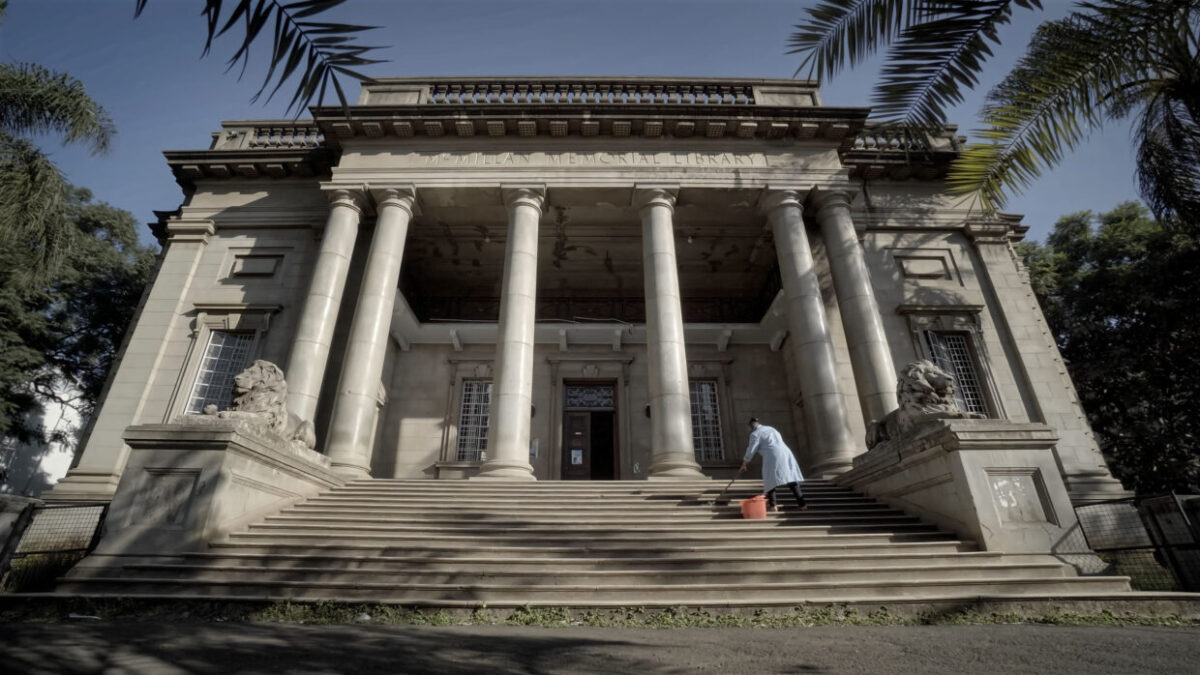
Still from How to Build a Library. Sundance Institute.
Shiro and Wachuka are two Nairobi women who attempt to transform the McMillan Memorial Library, a whites-only library until 1958, into a modern and vibrant cultural hub. Their attempts to navigate local politics and Kenya’s colonial history is tracked in How to Build a Library, husband-and-wife duo Christopher King and Maia Lekow’s follow-up to The Letter.
King, besides co-directing, also served as the film’s cinematographer. Below, he explains the importance of capturing a Kenyan point of view and why working as a two-person crew helps build trust with their subjects.
See all responses to our annual Sundance cinematographer interviews here.
Filmmaker: How and why did you wind up being the cinematographer of your film? What were the factors and attributes that led to your being hired for this job?
King: Working together with my wife, Maia Lekow, I always work as a director and cinematographer (and also editor and producer) while Maia, who is also a musician, does all field recording (and also co-composes of the score). So, we are mostly working as a two-person crew, which is important to capturing a deeply intimate presence with our subjects, with whom we try to develop a powerful relationship and trust over years of filming. This non-intrusive way of working and absence of a large crew is key to capturing important moments when our subjects are unguarded. Also, having lived in Kenya for 17 years (and Maia being a Kenyan) was crucial to capturing a Kenyan point of view as a central theme of the film and is why all additional cinematographers were Kenyan. Knowing the history and experiencing first-hand both the excitement and challenges of living in Nairobi were important factors that influenced the DNA of the images and allowed us to capture Nairobi’s raw energy and the quiet tension within the McMillan Library.
Filmmaker: What were your artistic goals on this film, and how did you realize them? How did you want your cinematography to enhance the film’s storytelling and treatment of its characters?
King: Our goal was to contrast the decaying, forgotten grandeur of the library with the vibrant energy of the young visionaries coming in to transform the space, a metaphor for what we saw as a battle for the soul of the city. We used natural lighting to emphasize the stark contrast between the dark, dusty archives and the bright colors of the young subjects, as well as the bustling city outside. This visual juxtaposition highlighted the struggle to bridge the past and present while also accentuating an image of Kenya that we feel has not been experienced by most of the outside world—an image of optimism, of potential, of a cultural renaissance in the heart of the city.
Filmmaker: Were there any specific influences on your cinematography, whether they be other films, or visual art, of photography, or something else?
King: I’m inspired by a range of artists and mediums, from Rembrandt or Caravaggio to photographers such as Gordon Parks and Seydou Keïta, cinematographers such as Christopher Doyle or Chris Marker, as well as inventors like Étienne-Jules Marey, who showed us how photography helps us understand how the physical (and I’d say spiritual) world functions, outside of our sensory experience of life.
Filmmaker: What were the biggest challenges posed by production to those goals?
King: Many years of filming were self-funded, so it was challenging to continue shooting and giving our all when demands meant we had to find other ways to support ourselves. Also, filming verité style, it’s always a challenge seeing all the shots that are missed, or moments that were lost to the ether of time. But when shooting for more than 7 years, helped us overcome these challenges.
Filmmaker: What camera did you shoot on? Why did you choose the camera that you did? What lenses did you use?
King: We filmed mostly on Sony A7S and FX3, which (outside of their affordability) gave us a lot more room to work in low light and capture the mood and tone of the dusty, forgotten space. Also, the small formfactor allowed us to maintain a crucial intimacy with our subjects, so that they could concentrate more on their tasks at hand and not be distracted by large rigs or many crew members.
Filmmaker: Describe your approach to lighting.
King: We used only natural lighting. The McMillan Library features beautiful high ceilings, which gave all interior scenes a beautiful classical look. Exteriors we tried to film when the sun was low, but this was not always how things worked out.
Filmmaker: What was the most difficult scene to realize and why? And how did you do it?
King: The scene where the king of England visited the library, was extremely difficult given the restrictions imposed on us by the royal entourage. We were initially not allowed to film this day, but we persevered and didn’t accept no as an answer and eventually were allowed to film from a single position. It was an extremely chaotic day, and at first, I was very unhappy with the footage captured. However my co-editor Ricardo Acosta C.C.E. gave this footage a poetry that I could have never imagined by pairing this it an earlier sequence showing a similar Royal Visit to Kenya in 1952, which gave us a sense of history unfolding in front of our eyes, carried by our protagonists’, Shiro’s and Wachuka’s, moral conundrum of having to bow to an empire they had worked so hard to clean from the library.
Filmmaker: Finally, describe the finishing of the film. How much of your look was “baked in” versus realized in the DI?
King: We shot everything extremely flat and neutral (sLog2), so the look was mostly created in the grading stage. Given the important use of archive in the film and the historical photographs our subjects were unearthing from inside the library, we worked with our colorist to treat our verité footage with a classical, de-sharpened film look with tones of brass and wood and dusty textures. We then tried to contrast the unsaturated and dimly lit environment of the old library with the vibrant colors and African fabrics introduced by the young protagonists, as well as the colorful street-life outside of the library, to show the life and energy being injected by a new generation.
TECH BOX
Film Title: How to Build a Library
Camera: Sony A7S, FX3, FX6.
Lenses: Sigma 24-70mm, Zeiss Batis 40mm & 85mm, Sony 70-200mm, Canon 24-105mm.
Lighting: None.
Color Grading: DaVinci Resolve
Publisher: Source link





‘The Rookie’s Best Season 8 Episode Goes Completely Different With Full Zombie Horror
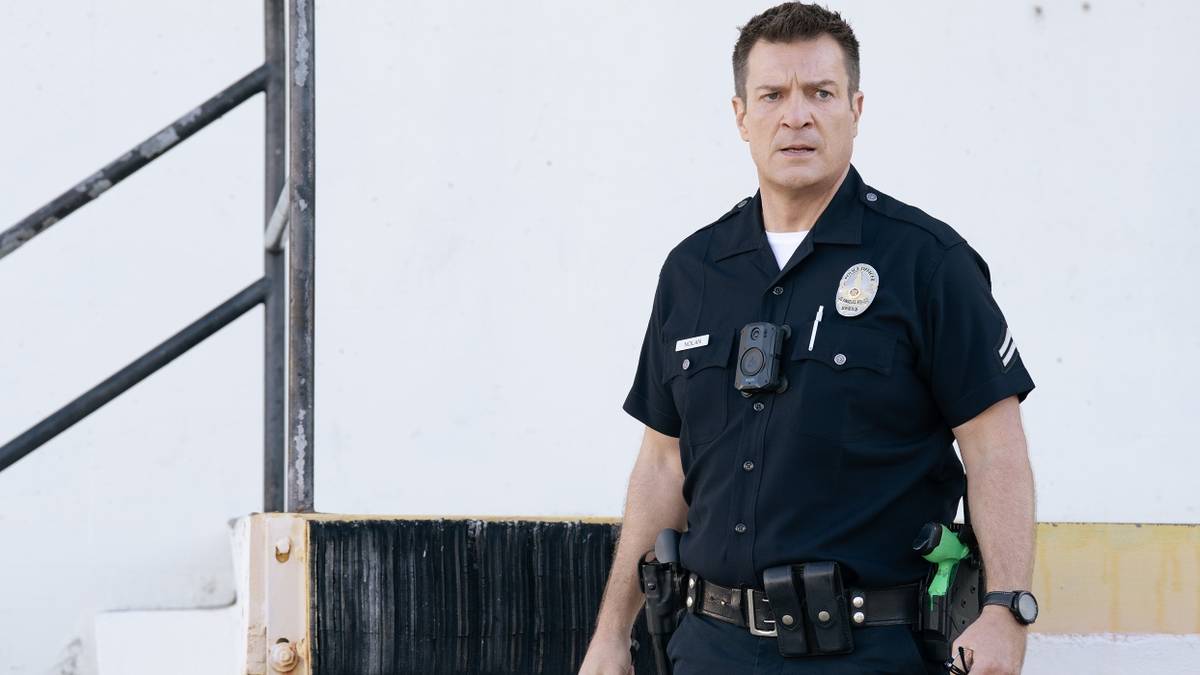
Editor's Note: The following contains spoilers for The Rookie Season 8, Episode 10.It's crucial for procedurals to come up with a winning formula that entices viewers to tune in every week. But it's just as important for these types of…
Mar 13, 2026

Sidney Prescott Leads a Brutal Throwback
Walking into Scream 7, I wasn’t sure if this entry would be a new reinvention. I know I wanted tension. I know I wanted that uneasy calm before the snap. And most of all, I wanted to see why Sidney…
Mar 13, 2026

Eggs – Film Threat
In writer-director-star James Clair’s short drama Eggs, a man struggling to rebuild his life finds his quiet mornings turning into strange conversations with the very eggs he is meant to cook. I mean, they want him to eat them. So…
Mar 11, 2026
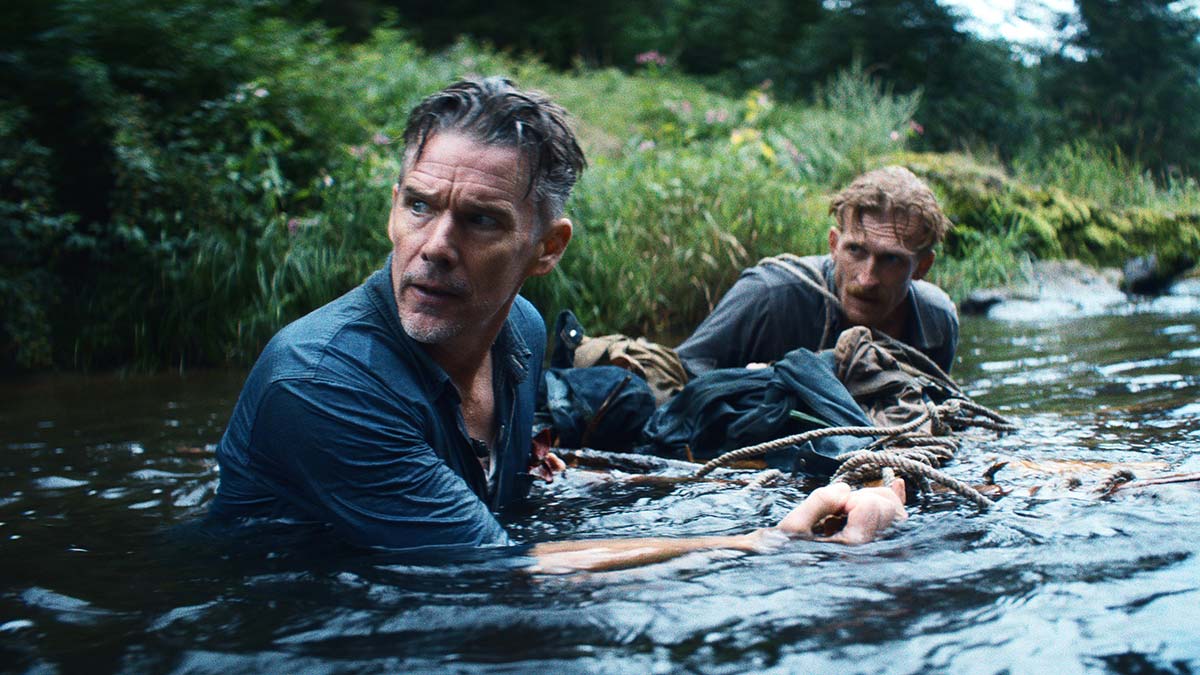
Ethan Hawke Elevates A Rugged, Predictable Gold-Run Survivalist Western[Sundance]
As far as one can tell, Murphy (Ethan Hawke), a father, WWI veteran, and avid car mechanic, has never encountered an insurmountable challenge. Living in Eugene, Oregon, in 1933, four years into the Great Depression, Murphy and his young daughter,…
Mar 11, 2026