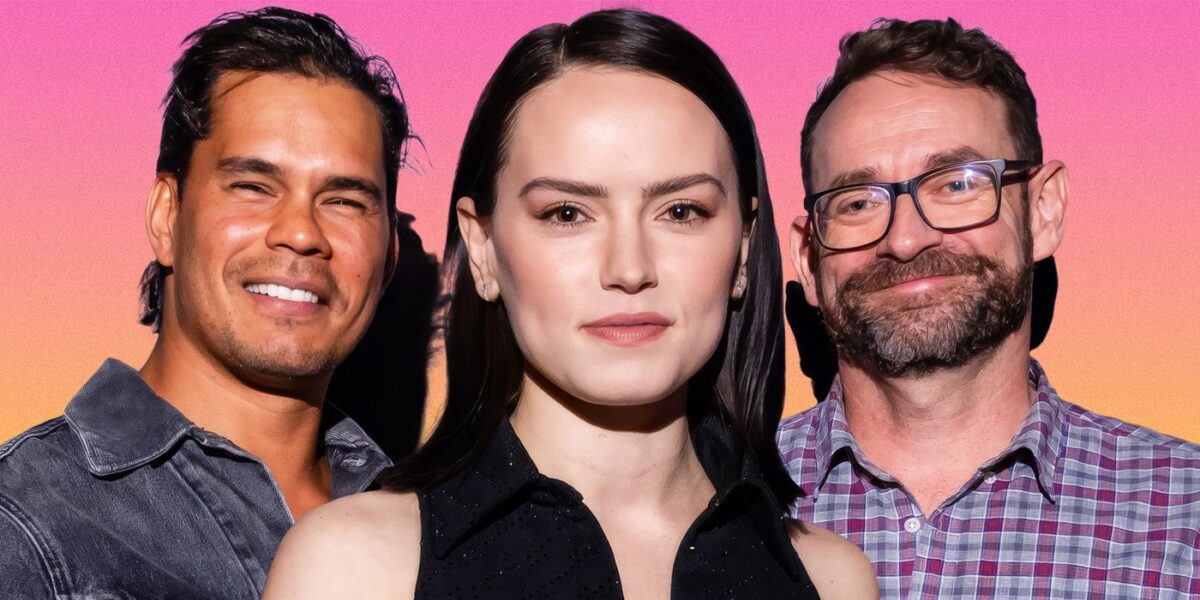
Daisy Ridley’s Horror Drama ‘We Bury the Dead’ Skews the Rules
Mar 20, 2025
Summary
Collider’s Steve Weintraub speaks with Daisy Ridley, co-star Mark Coles Smith, and writer-director Zak Hilditch for We Bury the Dead at SXSW 205.
In the movie, Ridley plays Ava, a woman searching for her husband in the wake of a devastating zombie outbreak.
During this interview, Ridley, Smith, and Hilditch discuss zombie lore and rules, breaking away from clichés, preparation for the intense shoot, and what’s up next for each of them.
Daisy Ridley has mastered the art of the Jedi in Star Wars, swam the English Channel, and she’s even taken down criminal activists Die Hard-style. Even with all this, plus producing and acting, under her belt, this on-screen heroine has now conquered a “terrifying” new fear in We Bury the Dead. “I fought a lot of things—people and things—but it was intense.”
From writer-director Zak Hilditch, We Bury the Dead follows Ava (Ridley) down a deadly highway in Tasmania as she searches desperately for her husband (Matt Whelan) after a devastating military accident. On the road, she encounters a man on his own journey, played by Brenton Thwaites (Maleficent), the undead, and other characters caught in the throes of the apocalypse, like Mark Coles Smith’s (Akoni) harried soldier, Riley.
At SXSW 2025, Ridley, Hilditch, and Smith joined Steve Weintraub at the Collider Media Studio at the Cinema Center to celebrate the World Premiere of We Bury the Dead. During their conversation, the trio share the behind-the-scenes of filming an emotional zombie feature independently and how this story changes the rules of what we know about the walking dead. Check out the video above or the full transcript below to find out how they prepared for the intensity of this shoot, how the movie changed from its original draft, and what they’ve got in the works.
‘We Bury the Dead’ Makes Its Own Zombie Movie Rules
“We came up with something that hasn’t really been done.”
Image via SXSW
COLLIDER: I really want to start with congrats on the movie. I thought you guys did such a great job with it. It looks so much bigger than you clearly had the budget for, and I think people are going to be very surprised. I know what the movie’s about, but everyone watching will not know anything, so how have you been describing the film to people?
ZAK HILDITCH: It’s been an interesting one. Basically, it’s about a woman named Ava who, after a cataclysmic event that her husband was caught up in, travels to Tasmania from America to find out if he’s okay. When she gets there, it turns out some of the dead bodies aren’t staying down. That’s giving the least spoilery version of the movie, but it’s the sort of film where there are a lot of different ways you can explain what it is. It’s a little bit of everything, which is the kind of eclectic film that I like. It’s like I sort of throw a bit of the kitchen sink into this script. It’s been inspired by films that I love, like 28 Days Later, for instance, a genre zombie movie, but with a twist and with something new to say and just done in an interesting new way, and told from a singular point of view, which I just love those ordinary people caught in extraordinary situation kinds of films.
Can we call this a zombie movie or you’re not calling it a zombie movie?
HILDITCH: We’ve been calling it a Daisy Ridley zombie movie until the cows come home, so go nuts.
I don’t have a problem when people mix it up on the zombie movies in terms of the types of zombies, in terms of the things that can happen, but there are a lot of people who care about rules, like the zombies need to move slowly like George Romero, and it needs to do certain things. I, of course, disagree. I welcome changes. Your film has different types of zombies, and there are different rules. Did you feel any concern? Because like I said, a lot of zombie fans want it a certain way.
HILDITCH: That’s an interesting question because in early drafts of the script, there weren’t even zombies, and then they started creeping their way in. I would never want to tell a clichéd zombie story; I only ever wanted to use them if they were going to work with the theme and the very story itself in a unique way. I think we came up with something that hasn’t really been done before using the zombie lore in a way that hasn’t really been done. The rules of all of that are done in a slightly skewed way, which I’m definitely not going to spoil right now, but I hope that audiences are going to be pretty into the way we went about it.
I really dug the choices that you made. For the two of you, I’m sure you’ve read a lot of scripts. What was it about this one that said, “Yes, I’m doing this?”
DAISY RIDLEY: In the most broad of terms, I just like what I like, and I like all sorts of different things, but I really liked this. It’s interesting because my mom and sister have both watched the film now, and my sister’s reaction was, “Oh, that’s so scary,” and my mom’s reaction was, “Oh, that was so sad.” I think it was that combination of things that really spoke to me because there are 100 different ways you could describe the movie, but at the center of it is a woman who is trying to find an answer, and in doing so, she’s also seeking forgiveness. There’s so much that she’s searching for, and along the way, she has other things to deal with. It’s such a beautiful combination of all of those things and her dogged determination to find her husband, regardless of how she finds him, not knowing what that ending was going to be.
Then, I love the fact that, for a moment, it becomes a bit of a road movie, and then the sequence that we have together feels like tonally such a shift. It was strange; I left filming this to come here last year, did this insane journey, then flew back to Australia, and the following week, we had our stuff together. It’s also interesting the themes of fear and who is representing fear in a very real way. So, the stuff we have together felt tangibly so terrifying in a very guttural way. It was such a broad range of things that I loved about the script, and then filming it, all of those things were heightened.
MARK COLES SMITH: I’ve just always wanted to be in a zombie movie.
Related
The 10 Most Unique Zombie Movies, Ranked
Films that’ll get in your head, in your head… Zombie, zombie, zombie-ie-ie.
I think a lot of us feel the same way.
SMITH: I’ve been a huge fan of the genre, so when Zak touched base, and he had the script, and that was the pretense, I was really excited. Then I started reading it and was very disappointed… No! [Laughs] This was so different from anything else I’d seen in the canon and in the genre. This is an incredible story that Daisy delivers so well, but it’s a huge meditation on loss and on grief and on how we hold on to what we’ve lost and how it changes us. So, my character really, in a way, mirrors Ava in the film in that he’s also lost loved ones, but it’s how he’s coping or not coping with that that ends up being the source of his antagonism towards her.
It’s really interesting because he was such a unique character for me, unlike anything I’ve ever done. As I was reading him, it’s like, the most terrifying thing about my character is the pain he’s going through. I’d never had an opportunity to play someone like that.
It’s basically about how people are willing to really put themselves at risk when they need to get an answer to something. I was thinking, as I was watching, I might do exactly what your character’s doing just because I couldn’t live without knowing what exactly happened. For the three of you, if there was a situation like this where something happened to your loved one, do you think you’d be willing to do what she does to try to get an answer?
HILDITCH: Oh, 100%. I’m already a person who needs to know the answer, so if it involved a huge loss like that, I’d do everything I could, 100%, no matter what the predicament.
RIDLEY: Yes, 100%. Also, Ava is carrying a lot of shame, too, so aside from this great loss and this great potential loss in her life with her husband that she’s seeking answers for, she is also trying to reconcile what she has done. That adds more of a thing of her needing answers for me. But yes, even outside of that, I would go to the ends of the earth to find an answer.
SMITH: I take it on a case-by-case basis. [Laughs]
I’ve got to tell you, you’re probably right. How much do you love that person and need to know what exactly happened?
SMITH: I don’t need to see mum as a zombie.
Daisy Ridley Says Fighting Zombies Is Terrifying
“I fought a lot of things—people and things—but it was intense.”
Image via Neon
So, here’s the big question. I think this is your first time fighting a zombie, so what the hell was that like?
RIDLEY: It was really intense. I fought a lot of things—people and things—but it was intense. It was super intense. As you were discussing, the progression of the zombies is very satisfying because there’s an element of understanding at the beginning for Ava. She’s trying to figure out what it is that’s going on, and then when she meets the thing that is, I’d say, the classic zombie moment, doing that is always terrifying, when you’re turning around and running from someone, but also turning around and seeing this insane makeup? Because also, the makeup was practical. He looked unbelievable, but also unbelievable in a way your mind is playing tricks on you. The whole thing was terrifying.
If I were in zombie makeup, I would absolutely be going to Starbucks and going out and about. Did you let anyone go out in zombie makeup?
HILDITCH: Who knows what happened on that crazy set? I have no idea. Hopefully! Hopefully, down in the town of Albany… But talk about Albany. They opened their arms to us, so I hope that people got to see some of the zombies because they were very excited that a zombie film was shot in their community.
Oh, without a doubt. I don’t want to spoil anything, but I’m going to address one thing. There is one type of zombie that has a clicking sound with the teeth, and it’s pretty effed up. It’s a disturbing sound, the sound of the teeth. Was that something you wrote? How did you come up with that?
HILDITCH: That was in there from a script level, as well—just one of the nice little nuances that would differentiate this and make it its own thing and be in the specificity of the zombies, which was something that we were trying to make on our budget and just hinged on. How are we going to cut through? Why are they going to be interesting? Then we spent days adding in the mix, just perfecting that sound and making it as fucked up and creepy as possible. The little test screenings that I’ve done with friends and family and people, you can see them just start to go into a ball when certain scenes happen, and it’s great. I just can’t wait to see it with the biggest audience so far.
Image by Photagonist
What is it like the night before for you when you’re going to a premiere of something you’ve spent as much time on? Do you sleep well? Are you in your head a little bit?
HILDITCH: You don’t sleep at all, and you are in your head all the time. You can’t believe it’s finally here. The fact that it’s exactly a year ago that you were here is just mental. We were halfway through our shoot, but it’s all gone so quickly. So, it’s really just a fever dream and a real blur. But we’re just happy to be here and can’t wait to unleash this bad boy on the world.
You have some really, really good establishing shots that look way bigger than your budget, and I think that adds a lot to the film because you’re seeing all these helicopters, you’re seeing all this activity. I know a lot of directors who actually do some of their own VFX shots; how did you pull all this off with the budget that you had?
HILDITCH: We just had to be smart with when to pull the trigger on certain shots. When we did go big, we had to put everything into that shot and just make it. The world-building was so important, especially early on with setting up the tragedy, but then later on, as well, when Ava’s one woman on foot, continuing her mission, with how sparse and destroyed everything remains to be, and just that isolation. It was such a huge, important part. So, quite a few drone shots in there that we just then lay on those VFX to just continue that world-building. We begged, borrowed, and stole to get all of them on screen. But I think it looks $1 million to $100 million, hopefully.
Some of those shots are really important to add to the believability of what’s going on.
Related
Daisy Ridley Opens Up About Her Devastating Zombie Movie ‘We Bury the Dead’ [Exclusive]
The ‘Star Wars’ favorite leads the genre flick coming to the Adelaide Film Festival next month.
For you guys, [Mark], you’re only in the movie a little bit, but when you saw the shooting schedule, what was the day you had circled in terms of, “I can’t wait to film this,” and what was the thing where you were like, “How the F are we going to film this?”
RIDLEY: I think our stuff, actually. It was the part of the film that felt the most different for Ava because she’s constantly moving and searching and moving and searching. It’s the moment where she’s sort of still for a second, and the Bluebird house is so representative of so many things, so that.
But also, I do remember when Ava first comes into the massive hangar full of all the people. That. Because a conversation we had is, of course, she is in deep, deep mourning, but she also has to get on with the day. She has to be on this journey. So, her voicing for the first time what it is that she’s doing, and then her desperately trying to claw back that feeling so she can just get on with it and get her husband. So, the hangar and Riley.
SMITH: For me, like you said, I’m not in it for that long—quality over quantity.
You have a very key role in this film.
SMITH: When I saw particularly the scenes at the farm and at the Bluebird property, I was like, “There’s so much potential for how to tell the story for both these characters in this moment.” It’s a pressure cooker. It is such a pressure cooker, and there’s so much that can be said for both of them. So, as that was coming closer and closer in the schedule, I was like, “Here it comes, here it comes. Oh, god!” [Laughs]
Image by Photagonist
HILDITCH: In Australia, you only get 10-hour shooting days, not 12 like in North America. So, every day was so hard and so crazy, and there was so much to do. By the time we got to the middle of the film, it was like we were making another film. It just felt like this whole other world, and it was this intimate two-hander. Every day had its own challenges. But that was a kind of fun one, as well, just to be in lockdown mode in that house for four days and knowing how much we had to get through and how intense it was. But it was kind of nice to not have to be somewhere else every day. We could actually just focus on it. It was almost like a short film; it was almost like there was now the Bluebird House 20-minute short film that we were making. So it was interesting just to be in that mode. It was just an awesome experience.
And just seeing these two go at it across the board, I was just sitting there watching the split, going, “My fucking god, I don’t need to do anything. I don’t need to say anything.” They say directing is casting, and, my god, these two. I just cannot wait for people to see these two on screen, especially in that house stuff. It’s just amazing.
If this was being made by a studio, I believe that they would ask you to do more explainers and really get into things and maybe add more dialogue.
HILDITCH: Oh, 100%. There would have been a scientist in the first five minutes explaining more things, and I don’t like those movies.
‘We Bury the Dead’ Drops You Into the Warzone
“When the characters know everything, it’s boring.”
Image via Umbrella Entertainment
One of the things that I commend you on is that I like movies that don’t explain things that let someone’s imagination run wild because it’s always more powerful than anything that’s going to be in the script. Talk a little bit about not wanting to explain things and also about how it’s not loaded with unnecessary dialogue.
HILDITCH: Those are just the films I like watching and the films that I like making and writing and playing around with. I’m much more interested as an audience member and the creator of the thing to watch a character who only knows so much. When the characters know everything, it’s boring. I want to be dropped into a warzone and have the civilian running around going, “Holy fuck, how am I going to do the thing?” That’s what excites me because that’s what it would really be like. You don’t always get all the answers, and that’s exactly what I wanted to do here. I wanted to drop Ava into this pressure cooker situation, and just see and just watch her dance, and what would she do and what would we do and reflect on what would you do if you were in her position? That’s why I made the movie—not to explain the science of the zombies.
Touch on not overwriting dialogue and having it so it’s real conversations.
HILDITCH: I’ve been writing scripts for 20 years now, so when it came to this one, you never know how a script is going to turn out, if it’s ever going to see the light of day, but this one held a special place in my heart. I started writing it pre-pandemic in Starbucks in LA just before the world ended, and that was the initial me just sitting around at the laptop, tinkering with this idea, this concept of this situation, and it sort of just snowballed from there. So, I spent a few years refining, refining.
Then you take what you think is the world’s greatest script to set, and then when it becomes another living, breathing thing, letting these two go at it at a dinner table, of course, it changes again. You’ve just got to keep the thing as organic and free-flowing as possible. You can only do so much as the writer. When it comes to that dialogue sounding real, it’s like, “Well, make it sound real.” You just take any idea that works. You can’t be locked into what’s on the page. That only gets you so far.
So you started writing this in a Starbucks, and I just want to talk to the camera for a second. Starbucks, remember when you took out all the tables in all the places, so you’re making it hard for people to write in your coffee shop? You’re killing cinema!
Related
The 10 Best Zombie Movies of the Last 25 Years, Ranked
Fast zombies, skinny zombies, zombies who climb on trains!
I’m fascinated by the edit because it’s where it all comes together. What did you learn after you started showing it to friends and family that impacted the finished film?
HILDITCH: The last three films I’ve done, religiously, at a certain point with the film, I will have a handful of people or people I don’t know, friends of friends, come in, and I’ll watch the movie with them, and then I will immediately have a little powwow with them. I don’t want to write things down. I want to get their immediacy after me watching it in a room with them in the edit suite. Do that as many times as you possibly can with different faces and different voices. Once those holes and Swiss cheese start aligning and you realize, “Oh, seven people now said, ‘This fucking thing sucks,’” this one moment, that better go. It’s not just for Christmas, it’s forever. So, you’ve only got one shot at this. My advice would be for anyone making a movie to get as many points of view on it as possible. You don’t have to take them all on board, but it’s the consensus. A film will tell you what it does and doesn’t want via that way, and I do all my movies that way.
Was there something in this that you had to cut when you started showing it to people, and everyone was like, “Oh no, this part needs to be changed?”
HILDITCH: There was a complete cold open that didn’t even have Ava in it. From the script to the shoot, it was such a hard thing to shoot in the edit week after week. In the edit, it just didn’t work without starting the movie with Ava. It’s Ava’s film, so it had to go, and that was pretty heartbreaking. But again, it was the movie telling you what it did and didn’t want, and it just couldn’t start that way.
Since it’s not going to be in the movie, can you tell people what it was?
HILDITCH: We used to show the events through characters that aren’t integral to the plot. It was a fun way to have our big disaster moment, and it’s just not that film. It’s Ava’s film. But I was trying to, from a script and conceptual level, combine the two. It almost worked, but it just had to be done the way it needed to be done, so we had to lose that set piece, which in hindsight, would have been such an expensive visual effects [moment]. We knew just before we had to click go on doing the VFX element to not do it because it just wasn’t working from a movie standpoint.
How the ‘We Bury the Dead’ Cast Prepped for Their Intense Shoot
“I invented a song, ‘Sad, Sad Ava.'”
Image by Photagonist
I’m fascinated by how actors get ready for roles, so for this particular project, how much before the first day of filming on a Monday are you thinking about, “How am I going to play certain scenes,” reading the dialogue, getting it in your head? Take me through that process leading up to being on set.
RIDLEY: This shoot was the closest to a previous shoot I’ve ever done. There were six weeks between finishing Cleaner and starting this, and I was tired. I was so tired, but it was sort of good because I got over the exhaustion of that over Christmas and then had those six weeks, and then we had rehearsals, which was amazing. So, I flew out to Western Australia, and we had a week, I’d say, which was really useful. Then, we actually had a pre-shoot day that, in and of itself, was helpful. It’s when you see Ava in her good moment, what Ava is searching for, you see it for a brief moment in the film. We got to film that, so that felt really scary. I remember thinking, “Oh my god, I’m not ready!” But that was quite revealing and lovely. But yeah, a few weeks.
And then, because it’s an American accent, I space out my accent preparation, so I’ll do a big session with the whole script, and then week by week, I do the scenes I have for the following week. So, it’s quite a good way for me to compartmentalize what I’m doing.
A lot of actors I’ve spoken to will keep the accent that they’re using offset and just keep it on the whole shoot.
RIDLEY: Not me.
So you can turn it on and off.
RIDLEY: Well, it was strange because there was a scene where me and Brenton [Thwaites], who plays Clay in it, thought we were being really funny, and for a scene, we switched accents. So I went into Australian, and he was doing American, and it was so bad. The thing is, I play someone who is so sad that I invented a song, “Sad, Sad Ava.” It had four lines, that was the whole thing…
Image via Nic Duncan
HILDITCH: It’ll be on Spotify at some point.
RIDLEY: But we had such a good time filming it. It was so joyful in between all of that stuff. So yes, very much switching out to happy me-ness in between.
SMITH: I have a self-sabotaging pattern where I always feel like I’ve got more time than I do have, and then find out I have no time at all. I’d just finished a whitewater rafting trip for two weeks in the remote Australian wilderness before I flew down to Albany to land on set. I got there that afternoon, and I swear I still had, like, river mud in the back of my ears. I actually bumped into Daisy at unit. I was like, “Daisy, hi!” And she was like, “Hey, lovely to meet you, too. Okay, I’ve got to go.”
RIDLEY: Absolutely not what happened! [Laughs]
SMITH: [Laughs] I was like, “Man, I think I really messed up that first impression. She’s probably thinking, ‘How is that guy Riley?’” So, I went home, and then I sat down, and I went back into the script, back into the world, and built my playlist. The music side of things is very big for Riley. It was the first time I really made use of Trent Reznor and his album Downward Spiral. That was a big soundtrack for descending me into Riley’s psychology and the emotional terrain for him. Then it was just like, “Just focus on Riley, not Mark.”
Why this title?
HILDITCH: Fuck me, titles are so hard. I reckon titles are maybe harder than writing the script. Sometimes, a title will come into your life that is just perfect, and this one came into my head during those Starbucks sessions when I was writing it. It just popped in, like, We Bury the Dead. It was just there, and it never went away. It was like, “That’s pretty badass. It’s pretty bold. It’s a little bit here. It’s a little bit there. It’s direct.” It’s like, “Why are you telling me this? What’s this about?” It just fit, and thank god it did because I can smash my head against walls on projects where I feel like I’ve never gotten the right title. But with this one, it was like a gift because it’s sort of just stuck forever.
I’ve said this to so many people, a bad title can destroy a movie because people are like, “What the fuck title is this?” Four words is good. Four words and under.
RIDLEY: For sure.
What’s Up Next for the Cast of ‘We Bury the Dead’?
Stephen King, sharks, and surprises!
Image by Photagonist
For all three of you, are you working on anything else? Do you have other scripts that you’re working on?
HILDITCH: Yeah, I did a Stephen King film called 1922 for Netflix, and I’ve been dabbling on another King adaptation called Revival, which, fingers crossed, will see the light of day.
Is it for a studio?
HILDITCH: It’s for no one yet, but we’ll see.
I won’t pressure you, but I hope you get to make that.
HILDITCH: So do I.
I heard Stephen King is popular.
HILDITCH: Yeah. He does alright.
RIDLEY: I’m about to go and do something very lovely, and I’ve been told I’m not allowed to say, even though it’s so close, and I’m literally about to do it.
Have you have you signed the contract?
RIDLEY: Yeah, yeah, yeah! This is a thing. It’s actually real. There’s so much that’s not real. This is real. Like, my flight’s booked and everything.
Is it because they want to make some sort of announcement?
RIDLEY: I don’t know.
It’s weird.
RIDLEY: Yeah, I’m literally going in two weeks. It’s just joyful. It’s a director I’m really thrilled to work with.
Did it happen for you last minute?
RIDLEY: It happened fairly recently, yeah. Since the last time I saw you.
Which is like less than a month ago.
RIDLEY: I think I had read the script the previous week and thought, “This is too good to be true. This can’t possibly be real,” and then it’s real. The guy I’m working with in it, we were meant to do something years ago, so we’re coming back together.
Well, first of all, I want to say congratulations because there are so much less movies being made. I know so many people who are just trying to get stuff off the ground.
RIDLEY: Thanks.
SMITH: I’ve just finished building a music studio in my hometown in the Kimberley, so I’m doing an album next month, starting an album. Then, I got a shark movie I did last year coming out.
HILDITCH: Say no more!
SMITH: Watch this space. It’s a period shark film, World War II.
Image by Photagonist
What is the title?
SMITH: The title is—drum roll—Beast of War.
RIDLEY: Oh, that’s a good title!
I’m assuming the shark is a beast.
SMITH: The shark is a 20-foot great white female—only the females get that big.
Special thanks to our 2025 partners at SXSW, including presenting partner Rendezvous Capital and supporting partners Bloom, Peroni, Hendrick’s, and Roxstar Entertainment.
We Bury the Dead
Release Date
March 8, 2025
Runtime
92 Minutes
Director
Zak Hilditch
Writers
Zak Hilditch
Producers
Ross M. Dinerstein, Mark Fasano, Grant Sputore, Kelvin Munro, Nathan Klingher
Publisher: Source link


Mason Gooding & James Van Der Beek’s Bad Night Is Aggressively Dull
Ever since the Scream franchise helped put him on the map, Mason Gooding has been a great talent to watch. The genre-bending slasher Heart Eyes is still his best non-franchise role yet, but he's also branched outside of horror in…
Mar 15, 2026
A Grumpy Nick Offerman Keeps This Fish Tale Swimming Along
Animated fish films have been done. Finding Nemo. Shark Tale. Ponyo. So to hear about another doesn't feel like anything new. However, The Pout-Pout Fish, starring Nick Offerman as a grumpy ocean pout named Mr. Fish, is a little different.…
Mar 15, 2026
‘The Rookie’s Best Season 8 Episode Goes Completely Different With Full Zombie Horror
Editor's Note: The following contains spoilers for The Rookie Season 8, Episode 10.It's crucial for procedurals to come up with a winning formula that entices viewers to tune in every week. But it's just as important for these types of…
Mar 13, 2026
Sidney Prescott Leads a Brutal Throwback
Walking into Scream 7, I wasn’t sure if this entry would be a new reinvention. I know I wanted tension. I know I wanted that uneasy calm before the snap. And most of all, I wanted to see why Sidney…
Mar 13, 2026