‘Faithless’ Frida Gustavsson Calls the Ingmar Bergman Adaptation Perilous
Oct 1, 2024
The Big Picture
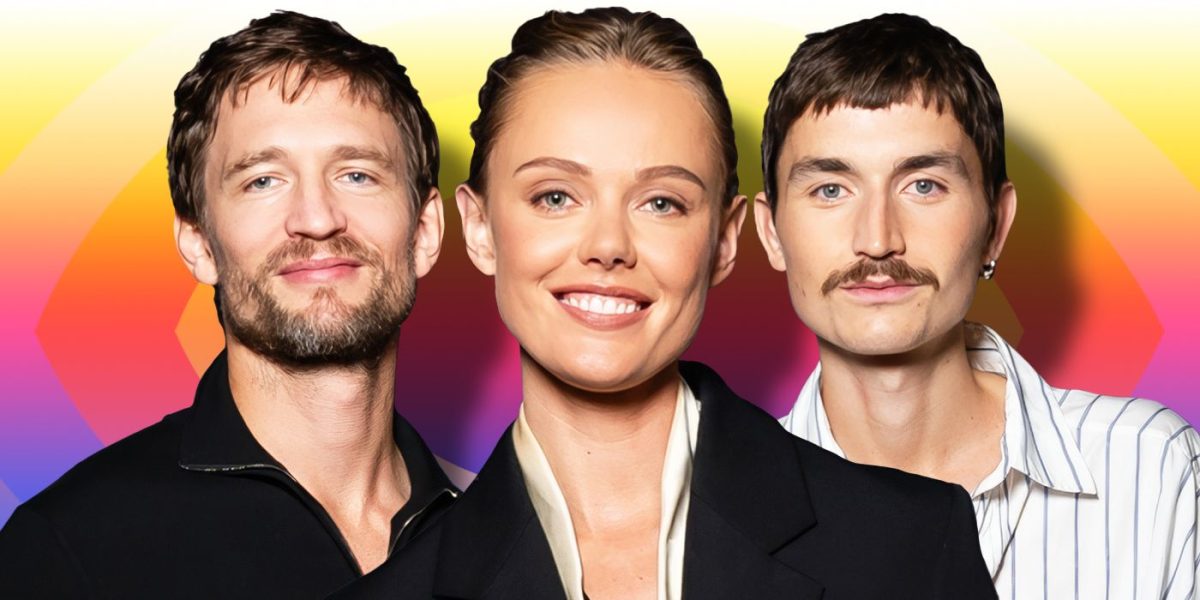
Collider’s Perri Nemiroff sits down with the stars of
Faithless
, Frida Gustavsson, August Wittgenstein, and Gustav Lindh, at TIFF 2024.
Faithless
is a gripping tale of lust, betrayal, and love, staying true to the original 2000 Ingmar Bergman film.
During their interview, the trio discuss their seamless collaboration, the working relationship and admiration for director Tomas Alfredson, and the pressure of adapting Bergman’s work.
A story of marriage, infidelity, and the emotional turmoil that gradually follows suit, Faithless is a raw, atmospheric take on the Liv Ullman and Ingmar Bergman classic. A story that has been stretched across time, the adaptation stays true to its roots. Marianne (Frida Gustavsson) is happily married to Markus (August Wittgenstein), but things get complicated when Markus’ best friend, David (Gustav Lindh), comes to stay for the summer. What starts as a spark between Marianna and David turns into a dramatic affair that changes the course of their lives forever. Forty years later, an older David (Jesper Christensen) and Marianne (Lena Endre) reconnect, still dealing with the consequences of their actions.
A gripping tale of lust and desire, Faithless, both the original and its contemporary version, is a testament to the cinematic talents of Sweden and Norway. Collider’s own Perri Nemiroff had the opportunity to talk more in-depth about Faithless with Wittgenstein, Lindh, and Gustavsson at the Collider interview studio at TIFF 2024, held at the Cinema Center at MARBL.
The Original ‘Faithless’ Premiered as a Feature at the 2000 Cannes Film Festival
Image via Photagonist
PERRI NEMIROFF: I know what Faithless is, but since we’re talking about a festival premiere, our audience might need to be caught up. Who would like to do the honors and give a brief synopsis?
AUGUST WITTGENSTEIN: Faithless is based on an old [Ingmar] Bergman manuscript, and Tomas Alfredson and Sara Johnsen, the Norwegian writer, have turned it into an amazing miniseries about relationships, jealousy, betrayal, and divorce.
GUSTAV LINDH: It was originally made as a feature that premiered at Cannes in 2000, I think. Ingmar Bergman’s.
No pressure at all. [Laughs]
LINDH: Why did I say that?
WITTGENSTEIN: And I think the essence of it is how divorce and betrayal leave everybody in a worse situation than before.
FRIDA GUSTAVSSON: And how that resonates through the lies. I think the change in our Faithless compared to the original is that the original took place in one time, and is an old man reminiscing on his life. Here, you get to see the real-world consequences, especially in our children.
LINDH: It’s also about love and passion, and a huge part of the show is about forgiveness, as well.
Given the weight of the material you all just highlighted, what is the key to jumping in and finding confidence that you can do it justice?
GUSTAVSSON: As a Swedish actor, jumping into the world of Bergman is quite terrifying and, at the same time, absolutely incredible. It’s something that I was sad not to get a chance to work with Bergman because he passed in 2008. But jumping into this world with Tomas, who is such a legendary, incredible director, can be a little bit overwhelming and terrifying, but I resonated so strongly with the material. When they presented it to us at Bergman Week, I was like, “Oh, I’m throwing my hat in the ring. I want to do this. I know this is a project that’s for me. I’m Marianne, and that’s it.” But yeah, it was a really big undertaking. I do mountaineering, and I’ve likened this to the biggest mountain I’ve ever climbed. You get all the way up there and see the view, but it’s a perilous journey and takes a big toll on you mentally and physically. It’s, to quote Marianne, “It’s been quite a ride.”
WITTGENSTEIN: But then, I think Tomas made it very easy for all of us to work with him on set. He’s a very actor-focused director. The whole show is more character-driven rather than plot-driven. So, for all of us, we felt very at ease working with such an experienced and visionary director.
LINDH: Collaborating with Tomas has definitely been the highlight of my career. I mean, he’s extraordinary.
Tomas Alfredson Is “Kind of Like an Old-School Director”
Image via Photagonist
To highlight what he does on set as an actor’s director, can you each recall a time when he gave you just what you needed, where his notes or him pushing you in a particular direction helped you crack something in your character?
LINDH: For sure. I mean, every day started with us gathering in the morning. We had table reads, but we also spoke to each other months before we started filming. And then every morning, just us, the actors, and Tomas would have a sit-down. We all came in early before getting into costume and makeup. We’d sit down with him, go through the day, and block the scenes. We just talked it through so we were all on the same page. He was always asking us, “What shot would you like to start with? This is what I have in mind. What would you prefer in terms of your emotional state in that particular scene?” So he’s always actors-first, and that’s so strange because he’s visually so strong, as well. He’s the best.
GUSTAVSSON: I think one of the takeaways and the feedback we’re getting from everybody involved in the production is that Tomas is kind of like an old-school director. He gives us the space to really prepare. He works with a really flat hierarchy, like whoever has the best idea, wins, and is very prestigious in that way. That wasn’t a shock because I know he’s a wonderful man, but to see someone so open to really collaborating and listening to everybody. The biggest takeaway for me is that he’s such a true artist. He refuses to let go of anything that doesn’t keep to the standard of the show. It was wonderful to see him fight to achieve the level he wanted in every single shot. And I think that resonates. You look at it, and it’s visually so striking, from the close-ups to just a wide shot of a tree with the wind blowing through it. It’s mind-blowing how gorgeous it is. That was his dedication to telling the story in the best, strongest way possible as a real artist and craftsman. I thought that was unparalleled.
Image via TIFF
WITTGENSTEIN: Yeah. And it’s always an original way that he brings a scene to life. He always finds something peculiar or special to make even the most mundane look interesting. But I think the one thing I really took away from his collaboration was that every morning when we came to set, he always said, “Hi, my friend.” It was such a nice greeting every morning to hear that, “Hi, my friend.” So, yeah, we’re friends. We can work together. That’s okay.
I love that. It’s such a simple thing, but that sets the tone in a really important way.
He’s obviously a very important collaborator, but it also feels like a story that does not work unless those roles are perfectly cast. So I’m curious, for each of you, can you recall the very first time, either in prep or on set, that you looked around at each other and thought, “My god, we really are the right trio for this?”
WITTGENSTEIN: We had a table read. We had a really nice table read early on with Tomas and Lena [Endre] and Jesper [Christensen] and the three of us. We were reading it together, and after each episode, we kind of stopped and reflected on the material. After every episode, we looked at each other and thought, “I can’t believe it.” It felt very real and clear that it was going to be us, and it felt very natural.
LINDH: Yeah. And also, this is a great opportunity to mention Kicki Ilander, the costume designer. She really created these iconic-looking characters. I had this sort of red suit that I wore.
GUSTAVSSON: The burgundy suit. Good suit. Every time you put that on, I was like, “Yes, there it is.”
LINDH: And you had the striped pajamas and all that. They looked very iconic, the characters, and the silhouettes of the characters are instantly recognizable.
GUSTAVSSON: I have a really fun story. When we knew we were going to do this, we met for coffee, and we were like, “Let’s sit down and work together on the script.” We sat there for, like, hours talking about it. Then I looked up, and Gustav was sitting underneath a portrait of Krister Henriksson, who played David in the original Faithless. We were like, “That was such a universe telling us we are right where we’re supposed to be.” We got some kind of little blessing from somewhere.
It was meant to be!
The Cast Carried Each Other Through the Entire Shoot
Image via Photagonist
So that’s the beginning of knowing that you were right for the roles. I want to jump into production now with that. Can you each recall a time when a scene partner did something for you that you really appreciated, and it helped you reach something in your own character that you might not have been able to without them?
LINDH: We don’t have that many scenes together, but I really enjoyed what we found in our friendship on screen. Having said that, I would not have been able to do this without this woman. I mean, she’s a great friend of mine, and we really went deep on this one. Every day was an experience like that, really carrying each other through the entire shoot in a very, very beautiful way.
GUSTAVSSON: I had the pleasure of sharing two love stories with these two wonderful men, and they were quite different. For me, towards the end of the shoot, we go into very, very heavy territory. There were a lot of heavy subjects that we were dealing with. Marianne takes quite a big emotional and physical hit from all of the negative things that have happened. We had a scene — not to spoiling anything — towards the end of the show that was very, very difficult to get through. I was so thankful to have you. I feel like with both of you, we had this big trust for each other, where we threw ourselves out there. Every single day, I felt held by you, by you, by Tomas, by Monika [Lenczewska], our photographer.
You’re quite exposed, especially for me, I’m quite exposed. Also physically, Marianne goes through a lot of things. I felt so held that I could really stretch everything that I had and put that into this character. We had such an incredible crew, too. I just want to say that it was amazing to work on a set where people were quiet, people see the work that we do, and it really resonates with them. Every day, you could see the boom operator with a tear because we were dealing with subjects people have lived through. It touches them because everyone’s been hurt or has hurt someone and has regrets about something they’ve done in their lives. To feel that sanctity, if I can use that word, on set was really powerful.
Image via TIFF
What a beautiful quality to have there.
WITTGENSTEIN: I absolutely agree with everything you said. The one thing I’ll add is probably the girl who plays our daughter, Poppy Klintenberg Hardy. She was kind of the glue that held everything together because she has a strong relationship with David, with Marianne, and with Markus, obviously. That was our connecting anchor. I feel the same; like you said, we were always there for each other. Nobody had any diva moments.
GUSTAVSSON: Only you. [Laughs]
WITTGENSTEIN: Only me, of course. But that’s okay. I’m allowed to have those. No, it was a very, very comfortable and safe environment to work in.
I was so impressed by the young actor who played your daughter.
LINDH: Tomas is great at directing kids, as well.
It’s one those situations where someone steps on screen and immediately lights it up with a natural screen presence that makes me, as a viewer, feel like I want to spend more time around them.
GUSTAVSSON: And that was something we spoke about before and with Tomas because Poppy, of course, isn’t allowed to read the script. She knows almost what’s happening. That’s another thing I really want to highlight with Tomas and this production, because, at the end of the day, we’re following this young girl and seeing her life being completely torn apart by the people she loves the most. It’s a very difficult theme, and the way she was handled, she was treated as a full-fledged cast member, and given the same respect and time to prepare and be a part of playing and creating and working this out. It was impressive. That’s a takeaway I’ll cherish, the way she was allowed to really shine and be a part of the creative process.
Gustav Lindh Was Nervous About Playing a Director
Image via Photagonist
I wanted to end on this particular question because, Frida, you were on Ladies Night before I started asking this, and now the show ends with this question every single time. In this business, I find that nobody tells themselves “good job” nearly enough. I want to know something each of you accomplished making Faithless that you’ll always be able to look back on and say, “I am so proud of what I did there.”
GUSTAVSSON: [Laughs] We’re Swedish; we’re not very good at doing something like that.
LINDH: This is Bergman’s most autobiographical script. I think I pulled off playing a film director in a Bergman script directed by Tomas Alfredson in front of him. I was very nervous about that, but I’ve seen it now, and I think I made it look sort of natural. I think.
GUSTAVSSON: You did!
I will confirm that, as well.
LINDH: And the dance sequence, as well. I was nervous as hell for that one.
WITTGENSTEIN: I think the one thing I’m most proud of is that we managed to really create a family and a web of relationships that felt very natural and real. To me, all these connections were as they would be in real life. To have that sort of family structure set around you as an actor, to know exactly who means what to me, I managed to do that in this project with the help of you guys and Tomas, of course. That’s something I’m really proud of. It feels very organic.
GUSTAVSSON: I think for me, coming into this, because I was such a big fan of Faithless, of Liv Ullmann and of Bergman, of course, but also Lena, who plays the original Marianne. Lena is a good friend of mine. The first person I called when I found out I was doing it was Lena, and this was before we knew Lena was on board to play the older Marianne. We celebrated with a glass of champagne. I was a bit terrified because I have so much respect for her and for the original material and the iconic part of Marianne. Something I’m thankful for is that I feel I was able to shed that and really create my own Marianne, who, to me, is a living, breathing person inside me and will always be. I’m really thankful for that because it can be daunting to enter such a strongly existing universe and put your own spin on it. I think I did my own Marianne.
Special thanks to this year’s partners of the Cinema Center x Collider Studio at TIFF 2024 including presenting Sponsor Range Rover Sport as well as supporting sponsors Peoples Group financial services, poppi soda, Don Julio Tequila, Legend Water and our venue host partner Marbl Toronto. And also Roxstar Entertainment, our event producing partner and Photagonist Canada for the photo and video services.
Publisher: Source link





Eggs – Film Threat
In writer-director-star James Clair’s short drama Eggs, a man struggling to rebuild his life finds his quiet mornings turning into strange conversations with the very eggs he is meant to cook. I mean, they want him to eat them. So…
Mar 11, 2026
Ethan Hawke Elevates A Rugged, Predictable Gold-Run Survivalist Western[Sundance]
As far as one can tell, Murphy (Ethan Hawke), a father, WWI veteran, and avid car mechanic, has never encountered an insurmountable challenge. Living in Eugene, Oregon, in 1933, four years into the Great Depression, Murphy and his young daughter,…
Mar 11, 2026
The Moment Review | Flickreel
Brat Summer was a cultural phenomenon that I didn’t understand at all. I knew that it was connected to an album that Charli XCX had released. Whenever I asked what Brat is, though, nobody could seem to give a straight…
Mar 9, 2026
Cillian Murphy’s Netflix Crime Hit Delivers a Brutal, Bleak Finale
It’s been four years since we last saw Cillian Murphy play Tommy Shelby, but seven have passed in the world of Peaky Blinders, with The Immortal Man taking place in 1940, in the middle of World War II. Tommy’s gone…
Mar 9, 2026