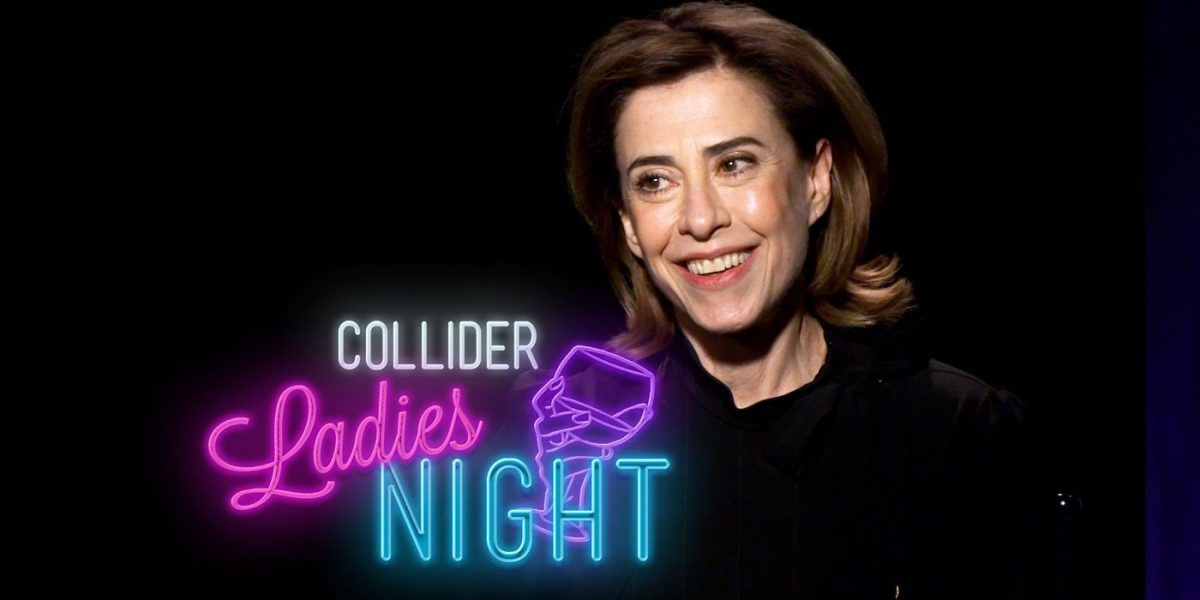
Fernanda Torres on Bringing People Back to Movie Theaters with ‘I’m Still Here’
Dec 7, 2024
The Big Picture
Welcome to a new episode of Collider Ladies Night with
I’m Still Here
star Fernanda Torres.
During her Ladies Night conversation with Collider’s Perri Nemiroff, Torres revisits her parents’ early influence, winning a Palme d’Or, and overcoming a devastating setback for film in Brazil.
She also goes into detail on her experience reuniting with Walter Salles to tell Eunice Paiva’s story in
I’m Still Here
.
As we near the New Year, awards season has come into focus and things are looking quite good for international feature contender I’m Still Here. Set in Brazil in the 1970s, a time of military dictatorship, the biographical drama puts the spotlight on Eunice Paiva (Torres), a mother of five who’s forced to forge forward after the disappearance of her husband, former Brazilian Labour Party congressman Rubens Paiva (Selton Mello). Based on Marcelo Rubens Paiva’s book, I’m Still Here chronicles the deeply profound fortitude Eunice exhibits as she both keeps her family together and earns a law degree in hopes of contributing to holding the government accountable for the human rights abuses committed during this period.
While the movie itself appears to be in good shape in Best International Feature, Best Actress has proven to be an especially competitive category this year. Many prognosticators are favoring the work of Mikey Madison in Anora, Karla Sofía Gascón in Emilia Pérez, Cynthia Erivo in Wicked, Nicole Kidman in Babygirl, and Angelina Jolie in Maria in particular. All phenomenal performances worthy of the praise they’re receiving, but don’t be surprised if we see someone climb those ranks in the coming weeks, and I’m predicting that someone could and should be Fernanda Torres.
In celebration of the film’s award season run and upcoming theatrical release, Torres joined me for a Collider Ladies Night conversation to revisit the significant moments that molded her as an actor and artist, and to discuss her experience making I’m Still Here, an experience that often transcended acting and felt more like being.
Being the Daughter of Acting Legends
“I was raised in the wings of theater.”
25:13 Related ‘I’m Still Here’ Gives a Voice to the Heroine Who “Stayed in Silence” The cast and director discuss meeting the family who inspired this story of resistance, building the actual house, and throwing out script pages.
If you’re familiar with Torres’ lineage, it’ll come as no surprise that her interest in acting was sparked by her parents, her father Fernando Torres and her mother Fernanda Montenegro, who also appears in I’m Still Here. “I was raised in the wings of theater. Our dining table was the place where they rehearsed.” Torres added, “It’s a profession that your parents do with such a love, and you can feel that they’re enjoying it, sometimes more than being at home! [Laughs] Then you start to think, ‘Well, it must be good to do that,’ so that was it.”
While her parents served as a hugely positive source of inspiration, Torres quickly began to carve out her own unique path as an actor.
“With my mother and father, in the beginning,
to do cinema was a way to be separated from them because they were so related to theater
. I started in theater, but then I did, like, four movies in a row that were very successful in Brazil. In one of them, I won a Palme d’Or at Cannes at the age of 19. So that created, for me, a kind of separation that I existed and they existed separately. But it was not easy.
Many times they compared me with my mother, and my mother is something that you cannot reach.
So I just forget about it and just move on. And also, my generation wanted to be actors, so I had the generation. It was not only something related to my parents. I had my generation to grow with, so that was important.”
“Cinema Was Over in Brazil”
Torres thought her career would skyrocket after winning the Palme D’or. But, then the Brazilian film industry was nearly obliterated.
Image Via Sony
Winning Best Actress at the Cannes Film Festival for her work in Love Me Forever or Never was a big deal. In fact, it gave her hope during a period when she was tempted to quit the profession.
“
I was doing the soap opera, so I was thinking about giving up the profession.
Then I got that award, and I was in Brazil shooting the soap opera. In the streets, at that time — nowadays, it wouldn’t be like this, but at that time, it became like a World Cup, like a soccer award. I became like a Pelayo [Novo]. It was something unbelievable. And young! I believed, ‘Wow, now I’ll have an international career. I will do just cinema.’”
That hope was dashed with the closing of Embrafilme in 1990, a state-owned company responsible for a significant amount of film production in the region. “That was when the first president elected in Brazil closed Embrafilme. Embrafilme was the main producer of cinema in Brazil, and they just destroyed it.” Torres continued, “Cinema was over in Brazil when I thought that I would be doing a lot of movies.”
While cinema experienced a significant setback at the time, Torres was able to continue to hone her craft by pivoting to theater. “I went to theater and I did Orlando by Virginia Woolf.” Torres added, “Sometimes you think that it’s the end of your career, like this; there’s no more movies in Brazil, and you go to theater and discover a whole new world.”
Eventually, Torres would go on to make a movie that would revitalize movie theaters — I’m Still Here.
“
I’m Still Here
opened in Brazil and brought people back to the cinemas. It’s totally full.
Totally full with people applauding and hugging
each other, like a Mass! This is so beautiful, so beautiful.”
The Key to Playing Eunice in ‘I’m Still Here’? Her Smile
“To make a character that has to abandon … her utopian life of a perfect housewife from the ‘50s and reinvent herself as a lawyer … it teaches us so much. And to do it smiling.”
Image Via Sony Pictures Classics
One of Eunice’s most remarkable qualities is also a reason Torres’ performance stands out. Even with everything she goes through, Eunice is almost always a woman who refuses to show cracks in her composure. She may be experiencing a tornado of emotion inside, but she will hold it together, particularly for her children.
“This woman who doesn’t show her emotions, who feels so much, who has such a feeling of injustice and anger and fear, and has to control herself in order to take care of five children and to be rational, and at the same time, sweet, to smile.
Her smile is something that, when I was watching her interviews, I said, ‘What’s this smile about?’
And a lot of times, Walter would come to me and say in my ear, ‘Listen, it’s perfect, but don’t forget to smile,’ because that was a key thing to this character. And I never felt what I felt with her. Never. I never did tragedy. I never did a Greek tragedy on stage or whatever, but she has this quality. And to make a character that has to abandon naivety, her utopian life of a perfect housewife from the ‘50s, and reinvent herself as a lawyer, as a defender of human rights, this is such a big gap, and it teaches us so much. And to do it smiling.”
While capturing the breadth and weight of Eunice’s journey in a single feature film may seem like a colossal endeavor, Torres had quite a few aspects of this production teeing her up for success in that respect, namely her longtime collaborator, director Walter Salles, a hugely talented young ensemble portraying her children, some of whom were making their first movie, and the benefit of being able to film I’m Still Here chronologically.
“That made the whole difference because,
at a certain point, we are not acting anymore. We were just being
. ‘To be or not to be,’ the famous problem. You do not pretend to feel. This film has this strange quality. We are acting. Of course, we are acting. But there is something beyond that.”
Fernanda Torres Had to Cry After Filming This ‘I’m Still Here’ Scene
“I could feel that she was with me, Eunice.”
You can see Torres tapping into “something beyond that” a number of times in I’m Still Here, but a personal favorite performance beat hits during a scene that takes place in a bathroom upon Eunice’s return home from prison. After 12 days of being confined to a prison cell and subjected to a multitude of abusive interrogations, Eunice goes home and looks at herself in the mirror.
“This film is really strange because, what is acting in that scene? What can you do besides feeling something, or understanding deeply an emotion? Because when you look at yourself, what will you do? You can’t do anything, and you hope that there is something there. It was one of the scenes, when I saw the film done alone in the editing room, that I said,
‘I felt so much for that woman. That was not me anymore.’
That look in the mirror was one of those moments where I didn’t do anything. I just had the feeling.”
Torres stepped beyond acting yet again in another key scene of the film, a scene during which she takes her children for ice cream after finding out that there’s no saving Rubens. He’s gone.
“I remember, because at that time, I had been in prison, I had gone back to the house, and we’d done a lot of the bathroom scene when she takes that bath. We had been through a lot of things. But then we had the ice cream day, and I remember that I arrived, I put on my costume — very strange.
I could feel that she was with me, Eunice.
It’s not spiritual. I mean the character. Then I crossed the square to the ice cream and this heavy burden, something really strange when we are so long with the characters, suddenly you access it. Then I did the scene, and I had to restrain, restrain, restrain, which is Eunice, and at the end,
I went out from the set and cried for, I don’t know, 10 minutes
. Then I could go home. And even now, when I think about it, I mean, what a strange thing it is to get an emotion right, to have it. And the ritual of putting on your costume, of becoming someone else, of accessing this kind of emotion enough that, how do you get rid of it and go back home? That day was a special day for me.”
Related ‘I’m Still Here’ Review: Family Political Drama Is One of the Year’s Best | LFF 2024 The movie tells the real-life story of the Paira family.
Turns out, Torres will never fully separate from Eunice. Not only was telling her story and sharing it with the world a profound experience, but it’s also one that’s heavily contributed to her personal evolution as an actor. She explained:
“An actor, each character that you do — comedy, drama, whatever — you will learn with it. It’s like a piano that gets better with the music you play on that keyboard. That’s why, for instance, my mother at the end is so shocking, because my mother is the reunion of all the characters she has done, and she has done a lot. She understands, ‘Oh, it’s melodrama. Oh, it’s comedy.’ She felt it. So when you see her face blank by Alzheimers, it’s so shocking. So
I’m sure Eunice taught me and tuned my instrument, which is my soul and my body, in a way that this piano here has never been played before
. So I think I now have this new keyboard, this new tune in my soul to access.”
Eager to hear even more about Torres’ journey as an actor and her experience making I’m Still Here? You can watch our full conversation in the video at the top of this article, or you can listen to the interview in podcast form below:
Your changes have been saved I’m Still Here I’m Still Here delves into the tumultuous era of 1970s Brazil, focusing on Eunice Paiva’s enduring quest to uncover the fate of her husband, Rubens Paiva, who disappeared during the dictatorship. As she nears the truth after decades, Eunice is confronted with the onset of Alzheimer’s, adding urgency to her search.Cast Fernanda Torres , Fernanda Montenegro , Selton Mello , Valentina Herszage , Maeve Jinkings , Dan Stulbach , Humberto Carrão , Carla Ribas , Maitê Padilha , Guilherme Silveira , Cora Ramalho , Bárbara Luz , Daniel Pereira Runtime 137 Minutes Main Genre Drama Expand
I’m Still Here arrives in theaters on January 17.
Get Tickets
Publisher: Source link




‘The Rookie’s Best Season 8 Episode Goes Completely Different With Full Zombie Horror
Editor's Note: The following contains spoilers for The Rookie Season 8, Episode 10.It's crucial for procedurals to come up with a winning formula that entices viewers to tune in every week. But it's just as important for these types of…
Mar 13, 2026
Sidney Prescott Leads a Brutal Throwback
Walking into Scream 7, I wasn’t sure if this entry would be a new reinvention. I know I wanted tension. I know I wanted that uneasy calm before the snap. And most of all, I wanted to see why Sidney…
Mar 13, 2026

Eggs – Film Threat
In writer-director-star James Clair’s short drama Eggs, a man struggling to rebuild his life finds his quiet mornings turning into strange conversations with the very eggs he is meant to cook. I mean, they want him to eat them. So…
Mar 11, 2026
Ethan Hawke Elevates A Rugged, Predictable Gold-Run Survivalist Western[Sundance]
As far as one can tell, Murphy (Ethan Hawke), a father, WWI veteran, and avid car mechanic, has never encountered an insurmountable challenge. Living in Eugene, Oregon, in 1933, four years into the Great Depression, Murphy and his young daughter,…
Mar 11, 2026