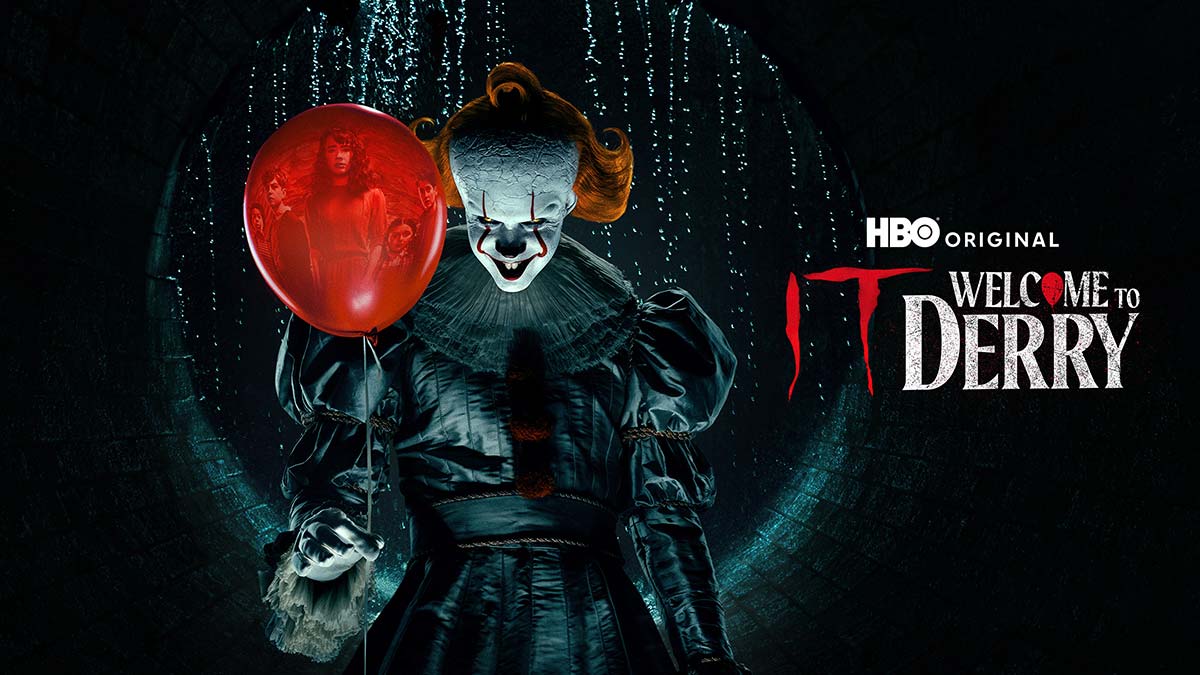
Grotesque Horror Winner Picks Up Where ‘Lovecraft Country’ Went Wrong
Jan 10, 2026
The violent terrors of Jim Crow South racism, the dread of 1950s Cold War anxiety, and the eerie, cursed-town mythology of Stephen King skillfully converge in “It: Welcome to Derry,” the striking HBO prequel series that fuses America’s real horrors with its imagined ones. Taking the best social-horror ideas from “Lovecraft Country”—before the show went abruptly off the rails—and expanding on them, its blend of racial trauma, period paranoia, and cosmic dread becomes something sharper, creepier, and far more cohesive. Franchise guardians Andy Muschietti and Barbara Muschietti, along with showrunner Jason Fuchs, expand the “It” universe far beyond clown scares to probe the rot at the heart of small-town America, where prejudice and paranoia breed monsters long before Pennywise ever showed up.
READ MORE: The 75 Most Anticipated TV Shows Of 2025
Muschietti (“It,” “It: Chapter Two”) directs the first four episodes, and the opener is a knockout—horrific, grotesque, and unnervingly confident. It’s a reminder of why his name became synonymous with contemporary horror: he knows how to stage dread as both spectacle and psychological excavation. The cold open is a gut punch, a brutal collision of suburban abduction fears and supernatural evil that feels ripped from both a nightmare and the nightly news. It begins with Matt Clements (Miles Ekhardt), a teenage hitchhiker trying to flee Derry in the dead of winter. When a passing family offers him a ride, their kindness curdles into something far more sinister. Moments later, Clements vanishes—his disappearance the spark that ignites the town’s latest cycle of horror.
From that unnerving prologue, the series widens its scope. Set in 1962, the story follows Leroy Hanlon (Jovan Adepo), a decorated Black Air Force major newly stationed at a nearby base with his wife Charlotte (Taylour Paige) and their young son Will (Blake Cameron James). What greets them isn’t postwar optimism but a community polished on the surface and poisoned underneath—a town where Cold War paranoia, racial hostility, and whispered superstition intertwine. As the Hanlons settle in, another child’s disappearance sends fresh tremors through Derry, and the family slowly realizes that something far darker than fear or prejudice stalks this place.
The ensemble of young actors forms the show’s new proto–Losers Club—a generation of kids who feel the fear adults ignore. Clara Stack is exceptional as Lilly Bainbridge, a girl haunted by horrific visions of Matt Clements’ mutilated body and tormented by the possibility that her mind, or her town, is betraying her. Matilda Lawler’s Marge is a convincingly insecure friend playing both sides of the popular kids at school, while Mikkal Karim-Fidler’s Teddy Uris, Jack Molloy Legault’s Phil Malkin, Blake Cameron James’ Will Hanlon, and Amanda Christine’s Veronica “Ronnie” Grogan round out the core group—the show’s new emotional anchor. Their camaraderie and youthful vulnerability recall the spirit of the original Losers Club without ever feeling like an imitation. Together, they bring warmth and humanity to a story steeped in fear and folklore, their shared courage giving Derry’s darkness real emotional weight.
Muschietti and his creative team make Derry itself the true protagonist—a town where superstition, racism, and repression swirl together. Cold War paranoia fuels a culture of suspicion; the military’s secret experiments hint at something unholy beneath the surface. And threaded throughout are Indigenous spiritual ideas that tie Derry’s horror to a deeper cosmic folklore—a sickness that predates the town itself. This thread comes to life through Kimberly Guerrero’s moving performance as the Native shopkeeper Rose, a descendant of Derry’s “First Losers Club,” a group of Indigenous children who first encountered the evil generations earlier, harboring a greater secret. Guerrero brings gravity and grace to the role, grounding the metaphysical horror in ancestral history and grief. She gives the show another dimension of soul—an anchor between past and present, myth and memory.
The adult cast is uniformly strong. Chris Chalk plays Dick Hallorann—yes, the same clairvoyant later seen in “The Shining”—with quiet distress. James Remar delivers commanding intensity as General Shaw, Leroy’s superior officer, whose patriotism hides dangerous secrets about Derry’s military presence. Madeleine Stowe adds an air of empathic authority as Lilly’s former therapist from her stay in a mental clinic, while Stephen Rider and Rudy Mancuso are engaging as Hanlon’s military buddies. Every performance resonates; each figure feels shaped by Derry’s unspoken guilt.
Visually, the show is sumptuous and immersive. Production designer Paul D. Austerberry and cinematographer Daniel Vilar (camera and electrical on “Dune” and the “Batman” films) capture a Derry bathed in fog and neon, its rain-slicked streets glistening with memory and menace. The show’s period world feels tactile—equal parts nostalgia and nightmare. Franchise composer Benjamin Wallfisch returns with a score that drifts between elegy and terror, amplifying the emotional depth beneath the scares.
“Welcome to Derry” strikes a balance between its strengths without shortchanging either. The character-driven stories rooted in racism, ignorance, exclusion, and doubt receive a grounded, prestige-level treatment, while the horror sequences remain grotesque, chilling, and satisfyingly frightening—enough to keep even the most seasoned genre fans on edge.
“It: Welcome to Derry” is an absorbing, richly constructed expansion of the franchise’s mythology as inspired by King. It blurs the line between social realism and supernatural horror, marrying historical trauma with cosmic unease. The series explores how suspicion, mistrust, bigoted assumptions, systemic injustice, and the civic decay that perpetuates the town’s evil all fuel the monsters we fear most. Bill Skarsgård’s Pennywise remains terrifying, but the truest horror arguably lies in how easily a town learns to live with him.
Support independent movie journalism to keep it alive. Sign up for The Playlist Newsletter. All the content you want and, oh, right, it’s free.
Assured, atmospheric, and full of eerie, unnerving dread, the series doesn’t reinvent King’s world—it enriches it. The Muschiettis and Fuchs have crafted a prequel that feels both intimate and expansive, frightening and soulful —a story less about evil’s origins than about how we keep inviting it back. [B+]
Publisher: Source link




![Born Again’ Stars Explain Why Bullseye Is So Dangerous in Season 2 [Exclusive]](https://www.filmibee.com/wp-content/uploads/2026/03/Born-Again-Stars-Explain-Why-Bullseye-Is-So-Dangerous-in-1200x675.jpg)
Born Again’ Stars Explain Why Bullseye Is So Dangerous in Season 2 [Exclusive]
Along with Charlie Cox's Matt Murdock and Vincent D'Ofnorio's Wilson Fisk, Daredevil: Born Again Season 1 brought back one of The Man Without Fear's most notorious villains: Wilson Bethel's Benjamin Poindexter, better known as Bullseye. Not only was he back…
Mar 19, 2026
Born Again’ Showrunner Confirms ‘Avengers’ Character Is Key to Street Level MCU [Exclusive]
Ahead of the Avengers' return to the big screen later this year, Marvel Studios will return to street-level storytelling with the second season of Daredevil: Born Again on Disney+. Along with making the show canon to everything that happened in…
Mar 18, 2026
Taylor Sheridan’s Underrated Action Thriller Series Roars to Streaming Success
It’s now been two years since we last saw anything from the underrated action thriller series created by Yellowstone’s Taylor Sheridan, but having finally had some promising word about the new season, the show has now shot up the streaming…
Mar 17, 2026
Netflix’s ‘One Piece’ Fails To Replicate Success of Season 1 on Streaming
It's been a little over two months since Stranger Things came to an epic conclusion on Netflix that left a massive hole in our hearts in more ways than one. However, the show's biggest replacement in terms of sheer production…
Mar 16, 2026