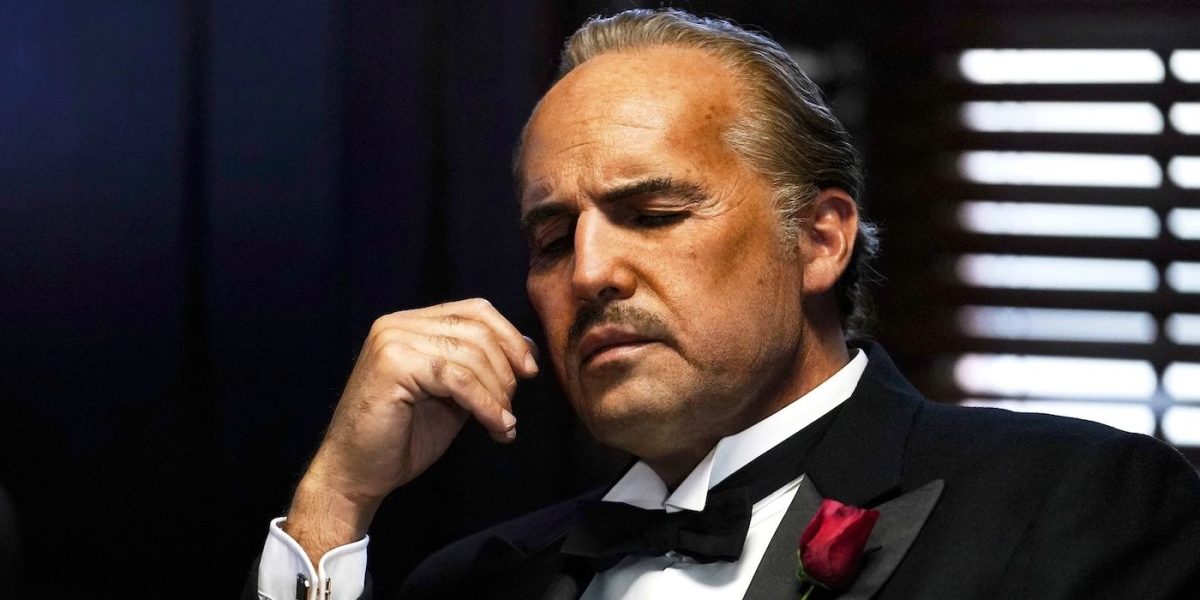
“He Walked the Walk for Civil Rights and Indigenous Rights”: Billy Zane on Bringing Marlon Brando to Life in ‘Waltzing with Brando’
Jan 17, 2025
Summary
Collider’s Aidan Kelley spoke with Billy Zane at this year’s Palm Springs International Film Festival for Waltzing with Brando.
Directed by Bill Fishman, Waltzing with Brando focuses on a period of the actor’s life when he sought to build an ecologically perfect resort in Tahiti.
Zane, who stars as Marlong Brando, discusses capturing the essence of Brando’s passion and activism, challenging traditional biopic structure, dismisses the myth of Brando as a method actor, and reveals the next biopic he’d like to tackle.
Whether it be his delectable villain in Titanic, his hysterical cameo in Zoolander, or our various fancasting him as Lex Luthor for a Superman movie, Billy Zane is a true beloved icon in the industry. He’s always shown a key interest in exploring diverse and unique roles, but that’s nothing compared to his latest venture. In a role he seems to be perfectly casted for, Billy Zane is now playing The Godfather legend Marlon Brando in the aptly titled Waltzing with Brando.
Taking place at a time when Brando was entering a new era with hit flims like The Godfather, Apocalpyse Now, and Superman, Waltzing with Brando sees the actor and architect Bernard Judge (Jon Heder) try to create an ambitious and self-sustainable island paradise. That’s a goal almost as difficult as playing a historical figure as nuanced and complex as Marlon Brando, but the Titanic star is clearly a big fan of the subject he’s portraying. We recently had the amazing opportunity to speak with Zane ahead of the film’s premiere at the Palm Springs International Film Festival, and he clearly holds a deep reverence for who many consider to be the best actor of all time.
Billy Zane Has a History with ‘Waltzing with Brando’ Director Bill Fishman
“It’s kind of kismet.”
Image via Paramount Pictures
COLLIDER: First of all, congrats on the movie. Playing Marlon Brando’s got to be the dream role for just about anyone. I’d love to hear more about how you first became involved with Waltzing with Brando.
BILLY ZANE: Firstly, thank you. That’s very kind of you. And it was the dream role. It’s kind of kismet, I should say. I had the pleasure of working with Bill [Fishman] in the early ‘90s on a film called Posse, and had known him through an acting group called The Actors Gang [that] Tim Robbins started some 45 years ago. I was an early member, along with [John] Cusack and a young Jack Black coming up. It was a hotbed of wacky talent. You could probably draw some correlation between those particular performers, including Bill, who was a director at the time as well.
Some years later, through happenstance, I happened to be seen by a gentleman [and] while he was on the phone and talking about the film. “Well, Billy’s right here. You should talk to him. You should play it.” I said, “Play what?” He said, “Bill’s doing a Brando film.” I said, “Shut up, Fishman? I haven’t spoken to him for 15 years.” He goes, “Yeah.” I said, “I’d like to do a Brando movie. He’s always been kind of a specter surrounding me, but I’m really interested in the Tahiti period.” He goes, “That’s what I thought this is about!” At this point, I thought, “That’s insane.” I read the script, and then we decided to collaborate and co-produce it. We worked on the script for some months. I found the financing, and then we started casting, and we took it from there. It was just this incredible labor of love that developed into what it is today.
The Tahitian Era Is a Pivotal Period in Marlon Brando’s Life
“He was always at the forefront of incredible social activity.”
You mentioned the Tahitian era, and that leads perfectly to my next question. This takes place at a very, very specific moment in Brando’s life. Could you talk a little bit more about where he was at that point in his life and why you thought it was so important to explore this era of Brando rather than a more all-encompassing biopic?
ZANE: I feel it’s hard to capture a life, or at least even the essence of someone unless you focus on their passion, which usually encompasses a fairly intense period rather than milestones on a linear timeline of certain events that, when strung together, we seem to assume makes up a character. In this case, this was such a prescient period because he was always at the forefront of incredible social activity, and it by no means was the fashion. Like a true trailblazer, if not likely the first Hollywood activist who used his platform to push the needle on equanimity. He walked the walk for civil rights and Indigenous rights, and the little at least-known fact that he was quite possibly spearheading the origins of sustainable design was just mind-blowing, especially considering this was the early 1970s when no one was talking about this stuff, and his foresight on what he believed to be a pending climate crisis in the future, and hitting those particular atolls as front liners. It was fascinating.
So, that story needed to be told for a variety of reasons. One, it was a way to get under the hood of one of the most beloved, complex, and interesting figures of the 20th century while bringing people to a subject matter that needs a lot of attention but without making it preachy. It was the multiservice kind of aspect of the narrative that became the most intriguing.
It’s great that all that stuff’s in there because from the trailer, it seems like it’s been marketed a lot as a comedy, but it still sounds like it’s gonna have a lot of really very important and relevant themes.
ZANE: Well, it is. I mean, the ancient Greeks celebrated that way, too — Aristophanes. They knew that in order to get a relevant social message across, you have to include some [humor] and fart jokes. They knew in the 5th century.
What would you say was the biggest challenge of playing Brando? I mean, you’ve got to imagine filling the shoes for that must be [daunting].
ZANE: Resisting that very notion, that it’s so daunting and so important and significant that you would approach it with fear and trepidation. It had to be just completely relaxed and in flow. The way he would have approached it is the only way to unpack it — how would Brando make Waltzing with Brando? And that was to not really give a shit and to look for the beautiful accidents along the way and to focus on the uncommon and on the humanity in every moment or the peculiarity of the fascination with the microcosmos. This was the approach, and it really served, was to just be a servant to the master, as every actor is when playing. In order to be him, I had to just slip him on like a coat and just flow.
He was a very funny man, which was nice. That’s why it’s a comedy and a peculiar kind of bromance, buddy picture in a way, filled with complexities and contradictions at a very difficult time in our history in America and in France, French Polynesia certainly. But it was a means with which to kind of unpack these serious themes and issues in a way that was kindred and very close to his character and his compass and make it accessible for audiences who, by today’s context, I think we’re awash in a lot of trauma drama. I need relief just as an audience member, so I just wanted to give an audience what I wanted as an audience, which was just an oasis. I want to go on vacation to Tahiti for a little bit with this guy and learn some stuff and have some fun, and I think we achieved that. I hope we achieved that.
Billy Zane Doesn’t Believe Marlon Brando Is a Method Actor
Image via Columbia Pictures
We could definitely use that right now. You mentioned doing it as Brando would do it. Brando was very famous, or maybe to some people infamous, for being very method when it comes to certain roles. Did you employ any method acting when working on this?
ZANE: I genuinely think that’s a fallacy. I don’t consider him a method actor. I think he’s a little more Meisner-esque. I know he studied it, but I believe Stella Adler was quoted as saying he showed up with it, and wherever he would have gone to school, he would have been brilliant because he came with this sense of self and rhythm as a drummer. I don’t get the impression that he relied on the device of sense memory, which was always meant as a default in practice, as I understood it. It’s not what you lead with. It’s what you use if you can’t get there in the moment. But he never left a moment and then changed acting forever because it was so immediate and magnetic.
I think it’s informed so many actors through the years, and to play him and to improvise as him was what was the most fun. That was what was great was to not just be in the zone, it was to be in the zone and to be free enough and hope for those unexpected moments. That’s what was so wonderful working with Jon Heder, who we know as a comedian first but is a wonderful dramatic actor. His knack for improv was so suited and was such an invitation to play as well. We really found a great chemistry in this friendship on and off-screen.
So not so much method, but more improvization.
ZANE: Yeah, I think he was more improv. I think it was more Meisner-esque. I don’t consider myself a method actor. The idea of focusing on an event in your childhood that may have made you feel an emotion would take you out of the scene, in my opinion, as opposed to just a strong sense of make-believe and letting the secondary experience encroach on the primary and just really firing off all those chemicals in your body and all that serotonin and dopamine in real-time because you believe what you’re in is true, right?
Billy Zane Wants to Tell Author Ernest Hemmingway’s Story Next
Image via Deano Productions
Amazing. One last question before I let you go. Again, Marlon Brando is such a dream and an incredible role for any actor. Is there any role or type of role or character that you would also really want to pursue in the future?
ZANE: I’d kind of like to do, I’ll call it an operetta, but I think a truncated opera about Hemingway. I think that would be interesting.
Waltzing with Brando does not currently have a wide release date. Stay tuned to Collider for more PSIFF coverage.
Movie star Marlon Brando recruits a Los Angeles architect to build the world’s first ecologically perfect retreat on a small, uninhabited island in Tahiti.
Release Date
November 30, 2024
Director
Bill Fishman
Cast
Billy Zane
, James Mackie
, Richard Dreyfuss
, Tia Carrere
, Jon Heder
, Rob Corddry
, Camille Razat
, James Jagger
, Sofia Masson
, Tanna Frederick
, Mark Canjar
, David Gueriera
, Patrick McLain
, Charles Venturi
Writers
Bill Fishman
, Bernard Judge
Publisher: Source link



‘The Rookie’s Best Season 8 Episode Goes Completely Different With Full Zombie Horror
Editor's Note: The following contains spoilers for The Rookie Season 8, Episode 10.It's crucial for procedurals to come up with a winning formula that entices viewers to tune in every week. But it's just as important for these types of…
Mar 13, 2026

Sidney Prescott Leads a Brutal Throwback
Walking into Scream 7, I wasn’t sure if this entry would be a new reinvention. I know I wanted tension. I know I wanted that uneasy calm before the snap. And most of all, I wanted to see why Sidney…
Mar 13, 2026

Eggs – Film Threat
In writer-director-star James Clair’s short drama Eggs, a man struggling to rebuild his life finds his quiet mornings turning into strange conversations with the very eggs he is meant to cook. I mean, they want him to eat them. So…
Mar 11, 2026
Ethan Hawke Elevates A Rugged, Predictable Gold-Run Survivalist Western[Sundance]
As far as one can tell, Murphy (Ethan Hawke), a father, WWI veteran, and avid car mechanic, has never encountered an insurmountable challenge. Living in Eugene, Oregon, in 1933, four years into the Great Depression, Murphy and his young daughter,…
Mar 11, 2026