How Elton John Changed Pop Music With Fourteen Albums in Five Years
Sep 22, 2024
The Big Picture
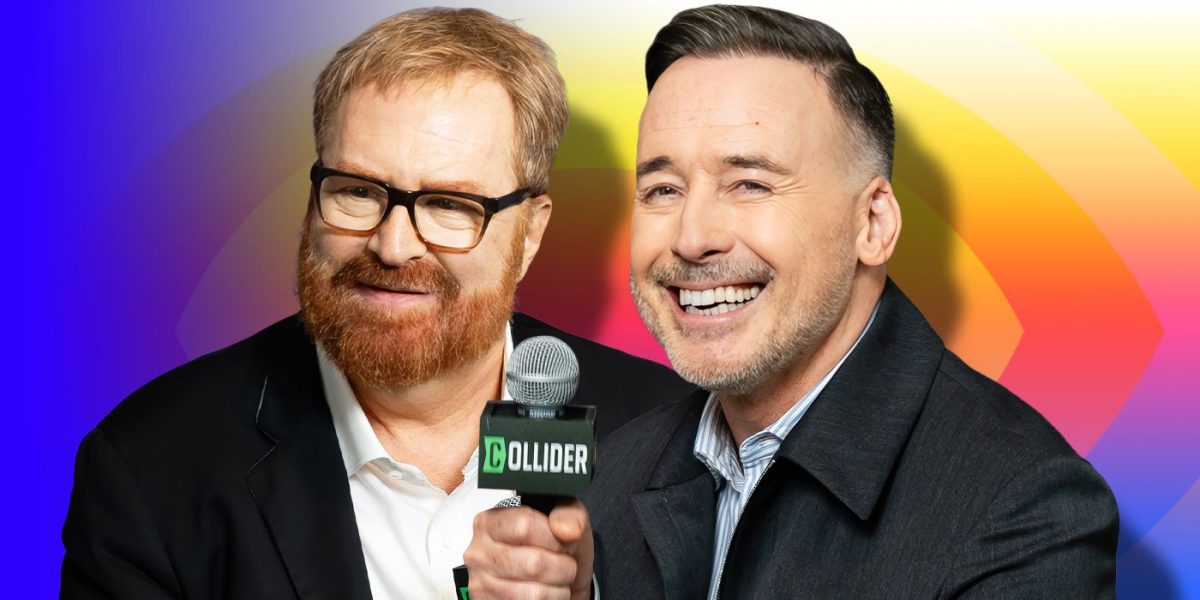
Collider’s Steve Weintraub talks with
Elton John: Never Too Late
co-directors R.J. Cutler and David Furnish at TIFF 2024.
Full of archival footage and interviews, Elton John: Never Too Late paves the road to the pop superstar icon’s farewell concert at LA’s Dodger Stadium.
In this interview, Cutler and John’s husband, Furnish, discuss Sir Elton John’s journey from childhood to superstardom, his love for his family, and upcoming projects.
This year, living icon Sir Elton John was crowned with EGOT award status. John has won multiple Grammys (including a Grammy Legend Award), two Oscars for “Can You Feel The Love Tonight” from The Lion King, and a Tony for the original score of Aida. Just this year, John won his first Emmy for Elton John Live: Farewell from Dodger Stadium. The story leading up to the award-winning farewell performance was captured by directors R.J. Cutler and David Furnish in their new film Elton John: Never Too Late.
Elton John: Never Too Late is a documentary following John as he looks back on his life. As he prepares for his final concert in North America at Dodger Stadium, Elton brings the audience alongside the astonishing early days of his 50-year career as he recounts extraordinary highs and heartbreaking lows, overcoming adversity, abuse and addiction. Never Too Late is an intimate and uplifting journey following a superstar from his humble beginnings to a family-adoring musical icon.
Cutler and Furnish stopped by the Collider studio at the Cinema Center at MARBL to talk with Steve Weintraub after its world premiere at this year’s Toronto International Film Festival. Together they discussed all things Elton John, including his passion for family, his career-defining Billboard hotstreak in the ’70s, and singing along with his childhood hero, John Lennon. They also talked about their cinematic process, editing theory, and Cutler’s honest-to-goodness 27-hour cut of Billie Eilish: The World’s A Little Blurry. You can watch the full interview at TIFF in the video above or read the conversation transcript below.
‘The Nanny’s Fran Drescher Helped Out Elton John in the ’90s
Image via Federico Napoli
COLLIDER: Before we get into the film, I do have some individual questions and they are directed at you if you do not mind. So let’s start with the most important thing, which is your early work on The Nanny .
DAVID FURNISH: [Laughs] You have done your research!
I like to come with some curveballs at the beginning. What did it mean to you in the ‘90s to be on that show?
FURNISH: Fran [Drescher] was a great supporter of the Elton John AIDS Foundation, and she always came to our Oscar parties. At that time, the first Elton documentary I had done, Tantrums & Tiaras, had just gone out on HBO, and Fran came to me with this crazy idea that she would be the woman on the tennis court in the south of France who says, “yoo-hoo” to Elton, which results in that enormous tantrum, and to put it into an episode of The Nanny, and it just seemed like so much fun. We loved Fran, and it gave us a chance to give the film a bit of profile, so that was actually a really wonderful experience, and I’m really thrilled that you know all about it.
Now let’s talk about the next thing. In 2015, you were named one of GQ’s 50 Best-Dressed Men in Britain. What did that mean to you, and did you feel like you had to step your game up the last nine years?
FURNISH: I’ve always loved clothes and fashion; it was nice to be recognized. I don’t like putting too much emphasis on that kind of stuff because my mother always raised me to say, “It’s what’s inside that counts,” and so that’s where the focus has to be.
I wore a tie for you. I’m trying to step my game up today.
FURNISH: I guess the nice thing was I got discounts at some stores, so that was actually pretty cool to wear people’s clothes. That was nice.
You have done so many films that I would recommend, but there’s gonna be people out there who have never seen your work before. If they haven’t, what’s the one that you want them to start with?
RJ CUTLER: Oh gosh, it’s like picking a favorite child.
You can name two or three if you want.
CUTLER: Billie Eilish: The World’s a Little Blurry, which is on Apple TV+, is a film I’m incredibly proud of. We started filming with Billie when she was 16 years old and ended right after her 18th birthday. It’s a film that’s very near and dear to my heart.
Image Courtesy of Apple
It’s fantastic. You never know, when you start filming with someone that young, where it’s all gonna go.
CUTLER: No, we didn’t know. It’s all cinéma vérité. We filmed with her, she, of course, filmed a lot of it on her phone, her mom filmed. It captures quite a journey of a young woman who’s an extraordinary artist, and she’s coming of age as a young woman but also as the extraordinary artist she’s become.
David Furnish and RJ Cutler Discuss the Best Elton John Music
Image by Photagonist at TIFF
Completely. Elton has so many incredible songs, and again, there are gonna be people out there — young people, especially — who might not have ever heard any of them. What’s the song or two that they have to hear if they’ve never heard a song?
CUTLER: Well, I point people to the entire album Madman Across the Water and that song in particular.
FURNISH: I am very fond of “Someone Saved My Life Tonight.” That’s the first song that really resonated for me when I heard it.
CUTLER: I would also say one of his lesser-known early albums, 17-11-70, which is a live album and is probably as good a live album as has ever been recorded. It’s amazing. It’s weeks after the Troubadour, Elton performs at WPLJ, I think, in New York, or WNEW, and it’s an incredible live album.
FURNISH: And never intended to be an album. It was the first stereo broadcast of a live, inside-a-radio-station performance. So many bootlegs were made on the back of it because it was such an amazing, amazing musical moment that, in the end, they said, “Look, we have to put this out as an album because people are bootlegging it so much.” So thankfully, it’s been properly preserved.
CUTLER: 17-11-70 — there’s a good day. A day well spent.
For RJ Cutler, There’s No Going Back Without Creating Something New
Image by Photagonist at TIFF
There are so many right answers. It’s just all right answers. You’ve covered so many subjects in your career. Have you ever had the conversation of revisiting someone a decade later, looking at the next chapter?
CUTLER: Sure. With The War Room, we did. The War Room, of course, is a film made in 1992, directed by DA Pennebaker, the great, the legendary DA Pennebaker, and Chris Hegedus. It’s the first film I produced, and it’s about James Carville and George Stephanopoulos, who were running Bill Clinton’s first campaign for president in 1992. Fifteen years later, we went back, and we followed up with everybody. If you look on the Criterion disc of The War Room, you’ll see that film, [The Return of the War Room]. It’s very resonant and very rich.
The reason I brought this up is because that was so effective, and there are so many other subjects you’ve covered.
CUTLER: Once you make a film, the film, the experience is very complete in my experience. Going back is like making a choice to make an entirely new film, and certainly, we’ve considered it. I mean, with American High, that was the first TV series that we did on network television, a premium documentary back in the year 2000, and the kids then were 18 years old, so now they’d be 42 years old. It would be really interesting to see them, but also, God bless them, they gave us their lives for a year — let them live in peace.
This Directing Duo Came Together by Kismet
“The universe has just sent me the signal that I need.”
Image by Photagonist at TIFF
You directed Tantrums & Tiaras back in ‘97. How did it become a co-directing project instead of you doing it on your own?
FURNISH: Tantrums was ‘95, actually, but it didn’t come out in America until ‘97 because I couldn’t get anybody to pick it up and run it. At that time, everything in Elton’s life was new to me, and the world was very unusual. Picking up a home video camera — it was a Hi8 camera before even digital — gave me an opportunity to do what I call “video therapy,” to kind of go into the world and go into our relationship and things that puzzled me and things that challenged me and confronted me. The camera gave me almost like a shield in a way to be able to ask Elton things and to confront things that I didn’t think were normal or healthy, or were unusual.
RJ is someone I have long, long admired, and we were put together about the prospect of working. I didn’t want the full responsibility of doing what I’d hoped would be a landmark documentary about Elton’s life on my own; I don’t think I bring the right amount of experience, and I don’t think I bring the full objectivity that’s required as a filmmaker. On the other hand, I’m a really good barometer for what is truthful for Elton in terms of his life and his world and when things are genuinely authentic, and so I wanted to collaborate. I wanted to work with someone where I could bring the skills that I had to someone who has terrific experience, amazing resources, an amazing team, and also manage Elton.
This was actually just before COVID, but we had just come off the road of hugely successful tours in Australia, New Zealand. We’d been down there for seven months, and we were back in LA. We had a coffee together at the San Vicente Bungalows, and it was the day before lockdown. RJ was the only person I really spoke to. It’s a short list of people that I would really choose to collaborate with, and I felt such an instant connection with him; I felt a kindred spirit. I felt a sense of trust. My defining question when I look to collaboration, because it is embarking on a big, big journey, is: Would I go on a dangerous mission with this person? And I would go on any dangerous mission with RJ. He gave me that sense of being steady and reliable and dependable and solid and creative.
I always think there’s a little bit of serendipity, or kismet, in everything in life, and a lot of our film is about Elton recognizing those moments in his life. When RJ shared with me that he’d actually been at Madison Square Garden for the John Lennon concert in 1974, which is something Elton had always talked about as being a significant moment in his life, the fact that RJ had seen that — and that was the first concert you ever went to?
Image via Disney+
CUTLER: Yeah, I was 13 years old.
FURNISH: I was like, “Okay, the universe has just sent me the signal that I need. This is the person to collaborate with.”
Actually, that’s one of the things I wanted to bring up. I am a huge fan of John Lennon and of Elton John, and I’ll be honest, I did not know about that event until I saw the doc and was floored by it. Talk about that moment and the importance of that moment, and trying to get footage.
CUTLER: Having been there, and it was the very first concert I went to, I was 13 years old, I had to commit grand larceny and forgery in order to get a ticket. In those days, there was no secondary ticket market. You either somehow magically had a ticket to Madison Square Garden, or you didn’t. I was a kid who needed to be at that concert, and I did everything I could, I got a ticket, and I went. When John Lennon came out on stage — of course, which nobody knew was going to happen — it was a feeling and an experience that I think nobody in the building had ever felt before. Madison Square Garden was shaking. Elton says, to this day, he’s never heard an audience louder and describes, as you see in the movie, that he and the band were in tears.
Lennon hadn’t been in New York since Shea Stadium in 1966. He had been out of the city on The Lost Weekend [A Love Story] for over a year. He and Yoko were separated — that would change that night. They came back together again that night, in large part through Elton’s arranging for Yoko to be there. Sean [Ono Lennon] was conceived that night, if you do the math and count nine months. He was born pretty much to the day, nine months after, Thanksgiving 1974. Elton, of course, is Sean’s godfather. And their relationship, Elton and John’s relationship — I mean, he had so many extraordinary relationships with so many. His life had changed. He says in the film he was a boy who would cycle to get the new Beatles album from his home in Pinner, and now here he was performing it. John Lennon was on his stage, and they were singing “I Saw Her Standing There,” singing the song that he had helped John Lennon make into a number-one hit. Lennon didn’t even know it would be a number-one hit, but Elton knew. So, for so many reasons, this was one of the most extraordinary nights of Elton’s life, and to be able to recreate it in the film was just such a thrill.
Image via Disney+
We got every picture, we got every frame. Nobody had cameras in those days, you couldn’t bring a camera in, but there were enough people who snuck their cameras in and held on to their footage from that night, and also enough still photographs that we could recreate the whole evening. And we had this amazing audio recording of it, so you could feel like you’re there.
FURNISH: These were bits and pieces we’d had in our archives but had never really been taken out. When I saw the first edit of it, I thought the work that had been done to capture the magic and the spirit and the energy with really limited scrap bits of footage, photography, and that wonderful audio track, it’s now been preserved for history. It is such a historically significant moment in both their professional and personal histories that’s now been preserved forever, which is the great thing about film.
It’s a reason alone just to watch the documentary, just for that stuff.
CUTLER: That Elton/John friendship, romance, love was so important, and that night was a turning point because it was the night that John Lennon became a dad and recommitted to his family, the change that would come to Elton some years later.
FURNISH: And found true happiness in his life before we sadly lost him.
CUTLER: And the last performance of his life.
Everything about it. Like I said, there were so many things I learned that I didn’t know, and again, I’m a fan.
David Furnish Beams About The Love He and Elton Share For Their Sons
“The real reason he’s coming off the road is the love of family.”
Image by Photagonist at TIFF
As a co-director, it’s an unusual thing because you are a manager, husband, father — you’re so involved in Elton’s life and also with the film. You show your kids in the film a little bit, but where was that line for you of, “This is too personal. What am I willing to show as a director and as a dad?”
FURNISH: I think Elton and I were both very protective of our sons. We actively don’t promote them in the media. If we put pictures of our family life on social media, we don’t show their faces, we show them from behind. We also try to show them in everyday situations because I think the world can benefit from a message of, “Hey, this is a family just like any other family, and their kids do stuff that everyone else does, and they seem to be really happy.” As advocates and role models, I think we have a responsibility to at least not hide the children away completely but have a very controlled narrative. So, it was important to me in this film. Obviously, if you’re going to show that Elton’s coming off the road, and the real reason he’s coming off the road is the love of family, the children have to be in it.
The challenge was only one of our two sons actually likes being filmed. The other one doesn’t like being filmed at all. And we had numerous times where the crew would come in, or I would even pick up my phone and try to capture stuff, and my older son would be like, “You’re filming me, aren’t you? I don’t want to be filmed.” He just would completely shut down. The magical moment that we got — and this is what I love about documentaries, when you get these gifts from the Heavens — is Elton’s sitting in the studio, and he has that FaceTime call with his sons. Zachary would never have done that on camera, but the fact that that’s just the way he and his daddy talk, and he and his brother are poking fun with each other and playing around like every other kid does, there’s so much in that phone call. You can see how they’re brothers. You can see how they’re active and involved and committed in school stuff, like every other kid. And you can see how much Elton absolutely adores his sons and is determined, based on his own childhood.
Image via Disney+
When we had Zachary, and then we had Elijah, he said, “I don’t want my children to know fear.” He said, “Every day I came home from school, every time I came back home, it was like walking on eggshells.” He mentions that in the documentary. You can see the culture around our sons. It’s loving, it’s positive. He tells them he loves them every single day. He compliments them. Elton, as a child, by comparison, was always criticized and always put down and always told what he was doing wrong and nothing was ever good enough and he was collared around the ear. It’s a very powerful contrast when you hear of Elton’s childhood, and you see that. I was so happy that there was so much narrative content and so much deep life meaning just in that one little sequence.
I did have to sit down with both boys at the end and screen the whole film for them and get their permission because when we started filming, they were like, “Well, hang on a minute. We don’t know if we want to be part of this.” And I said, “Don’t worry, we’ll show you the whole film, and if there’s anything you don’t like, we will take it out.”
How nervous were you before that first screening? Because that phone call is really important.
FURNISH: When they saw it, they were like, “Oh my god, we’re so young! We’re talking like babies. Our friends are going to tease us about this.” Then, in the end, we talked about the greater message that the film could put out because we do talk with the boys about the fact that same-sex parenting is not everybody’s cup of tea and we do live in a world with a lot of judgment and a lot of homophobia. They don’t get it. They’re like, “How could people be so wrong?” Because they’re perfectly happy in their situation. But the fact that a scene like that in a film can be a very powerful, powerful piece of advocacy, and it could maybe change people’s minds and maybe make people think more positively about it.
I cannot tell you the number of times I’ve gone out socially — and this was in the earlier days when we had the boys, and I would sit next to prominent societal people — and people I would think were very intelligent and very well-read, would go, “I hear you have children.” Then I would just start talking about my kids like anyone else talks about their kids with pride, and I’d have photos on my phone and stuff, and it’s three or four times with people who I thought would be more, I guess, evolved socially, have said, “Wow. I didn’t think it was right when you and Elton had kids, but now that I’ve sat next to you at this dinner, and I see how much you love your children, it’s absolutely right that they’re your kids.” So there’s a lot of work to be done. There’s a lot of preconceived notions out there.
CUTLER: The other thing that’s so important about that phone call scene, of course, is that you feel how much Elton misses his boys. You can feel that, in a way, that yearning to be reunited, which of course, is his journey through the film. He’s giving something up, something we refer to kind of as his last great addiction, which is performing and touring. He’s giving that up in order to be able to be with the things he wants most, which are his children and his family.
Image via Disney+
And then there’s another really important moment with the kids in the film, of course, which is this simple moment at the end when they come out on stage with David, and it’s completely uninflected. It’s a dad calling his family out to say thank you, but what you’re seeing is this completely normal family in this great moment of joy and gratitude. To see that, to see these two dads and their two boys, these beautiful boys, is a really powerful, emotional moment.
FURNISH: That was something that Elton and I deliberately didn’t build up with the boys. It was only a day or two before the final Dodger Stadium. He said, “I had this idea. How would you guys feel about maybe just coming on stage with me? I just want people to know this is why I’m coming off the road and to see how happy I am.” And they’re like, “Well, why would you do that?” They were very guarded and very protected, so we played it down. In the audience every night, they knew what was going on around them with those tens of thousands of people, and it took a little bit of reassuring, but it was truly spontaneous. It was not something we said, “Right, kids, we’re gonna take you on stage, and this is what you have to do, and this is how you have to behave.” I just said, “Be yourself.” I said, “You’re getting your daddy back full-time. Show the world how that feels.” And that was all I said to them, and they rose to the occasion magnificently.
There’s a 27-Hour Cut of Billie Eilish’s Documentary
I love talking about editing because it’s where it all comes together. How long was your first cut of this movie, and did you ever think you’d get it shorter?
CUTLER: It’s always long, and you never think you’re gonna get it shorter. The first cut was probably about three hours. Not so bad. I mean, I’ve done worse. The first cut of Billie Eilish was 27 hours.
Are you joking?
CUTLER: I’m not joking. It’s a delightful 27 hours. If you have the time, come on over. I’ll show it to you.
In all my years of talking to directors about assembly cuts and edits, I have never heard anything above Peter Jackson on The Beatles [ Get Back ], his first cut he told me was, like, 12 hours or 15. I’ve never heard 27.
CUTLER: Well, there you go. Billie had a lot to say. [Laughs]
Wow!
FURNISH: Especially for someone so early on in their life.
CUTLER: Yes, and I’m telling you, it was very compelling. If you watch it in five-hour chunks over the course of a week, it’s a very satisfying cut.
Oh my god.
CUTLER: And it came down. It came down beautifully. It’s like a sauce, these films. You’re making a reduction. There are two metaphors I always use — one is the sauce reduction, and you’re finding the essence, finding the essence, finding the essence until it tastes just right; the other is the block of clay where you’re carving away to see what it wants to be and what shape it wants to take. So, you asked, did we ever think we would get it down? Thank goodness for my experience because whether I think we’re gonna get it down or not, which of course, I never think, “We’re never gonna get it down,” but I know in my heart it will come down the way all the films do, and they reduce, and you find the sculpture within the block of clay.
FURNISH: I also think as a filmmaker, no one ever leaves the cinema and goes, “Wow, that was too short.” I always like to leave the audience with a sense that you pack something with a lot of information and a lot of emotion in a sensible time frame. There’s so much long-form cinema and so much long-form content now. Some of it’s absolutely appropriate and fits with the subject matter really, really well, but I think pacing and keeping an audience fully engaged and keeping the energy is super important.
Elton John Changed Pop Music With Fourteen Albums in Five Years
Image via Disney+
The thing with Elton, though, is I’m a big fan, and I don’t mind seeing more concert footage or I don’t mind seeing certain other things. So it’s a question of like, ultimately, what’s the story you’re saying? Which leads me to my next question. It’s basically building to Dodger Stadium and stuff in the early ‘70s. How did you guys figure out what the storyline was gonna be?
CUTLER: David referred to the very first conversation we had when we were talking about maybe working together, and I think in large part, part of why we knew that this was going to be a successful collaboration is in that very first conversation. David said, “I think it should be shaped around the final tour.” And I said, “If that’s the spine, the nerves will be the first five years.” What a prolific time of artistic explosion that Elton went through. You have to remember this was a time when the Beatles had broken up, the Stones weren’t touring, they were having their own problems, people had died — Janis Joplin had died, Jimi Hendrix had died. Nobody really knew where the music industry and pop music was going. Along comes Elton John with this extraordinary explosion — 14 albums in five years.
It’s crazy .
CUTLER: Seven of them go to number-one, songs that we now consider to be the classic songs. I mean, you’re talking about from the Elton John album to Captain Fantastic, all of those albums in that time period, and it’s a five-year time period. Plus, he’s making this monumental decision about his life, which is to come out to Rolling Stone. He almost dies on the road to that. He almost dies at the age of 27, the same age that all the other rock stars died early, and too young. Elton is able to save his life and put it on track, on the track that he wants it to be on. We discussed in that very first conversation that that decision could parallel the decision he’s making now to come on the road. When you can have that kind of an incredible collaborative conversation and creative conversation in your first meeting with great comfort, I mean, who would not want to pursue this?
FURNISH: I was particularly excited about the opportunity. I see the numbers behind Elton’s music, which is one of the benefits of streaming today, and nearly 60% of his music is now streamed by 18 to 35-year-olds, which is not like his contemporary. So, there’s a whole young group of people out there discovering these songs; I don’t think they have any idea of the history behind them. I don’t think they realize the intensity of the creative process. I don’t think they realize how monumental it was for Elton to come out in 1976, what a different place the world was, and what a tremendous, tremendous risk that was.
Elton John Risked His Career To Come Out At The Height of His Fame
Image via Disney+
You should really emphasize that because it was a dangerous time to come out, and he was also at the height of his fame.
FURNISH; Biggest star in the world.
CUTLER: People were not coming out.
FURNISH: Nobody came out. He risked his career.
Also, it’s more common now for people to come out, but still, people won’t come out because there is that risk to their career, and this is 50 years later.
FURNISH: So I think it was good to give young people that context. Also, Elton is very passionate about the fact that success in music is not overnight. It is a craft, it is a passion, it is something that you learn and that you work at, and that you develop. When you look at those years as a young child going into the Royal Academy of Music, getting a foundation in classical music training, deciding, “Rock and roll is my future,” and then becoming a session musician playing three and four shows a night for other artists and going into studios and recording on other people’s records, all of that foundation Elton put in place. Yeah, the Troubadour looks like an overnight success, but the reality is everything Elton had done in his life up until that point prepared him for that opportunity so that when he had the chance, he landed way bigger than he ever expected to, and then he just kept running and kept working and kept writing and creating and touring and performing.
It’s unfortunate, some of the reality television shows around music think that you can have a lasting career in music if you just go on TV and sing karaoke and sing someone else’s hit. There’s no foundation there in which a career can be sustained. So, I hope that young people who have musical aspirations can watch and feel from Elton’s journey, “I’ve got work to do. There are things I need to learn. There are lots of opportunities that I need to step into.” Our world is so instant now, and people sometimes get attracted to just the fame and the glory side, when in fact, it’s a craft that you learn.
I always try to explain to people, it’s great television, but it’s not a great music career.
CUTLER: Look at Chappell now. Look at Chappell Roan and the decade that she put in.
100%.
CUTLER: That’s why she’s so extraordinary.
I know you’re involved in about 72 projects, so what are a few of them that you are working on that are far out, not the one that’s coming tomorrow?
CUTLER: Well, I will say coming tomorrow, in addition to the Elton John film, is a film I’ve just completed about Martha Stewart that’s going to be on Netflix in the fall, and we’re very excited and honored about that, as well. We have a number of different films coming up — a movie about the man who invented K-pop, the Korean futurist and genius Lee Soo-man, somebody who’s not known in America, but we will be after this film. It’s just an incredible story about how he invented this part of pop music that has taken over the world. We’re working with our dear friends at Imagine Entertainment and Major League Baseball on a project about this year’s World Series that I’m very excited about and soon we’ll be able to announce our distribution partner, as well. There are a lot of great projects. It’s a thrilling time in documentary; I compare it to the 1970s in narrative filmmaking, where artists are really expanding the form, spreading their wings, building up their muscles, and telling incredible stories. I’m just honored to be part of the documentary filmmaking community.
Elton John Loves Mentoring Young Artists Like Chappell Roan
Image via Chapell Roan
I have a question about Elton John and what could be coming in the future because I’m assuming over the years you guys have recorded so much stuff. Are there plans for more concert films or things like that?
FURNISH: Elton is most inspired by new creation. That is what excites him the most. We have two stage musicals opening this year. We have The Devil Wears Prada, which we’ve been working on for over eight years in London, which is going to have its world premiere on the first of December, World AIDS Day, and we’re very excited about that, and we have a musical that we’ve been working on for 14 years about the life of Tammy Faye Baker, a televangelist. We opened that in a very limited capacity at the Almeida Theatre in London, which is only a 300-seat theater. We did it very much off the radar and said, “This isn’t the next big Elton John musical,” because we wanted it to find its feet and get a sense of how audiences would respond. We sold out almost immediately, got fantastic reviews, and now we’re gonna open on Broadway in the newly restored Palace Theatre in November. So, that’s just two irons that we have in the fire at the moment.
Elton, I know, wants to write and record and continue to develop new stuff. He doesn’t sit on an archive of unreleased recordings that he’s dying to put out. He always does one album at a time. It is very much something that exists in its own right, and if it doesn’t make it onto the album, then in his mind, it shouldn’t be on the album, and it shouldn’t be released publicly. So, Elton is the least nostalgic person I know. I think the thing that he would find difficult would be to sort of say, “Oh, let’s keep going back and looking at the past. Let’s keep unearthing things that haven’t been seen or done before.” I was so thrilled with this documentary. We had an opportunity to do that with the archive footage that we have and the audio tapes. Elton’s handwritten diaries serendipitously found their way back to us a few years ago. Elton had forgotten he’d done them, and they are literally a handwritten day-by-day account of the rise of one of the most important and successful careers in music history.
He’s like a shark; he has to keep moving forward to stay alive. It’s what feeds him. It’s what thrives him. His radio shows, he absolutely loves doing them. He’s doing lots of work on the side in terms of Chappell Roan, for example. He played “Pink Pony Club” over a year ago when that single came out, got her number, called her, and has stayed in touch with her ever since, and sort of checks in from time to time because he watches the charts every day. He doesn’t do it for kudos, he does it because he cares about the future of young artists, and he sees people with talent and potential. He calls her up, and he says, “Your album is about to break.” “Really?” “Oh, yeah, I’m watching the numbers. I know how this works. I know how the charts work. You’re getting the right amount of ads. This is hanging around. This is your lead single.” And so, he does that for love. He does that for love of craft, and he does it because he remembers all of the artists when he was starting out, like Leon Russell, like Brian Wilson from The Beach Boys, like George Harrison or [Bob] Dylan to reach out to him to say, “I love what you do. Have you thought of doing this?” Just kind of giving him the nudge and the nods that he needed to continue to propel him in the right direction.
Elton John Excites Broadway with ‘The Devil Wears Prada’
Image via Disney+
I have to ask you one last thing. I am so curious about The Devil Wears Prada . What can you tease about this?
FURNISH: If you love the film, you’ll love the show. Vanessa Williams is playing Miranda Priestley, and she is terrific. Vanessa is a beautiful singer and a fantastic actress. The songs sound very much like Elton John songs. It’s a really great fun sonic pop soundtrack. The clothes look great, as they should do, and our director is Jerry Mitchell, who did Kinky Boots, who’s a fantastic director and choreographer. So visually, everything holds together. It’s cohesive, and it’s fun! There’s so much negative stuff in our world right now. We wanted to create a show that people could go to the theater, sit back in their seats, and have a good time and laugh and just enjoy themselves.
How many songs are in it?
FURNISH: Off the top of my head, I would probably say there are at least 14. It’s hard for me because songs come in and come out, and they change. We’ll work on the show until the night that the critics come in. You’re always, with musicals, polishing the jewel constantly and looking at ways of reconfiguring and doing things. So, that’s why I’m not on my toes.
No, totally. It doesn’t come out until, you said, December 1st.
FURNISH: Our gala opening is the first of December in London at the Dominion Theatre, which is a big beautiful theater. And if I may, and on the subject of new Elton material, as you know from having seen the film, there’s the closing credits song that he and Brandi Carlile wrote and perform that is called “Never Too Late.” We took the film’s name from that song, and what a beautiful, beautiful song it is that encapsulates all of the themes of the film. That came from not last summer, but the summer before. Elton and Brandi are close friends, our family’s holiday together. They were staying with us and I shared a very rough, rough edit of the film with Brandi because he’s been her musical North Star her entire life. I know how much she knows about Elton’s musical history, and I just wanted to get her feedback on the film. She was so inspired, she wrote that lyric. She said to Elton, “I just saw the film and this is what this film is about,” and asked Elton if he wanted to write to it, and he did, and now we have a wonderful song closing our film.
On that note, I will say that the film is premiering at the Toronto Film Festival, but it will be on Disney+ on December 13th.
FURNISH: And a month before in theaters.
Special thanks to this year’s partners of the Cinema Center x Collider Studio at TIFF 2024 including presenting Sponsor Range Rover Sport as well as supporting sponsors Peoples Group financial services, poppi soda, Don Julio Tequila, Legend Water and our venue host partner Marbl Toronto. And also Roxstar Entertainment, our event producing partner and Photagonist Canada for the photo and video services.
Publisher: Source link





Eggs – Film Threat
In writer-director-star James Clair’s short drama Eggs, a man struggling to rebuild his life finds his quiet mornings turning into strange conversations with the very eggs he is meant to cook. I mean, they want him to eat them. So…
Mar 11, 2026
Ethan Hawke Elevates A Rugged, Predictable Gold-Run Survivalist Western[Sundance]
As far as one can tell, Murphy (Ethan Hawke), a father, WWI veteran, and avid car mechanic, has never encountered an insurmountable challenge. Living in Eugene, Oregon, in 1933, four years into the Great Depression, Murphy and his young daughter,…
Mar 11, 2026
The Moment Review | Flickreel
Brat Summer was a cultural phenomenon that I didn’t understand at all. I knew that it was connected to an album that Charli XCX had released. Whenever I asked what Brat is, though, nobody could seem to give a straight…
Mar 9, 2026
Cillian Murphy’s Netflix Crime Hit Delivers a Brutal, Bleak Finale
It’s been four years since we last saw Cillian Murphy play Tommy Shelby, but seven have passed in the world of Peaky Blinders, with The Immortal Man taking place in 1940, in the middle of World War II. Tommy’s gone…
Mar 9, 2026