In Case You Forgot, Climate Change Sucks
Feb 13, 2026
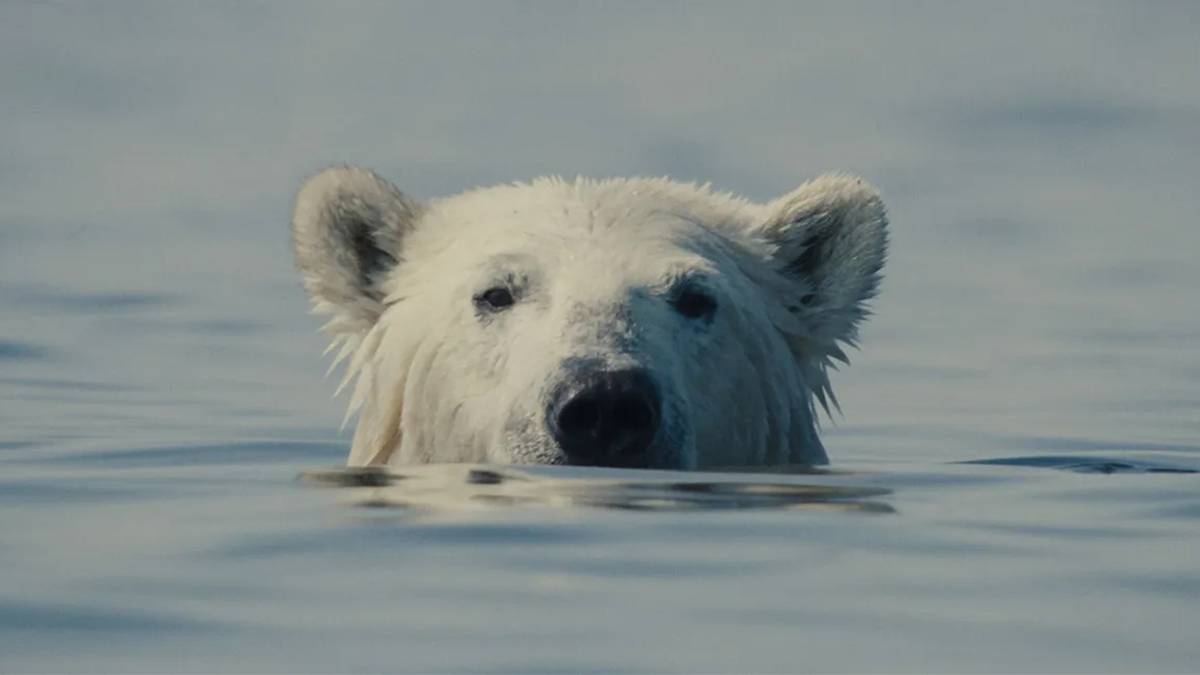
In the northern corner of the Canadian province of Manitoba lies the small town of Churchill, colloquially known as the “Polar Bear Capital of the World.” Here, polar bears have become a common part of everyday life. Tourists come to Churchill to see the bears while the locals endeavor to redirect them away from humans. But what happens as the climate changes and these bears are forced to scavenge and travel further inland? In Gabriela Oslo Vanden and Jack Weisman’s documentary Nuisance Bear, audiences are not only introduced to the odd disharmony of Churchill but also to the growing list of obstacles these apex predators face as their environment and dynamic with humans change.
What Is ‘Nuisance Bear’ About?
Vanden and Weisman’s feature documentary is based on the pair’s award-winning short film of the same name (seen above). In it, the documentarians chronicle how the town of Churchill handles these “nuisance bears” as they are slowly drawn into human-inhabited areas to search for food. While trying to lessen interaction, humans are forced to resort to extreme measures to try to transport the bear back into their natural habitat and away from the populated areas. In the feature film, Nuisance Bear expands on this concept, adding nuance and depth to an issue that runs far deeper than the average nature documentary. Narrated by Mike Tunalaaq Gibbons, we learn about the nature of these nuisance bears and how they both benefit and hurt the town. Gibbons, who is Inuit, describes the opposing views that Inuits have compared to the tourists who come to Churchill. The indigenous Inuit are the last people who are allowed to hunt the polar bears, following their cultural tradition, and have always viewed the bears as beasts to be avoided and hunted if they appear near human settlements. Signs all around town warn of the presence of these giant animals, and for good reason, too. Not only are polar bears the largest of all bears, but also the largest land carnivores, and they aren’t afraid of humans; in fact, they see us as prey. Lest you think this is a problem of a foregone generation, Gibbons himself has lost family to a polar bear attack. It’s a sobering reality that, as much as we want to protect these animals, they are still hunters and predators. To the Inuit, the bears aren’t spectacle, they’re a genuine threat. Children are told to stay indoors at night, signs pepper the town warning of polar bears in the area, and the melting polar ice caps mean seeing these predators has become more commonplace. But at the same time, these bears contribute directly to the revenue of the city as tourists flood in to see the polar bears. And, yes, it’s undeniable that these great bears are majestic, and their cubs are adorable. Seeing them in person and in the wild, especially knowing their endangered status, could be a bucket list item for outsiders. Still, the locals feel differently. As wildlife officers do their best to relocate the bears, whether by using large noise deterrents or by physically airlifting tranquilized bears back into the wild, the landscape of the polar north has undeniably been changed.
Vanden and Weisman Paint a Mesmerizing Picture in ‘Nuisance Bear’
Immediately, what jumps out from this documentary is not only its nuanced look at the topic of polar bears mingling with society, but the footage that Vanden and Weisman have captured. Gibbons offers strong narration and fills in the gaps that images might not be able to depict, such as the sobering fact that these large noise deterrents that are used on the bears have slowly made many of them deaf, meaning that more human interference will be required to relocate the bears. However, the lion’s share of time in Nuisance Bear is dedicated to the slow and meditative look at Churchill. Due to the alarmingly fast rate at which the world is losing sea ice — thanks climate change — these bears aren’t able to hunt for seals. Long shots of the nuisance bears foraging in town go uninterrupted, and we watch as these apex predators are reduced to pawing at trash cans and outsmarting traps to get the sustenance they need. Extended sequences are dedicated to watching the complicated process of wildlife officers carefully transporting the bears back to the wild, trying their best not to expose the bears to human interaction. The amount of footage captured by Vanden and Weisman is impressive, as is their close connection to this community. We go into the homes of Inuit hunters who work as a family to prepare the pelts and meat after a hunt with no prejudice or judgment. We watch as the locals set off noise deterrents in the hope that this will be enough to protect their children. We follow tourists who gasp in glee when they finally are able to spot a polar bear in the wild, and can we really say we wouldn’t be doing the same? But the fact remains, this new normal is not sustainable
‘Nuisance Bear’ Is a Quiet Image of Climate Change, but Lacks a Damning Note on the Real Perpetrators
Sundance 2026Image via Sundance
It’s difficult to watch Nuisance Bear and not feel slightly hopeless. No one in Churchill is to blame for this mounting issue that they’re facing year after year. Who does this land belong to? The Inuits who have lived here for thousands of years? The bears whose natural habitat is this ecosystem? How do they coexist? Is such a thing even possible? There are no easy answers, and Nuisance Bear presents none of them.
The major flaw of the documentary is perhaps its almost dogged refusal to make a moral argument and point the finger at politics. Because, let’s face it, there is a villain in this story. It’s not the bears, it’s not the tourists, it’s not the hunters. It’s the politicians pushing to ignore the facts of climate change. It’s the lawmakers who feel no guilt repealing regulations set in place to slow the progress of global warming. It’s the corporations that don’t really care about anything but their bottom line. It doesn’t matter to the executives sitting in an office thousands of miles away if there’s a nuisance bear that could be attacking children. To them, a polar bear is a cute animal seen at a zoo, stuffed as a toy, and animated in commercials. Nuisance Bear assumes that you already know all of this; after all, climate change became a political issue half a century ago. But not damning these very real people, who have a direct correlation to what is happening in Churchill, does a disservice to everyone affected by these changes. There are no good and bad guys in the town of Churchill, Manitoba, but there are definitely villains willingly ignoring the facts that deserve, at the very least, a bit of shaming for quietly but surely eviscerating the planet. Nuisance Bear premiered at the 2026 Sundance Film Festival.
Release Date
January 24, 2026
Runtime
90 minutes
Director
Jack Weisman
Producers
Nicole Stott, Teddy Leifer, Nina Sing Fialkow, Nicole Quintero Ochoa, Emily Osborne, Harry Go, Sam Frohman, Christine D’Souza Gelb, Alex Pritz, Will N. Miller
Pros & Cons
Documentarians Vanden and Weisman share all the different perspectives of the people in Churchill, Manitoba.
The slow and meticulous shots of the bears offers a rare insight into the remote town.
In trying not to point fingers, ‘Nuisance Bear’ ignores the largest contributing problem to everything that is happening.
Publisher: Source link





The Harsh Realities of Peak Millennial Activism
Imagine this: After months of finally coming to the conclusion that you want a divorce, you lay it out for your spouse, and then the next morning, Russia invades Ukraine. Okay, sure, perhaps if you don't live in Eastern Europe,…
Feb 13, 2026
In Case You Forgot, Climate Change Sucks
In the northern corner of the Canadian province of Manitoba lies the small town of Churchill, colloquially known as the "Polar Bear Capital of the World." Here, polar bears have become a common part of everyday life. Tourists come to…
Feb 13, 2026
Anaconda Review | Flickreel
To some, the original Anaconda is a 90s cult classic. To others, it’s a so bad, it’s good guilty pleasure. To me, it’s just a bad movie. Not awful, but as weird as it sounds, Anaconda wasn’t quite over-the-top enough…
Feb 11, 2026

A Cinematic Marvel Sans Thrill
Starring the ultimate action hero of Bollywood, Sunny Deol, as Lieutenant Colonel Fateh Singh Kaler Jai Hind! A highly anticipated Hindi war epic blasted the big screens on January 23, 2026, marking the weekend of India’s Republic Day. It is…
Feb 11, 2026