Kate Siegel Reveals Her Deal-Breaker Idea for Her ‘V/H/S/Beyond’ Segment
Oct 4, 2024
The Big Picture
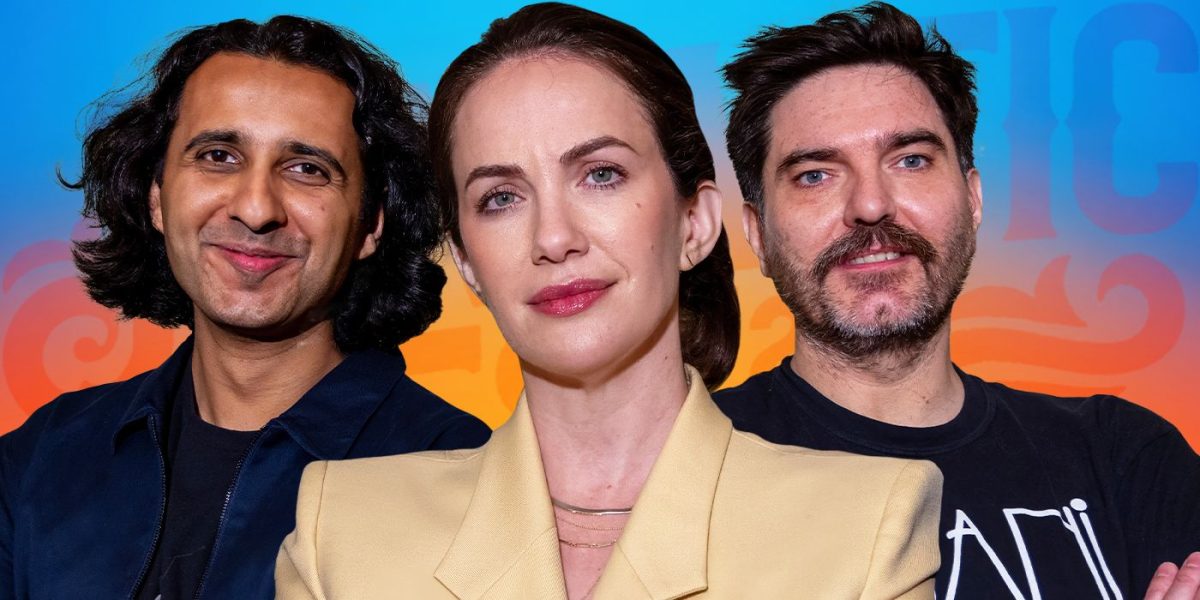
Collider’s Perri Nemiroff talks with
V/H/S/Beyond
filmmakers Kate Siegel, Jay Cheel, and Virat Pal at Fantastic Fest 2024.
V/H/S/Beyond
is a brand-new installment of the long-running horror anthology franchise with a new batch of innovative shorts focusing on sci-fi.
In this interview, Siegel, Cheel, and Pal discuss overcoming production challenges, the joy of working on a
V/H/S
production, and more.
The V/H/S franchise is back with six more stories that spotlight wildly talented genre filmmakers. From producers Brad Miska and Josh Goldbloom, V/H/S/Beyond celebrated its world premiere at this year’s Fantastic Fest, where Collider’s Perri Nemiroff had the chance to sit down with the directors for each segment to dig into what makes these movies standout filmmaking achievements.
In the first V/H/S/Beyond conversation, which you can read here, we learned about Jordan Downey’s “Stork,” Christian and Justin Long’s “Fur Babies,” and Justin Martinez’s “Live and Let Dive.” For this second interview, the focus shifts to exploring the behind-the-scenes of Kate Siegel’s directorial debut, “Stowaway,” the first-ever V/H/S segment from India, Virat Pal’s “Dream Girl,” and the “evidence of an alien abduction” in Jay Cheel’s wraparound segment.
Before V/H/S/ Beyond hits Shudder on October 4th, check out Nemiroff’s full conversation with Siegel, Cheel and Pal in the video above, or read the interview in transcript form below to find out what made Siegel’s directorial debut so ambitious, what it’s like on a Bollywood set (at least in a horror movie), and why Cheel’s mysterious alien footage is so special to him personally.
The V/H/S Franchise Is a “Relentless Wave of Yeses”
“They were willing to listen, and they were willing to change their minds, which is rare and special.”
Given the fact that I love V/H/S so much and how it supports filmmakers in a way that lets them swing for the fences, can you each give me an example of something about the V/H/S filmmaking environment that you think set you up for success on your respective films?
KATE SIEGEL: One of the things I loved about V/H/S was the relentless wave of yeses you get, which is like, “Sure, try that. Sure, try that.” I had a technology that I had no proof of, infrared light had not been done or used, shot in pure infrared. I had nothing to point at, and so I had to meet each executive in order and explain why I want to use it and what it would look like, and I had to show them examples of it. But to their credit, conversations that would start with, “I think we’re going to have to go in another direction…” they were willing to listen, and they were willing to change their minds, which is rare and special.
And it looks exceptional.
VIRAT PAL: It’s just such a collaborative environment. The producers are incredible in giving you all the creative freedom. In our case, we did a little bit of pre-production from here, like the casting, the getting the special effects stuff started, but once we just left for Mumbai and we were there, we were left to our own devices which was very liberating but also sometimes terrifying. I would share on WhatsApp and email on Dropbox stuff with Josh [Goldbloom] and Nick [Lazo] from Shudder, everybody, and they were just giving us thumbs up. “This is great! This is awesome!” And sometimes they would give some ideas, “What if do you do this? What about this?” But we were just by ourselves, even for the shoot. Though Michael Schreiber, who was one of the producers, was amazing enough to come there and be with us on set. He was there for the actual shoot days, but a lot of the prep, we were just doing our own thing and hoping and praying that when we put it all together, it’s something they like.
JAY CHEEL: For us, having the shorthand with the Shudder team, because we had done this Cursed Films series for them, two seasons of it, so the fact that the wraparound was in that same sort of form, at least Nick and the people at Shudder knew my process of getting at something. And Josh, I knew from way back. My first feature doc he programmed at a festival in Philadelphia, so it was great reconnecting.
How to Craft a V/H/S Wraparound
Image via Shudder
Jay, I want to talk a little bit about crafting a wraparound. Any film is difficult to make, but when it comes to V/H/S , I always feel like that is probably one of the most challenging things to pull off, and pull off well. What are some things you did to make sure you were serving your own story, but also the stories that would appear between it?
CHEEL: I just focused on my story, basically. I guess thematically approaching it as a wraparound, so it touches on the idea of verisimilitude, and in UFO and alien footage, and what it would take for someone to believe that something is authentic. So, just exploring that and allowing the theme to throw to the segments rather than literally throwing to the segments. I felt that that might be a kind of different, rich version of a wraparound.
I was reading your director’s statement and you mentioned that you received an anonymous email from someone who claimed to have evidence of an alien abduction, and that’s what inspired all of this. What were the details of that email, and can we see any of them directly in the finished film?
CHEEL: Yes, the whole tape at the end was what we received.
Oh!
CHEEL: I don’t know if what’s on the tape was real, but it was delivered. This was while doing Cursed Films Season 2. I got an email from someone anonymously, a video was attached, and we thought, “Okay, this isn’t appropriate for Cursed Films, but we’ll hold onto it.” Then this came up, and it was like, “If we have evidence of an alien encounter, what better way to introduce it to the world than a genre film festival?” [Laughs]
PAL: I feel like that’s how The Ring begins. [Laughs]
“Dream Girl” Brings V/H/S to Bollywood for the First Time
Image via Shudder
Virat, I was reading another interview where you mentioned that it was really important to you to give the audience a glimpse of what it feels like to be on a Bollywood film set. Can you tease some things that people will see in your film here that highlight the difference between how a Bollywood film set operates and what people might think a traditional Hollywood film set is like?
PAL: Great question. Truth be told, I have observed sets where my friends have been working, I have also been a visitor to sets in the past, but I have never actually run a set over there. I’ve actually just worked in LA, but I know how sets there work, and in our own small sort of V/H/S segment way, we wanted to give you just a glimpse of how things are there. Obviously, as you know, the way the story is, it just kicks right into gear as we see this stuff happening there. But there are subtle differences — the sound stage looks different, the way the people interact. These are very small, subtle nuances, but people in a high-pressure environment can be a little rough as they give instructions. That’s why we have this character who is kind of just commanding things because I’ve actually seen that in real life. I do not condone any of it. It’s changing now in the last few years, but in the ‘90s and 2000s, directors were very, very dictatorial, and many people, directors of photography, would just shout at the crew and everything, and everybody was always in fear. I don’t think that’s how sets work even there now, and obviously not here.
And just the vibe. There are so many people! A thing which would take 20 people here would be, like, 100 over there because every department, anybody, even a costume designer or a production designer, you would think they’ll need two people, especially for the scope of work required, and they would say, “No, no, no. We need five,” but they won’t charge more. They just say, “Five people will come with me,” and that’s it. And if you say, “No, no, no,” if you try to convince them, they’re like, “No, but that’s not how we work.” It’s also just the way union works over there. You require more people for lighting, for camera, for all these departments. So, we had, like, 100 people on set. 100 people for a V/H/S segment.
I love that!
CHELL: We had three people.
Image via Shudder
I also have to ask you about that song, which is permanently stuck in my head now. When you started working on this, did you already have a very clear sense of what you wanted that to sound like, and if not, can you walk us through some of the trial and error you experienced crafting it?
PAL: In terms of the song, the chorus lines were in the script, which I had put there, and so we knew it had to have a certain feeling. Again, I’ve not mentioned this before, and I think it would require a lot of context, but for many years, especially since the ‘90s, the 2000s, the 2010s, there were these — they are not called music videos, they are part of movies in India, especially the ones that have songs — very specific kind of song where an actress comes and dances. It’s like a Beyoncé kind of video, and somebody in the press termed it as “item songs.” They subverted expectations. They started having main actors also doing it, so there’s an item song with a guy.
So I told the producers that we are gonna do, we won’t call it an “item song,” but it was basically like a promotional song in a movie for the movie. So, in the movie she’s doing, the movie within the segment, she’s doing a promotional song for that film, which is what we are capturing. And in terms of recording the song, I worked with a composer here, he had a melody, and we just took it to a composer back in Mumbai. After two or three people who were not working out, we found this person. He just got it, and in two days it was done, and then we were off to the races. We have an amazing singer, Hansika, who sang it, and then it all just came together very quickly.
How Kate Siegel Made a Film that “Reads Like a $100 Million Short”
Image via Shudder
Kate, I have a quote from Josh that I really wanted to highlight. He had said, “Kate’s treatment was far and away one of the craziest I’ve ever read. It was so thorough and complete and chaotic, and on paper, it reads like a $100 million short film.” What was the single most chaotic or ambitious idea in that treatment, and how did you go about executing it for less than $100 million?
SIEGEL: It was that I wanted the back half to be in zero gravity. That was a deal-breaker for me. I was like, “If Kate can’t go to space, then what’s the point of the revolution?” And the way I ended up doing that was I used something called a trinity head, which is a gyroscopic crane head, that I put on a Steadicam operator. A gyroscopic crane head, what it does is it goes side to side, and it can pan 360, and it can do a full twist, and it is operated by your DP at monitor. So, he has two little wheels, Michael Fimognari was spinning them, and then my Steadicam operator, who had this on a long pole, could move also. And so all of a sudden, we could get a flow.
We spent a lot of time working on the float, and you can sell it with a few things. The question is, where does she go? Floating a person is very hard. I didn’t want there to be wire work because you feel the gravity almost in wires, and also we couldn’t afford wires. We didn’t have that kind of safety or stunt, but we had one wire stunt, but she gets thrown into the filaments. Anyway, so we did a thing where we had a dummy made of our actress, and I was like, “Just have her float gently. Just that moment of her leaving frame. We’ll sell it.” And then when she ends up grabbing the camera by the window, she’s on two giant apple boxes on a furniture dolly and rolled up so that she could lift her body for short periods of time. We tried that from a bunch of different angles just to sell it just a little bit. I just wanted people to get permission to buy in. I knew I wasn’t gonna be able to do it 100% and that people could be like, “Well, her hair didn’t…” or, “Her clothes didn’t…” but I just wanted them to buy in enough.
Image via Shudder
You brought up your lead in this, who you already know I think is absolutely exceptional, Alanah Pearce. I believe you two have known each other for a little while, so can you tell me how you first met and what the first thing you saw in her was that signaled to you, “She would be a great collaborator for me when I direct?”
SIEGEL: Alanah is one of the most talented and generous people I’ve ever met. She came into my friend group, she is currently dating one of my friends, and she has a magnetism to her that just draws you into her sphere. She’s very experienced in front of the camera, which I needed, but I also wanted someone who wasn’t going to feel like an actor, and Alanah has done a ton of voice work. Her American accent is flawless.
We were at a game night, we were playing running charades, and I was deep into “Stowaway” prep, and I had just heard that my first choice actress wasn’t going to be approved for union reasons. I’m just looking around, and I saw her sitting there watching the games go off, and I was like, “It has to be Alanah.” And so, because I never, ever can stop any impulse that has ever occurred to me, ever, I ran over to her and was like, “Hey, you want to be in my movie?” And Alanah is very cool, and she was like, “Okay. What’s your movie?” And I was like, “Oh, yeah! Okay, so…” Working with Alanah is a dream. I like to pick actors that communicate the same way I do, which is like no bullshit and very honest. She would tell me what she needed, I would tell her what I needed, and it was a dream, and I hope to work with her again and again and again. But I think she will be very booked and very busy.
‘V/H/S/Beyond’ Inspires Its Filmmakers
“Try to shoot for the stars, and you can make it happen.”
Image by Adam Matignetti
I wanted to end on a group question. I’ve been ending on this ever since our first Fantastic Fest interview this year because it is an idea I really like. It was for The Rule of Jenny Pen , the movie with John Lithgow and Geoffrey Rush. Their director, [James Ashcroft], was explaining that one of the things that wowed him about them is how much joy they have on set. For each of you, can you isolate the single moment on your set that brought you the most joy as a creator?
PAL: I had never shot a song before. We were very nervous doing it in the lead-up to it, but then we started. I saw the choreography two days prior and how our actress literally had two days to prep it, and she said, “I’m doing it.” She did it, all the backup dancers came, and then when we saw it actually on stage with the cameras and everything, it was surreal. It was a surreal moment. I was very overwhelmed, and it was a truly joyous experience.
Obviously, the horror of it and all the other set pieces were so much fun. There is a moment I don’t want to spoil, but something is revealed and it’s the first thing we see happen to a character, and everybody on set was on tenterhooks. But when it happened and it was over, everybody started clapping. It was amazing. It was a great moment.
I would also like to add, just in terms of as a filmmaker who got to be with these amazing filmmakers, it was a dream come true for me to work with such established names. It takes a lot of courage to be able to even do an idea that you don’t have the bells and whistles for, like Kate’s segment, but to have the conviction and the assured sense that “Even without the bells and whistles, I will be able to do it.” It’s very inspirational, actually, and it really makes you feel like, sometimes, try to shoot for the stars, and you can make it happen. I think that’s a lesson for me and hopefully for many people listening here.
SIEGEL: God, the whole thing was so joyous. I burst into the stages every day like the Kool-Aid Man, like, “Oh yeah!” I was so excited to be there, so excited to figure this out. Of course, being a director is 90% preparation and 10% putting out fires on the day, and something goes wrong, or this thing doesn’t show up correctly, and how you have to shoot that. For me, the creative, collaborative problem-solving where I’m looking at something, and I’m like, “I don’t know what the fuck to do with that,” and I could turn to my left, and my DP was there, and I could turn to my right and the producer was there, and we were like, “Alright, so the shark’s not working. What are we going to do?” And those moments of feeling that were the best. I’m just immediately addicted and I have to get back on.
Oh yes, I like hearing that.
CHELL: Hypothetically, if the tape at the end was something we made, the best part was probably casting the hypothetical actor in that section, who’s a friend of mine — hypothetically — Jerry Ang, who is not an actor, and we’ve been friends for a long time, and he has always taken part in projects that we’ve done. So I thought, “I wanna bring him into this.” Somehow I cast him without anyone knowing that I was just casting my friend, who has no experience with anything. But we brought him to LA and he had his first Uber ride, he had his first Starbucks. It was a lot of firsts. He’s not someone who normally expresses gratitude sincerely, and at the end, he said it was the best experience he’s had in his life, which he then added, which probably makes his life pathetic, which is very him, and that it was like a Make-a-Wish foundation which is also a comment that’s very him. So, I think that, hypothetically, would be the best thing.
Check out Collider for even more from Fantastic Fest. If you missed our V/H/S/Beyond discussion with the first group, you can read that here!
Publisher: Source link




Eggs – Film Threat
In writer-director-star James Clair’s short drama Eggs, a man struggling to rebuild his life finds his quiet mornings turning into strange conversations with the very eggs he is meant to cook. I mean, they want him to eat them. So…
Mar 11, 2026
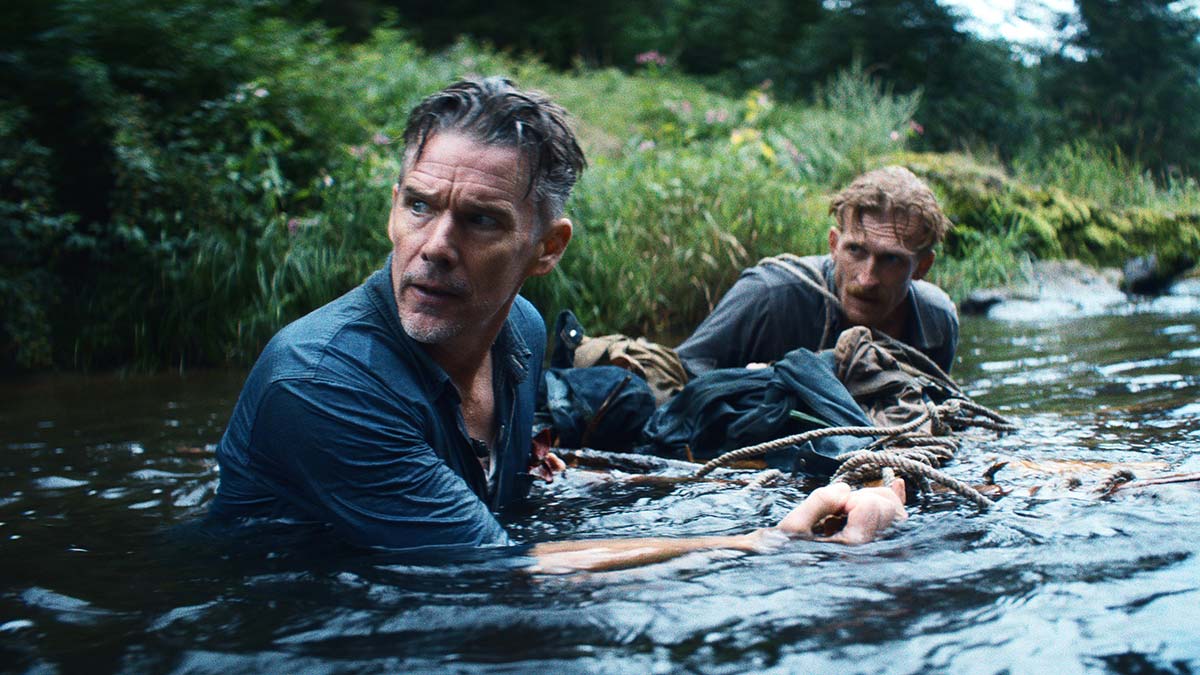
Ethan Hawke Elevates A Rugged, Predictable Gold-Run Survivalist Western[Sundance]
As far as one can tell, Murphy (Ethan Hawke), a father, WWI veteran, and avid car mechanic, has never encountered an insurmountable challenge. Living in Eugene, Oregon, in 1933, four years into the Great Depression, Murphy and his young daughter,…
Mar 11, 2026

The Moment Review | Flickreel
Brat Summer was a cultural phenomenon that I didn’t understand at all. I knew that it was connected to an album that Charli XCX had released. Whenever I asked what Brat is, though, nobody could seem to give a straight…
Mar 9, 2026

Cillian Murphy’s Netflix Crime Hit Delivers a Brutal, Bleak Finale
It’s been four years since we last saw Cillian Murphy play Tommy Shelby, but seven have passed in the world of Peaky Blinders, with The Immortal Man taking place in 1940, in the middle of World War II. Tommy’s gone…
Mar 9, 2026