
Letâs Play: Genki Kawamura and Jirô Nagae on a New Kind of Video Game Cinema
Apr 10, 2026
Exit 8
At first glance, film producer and novelist Genki Kawamura would not appear an obvious fit to helm a big-screen adaptation of an indie video game. Best known for producing major titles such as Hirokazu Kore-eda’s Monster and Makoto Shinkai’s Your Name, Kawamura made his directorial debut in 2022 with A Hundred Flowers, a muted and focused dementia drama. “There was one sequence in that film that was well-received in how it showed how the world looks from that perspective,” reflects Kawamura. “I was hoping to expand on that, so I searched for some kind of elevated horror project to do so with. That’s when I encountered Exit 8. It was the perfect marriage of a game looking for a movie, and an opportunity for me to apply what I’ve learned.” Distributed by major Japanese studio Toho (with NEON handling in North America), the film is a landmark moment for video game movies in both their box office performance and their artistry.
Crafted by indie developer Kotake Create in 2023, Exit 8 is a walking simulator puzzle video game with liminal horror elements, popularised by YouTube and Twitch streams. The objective of the game is simple: walk through a recursive passageway in a Japanese underground station, spotting anomalies in your environment as you go. If you identify any, you are to turn back the way you came; if you don’t, you proceed to the end of the corridor. Each successful stroll brings you to the next exit, until you finally reach “Exit 8”: the ultimate escape, and your salvation from endless puzzle-solving.
Kawamura was introduced to the Exit 8 video game on its release by Yuto Sakata, a young producer at his company, Story. “I played it myself,” says Kawamura. “I thought it had a beautiful design—very simple rules. I also watched many YouTube videos and livestreams of other people playing through the game. What I found fascinating was that they were all playing the same game, but they’d all have different reactions and consequent actions that they’d take.” Like most Japanese people of his era, Kawamura grew up playing Nintendo consoles, and he considers himself a keen gamer. “I think a lot of the adaptations attempted from video games to movies haven’t been great,” he reflects. “Exit 8 was my own answer to the question of how we adapt games into film. I’m a fan of indie games, and I think there’s a lot of interesting stuff happening in that space.”
The results of Kawamura’s screen translation are fascinating. The Exit 8 film begins in first-person, with an engaging metro intro that fleshes out the game’s player character into a breathing, believable human. Off the train and past the platform, the station corridor starts looping, and the game begins. Rather than transition into a live-action recreation of the game’s objective, we instead shift to third-person. The player character is revealed as Kazunari Ninomiya—famed for his role in Japanese idol group Arashi—and we find ourselves spectating as if this is his gameplay session of Exit 8. “I don’t necessarily consider this ‘a video game adapted into a film,’” clarifies Kawamura. “I was trying to blur the lines between video game and film for a brand-new audiovisual experience. Ten years ago, I had the opportunity to speak with [legendary Nintendo game designer] Shigeru Miyamoto. One thing he said stuck with me—that a really great video game is not only fun for the players, but also for the people watching the players. At times in this film, we place the audience in the shoes of the player, and at other times it’s almost as though they’re watching a Twitch livestream. It was intended as a metaphor for how the game industry itself is evolving.”
Kawamura is not the only Japanese film director to have seen screen potential in the constrained liminal scares of the indie game space. Independent horror filmmaker Jirô Nagae (Kisaragi Station) first came across the game The Convenience Store through an online article in 2005, and adapted it for theatrical release this year. “I found the concept extremely intriguing. I played the game myself and watched Let’s Play videos,” says Nagae. “What struck me at the time was how closely the direction aligned with my own sensibilities. My approach to horror blends the damp, atmospheric stillness typical of Japanese horror with the dynamic jump-scare elements of Hollywood, and I felt that this game embodied that same fusion. I strongly believed that if this game were to be adapted into live action, I was the right person to direct it.” Like Exit 8, the film is a collaboration with a major studio, in The Convenience Store’s case NBCUniversal Entertainment Japan.
“I was surprised when Toho announced their adaptation of Exit 8,” reflects Nagae.”And to be honest, The Convenience Store was not produced with the kind of large budget that Exit 8 had. It’s more of a small-to mid-scale production, even by Japanese standards. However, the fact that both films have performed well, both commercially and critically, demonstrates the enormous appeal and potential of indie games as source material—whether for low-budget productions or big-budget studio films.” Nagae is candid about the potential reasons for this industry shift. “There’s a shortage of fresh ideas. The film industry, including major studios, has started to look toward indie games—an as-yet largely untapped resource—for that reason,” he says. “I believe this is especially true in Japan, where it can be difficult to get original films made.”
Kawamura views that resource as being rich and potent. “I think indie video games offer a medium for individuals to cast their creativity with a strong sharp edge in terms of what it is they want to express,” he reflects. “In terms of Exit 8, it was this young individual from Kyoto. I could really see his personal creativity projected onto the game—from its visual concept to his inner thoughts. Playing it, it felt like viewing a piece of fine art.” In recreating the game’s signature glossy aesthetic—reminiscent of the polished textures of a videogame built in the ubiquitous Unreal Engine—Kawamura’s team decided against use of CG. “The reflective tiles, the way the fluorescent lights bounce off the environment—none of this was achieved in post-production,” he says. “We took it on as a challenge, to recreate that Unreal Engine-like render and put it into the camera using practical effects and production design.”
Retracing our steps from this current state of play, we find ourselves turning again to YouTube. Earlier this year, popular YouTuber Mark Fischbach, known to his fans as ‘Markiplier’ self-released Iron Lung into international cinemas, to near-unprecedented box-office success—grossing over $50 million worldwide against a production budget of roughly $3 million. The film is an inventive DIY single-location horror which adapts an indie game by solo developer David Szymanski. Markiplier had brought the game to prominence by livestreaming it, creating a curious co-authorship even before his adaptation. Markiplier’s streams also popularised Exit 8 and The Convenience Store. Speaking with Little White Lies in February, Fischbach reflected on the proliferation of similar films to his own. “It’s so cool, because I think it’s a pipeline,” he said. “[The Convenience Store] is low-res. There’s no voice acting, it’s mostly sounds and text. Maybe filmmakers could reduce their idea down to a different medium—even just an audio podcast—and then use that to cultivate an audience and get it on screen. I think [Iron Lung] shows that it works.”
Kawamura is equally convinced by his project’s success, and he questions what the future holds. “I think [Exit 8] worked because I didn’t consider it a video game adapted into a film,” he says. “Rather, I tried to capture the phenomenon of video games, and what it says about us as a species. Blurring all those different lines, I created an experience that was simultaneously entertainment and arthouse. I didn’t want the film to be boxed-in and limited by those constraints. I’m still wondering what exactly we’ve created.”
With thanks to Mikey McNamara for translating for Genki Kawamura.
Publisher: Source link






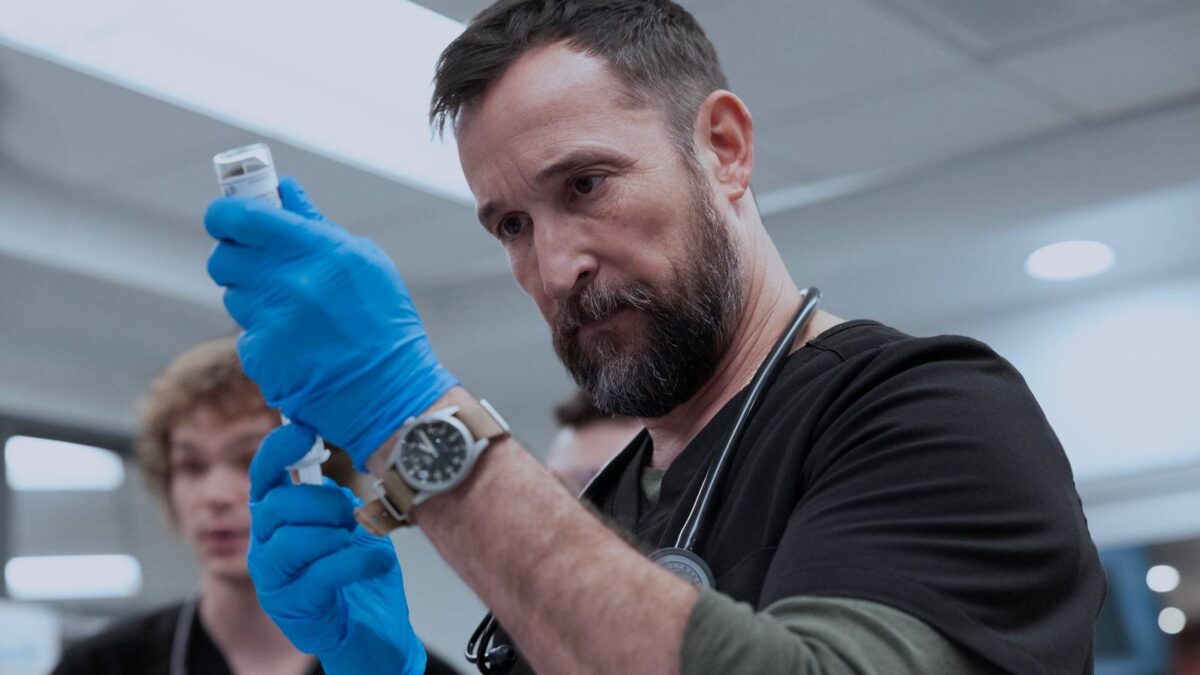
‘The Pitt’ Star Noah Wyle Teases Season 3 Time Jump & Winter Setting
As The Pitt heads toward an even final few episodes for Season 2, the stage is already being set for the upcoming third season. The star in front and behind the camera has revealed new details about what audiences should…
Apr 11, 2026
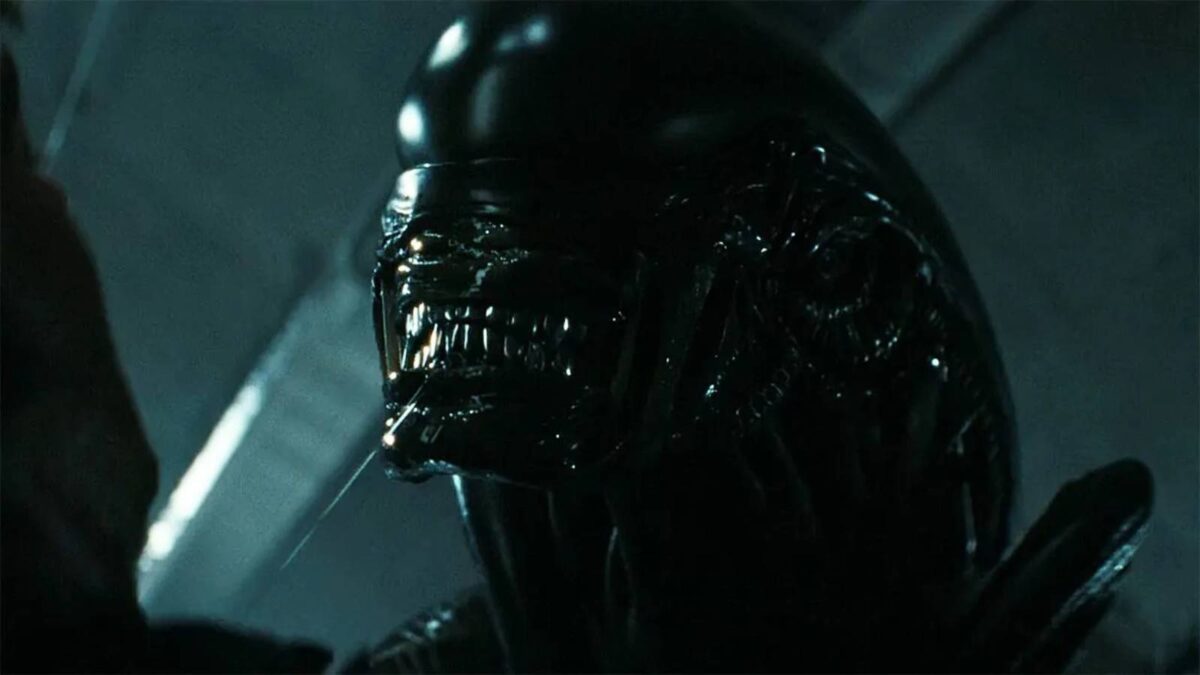
Earth’ Season 2 Casts Peter Dinklage as Series Regular
While screenwriter, television showrunner, and director Noah Hawley is already lining up his next feature film project, that seemingly hasn't stopped developments on the second season of Alien: Earth. The series, which premiered on FX last year, was a project…
Apr 10, 2026

‘Foundation’s Lee Pace Teases Even “Bigger” Story in Season 4
The return of Apple TV’s critically acclaimed, yet somehow still sorely underrated, three-part science fiction epic has just been given the perfect hype, with a returning star not only offering a production update but also calling the next outing “bigger”…
Apr 9, 2026

‘Star Wars: Maul – Shadow Lord’ Is the Perfect Jumping-on Point for Newcomers [Exclusive]
Lucasfilm and Disney are jumping back into the animated Star Wars universe with the release of Star Wars: Maul — Shadow Lord, centered on Sam Witwer's iconic animated Sith villain. Spinning off from Star Wars: The Clone Wars, Shadow Lord…
Apr 8, 2026