Paolo Sorrentino Ponders The Presidential Pardon In Stylish Drama [Venice]
Aug 31, 2025
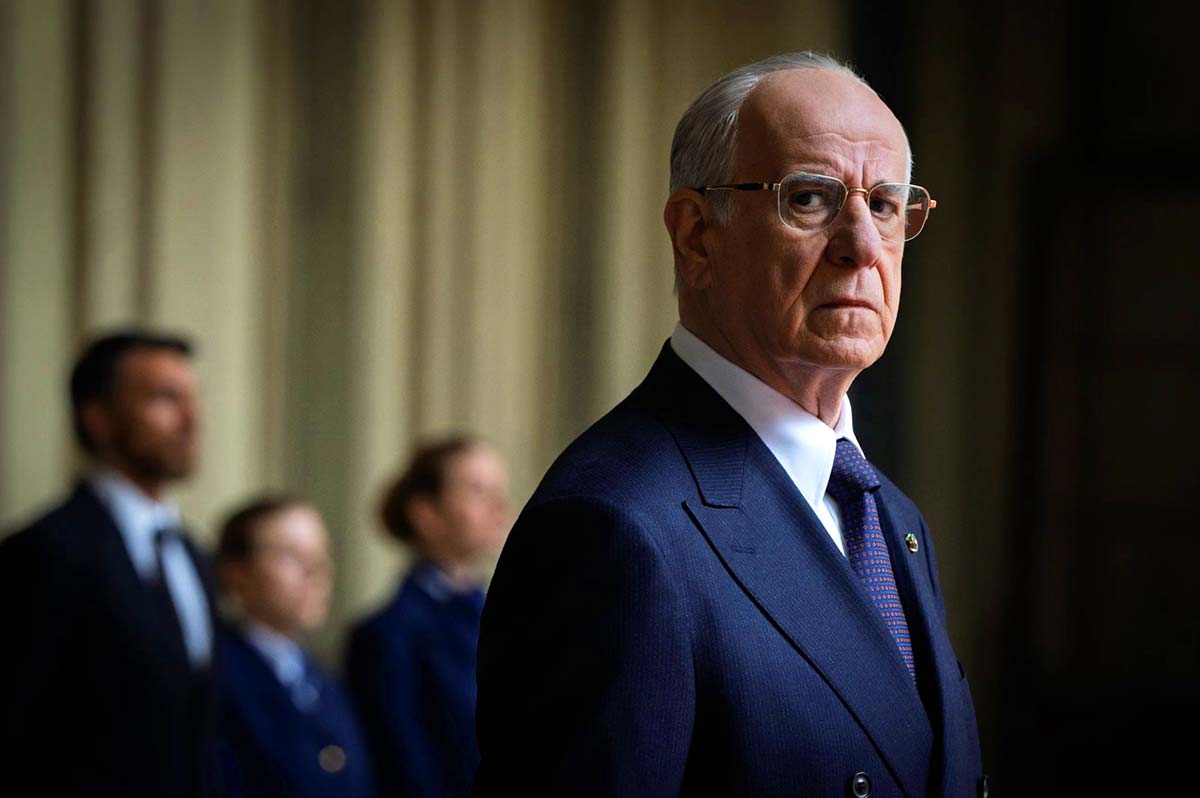
The literal translation of Paolo Sorrentino’s “La Grazia” for English-speaking audiences is “Grace.” But that intangible term also carries another meaning, and it’s this more concrete iteration of the word that preoccupies the protagonist much more in the film. Toni Servillo’s fictional Italian President Mariano De Santis faces down the prospect of granting “la grazia” – an official pardon – to two incarcerated individuals as he nears the end of his term.
READ MORE: 2025 Venice Film Festival Preview: 23 Must-See Films To Watch
It’s fitting that Sorrentino begins his film with written titles enumerating how the Italian constitution defines the role of the President. De Santis sees himself as a jurist first and foremost, earning him the nickname “Reinforced Concrete” for the solemnity with which he approaches the letter of the law. He prefers to stay within the clearly outlined boundaries of his responsibilities rather than embracing more intangible duties like “represent[ing] national unity.” When it comes to fluffier elements of the job, such as providing comment on personal fashion to an editor at Vogue, forget about it.
But as he prepares to face the final curtain of his time in power, De Santis must confront the end in many arenas. That includes his last remaining legislative priority, a bill of generational change on euthanasia pushed heavily by his daughter and trusted legal adviser Dorotea (Anna Ferzetti). The two pardons under heavy consideration are cases that might not require clemency under De Santis’ new regulations around compassionate care for a loved one suffering from terminal illness. Knowing her father’s inclinations, she tries to make her case for change in the logical, textual mode in which he tends to operate.
Yet much to the frustration of Dorotea and others in his life, such as the colorful confidante Coco Valori (Milvia Marigliano), De Santis drags his feet in deliberation. He’s not in the best headspace to judge death objectively because he’s still in denial about a departure that hits close to home: that of his late wife, Aurora. So flummoxed is he by the seemingly arbitrary nature of mortality that he cannot even give the order to mercy kill a horse under his control. De Santis cannot bring her back to life, but he refuses to let her memory slip by doing everything from keeping her full wardrobe to obsessing over an inkling of her past infidelity.
Two hours and change might feel like a long time to sit with a story that essentially boils down to a man having to make three decisions about whether to sign a piece of paper or not. Yet “La Grazia” remains a compelling watch even as it occasionally meanders, in no small part due to Sorrentino’s trademark stylistic verve. His Fellini-esque flourishes help dispel some of the inscrutability De Santis builds up around himself, most notably (and humorously) through a repeated sound cue of an EDM-like riff to indicate a thought percolating in his head. When Servillo shows the concrete cracking, it makes a shaking impact.
Support independent movie journalism to keep it alive. Sign up for The Playlist Newsletter. All the content you want and, oh, right, it’s free.
“La Grazia” is a film full of slow-motion and suspended time as De Santis goes through the motions of his waning weeks in office. Such an aestheticization of his experience might seem like an ironic counterpoint to his stoic demeanor. Yet these moments quickly reveal their thematic significance as they visualize the emptiness with which he views his functionary duties. For a man devoted to upholding the letter of the law, he begins to contemplate whether he might locate true and enduring meaning outside of traditional channels.
That Sorrentino flashiness all disappears when it comes time to face the human dimensions of euthanasia and its related pardons. He and cinematographer Daria D’Antonio shoot rather straightforward shot-reverse shot sequences when Dorotea and De Santis visit the prison where the convicted murderers plead their case for leniency. Other conversations, such as De Santis’ regular conversations with the Pope, follow a similarly unobtrusive technique. Sorrentino focuses viewers’ attention on the substance of the issues rather than the style.
“La Grazia” embodies much of the Sorrentino appeal, even if it registers in more of a minor key for the Italian auteur. The film is playful when it wants to be and pensive when it needs to be. He brings a gravity to the decision-making of an austere and often severe man like De Santis, a devoted Catholic for whom any inkling of playing God in matters of justice and mercy is something he approaches with the utmost seriousness.
What the film might lack in scintillation, it makes up for in an overwhelming sincerity of spirit. If “The Great Beauty” offered Sorrentino’s take on la dolce vita (the sweet life), “La Grazia” posits what la dolce morte (the sweet death) might look like. His vision of how things can end with grace is one of great wisdom, pulling from both the extensive experience of De Santis and the more youthful idealism of Dorotea. Sorrentino suggests the answer to pressing ethical issues lies less within the laws and more within each other. [B]
Follow along with all our coverage of the 2025 Venice Film Festival.
Publisher: Source link





Sarah Michelle Gellar Urges ‘Buffy’ Fans to Avoid Reading Leaked Reboot Scripts
Buffy the Vampire Slayer fans have had a rough few days after Hulu officially pulled the plug on a revival of the series, which would have brought star Sarah Michelle Gellar back as the titular heroine. Described as a continuation…
Mar 20, 2026
Born Again’ Stars Explain Why Bullseye Is So Dangerous in Season 2 [Exclusive]
Along with Charlie Cox's Matt Murdock and Vincent D'Ofnorio's Wilson Fisk, Daredevil: Born Again Season 1 brought back one of The Man Without Fear's most notorious villains: Wilson Bethel's Benjamin Poindexter, better known as Bullseye. Not only was he back…
Mar 19, 2026
![Born Again’ Showrunner Confirms ‘Avengers’ Character Is Key to Street Level MCU [Exclusive]](https://www.filmibee.com/wp-content/uploads/2026/03/Born-Again-Showrunner-Confirms-Avengers-Character-Is-Key-to-Street-1200x675.jpg)
Born Again’ Showrunner Confirms ‘Avengers’ Character Is Key to Street Level MCU [Exclusive]
Ahead of the Avengers' return to the big screen later this year, Marvel Studios will return to street-level storytelling with the second season of Daredevil: Born Again on Disney+. Along with making the show canon to everything that happened in…
Mar 18, 2026

Taylor Sheridan’s Underrated Action Thriller Series Roars to Streaming Success
It’s now been two years since we last saw anything from the underrated action thriller series created by Yellowstone’s Taylor Sheridan, but having finally had some promising word about the new season, the show has now shot up the streaming…
Mar 17, 2026