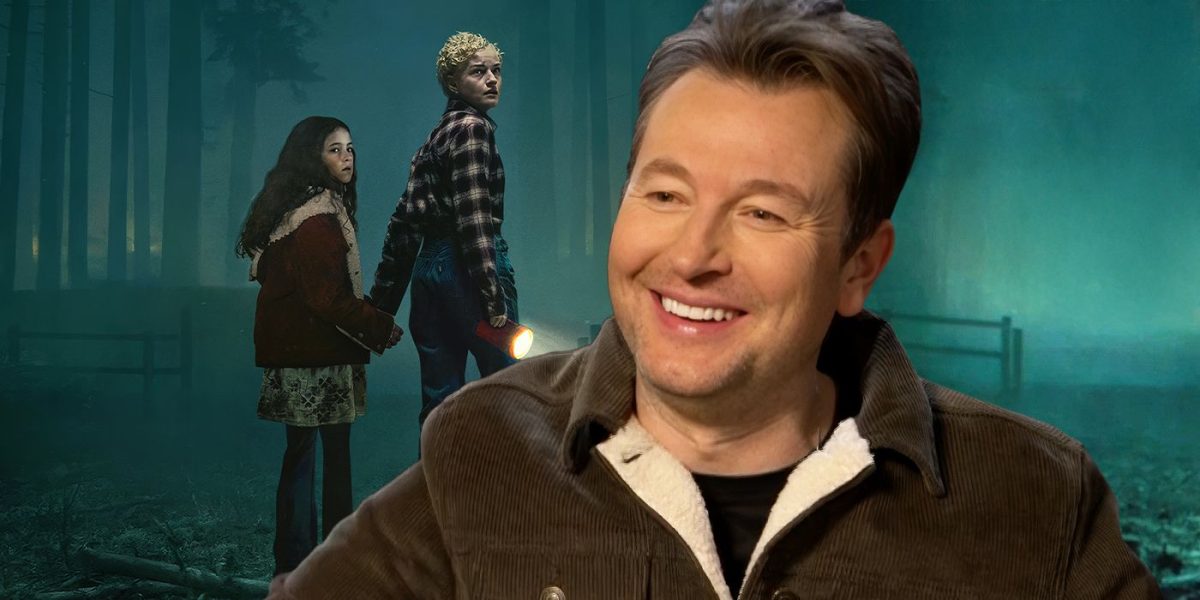
Part Two’ Swiped This Wolf Vision Tactic
Jan 18, 2025
Summary
Collider’s Perri Nemiroff sits down with Wolf Man writer and director Leigh Whannell.
In the movie, Christopher Abbott and Julia Garner star as a couple on a family getaway to a farmhouse in rural Oregon when they’re attacked by a mysterious and deadly creature.
In this interview, Whannell discusses initially turning Wolf Man down, major script changes, the most challenging scenes of a difficult shoot, and capturing “wolf vision.”
After a harrowing and successful take on Universal Pictures’ The Invisible Man, writer-director Leigh Whannell wasn’t confident he wanted to take on another Universal Monster so soon. Fortunately, producer and Blumhouse CEO Jason Blum used his “Jedi mind trick” on the filmmaker, and the wait for Wolf Man is nearly over.
Having learned a thing or two from his first adaptation, Whannell tells Collider’s Perri Nemiroff he opted to leave what fans know to the original. “Just divorce yourself from the law and from the expectations of people,” he says. “Try to just make a story that is good unto itself.” This mindset freed up space for him and co-writer and partner Corbett Tuck to develop a story that allows Christopher Abbott and Julia Garner to breathe a new life into Wolf Man.
In this one-on-one, Whannell shares why he was reluctant to take this project on initially, as well as why he had a change of heart. He also talks about how the finished film changed from the original script, how he and cinematographer Stefan Duscio (The Invisible Man) crafted the perfect wolf vision, and reveals the surprising scene that proved to be the biggest challenge. For the full conversation, you can check out the video above or read the transcript below.
Leigh Whannell Almost Passed on ‘Wolf Man’
Thankfully, Jason Blum has “Jedi mind trick”-level persuasion skills.
PERRI NEMIROFF: The first thing I wanted to ask you about is, I heard when this was initially pitched to you, you said no. Why did you say no, and what made you change your mind?
LEIGH WHANNELL: Well, it wasn’t that I said no because I thought, “This project’s beneath me,” or, “It’s not a good character.” I love The Wolf Man, and I love all those classic monsters. It was more that I had just done that with The Invisible Man. Whenever I’ve just made a film, it feels like a kind of skin you want to shake off, like, “I’ve got to pivot into some other genre.” But they incepted me. As soon as they suggested The Wolf Man, I started thinking about what I would do. Jason Blum is very good at this, by the way. He’s good at the Jedi mind trick, like making you think it was your idea. So he said to me, “Well, you don’t have to commit to it. Just think about what you would do.” And that was it. He got me once again. So that was it. After that, I went into it.
That’s a pretty good tactic. I would believe he’s very good at that.
WHANNELL: He is.
What is something you learned about what it would take to bring a classic Universal monster to a modern audience making The Invisible Man that came in handy on Wolf Man? But then also, what is a challenge unique to Wolf Man that you experienced making this film?
WHANNELL: I guess the thing I learned on Invisible Man is that if you just divorce yourself from the law and from the expectations of people, and you try to just make a story that is good unto itself, a standalone movie, that’s the best quote-unquote fan service you could do. At least, that’s what I discovered because people seemed to be so receptive. I wasn’t doing any of the old Invisible Man tropes — the sunglasses and the jacket — but I didn’t get penalized for it. People were saying like, “Oh, we like this take.” So I guess that’s what I brought into Wolf Man, is this freedom to be like, “Just do your version of it.” It’ll be a version. It’ll sit there, and then eventually, someone’s going to make another version, right?
Related
Elisabeth Moss Talks ‘The Invisible Man’ and Being a Huge Horror Fan on Ladies Night
She also tells us about her cats who actually have their own IMDb pages!
How about a challenge that was unique to Wolf Man?
WHANNELL: Well, I invented all those challenges. I co-wrote the script with my wife, Corbett [Tuck], and I didn’t realize how hard I had made it. Like, when I was writing, I wasn’t thinking about being on set. There’s a child in there who can only act, there is an actor who’s going to be in makeup for six hours, it’s all at night, it’s all in one night. Like, I put the most amount of challenges in this movie. So, I basically tortured myself. I’ve got no one else to blame. There’s no screenwriter to blame. It’s just me.
If you don’t challenge yourself like that, is there a point?
WHANNELL: Well, I do agree with this. Sometimes you see certain movies — and I think Adam Sandler’s got this down to a science — where you watch the movie, and you’re like, “This was a vacation that was occasionally interrupted by a film shoot,” and I love that. But I do agree with you that I would be suspicious of something that was easy because I’ve never been involved in a film that turned out well that was easy. It’s always this push and this struggle. So even though I was torturing myself, in the end, I was like, “Alright, this is the only way we’re going to do something.”
This Major ‘Wolf Man’ Script Change Creates Even More Isolation
“We’re just not vibing with these other people.”
Image via Universal Pictures
What is the biggest difference between draft one of the screenplay and the finished film?
WHANNELL: The biggest difference was in the first draft, there were more people. There was a community of people that suddenly gathered around. It was focusing on the isolated family in the same house, but suddenly, there were these other people from the community that got involved. At some point, Corbett and I were like, “We’re just not vibing with these other people.” A friend of ours who’s a screenwriter, a good friend of ours, was like, “I’m just liking the intimate story. Why do you need to involve these other people?” So that would be the biggest, I think.
What Does ‘Dune’ Have in Common With ‘Wolf Man’?
“It looks ridiculous until it doesn’t.”
Image via Universal
One of my favorite challenges that you added to the mix here was the wolf vision. What was it like figuring out the right look for the wolf vision, and then can you also walk us through what you need to do on set in order to complete a shot where you go from human vision to wolf vision and back again? That was my favorite shot of the movie.
WHANNELL: Oh, that’s great. Mine too. Well, first of all, coming up with the look was a real process of trial and error because Stefan Duscio, the cinematographer, and I were talking about different lenses. He actually flew to LA just to test out some infrared cameras. They ended up using these cameras on Dune. Do you remember the black-and-white sequence? So we were like, “Oh, they stole our idea,” right? And so those were the sorts of cameras. We looked at infrared stuff. We were basically trying to do it with the camera, and eventually, what we landed on was, “Let’s just do it in camera with the lights.”
So when you ask about how difficult it was, it was a little bit of a dance because we were manually moving around the room, and then the actors all have these cues to hit, but the gaffer is changing the lights as we go. It’s the type of thing that when you watch it in dailies, you’re like, “Does this work?” It takes those layers. A similar thing happened with Invisible Man when you had a guy in a green bodysuit pulling Elisabeth Moss around. It looks ridiculous. It looks ridiculous until it doesn’t, and that’s usually about right at the end of the process is where it suddenly turns a corner, and that’s how I felt with this. There was a moment where I was watching that shot, especially when we added the sound design, where I was like, “Oh, I think we’re there.” But it took a while.
Image via Universal Pictures
Of all the scenes in the film, which would you say seemed like the most difficult going into production, and ultimately, did it wind up being the toughest to complete, or did a different one catch you by surprise?
WHANNELL: Oh yeah, that’s interesting. It’s always the little ones, like little things. The truck sequence was always going to be tough, but the things you don’t realize are like the living element of it. There are actors who have to hang in harnesses, so their discomfort proved to be a challenge of that. But I would say the thing that I didn’t think would be difficult that turned out to be very difficult was some of the more intimate, emotional scenes because the actors are really hard on themselves, and they don’t necessarily want to be told that you have to emote at this exact moment when we hit the lights. That’s the last thing an actor wants to be told, in my experience. So I had a lot of difficulty that day. I think Julia likes to get herself into a really raw place. It’s hard to talk to someone who’s worked themselves into that state, so I found that we had to do a lot of takes before we all felt like we were on the same page, and that was just a scene of two people by each other’s side.
That’s what gives a movie like this heart.
WHANNELL: I know. Yeah, you need to get it right more than anything.
Wolf Man hits theaters on January 17th.
A family at a remote farmhouse is attacked by an unseen animal, but as the night stretches on, the father begins to transform into something unrecognizable.
Director
Leigh Whannell
Writers
Leigh Whannell
, Rebecca Angelo
Studio(s)
Blumhouse Productions
Get Tickets
Publisher: Source link



‘The Rookie’s Best Season 8 Episode Goes Completely Different With Full Zombie Horror
Editor's Note: The following contains spoilers for The Rookie Season 8, Episode 10.It's crucial for procedurals to come up with a winning formula that entices viewers to tune in every week. But it's just as important for these types of…
Mar 13, 2026
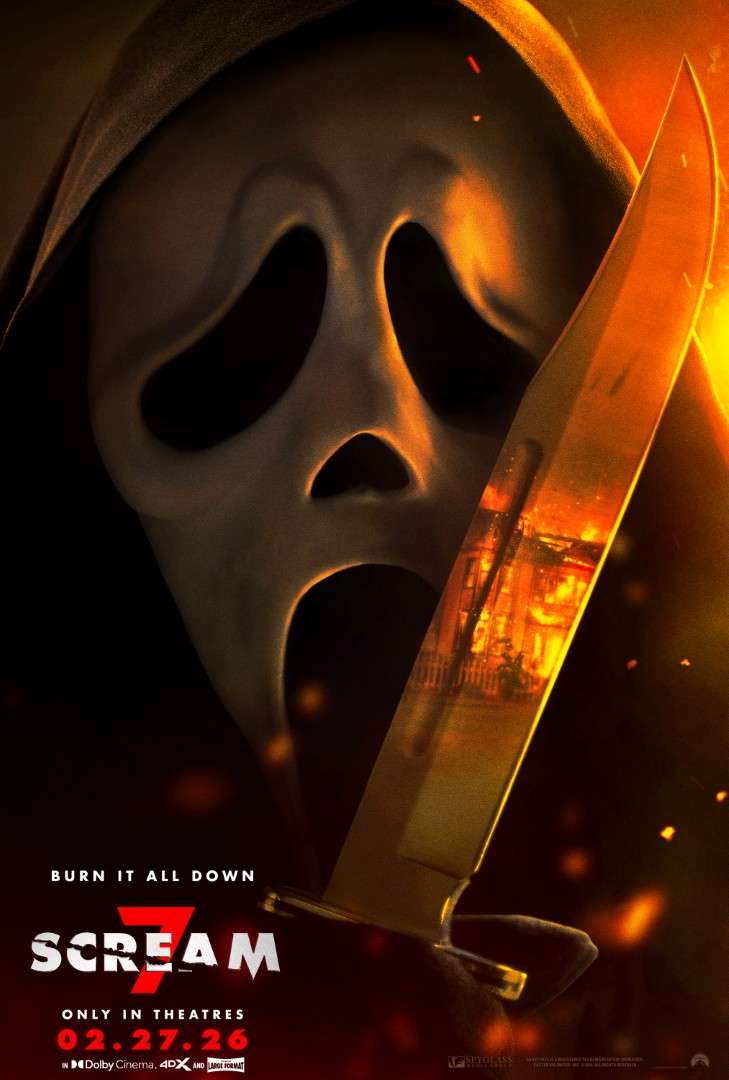
Sidney Prescott Leads a Brutal Throwback
Walking into Scream 7, I wasn’t sure if this entry would be a new reinvention. I know I wanted tension. I know I wanted that uneasy calm before the snap. And most of all, I wanted to see why Sidney…
Mar 13, 2026

Eggs – Film Threat
In writer-director-star James Clair’s short drama Eggs, a man struggling to rebuild his life finds his quiet mornings turning into strange conversations with the very eggs he is meant to cook. I mean, they want him to eat them. So…
Mar 11, 2026
Ethan Hawke Elevates A Rugged, Predictable Gold-Run Survivalist Western[Sundance]
As far as one can tell, Murphy (Ethan Hawke), a father, WWI veteran, and avid car mechanic, has never encountered an insurmountable challenge. Living in Eugene, Oregon, in 1933, four years into the Great Depression, Murphy and his young daughter,…
Mar 11, 2026