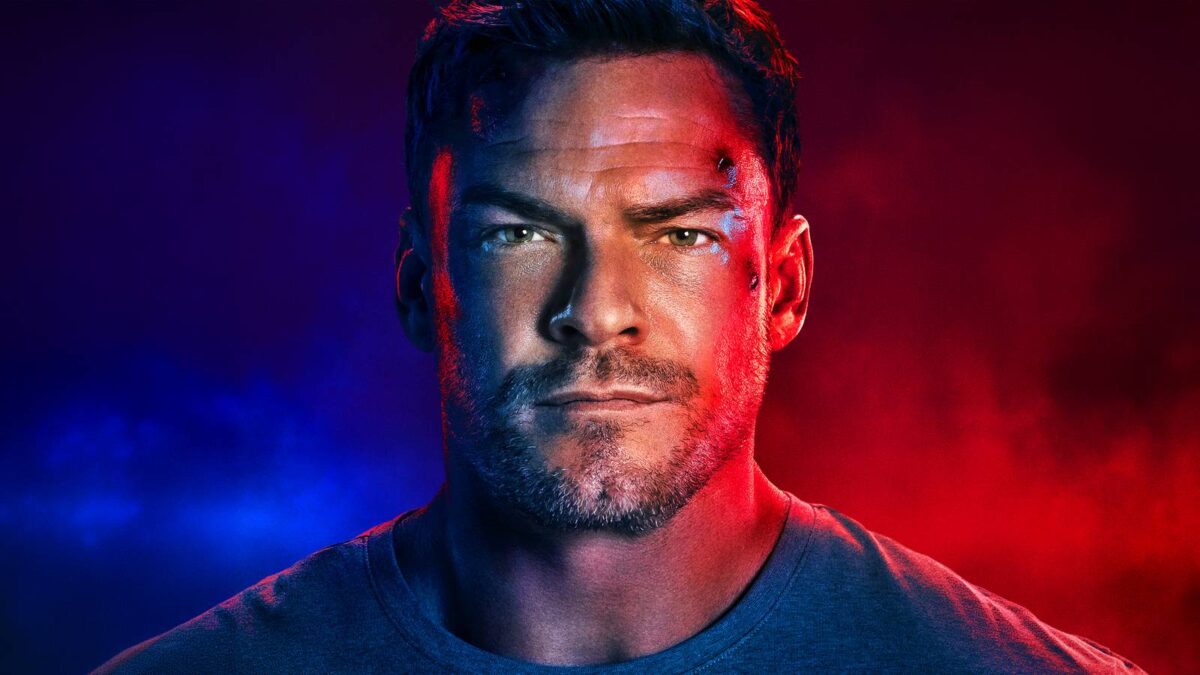
‘Reacher’ Season 4 Officially Changes Alan Ritchson’s Prime Video Series, Plus 5 Things We Learned From Set
Aug 11, 2026
There are a few places that can make Alan Ritchson look really big, but the narrow hallways of a crumbling Philadelphia building are definitely one of them. While exposed pipes run overhead and aging plaster lines broken brick walls, there’s not enough room to imagine how his titular character in Prime Video’s series Reacher actually moves through tight spaces without taking half the building with him. But that’s the magic of Hollywood, because we aren’t actually in Philly. Instead, we’re inside Studio City Toronto on a massive set designed to function like a real industrial environment. From working elevators to connecting floors, production designer Nazgol Goshtasbpour has intentionally turned the place into a maze. As she puts it, while walking Collider and other media through the area last fall, it was built so that characters could “go in and out and do a cat-and-mouse chase and get your ass kicked.”
All of it feels like a fitting introduction to Reacher’s fourth season. After watching Ritchson’s former military investigator walk into just about every situation already knowing that he’ll get out of it, the series is putting him someplace less comfortable. Adapted from Lee Child’s 2009 novel, Gone Tomorrow, the newest installment finds him in Philadelphia, where a chance encounter with a distraught woman on a subway ends horribly and pulls Reacher into a much larger conspiracy. Collider spoke with Ritchson, executive producer and director Sam Hill, stunt coordinator Buster Reeves, Agnez Mo, Anggun, and Goshtasbpour about what all of that means for a series that has spent three seasons steadily raising the stakes. According to Hill, the challenge has never been about getting bigger. “I think it’s more about different,” he explains, describing each season as a new world built around a character who essentially is the same at his core. As Season 4 takes that idea pretty seriously, Reacher finds himself with new opponents, a different physical language for the action, and a particularly uncomfortable problem of not knowing what he’s entirely walking into.
‘Reacher’ Season 4 Isn’t Trying To Go Bigger, Just “Different”
Image via Jessica Kourkounis/Prime
While going bigger is the most obvious choice for a show like Reacher, Season 3 took that idea pretty literally by pitting our hero against Paulie (Olivier Richters), a man who was finally bigger than him. By the time the fight was over, the series inadvertently created a strange problem: the guy needs to be taller, right? Ritchson was thinking about that, too. In fact, he admits the success of Season 3 left him more nervous than relaxed. “I’m so paranoid about the success of the show. It’s just so unreal and terrifying, and I’m somebody where I refuse to rest on my laurels,” he says. “I’m just like, ‘How do we make it better, a better experience? How do we get better at doing it? How do we understand these characters better and make the world bigger and more interesting?’” That feeling only got worse once Season 3 actually landed. “I was so stressed out after we did well in Season 3,” Ritchson laughs. “I was like, ‘Now, how do we top that? It’s impossible. We set the bar so high. It was such a fun experience. How do we do that? Now people are gonna go, ‘Eh, Season 4 wasn’t that good,’ and we’re trying our hardest!’” The answer from showrunner Nick Santora was simple, according to the actor. “We can’t try to beat ourselves every time. We just have to continue to be different. If we just surprise people with where Reacher can go and what he can get into, we’ll always keep people guessing, ‘What’s going to happen this time?’” That “different” vibe comes up when we talk to Hill, who says it’s the only way for all the creatives behind the Prime Video series to approach the groundbreaking series. You can see that by putting the seasons next to each other — Season 1’s Margrave had a small-town mystery, Season 2 was set in New York and neighboring New Jersey, and Season 3 went down in coastal Maine. Now that Reacher has landed in Philly, Hill says the landscape is “texturally different,” even if it’s “tonally” the same. “It has a different fabric to it,” Hill explains. “What’s new and exciting about every season isn’t necessarily like, ‘Oh, this person is a bigger, better person,’ or, ‘This is a bigger, harder challenge.’ It’s this whole new group of people reacting to a Reacher perspective on the world.” There’s something useful about that distinction because, as viewers can understand, Reacher is rarely the type of character who undergoes dramatic changes. He arrives somewhere, encounters people with their own lives and problems, and then leaves. Hill sees this as one of the show’s strengths, rather than something it needs to fix. As he puts it, “the Reacher figure himself doesn’t really arc over any given novel or over any given season, but it’s all the people around him in that orbit who do.”
‘Reacher’ Season 4 Does Something That Its Lead Hero Really Hates
Image via Prime Video
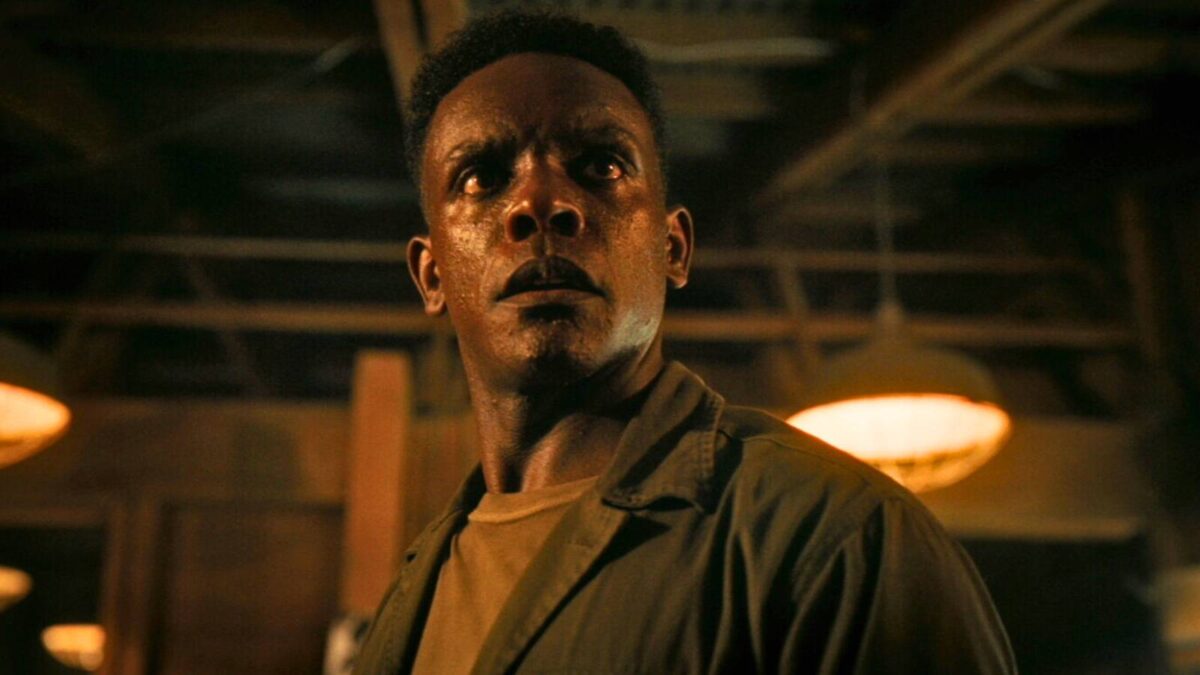
While speaking with Ritchson and Hill on the set of Season 4, one thing became pretty clear: Reacher isn’t going to have all the answers this time around. That’s an unusual position for a character who walks into a room and commands the situation every time. But it gives Ritchson something a little different to play without changing who Reacher is. “My responsibility to this character and to Lee Child and what’s preceded this is to maintain a figure that’s familiar and rather predictable in its ways. So, largely unchanging,” Ritchson explains. “And on the other hand, we’re trying to build a catalog of experiences that humanize him in a way.” But, Ritchson adds, there is a limit to how far he can push things. “I think if I do too much, I think we’re losing a bit of what Reacher is, and if I don’t do enough, he’s not human.” Of course, Season 4 finds some of that humanity by letting Reacher get things wrong — like the subway incident that pulls him into the story and leaves him with a lot of questions that he can’t immediately answer. According to Ritchson, that gets under the character’s skin. “This is the first time we’re seeing him confounded by a case that he wants so badly to unravel and understand, and it’s not something that he has an intimate connection with. It’s not his family, it’s not his adoptive family, and so this is confounding in a lot of ways. Why is he so invested, and why is it so hard for him to either step back from or figure out?” There is some guilt behind that interest, too, as Ritchson believes it’s this moment that weighs on Reacher as the mystery grows. “He also feels responsible for what happened. He was trying to intervene and misread the situation,” he says. “I think there’s also this sense of indebtedness to make it right, beyond his curiosity. It’s like a perfect storm.” While Reacher can be coined as a Sherlock Holmes with fists, he can look at all the available information and still come to the wrong conclusion. “One of my favorite things about Reacher is how fallible he is,” he says. “There are so many times in the book where he does his, like, Excel spreadsheet rant about everything he’s cataloged in the case before him and all his assumptions, and in the end, he’s completely wrong, and I just think that that’s hilarious that that’s the protagonist we have.” It’s that uncertainty that poses another challenge altogether, because Reacher isn’t exactly known for talking through his feelings. Hill jokes that his directing strategy has two steps: casting Ritchson and putting a camera as close to him as possible and “[letting] him do his thing.” As Hill puts it, “He is really good at internalizing and yet still being accessible to the viewer in some way.”
‘Reacher’ Season 4 Gives Jack a Very Different Kind of Fight
Image via Prime Video
Compared to Season 3, Season 4 of Reacher goes in a completely opposite direction. Whereas Ritchson spent almost a month shooting that climactic fight with Richters’ towering stature, the series sees no point trying to create another moment with another literal big baddie. “I spent three weeks shooting that final fight with a guy who’s 7’2”, 400 pounds, and the fun of that is you’re totally outmatched, and it’s so fun to think there’s no way Reacher is going to win this fight — and he almost died trying,” Ritchson says. “That’s tough to beat.” But instead of trying to find an even bigger person for him to punch, Season 4 changes the equation. Some of the people Reacher faces are much smaller than he is, which sounds like it should make his life easier, but Ritchson says that assumption doesn’t last very long. “You throw in something that’s really challenging where Reacher’s now fighting somebody half the size. How do we feel like this is going to match up?” he says, almost amazedly. “It feels like we’re kind of cutting our feet out from under us, but the way that these characters are developed and the way that they’re depicted on screen and their villainy comes to life, you quickly realize, he’s met his match in a very different way.” This means the stunt team had to rethink the physical language around Reacher this season. Stunt coordinator Reeves says size changes how a fight has to work long before anyone really throws that first punch. “We kind of play a lot around with different fighting styles and just see which one would work best to coincide with the script and the style and the tone of the show, and then we just go from there, and we see where we land.” For Mo, a well-known Indonesian singer and actress who joins the cast this season as Lila Hoth, that language draws heavily from her own background. Rather than just learning a set of moves, Mo worked in pieces of traditional dance for the way Lila moves. “We use a karambit, which is an Indonesian traditional weapon, but we wanted to make sure that we don’t represent silat the wrong way, so we never actually say that it’s silat, but it’s inspired by a lot of Southeast Asian martial arts,” she explains. “I also do traditional Indonesian dance, like Jaipong, and there’s a lot of movement that I infuse into that that becomes its own little signature.” The result, at least in her mind, looks very different from the heavy, strength-first fights the series has leaned on before. “So it’s not just karambit; it has a little dance to it, which I feel is so different from the other seasons, as well,” she says. “I feel like the other seasons are always about just strength and strength, but this one, there’s femininity. There’s this pretty picture while killing you, basically. Flipping hair while… So, there’s a little bit of that, not just sweats and testosterone.” Anggun, who plays Amisha Hoth and is also a renowned artist in Indonesia, had almost the opposite starting point. She describes herself as “not a physical person,” which made the stunt work its own learning curve. “Of course, there are fighting scenes for absolutely everybody, and so we have training sessions with the stunt team. That is no bueno for me,” she jokes. “Again, the first day of rehearsals, it’s like understanding a new language where I’m not making phrases, I’m just trying to write the letter ‘A,’ because I’m not a physical person. But now I’m more physical.” And yes, there is still the very obvious joke of asking someone much smaller to stand opposite Ritchson, with Anggun being the first to acknowledge it: “I can’t be bigger than him. It’s just optically impossible,” she says with a laugh. “And we make fun of that. He is so huge. He’s this massive person, and I like my petiteness.”
‘Reacher’ Season 4 Has More Fights Than Ever
Image via Prime Video
Naturally, for a show like Reacher, there is no shortage of action. Ritchson tells us that production shot more fights in the first three weeks than in all previous seasons combined, which is a slightly alarming sentence to read back once you remember how much this show already does. “I work very hard to make sure that we don’t have fight fatigue, and when you’re filming like 30 fights a season, this year we have a lot,” Ritchson says. “I think in the first three weeks, we shot more fights than all the other seasons combined. It’s crazy.” Reeves had roughly the same reaction when he first saw what was waiting for him and the crew. Asked what went through his head after reading the scripts, he gives a very simple answer: “Fuck,” he says with a laugh. “But I think in the first four episodes, we had 11 fights, and not just skirmishes… We had 11 choreographed, pre-vis, everybody-has-to-learn-their-section fights.” He adds that it was enough that he had to bring in his full stunt team immediately rather than build up as production went along. The obvious risk is that 11 fights in four episodes can very quickly become 11 versions of the same thing. Ritchson says his rule is to find “the story within the story” every time Reacher starts swinging. “How does that not become a tiring endeavor for an audience, and how do you feel like there are stakes involved in every single one?” he poses. “If there’s a story within that story, it gives him even more to calculate and engage in.”
Related
The 10 Greatest Jack Reacher Books, Ranked
Jack Reacher’s been kicking it since 1997.
One of the best examples we heard about on set takes place in a bowling alley. On paper, it sounds like a fairly standard Reacher problem: several men, one very large target, and a room full of objects that probably should not be used as weapons. In practice, Ritchson and Reeves built the fight around Reacher trying to get hold of a gun while everything around him keeps changing. “What ended up happening is you can see him processing in the fight how to get that gun,” Ritchson explains. “This seven-minute fight became the funnest thing in the world, both to shoot and watch, because there was just so much going on. It was about so much more than just punching each other, which is something I just kind of can’t stand.”
Naturally, Reeves also saw the bowling alley as one giant weapons cabinet. “The bowling alley was good because we have all kinds of things that we can use,” he says. “We have bowling balls, we have pins, we have trophies, we have popcorn makers, we have things.” With the vibes being exactly what you imagine, he says everyone “had a lot of fun.”
Philadelphia Is More Than Just a New Backdrop for ‘Reacher’ Season 4
The move from New York City to Philadelphia in Reacher Season 4 might sound like one of the more simple changes from page to screen, but in terms of the set, it becomes clear that production never wanted to treat the city as interchangeable scenery. Hill says that part of the decision came down to avoiding repetition. “Moving from New York to Philly was, in part, just a response to two cycles ago. We had done a show that was in New York City, so we’re trying not to repeat ourselves in that way,” he explains. “Philly is super interesting just as a town, and I don’t think that we really affected the narrative in any negative way, and it did open up, like, ‘Oh, this is a Philly thing. That’s a Philly thing.’” But as the crew built out another version of Philadelphia north of the border, they never let Toronto do all of the work. In fact, Hill confirms that the production actually filmed in Philadelphia, including its subway system, and went looking for places that would make the city recognizable without turning the season into a postcard. “We were in Philly properly,” he says. “We’ve got a whole bunch of stuff that takes place in the subway system.” Elsewhere in the city, the goal was to find locations that couldn’t easily pass for somewhere else. “We said, ‘Okay, how do we ground this show in Philadelphia? Like, this place only exists in Philadelphia?’ There’s a bunch of that.” However, back in Toronto, that same obsession with place carried into how the sets needed to look. Walking through the tenement with Goshtasbpour, it’s hard to miss just how much of it is built to behave like a real building. As the production designer shares, the set was designed in separate levels that could be redressed and reused, while hallways, rooms and entry points were arranged so characters could move through it naturally. “The one great thing about this set is that we designed it in a modular way, so it could play as multiple levels and different rooms, and you can go in and out and do a cat-and-mouse chase and get your ass kicked.” The elevator alone travels roughly 45 feet and can carry people and equipment between levels. Even the details that most viewers will never consciously notice were carried through. Pipes run beyond the visible floor rather than stopping just outside the frame. Layers of plaster, brick, wiring and ceilings continue from level to level, giving a solid dilapidated look. Goshtasbpour says all of it was intentional. “When you see that on camera, it really makes it believable that you’re in an actual building,” she explains. “Being able to carry this all the way up and all the way down is an extra little layer that we can do to this set to make it look like a location.” But sometimes, she even makes the set less convenient on purpose. “I also like to put awkward things in the way,” Goshtasbpour says, adding that Hill “embraces the awkwardness of sets, because then it forces you to shoot it like you’re in the location.” It’s a concept that probably sums up a lot of what was heard during the visit. Season 4 isn’t trying to smooth everything out for Reacher. Instead, the mystery is harder to read, the people around him fight differently, and even the spaces have been built to make movement a little less easy. Philadelphia may be new territory for the series, but Reacher isn’t getting a sightseeing tour. Don’t expect him to stop at an iconic Philly location, either. Asked if the city’s famous tribute to Rocky Balboa made the cut, Hill laughs off the idea. “This show is not trying to be Rocky,” he says. “I’m pretty certain that Reacher, as a character, would not be interested in the Rocky statue.”
Reacher
Release Date
February 3, 2022
Network
Prime Video
Showrunner
Nick Santora
Directors
Omar Madha, Carol Banker, Julian Holmes, Lin Oeding, M.J. Bassett, Norberto Barba, Stephen Surjik, Thomas Vincent
Publisher: Source link






Taylor Sheridan’s 5-Part Western Sensation Returns to Streaming as New Spin-Off Battles for #1 Spot
Taylor Sheridan's seminal five-season western is officially one of the biggest shows on streaming, once again, all while its latest spin-off fights for the #1 spot on the charts. Taylor Sheridan keeps going from success to success. After his hit…
Oct 22, 2026

5 Years Later, Spin-Off of Netflix’s Rescued Sci-Fi Hit Reaches a Major Milestone
Manifest is one of the few examples of a canceled television series finding new life on a streaming platform. After being canceled by NBC in 2021, Netflix added the supernatural drama to its extensive library, and it immediately shot to…
Oct 21, 2026
HBO’s Hit Stephen King Series Gets Major Season 2 Update as It Promises a Bigger Return
HBO's spooky spin-off of a bestselling Stephen King novel is going strong, and a fresh Season 2 update is upping the anticipation. There are some major changes in store for the horror-themed release, which maintains a solid 81% Rotten Tomatoes…
Oct 20, 2026
Goodbye ‘Lioness,’ Paramount’s Hit 114-Episode Military Thriller Is Officially KIA on Streaming
Taylor Sheridan's Lioness might be one of the biggest shows on streaming (with a fourth season on the way), but Paramount's perfect military action thriller replacement just suffered a major defeat. With Taylor Sheridan set to leave Paramount and CBS…
Oct 19, 2026