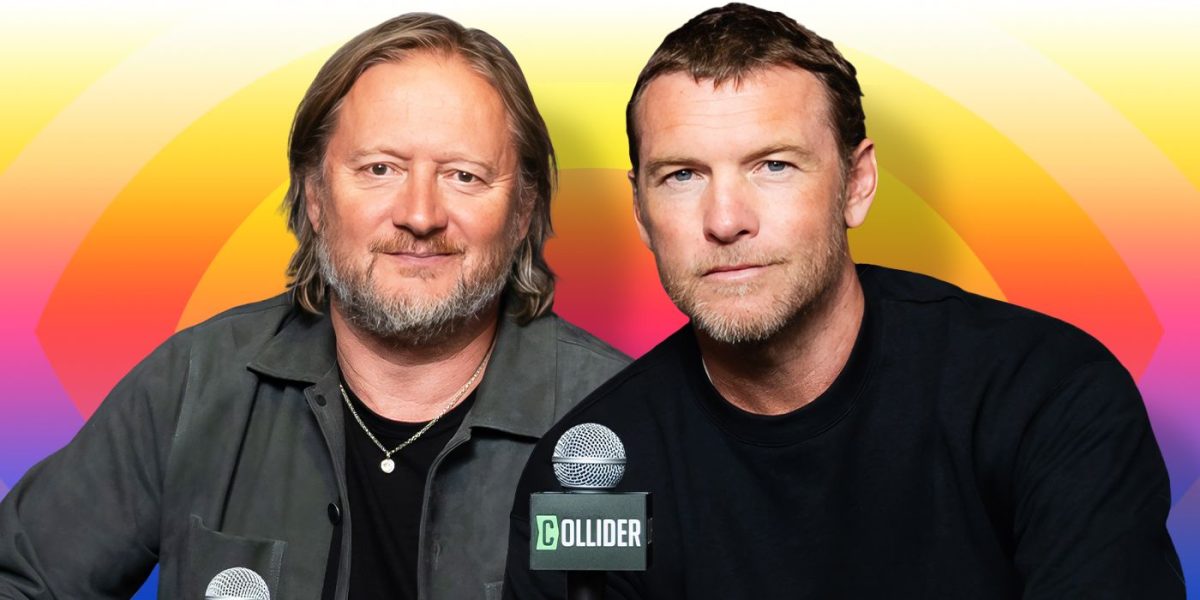
Sam Worthington & ‘Relay’ Director David Mackenzie Discuss Their Whistleblower Thriller and the ‘Avatar’ Sequels
Sep 17, 2024
The Big Picture
Collider’s Steve Weintraub speaks to
Relay’s
director David Mackenzie and actor Sam Worthington at TIFF 2024.
Mackenzie talks about using technology, editing
Relay
and wrapping up filming on
Fuse
, which will star Aaron Taylor Johnson and Theo James.
Worthington praises Mackenzie’s and James Cameron’s approach to directing, teases
Avatar 3
and learning to act after 20 years.
Staying off-the-grid in this digital era of hyper-surveillance has never been more difficult, but Riz Ahmed’s Ash, who is a middleman for whistleblowers, manages to stay ahead of a cat-and-mouse chase in David Mackenzie’s Relay. However, when he makes a personal connection with his latest client who stole scandalous documents from a bio-tech company, his reclusive way of living is threatened. Joined by a talented cast including Lily James, Sam Worthington and Willa Fitzgerald, this thriller enthralls us with misdirection, stunning set pieces and jaw-dropping twists.
At this year’s Toronto International Film Festival, Collider’s Steve Weintraub sits down with director Mackenzie and cast member Worthington and discuss the insane pressures of filming extensive shots at Times Square. Worthington praises Mackenzie’s approach to filmmaking and also teases Avatar 3, which he has been working on with director James Cameron. Hear about how Mackenzie plays with technology in Relay and just wrapped up shooting Fuse, which will be starring Aaron Taylor Johnson and Theo James, in the video above, or you can read the transcript below.
‘Relay’ Is a Whistleblower Thriller Set in New York
Image via TIFF
COLLIDER: No one watching this will have seen the movie yet. How have you been describing the film to people?
DAVID MACKENZIE: It’s a kind of paranoid thriller about good guys versus bad guys. It’s set in New York, contemporary. It has a flavor of some of the great movies from the seventies and a little bit of [Alfred] Hitchcock in there. As I said, a cat and mouse game that’s quite a strong element to it. It’s all set in the world of whistleblowers and the strange bravery of guys who are going against some quite strong corporate interests to try and bring their stuff out or not as the case may be.
Sam [Worthington], I know you get offered scripts. What was it about this script that said I need to be a part of this?
SAM WORTHINGTON: David, to be honest. I worked with David on Under the Banner of Heaven and liked his style. Then I heard that he was doing this with Riz [Ahmed] and Lily [James] and I’m big fans of theirs. I knew the script would just be popping. Knowing how David approaches things, he has such a fluid and visceral style that I begged him for the job. I live in New York City. I thought that might get me in the door because they’re filming around the corner. David’s style and how I look at filmmaking kind of matches. I know that he can bring such a different energy to different genres, like his body of work. He’s done a whistleblowing thriller to a western, to a prison movie. He’s pretty adept at handling kind of any material, and it’s just the style he approaches is very exciting for me.
I don’t want to do any spoilers. I’m just gonna talk about the opening shot because I love it. Right at the beginning, you’re establishing tension with the way the camera starts on the street, and you follow someone into a restaurant. It’s a oner that really pulls you in. Why was it important for you to start the film like that?
MACKENZIE: I’ve got a little bit of a tradition of starting films with oners. This is not necessarily the most complex one that we’ve done, but I think it’s a really interesting way to kind of draw people into a movie. The tension of waiting for the cut, allows you to enter into the world. That was the intention of that.
Director David Mackenzie Plays With Technology in ‘Relay’
“This character is a kind of complete analog man.”
Image via Photagonist at TIFF 2024
One of the things about the film — it’s so nice as someone who watches so many movies — is that the antagonist and the protagonist seem very equally matched. You’re also working with things that you typically don’t see in movies, the way people communicate. There’s a lot of fresh stuff in this. Talk a little bit about that aspect of trying to depict things where people are in equilibrium and using technology and things that a lot of people don’t realize.
MACKENZIE: One of the realities of today is that if you want to go incognito or if you want to kind of be untraceable and untrackable, you have to ditch your technology. Because everything that you’ve got technologically is completely trackable. This character is a kind of complete analog man. He uses phones but in a different way and they’re all burner phones. He’s operating on the fringes, trying not to be seen. He’s got stuff in Faraday bags, it’s all sort of corporate espionage type stuff in a way. It’s a reality nobody, none of us can, can escape being tracked if we use technology. The only way of not being tracked is to not use technology.
For Sam, talk a little bit about the character that you play in the film and the aspect of technology, and the way David incorporates [it].
WORTHINGTON: The character, it’s henchman one, that’s what it is right now. Don’t get me wrong, I think that they’re the best kind of roles, obviously. If you work with someone like David, he allows you to explore and to play. Out of the truth of what you’re trying to achieve, you can create characters that go far beyond what may have been on the page. That’s the idea. It’s not necessarily true. It’s just the journey that I go on with David and how we work together. Part of that fun in a movie like this is you’re gonna explore way more.
Because the characters aren’t necessarily interacting or communicating in person for a majority of this movie, when it’s put together, you’re coming up with probably unique angles to each scene that weren’t necessarily thought of in the original draft. There are scenes with Riz where I have no idea really what he did off camera and vice versa. He didn’t know how I was responding. Sometimes, the way what I’m saying to him is not necessarily what I’m thinking or what I’m doing and being expressed. That’s where you can find a bit of nuance and fun with what you’re playing with and try to elevate the movie somewhat.
Mackenzie and Worthington Filmed an Eight-Minute Shot in Times Square
Image via Photagonist at TIFF 2024
For both of you, I ask this of everyone because it always gives a unique answer. When you see the shooting schedule in front of you, what day do you have circled in terms of, I can’t wait to film this? And what day do you have circled in terms of how the “F” are we gonna film this?
MACKENZIE: It’s a good one. This is a pretty short schedule for the ambition, and we had just under 300 scenes, we had to shoot in 27 days, and a lot of it on the streets of New York. Every day was a little bit of a kind of like, “Oh, how are we going to do this?” Our first day shooting, we shot, what is it ultimately, an eight-minute scene in Times Square, which was pretty scary in live Times Square. We didn’t control Times Square at all. Sam was in a corner observing things and I just let him get on with it, and he could have produced the amazing kind of stuff that he did. It was a thrilling live location scenario, but obviously slightly terrifying as well.
WORTHINGTON: These are the questions you don’t ask an actor because we’re not thinking of days or time or budget constraints. Any day where it’s authentic and you just filming wherever: at Times Square on the airport. That’s part of the fun. I don’t find them intimidating. I find when David drops me in a situation and says, “Ok, we’ve gotta get this and we gotta get it on the fly, and we don’t know what’s gonna happen.” That’s the spontaneity that you’re trying to capture. I live for every day with you like that.
MACKENZIE: Sam’s amazing at taking those opportunities and finding ways to find the truth in things. It’s interesting. In the last one we did, we explored stuff, and then we found simplicity. It’s always about trying to get to the emotional core and the truthful core of the performance and the character.
Mackenzie and Worthington Tease Upcoming Project Called ‘Fuse’
I was going to get to this to the end. But let’s just bring it up now, it’s called Fuse. And you have Aaron Taylor Johnson in it. Might as well tell people what it’s about.
WORTHINGTON: Theo James as well. I play a henchman too. [Laughs]. It was the same thing. I begged him for another role.
MACKENZIE: It’s a story based on an old World War II bomb being discovered on a building site in London and a large scale evacuation taking place. Shenanigans that are going on around that.
WORTHINGTON: I think a lot of David’s movies, if you look at them from Fuse and Relay, they deal with loyalty and betrayal. They’re really cool themes to explore because they can take the audience any way, if you’re forever guessing what’s gonna happen. There’s always an intricacy to that. When it’s done right, you’re ahead of the audience and that’s what you’re trying to take them. Especially in Relay, you’re ahead of the audience for the majority of it.
I hear this from so many filmmakers right now is that films are not being given that much time. TV is getting more time to tell their story. You know 27 days — I know a filmmaker that laments that he can get 40 or 42 and that’s it. He cannot push beyond that. One of the things that I love about your work is that it feels so cinematic. Talk about what it’s like when you’re getting ready to make Relay, you have limited time and making sure you can get those shots that feel like you’re in a movie and not on a TV show.
MACKENZIE: I work very fast. That’s how you do it. You’re always thinking very intuitively about how to get that scale and that cinematic quality. It’s an instinctive game, but there’s a speed and energy to us doing it, and we keep it going in a way it doesn’t feel like the stop-start a lot of movies. You can get through quite a lot in a day. One wants to have as much time as possible to explore every angle and do everything. You cut your coat according to your cloth.
‘Relay’ Came Together in the Editing Room Quite Straight-Forwardly
And ‘Fuse’ Finished Shooting Last Week
Image via Photagonist at TIFF 2024
I love talking about editing. That’s another question for your director, I’m sorry.
WORTHINGTON: He’s good because he puts in my best bits. [Laughs].
MACKENZIE: That’s not true, they’re all good. [Laughs].
Editing is where it all comes together. My first question is, of the films you’ve made, which one changed the most in the editing room in ways you didn’t expect going in?
MACKENZIE: It’s a good question. Certainly, with Outlaw King, the first cut was 4.5 hours long.
Was that an assembly or was that an actual cut?
MACKENZIE: It was an assembly cut, but everything was there. The editor had sweepstakes — which character would contain the most percentage of what they put in there. During the course of the edit, it would change. Some people would have more; some people would have less. That shaped a lot in the edit. My first film, The Last Great Wilderness, which was made in a very chaotic environment, where the UK shut down because of foot and mouth disease. We were turning up at locations we’ve never seen before and having to shoot. That was very much constructed in the edit. That is probably the answer.
Image via Photagonist at TIFF 2024
Jumping into this film. You get in the editing room; you have your cut. How did this one change in the editing room in ways you didn’t expect, maybe, after showing it to friends and family?
MACKENZIE: This one came together editorially, relatively straightforwardly. There was a bit of cross-cutting, so there’s some choices that we made on that. There’s quite a lot of complex information. There were times we needed to reinforce things. But this one was definitely not a tortured edit. Fuse, which has got a lot of cross-cutting, and we’ve shot a lot that’s going to be a really interesting edit because of the cross-cut. There are so many choices. I’m sort of steeling myself for that because we just finished shooting last week.
You just finished?
MACKENZIE: Yeah, like four days ago.
Did you need to finish before you came to TIFF?
MACKENZIE: I would have had to stop if we hadn’t done. The schedule worked out right.
I don’t mean to ask this, but as I want to see this next one. Is the plan for next year’s TIFF?
MACKENZIE: Possibly. I don’t know quite when it would be ready. It depends on how complex that edit is, to be honest.
Sam Worthington Learned To Act After 20 Years
“Each misstep you may make in your learning your craft, it could end your career.”
Image via Photagonist at TIFF 2024
Question for you, Sam. I am a fan of your work, and I love talking to actors about getting ready for a role. Say you’re shooting on a Monday and how early before you’re shooting are you breaking down the character? Thinking about how you wanna play things? Now that you’ve done so many roles, is your process refined because you have a system in place?
WORTHINGTON: It’s took 20 odd years for me to figure out how to act, to be honest. I’ve only now, having the confidence, to actually maybe articulate it in a way where I can go, look all that stuff that you’re talking about should have been done months before I get to set. When I get to set that stuff, it’s just in your fabric, and then you lend yourself to the hands of the director that you’re with. I only feel that I’m only just starting to figure out what I’m doing now. I’ve spent 20 years looking at a horizontal format where I learnt my craft. It’s weird. A band can go in a bedroom and learn how to play an album and then, when that album is ready, they’ll release it to the world. A painter can do the same or a writer can write their book and then refine it with friends and then publish it.
We’re kind of at a loss. We have to learn our craft as we’re doing it and putting your movies out there. Each misstep you may make in your learning your craft, it could end your career because it’s in the zeitgeist. As an actor, you can’t really kind of go in your bedroom and learn how to act. You gotta be on a set and work with fellow creatives and out of that, you take risks, but you’re doing it in the public eye. I think I’ve been lucky enough to survive a long time and then get to the point where now I go, I know where my craft is. I’ll start going vertical rather than horizontal and find people where I go, I think our style kind of matches man, or I’d like to explore more. Now I’ve got stuff that I can offer you even though it’s took two decades to get there. That’s just how I’ve approached it.
Sam Worthington Teases ‘Avatar 3’ and Working with James Cameron
Image via 20th Century Studios
As a huge fan of James Cameron and what you guys have done together, I think I represent all fandom when I say, what can you tease about the upcoming Avatar sequel?
WORTHINGTON: Me and Jim talked the other day about it. It was 18 years ago when I first met Jim, I’ve known him 18 years. In that time, I’ve learned how to act for him. We can’t tease that much, man. He released the title the other day. I’ve seen a lot, I know where the third one goes, I know where four and five go. It’s very difficult and part of us also don’t want to release things, as you said earlier on. Sometimes to go into movies completely anonymous and not knowing anything is a rare gift and with those movies, the less we say, the better, I think.
One of the things is the sequel did so well around the world and there was a lot of talk, is the audience still around for this world and for these characters?
WORTHINGTON: It was a great thing. I remember a journalist said to Jim that same question when we were promoting, he said it’s been 13 years between movies. Is there still an audience? He said, “Well, no one knew anything about the first one, and it didn’t seem to hurt that.” The way Jim approaches it, if you’re true to the story — you would be the same David — if you’re true to the story and true to the characters, it will find an audience. You’ve got to believe in it. It’s crazy that someone out there is wanting to hear your story.
Worthington and Cameron Filmed an Unprecedented Underwater Shot in ‘Avatar 2’
“No one had ever attempted or even thought you could do underwater motion capture.”
Image via 20th Century Studios
You’ve worked with so many different filmmakers and, I’m putting you on the spot a little bit, but how does someone like David and James work on set? Are they similar? Have you had certain filmmakers that are just radically different in terms of their process?
WORTHINGTON: Every single one is different. Every single one. That’s what makes my job very interesting because, David, it may take two years for him to get back on another film set. Whereas in that time, I could potentially do four movies, maybe 5-6 movies. You’re working with very different personalities and approaches. Jim’s very fluid. He understands it’s a creative endeavor and a very collaborative endeavor. He’s exactly the same. He’s fluid. He’s spontaneous, and he realizes it’s about collaboration. There’s always one leader, be it David or Jim. But that approach, they’re identical. I’ve said, I’d only work with Jim for the rest of my life. I really enjoyed the process of it. That’s very rare because sometimes that process can be a headache, or it can be very difficult. You want it to be simple and be on the same page and tell the same stories.
You’ve worked on so many different projects, when you think back what shot or sequence for you has been the most difficult to pull off and why?
WORTHINGTON: Any time we’re doing something with Avatar, we’re pushing the envelope because it’s never been done. It’s never been tried. On Avatar Two, no one had ever attempted or even thought you could do underwater motion capture. That’s what Cameron does, and I’m always his guinea pig. I love being the soldier that jumps into the water with all the technology on me and see what happens. I love being around that. I love being around filmmakers that there is no boundaries. They’re just willing to keep pushing this art form. It’s a very infant art form when you compare it to music or literature. I really wanna be with those guys that are keen to take risks and keen to keep pushing it.
Image via Photagonist at TIFF 2024
MACKENZIE: I don’t know the answer to that question really. I remember we had a conversation a few years ago about the opening eight minutes of our film Outlaw King, which obviously took a long time to do. That was fun. The last few scenes of our film Starred Up, where we shot the film sequentially, it was very high intensity. We were all completely exhausted after a 24-day shoot.
I don’t know how you do that.
MACKENZIE: The emotions were really frayed. Ben Mendelsohn and Jack O’Connell were almost really going through each other. It was really, really, really intense and having to navigate that while being punch drunk. It was quite intense.
Both of them are tremendous actors and I can only imagine when you’re that many hours in.
WORTHINGTON: And you’re in a prison.
I apologize, but is this film for sale here or is it coming out? What can you say?
MACKENZIE: I think it is for sale. There’s no domestic distributor yet. I’m hoping that in the course of the next few days that we find one.
I’m pretty confident the answer is gonna be yes.
Special thanks to this year’s partners of the Cinema Center x Collider Studio at TIFF 2024 including presenting Sponsor Range Rover Sport as well as supporting sponsors Peoples Group financial services, poppi soda, Don Julio Tequila, Legend Water and our venue host partner Marbl Toronto. And also Roxstar Entertainment, our event producing partner and Photagonist Canada for the photo and video services.
Publisher: Source link




Eggs – Film Threat
In writer-director-star James Clair’s short drama Eggs, a man struggling to rebuild his life finds his quiet mornings turning into strange conversations with the very eggs he is meant to cook. I mean, they want him to eat them. So…
Mar 11, 2026
Ethan Hawke Elevates A Rugged, Predictable Gold-Run Survivalist Western[Sundance]
As far as one can tell, Murphy (Ethan Hawke), a father, WWI veteran, and avid car mechanic, has never encountered an insurmountable challenge. Living in Eugene, Oregon, in 1933, four years into the Great Depression, Murphy and his young daughter,…
Mar 11, 2026
The Moment Review | Flickreel
Brat Summer was a cultural phenomenon that I didn’t understand at all. I knew that it was connected to an album that Charli XCX had released. Whenever I asked what Brat is, though, nobody could seem to give a straight…
Mar 9, 2026
Cillian Murphy’s Netflix Crime Hit Delivers a Brutal, Bleak Finale
It’s been four years since we last saw Cillian Murphy play Tommy Shelby, but seven have passed in the world of Peaky Blinders, with The Immortal Man taking place in 1940, in the middle of World War II. Tommy’s gone…
Mar 9, 2026