Secrets From The Production of High-Concept Experiment Yes. Repeat. No. Featured, Interviews Film Threat
Nov 26, 2023
Late actor-activist Juliano Mer-Khamis shapes the core of Michael Moshe Dahan’s ‘Yes. Repeat. No.’ A film within a film, this high-concept, thought-provoking narrative features three actors competing for a lead part for director Yael. Auditioning as interchanging shades of character types, all inspired by different personas of Mer-Khamis, the three actors engage in conversations that make them question each other about their identities and roles in the long-standing conflict between Israel and Palestine. Traversing various notions, beliefs, and perspectives throughout, Yes Repeat No eventually questions whether we are shaped by holding on to the past or moving forth and ushering in newness while not forgetting entirely about it.
High on themes, heavy in conversations, and pushing you, the viewer, into a simultaneous analysis while experiencing this well-crafted experiment, Yes Repeat No is a fascinating venture that offers an anti-war sentiment while reflecting situations across sides in an iconic tribute to Mer-Khamis, performing arts, and filmmaking. It’s a blend of beliefs that comes forward through statements and remarks in the most unusual yet attractive manner – through an unpredictable and honest production.
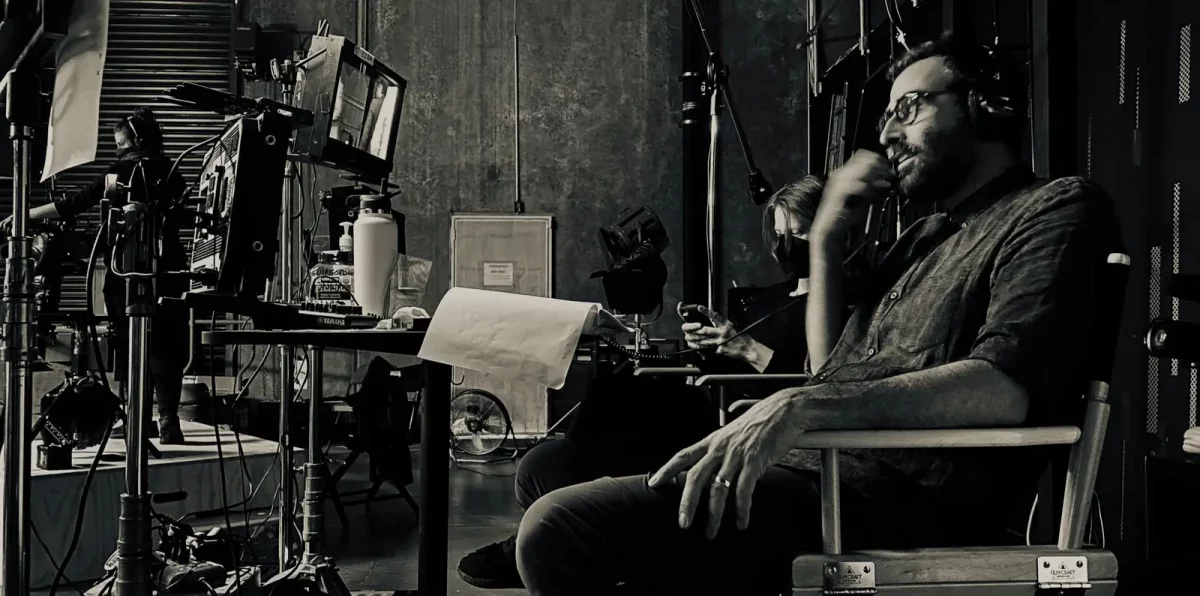
Discussing everything from the film’s backdrop, themes, and production process to the casting, subtexts, and the very conception of it, I sat with director Michael Moshe Dahan, producer Sarah Szalavitz, and cast members Salome Azizi, Karim Saleh, Mousa Hussein Kraish, and Adam Meir.
Why Juliano Mer-Khamis? How did you learn about him, his filmography, and his work as an activist? Or say, how did he find you and become the source of the movie?
Michael: I was trying to curate an exhibition with Israeli and Palestinian artists working on inter-generational trauma. And I was looking at people working on videos concerning the aftermath of Nakba [Palestinian Catastrophe], after the occupation, and even three or four generations after the Holocaust. And that led me to meet some amazing artists. But they did not want to be in the same room. They didn’t wish their work to be exhibited together.
“…conversations that make them question each other about their identities and roles in the long-standing conflict between Israel and Palestine.”
Because Palestinians didn’t want to be tokenized because I am an Israeli-American, Israelis resisted because they felt sensitive about potential backlash. I had three months to fill a gallery, and the gallery director said. “You’re a filmmaker; why don’t you make a film?”
Then, I spoke with someone who warned me that it’s dangerous to tread upon this scenario – to occupy both realms simultaneously. And that one person who tried to do that suffered for it. And that was Juliano Mer-Khamis. Eventually, during my research into him, when I saw that he talked about his assassination in a predictive way and that he really was assassinated in the same manner, it made me realize that there’s got to be a movie here.
Sarah: I have a different relationship with the material. I have studied the peace process in Northern Ireland and Israel. And at the point when Michael had begun working on this, I was approached by some other people about what was happening in Israel and Palestine, discussing what approaches could be taken. Because a lot of what’s happening there, or the United States here, isn’t dissimilar to what’s happening in India in terms of the way certain groups are fostering hatred. So, I was looking to be involved in such a project, and Michael and I have been best friends for eternity.
There are two different factors lined up here. I believe Juliano was an excellent representation of the complexity [of the conflict] of what we wished to portray. And interestingly, some more such complexities have come out since the film. For instance, Chaim Topol [he played Tevye in Fiddler on the Roof], who recently passed, was revealed by his family as an asset to Mossad in his later career. That kind of information, I believe, adds up another level or layer to what we have presented in the film [which is reflecting on the conflict through an actor’s perspective].
Michael, you say that artists from Israel and Palestine were skeptical of involving in the project. Has anyone from the audience, from Israeli or Palestinian backgrounds, approached you post-screenings? And if yes, what have been the responses?
Michael: Well, Mousa is Palestinian and is part of the film. And Adam is Israeli and has been a part of the military. So, the film itself is an embodiment of that dichotomy. However, we have been roundly rejected from both Jewish and Arab festivals. So we haven’t been among that crowd yet. Most of the crowd we have been with comprises Jewish people, and maybe Muslims, who have an opinion about cinema but not because they are leading with their religion and nationality. Am I correct, Sarah, in terms of the questions that we have got in Beverly Hills and other places?
Publisher: Source link



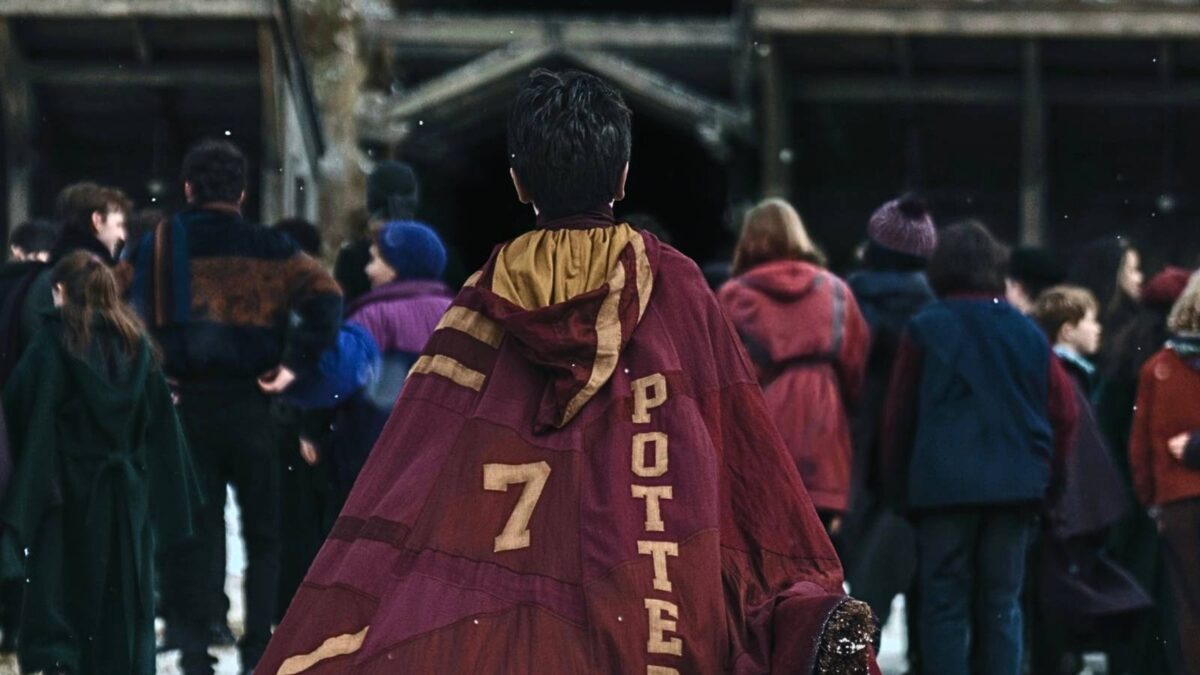
HBO ‘Harry Potter’ Series Image Reveals Dominic McLaughlin in Title Role
The first official look at HBO's upcoming reboot of Harry Potter has finally arrived, and it is already teasing a magical trailer release. As we inch closer to the show's expected 2027 release, the network has begun to reveal more…
Mar 25, 2026
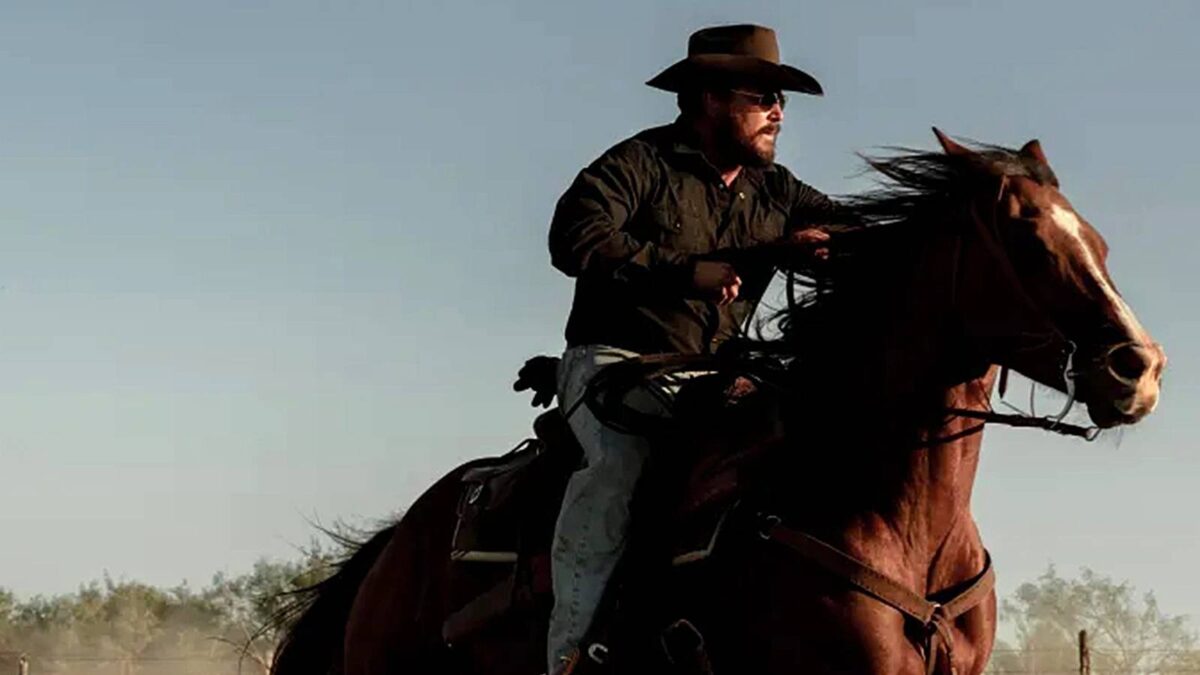
‘Dutton Ranch’ Trailer Reveals ‘Yellowstone’ Sequel Release Date
Rip Wheeler and Beth Dutton gamble everything on a new life in South Texas in the first trailer for the Yellowstone spin-off, Dutton Ranch. The footage reveals all manner of gun fights, fist fights, explosions, galloping horses, and even mysterious…
Mar 24, 2026
Born Again’ Showrunners Detail How the Media Ties into Season 2
Marvel is fast approaching the release of Daredevil: Born Again Season 2, marking its second live-action Disney+ show of 2026. Bringing back Charlie Cox's Matt Murdock and Vincent D'Onofrio's Wilson Fisk, this season picks up where Season 1 left off,…
Mar 23, 2026
New ‘Wheel of Time’ Animated and Video Game Adaptations Are in the Works
Amazon might be finished with The Wheel of Time, but we haven't seen the end of the story when it comes to adaptations of Robert Jordan's bestselling high fantasy saga. Fans were left blindsided when Amazon abruptly pulled the plug…
Mar 22, 2026