
Should We Consider ‘A Nightmare on Elm Street’ a Slasher Movie … or Something Else?
Sep 30, 2024
The Big Picture
Collider’s Robert Taylor speaks with Robert Englund and Heather Langenkamp for the 40th anniversary of
A Nightmare on Elm Street
.
In 1984, this Wes Craven classic introduced a group of teens to their worst nightmare: Freddy Krueger.
During this interview, Englund and Langenkamp reflect on their time working with Craven and weigh in on whether
A Nightmare on Elm Street
should be considered a slasher film.
It’s now been four decades since Freddy Krueger invaded the dreams of his first group of unsuspecting teenagers in writer/director Wes Craven’s 1984 horror smash A Nightmare on Elm Street. Led by Robert Englund’s sinister Krueger, the film launched a franchise that would eventually include eight films (seven starring Englund), a TV series, and an uncountable number of books, comics, toys, and god only knows what other spin-off material. Actress Heather Langenkamp serves as Krueger’s primary nemesis in three of those films. In the original, she’s Nancy, a clever teenager who turns the tables on Krueger (and dates a young Johnny Depp). She reprised that role in A Nightmare on Elm Street Part 3: Dream Warriors and then returned again for Wes Craven’s New Nightmare, the series’ risk-taking seventh installment, a meta twist on the franchise that finds her playing a fictionalized version of herself.
Still, it’s the original film that’s proving to stand the test of time 40 years later, and Warner Bros. is marking the occasion by releasing it in 4K UHD, first digitally on October 1 and then with a fancy physical release on October 15. Englund and Langenkamp reunited this past week to celebrate the occasion, and, in this one-on-one interview with Collider, the pair talk Elm Street’s legacy, debate whether A Nightmare on Elm Street should be categorized as a slasher movie, and fondly remember their time with Craven, who would also go on to launch the Scream franchise before he passed away in 2015.
40 Years of ‘A Nightmare on Elm Street’
COLLIDER: It’s great to talk to you both today as we celebrate the 40th anniversary of A Nightmare on Elm Street and this gorgeous new 4K release. We’ve come a long way since I first saw this film as a kid or a teen on a dingy VHS tape sometime in 1980s. Do either of you just find yourselves in awe of the fact that we’re all still here talking about this movie four decades later?
ROBERT ENGLUND: Well, Heather and I are a little used to it by now because we see each other at film festivals and comic cons and things like that with the fans. But just sitting here today and adding up the numbers and realizing 40 — and all the other projects we’ve done in between — I never had an inkling that this would last this long. I knew we had a successful franchise somewhere after Part 2, but I never thought we would be going for all these years and come up with eight films and a television series. And the merchandizing. As we sit here right now, a new action figure is being created, a new poster, a new t-shirt, a new [Funko] Pop.
HEATHER LANGENKAMP: A new set of earrings. [Laughs]
ENGLUND: Earrings, jewelry … it’s just incredible.
LANGENKAMP: It’s really a cottage industry in America right now: the entire fascination with our movie, but also all the franchises. People just feel so comforted by the fact that they have this thing they saw when they were a kid, and they can share it with their friends and their family. And yet it’s the diabolical hero here and a really resourceful “final girl.” For some reason, it just is such a great combination for folks.
ENGLUND: Yeah, that’s part of it. It’s a good nemesis — a good, antagonistic coupling.
I think the entire horror community, both fans and creatives alike, still really miss Wes Craven. When you guys think or reminisce about Wes, is there a moment during the making of the original Nightmare that really stands out in your mind?
LANGENKAMP: I got to work with Wes so much in the first movie. He and I were side by side every day for 35 days, and we had a great relationship. He was so funny. He’d break the mood of seriousness all the time.
ENGLUND: And corny jokes!
LANGENKAMP: Corny jokes, like dad jokes. Like really bad jokes. But by livening up the atmosphere at every moment, I really feel that I see that energy in the movie when I watch it. There’s this energy that comes after you laugh, and you’re relaxed. And then that relaxation shows itself in the film. He was ribbing me or ribbing Johnny or ribbing Robert about something or just poking fun at us, and then we had this relaxation to start the scene. I just feel like it was the key to his success in many ways.
ENGLUND: I’ve worked with Wes a lot, and I was trying to think of a moment on the first one that would be specific to my thinking at the time. I don’t have one there, but after years of working for Wes — three movies, a television series — I did have a moment with Wes in an apartment in Canada watching Saturday Night Live. Wes had a glass of wine. There was a Dana Carvey sketch, “Head Wound Harry,” and Wes laughed so hard he was almost crying. He practically fell off my couch. I think that was the moment where Wes was sort of surrendering to being my friend finally, and not just my boss and my director and my Doctor Frankenstein.
Should We Consider ‘A Nightmare on Elm Street’ a Slasher Movie … or Something Else?
There’s been a running debate over the years at Collider about whether or not Nightmare on Elm Street should be classified as a slasher film. Because on one hand, you do have this classic villain who’s stalking and killing teenagers. But, on the other hand, it really is much more high concept and cerebral than a lot of “guy in a mask in the woods” types of movies. So I figure who better to settle this argument than you two. Is A Nightmare on Elm Street a slasher film?
ENGLUND: I was told very early on, on the set of Nightmare on Elm Street, because the term “slasher” was kind of new back then: “Don’t use it. Wes hates it. This is not a slasher film.” The problem is that I have a glove with blades, and if I move toward you or gesture toward you, I am slashing. That’s the only verb to use. On the other hand, we’re not a gore-fest film. The kills and the deaths and the hauntings in it are all in the dreamscape. They’re all surreal. A girl in [Part 4] being turned into an insect in a Roach Motel — that’s pure popular-culture Kafka. That’s Kafka-esque, as they say, which is the world of surrealism. My god, if anyone can be said to be a surrealist, it’s Kafka. And so I tend to think of it that way. I tend to think of Nick’s death in Nightmare 1 — Nick Corri — being hung by an animated sheet that coils and knots itself and becomes like a snake and a noose — a noose snake. That’s very imaginative. That’s not a slasher film.
LANGENKAMP: And Johnny’s death, the blood erupting out of the bed. We never see him get even nicked by the knife ever.
ENGLUND: It’s afterward. Johnny Depp regurgitated. [Laughing]
‘Wes Craven’s New Nightmare’ and ‘Elm Street’s Legacy
Image via Warner Bros.
You two made three Elm Street films together over the course of a decade. I was hoping you could speak to how your relationship, either your working relationship or your friendship, evolved over the course of those three movies.
LANGENKAMP: Well, I have to say that I was more than a little jealous of Robert because Robert as Freddy was such a huge global icon very quickly after the second or the third movie. Kids were coming to my door in Freddy costumes, and I felt very much that the heroine, Nancy, was getting short shrift by the culture. There wasn’t a Nancy costume coming to my door.
ENGLUND: Not yet!
LANGENKAMP: I worked really hard with Robert when we were together at these comic cons and autograph shows. I kept trying to emphasize Nancy is important, too. Let’s give Nancy credit where it’s due. That effort on my part started maybe five years into it, 10 years into it. And now I really feel like the fruits of that, discussing final girls, talking about it with fans … because fans are really the most important thing about the success of our film. Getting the fans to understand why they like the movie so much has a lot to do with Nancy. And so I kind of felt like I have been a politician over the last 40 years, trying to say, “Yes, this is an important part of our culture.” The final girl is something that we should call to Wes and say, “Thank you for creating such an incredible character.”
ENGLUND: To illuminate our relationship, I remember on 3, you and I were kind of like mom and dad with the rest of the kids.
LANGENKAMP: Yeah, we were very much mom and dad.
ENGLUND: All the boys were falling in love with Patricia Arquette. I remember how funny it was sharing that with Heather because we would see the love notes being passed and everything.
LANGENKAMP: And then, by Wes Craven’s New Nightmare, it was such an unbelievably different script, and Robert’s part is so interesting, I think we were really serious. We felt we were making a really serious film.
ENGLUND: Well, it was early meta. It was early, deconstructed horror. Scream hadn’t come out yet and hadn’t been made yet. When you look at Wes Craven, he’s changed the industry two or three times.
LANGENKAMP: But he had gone out on a limb on that seventh one because Warner Bros. was giving him all this free rein to create this meta movie, but nobody really knew what it was. And even sitting in sessions where we were going to talk about publicity, we kept having these debates: Do we pretend like Heather is really Heather Langenkamp in the movie? Or do we pretend that Robert …? It was very hard to talk about, actually.
ENGLUND: But it’s interesting because, after Scream came out, people went back and bought DVDs of Wes Craven’s New Nightmare. Scream taught them how to watch Nightmare 7, and then it did become a phenomenal success. It was a success, but it wasn’t boffo socko. It wasn’t this huge success that some of the other films had been, but it caught up, in great part, due to audiences understanding Scream.
Image via New Line Cinema
LANGENKAMP: And the meta, yeah.
ENGLUND: We made that movie for the fans. Wes made that movie for the fans. And he’s dealing with the responsibilities of being a filmmaker and exploiting evil, exploiting a serial killer, even though it was a fictional one, and the guilt of that. I think Wes thought a lot about that up there in Steve McQueen’s old bachelor pad overlooking Catalina Island in the Hollywood Hills.
LANGENKAMP: Like, “What did I give birth to?”
ENGLUND: Yeah, “What did I do? What I did I do to deserve all this? Is it right?” And he was also dealing with the fact that the culture then was really embracing horror. The world, in reality, there’s very real horror, and one of the places we can sort of substitute the very real horror in reality is in the horror movie. You can sit in the dark and forget about it. I learned that years ago. I donated a bunch of horror movies to a hospital for the ward where everybody’s waiting for bone marrow transplants. Teenagers. And they all yelled, the nurses and the doctors. They didn’t know who this Robert England/Freddy Krueger guy was. “What’s he doing, bringing in these violent films for these teenaged boys? What the hell?”
LANGENKAMP: They loved it.
ENGLUND: They called me up a week later. They wanted more. All the boys, they’d been laying around 12 hours a day worrying about, “Is my bone transplant coming through? My bone-marrow transplant?” Now, they were watching horror movies and sharing the themes and painting stuff from the movies. And they were all not obsessed with their own fear about themselves.
Thank you both so much for your time today and congratulations on just the crazy continued success of this film and this franchise.
LANGENKAMP: Thank you.
ENGLUND: 40 years!
Publisher: Source link





Eggs – Film Threat
In writer-director-star James Clair’s short drama Eggs, a man struggling to rebuild his life finds his quiet mornings turning into strange conversations with the very eggs he is meant to cook. I mean, they want him to eat them. So…
Mar 11, 2026
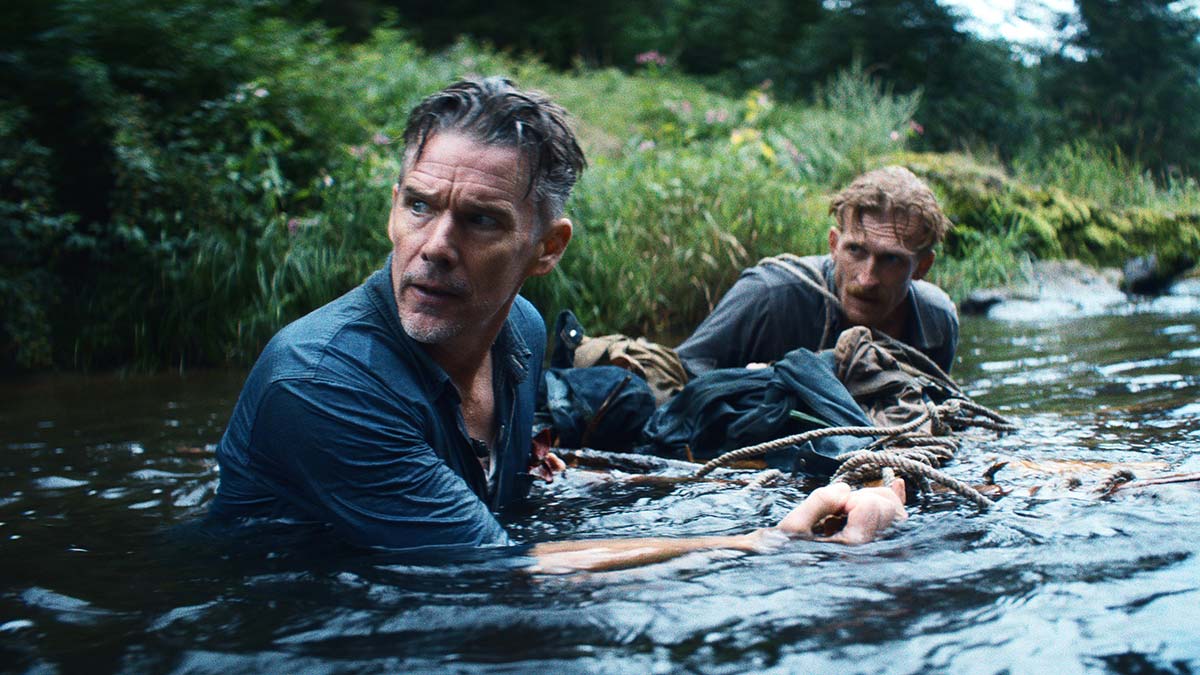
Ethan Hawke Elevates A Rugged, Predictable Gold-Run Survivalist Western[Sundance]
As far as one can tell, Murphy (Ethan Hawke), a father, WWI veteran, and avid car mechanic, has never encountered an insurmountable challenge. Living in Eugene, Oregon, in 1933, four years into the Great Depression, Murphy and his young daughter,…
Mar 11, 2026

The Moment Review | Flickreel
Brat Summer was a cultural phenomenon that I didn’t understand at all. I knew that it was connected to an album that Charli XCX had released. Whenever I asked what Brat is, though, nobody could seem to give a straight…
Mar 9, 2026
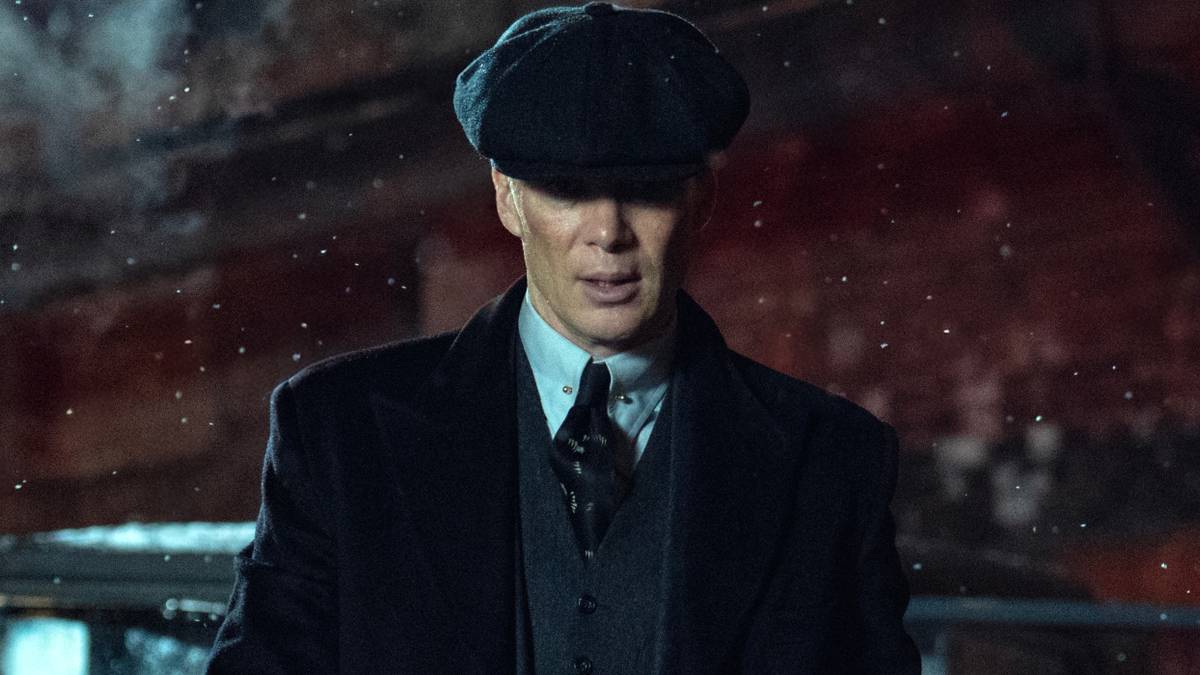
Cillian Murphy’s Netflix Crime Hit Delivers a Brutal, Bleak Finale
It’s been four years since we last saw Cillian Murphy play Tommy Shelby, but seven have passed in the world of Peaky Blinders, with The Immortal Man taking place in 1940, in the middle of World War II. Tommy’s gone…
Mar 9, 2026