Skeleton Crew’ Episode 6 [Exclusive]
Jan 7, 2025
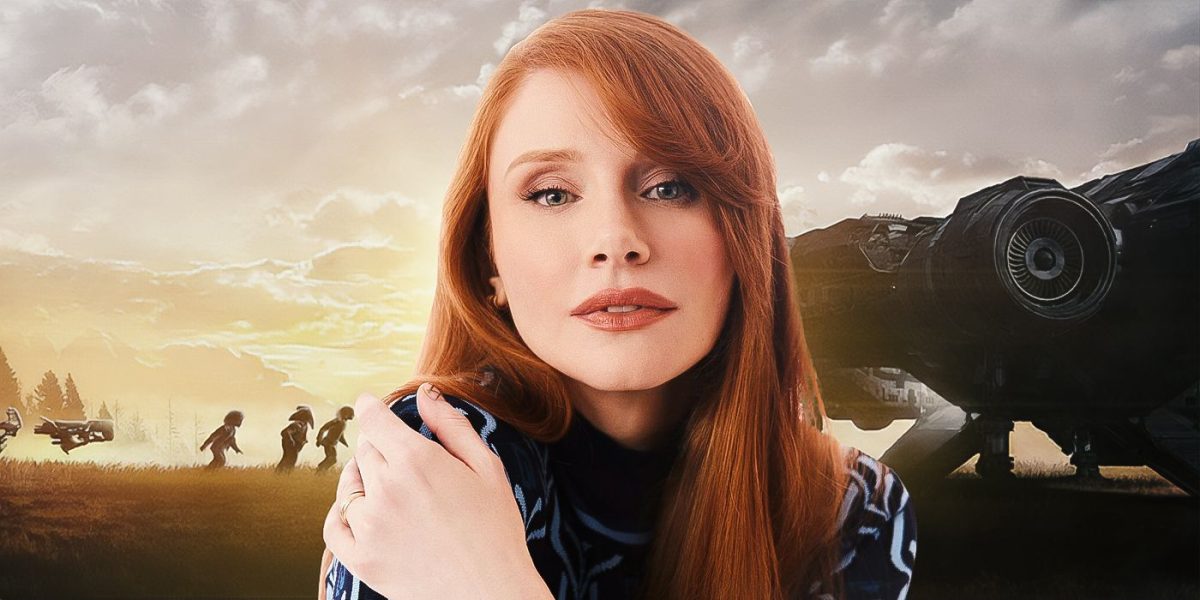
Bryce Dallas Howard returned to a galaxy far, far away with the most recent installment of Star Wars: Skeleton Crew. Episode 6, entitled “Zero Friends Again,” marked her fifth time directing for the franchise, after making her debut during Season 1 of The Mandalorian. She went on to direct two more episodes for the series, alongside an episode of The Book of Boba Fett, and every time she returns, fans know they are in for a treat.
The sixth episode of the series, penned by Myung Joh Wesner, proved to be a beautifully poignant one, as the core four—Wim (Ravi Cabot-Conyers), Neel (Robert Timothy Smith), Fern (Ryan Kiera Armstrong), and KB (Kyriana Kratter)—looked for a way off of Lanupa, by way of a trash compactor. Fern found herself at odds with her best friend KB for the first time, as KB struggled with how to talk to Fern about her physical differences and how they impacted her ability to keep up with their adventure. Meanwhile, after betraying the children in Episode 5, Jod’s (Jude Law) victory is short-lived as his former crew hauls him back to Brutus (Fred Tatasciore/Stephen Oyoung) to face punishment for his crimes.
At the end of last week, I had the opportunity to chat with Bryce Dallas Howard about directing for Skeleton Crew; what it was like working with the series’ incredibly talented young cast; how Jude Law transformed the scene on the pirate ship into a true pirate’s tale; and what it was like working with Tippett Studio to bring to life the awe-inspiring Mama Crab stop-motion animation creature. You can read the full transcript of our conversation below.
Bryce Dallas Howard’s Journey to ‘Star Wars: Skeleton Crew’ Happened Fast
COLLIDER: I knew I was going to like the show, but I didn’t realize how much I was going to love it.
BRYCE DALLAS HOWARD: Oh, that’s wonderful! I love hearing that.
At first, they sold it as a Goonies thing, and Goonies was never a thing for me. I wasn’t a Goonies girl. But as soon as I realized it’s really Peter Pan, like it’s Captain Hook and the Lost Boys and Wendy, I was like, “Okay, now you’ve got me.”
HOWARD: You’re totally right. It really, really, really is. Oh, that makes me so happy to hear that because you never know. But there is definitely a lot of enthusiasm behind the scenes, as well, just with the concept and the kids and Jude [Law] and all of that. So, the fact that that’s translating is the best.
I see love for it every week. Was this a project that you had heard about, and you were like, “Hey, I want to direct an episode for this?” Did you get to pick the episode? How did Episode 6 land in your lap?
HOWARD: I never get to pick an episode. It’s always, “Do you want to direct in Star Wars?” “Yes.” “Here’s the script.” It’s that, and it’s a little bit like Christmas. It’s really wonderful and exciting, like opening up a present. I had heard about it a lot from The Third Floor team—that’s the previs team; they animate. Typically, they would animate primarily the VFX sequences and action sequences, but on The Mandalorian-verse workflow, The Third Floor team animates the entire episode, and so they’re very, very involved as storytellers and very invested. I really trust that team so much. And so, when I was working on Season 3, they were already working on this show, also, but of course, it’s all really confidential and you can’t say anything. I’m also very hesitant to even ask because I don’t want to put them in that position.
One day, I was just like, “How is it?” Jon Watts and Chris Ford are old friends from college, so they knew that they were talking to someone who’s a fan, and I was like, “How is it?” They were like, “It is amazing. It is so fun.” So I definitely was sort of drooling over it. But the way I got asked was very fast. It’s always very fast. It’s always like, “Would you be interested in this? That’s awesome. Could you come in, in the next three days to start?”
Oh, wow! Very fast.
HOWARD: Yeah, yeah, very, very, very fast! And I hate to admit this, but I maybe consciously evaluate things against the possibility that they could call for an episode. [Laughs] I’m like, “But I want to be available just in case.”
You know a Star Wars thing is filming soon, and you’re like, “Okay, I shouldn’t go on that vacation.”
HOWARD: “Wait for it…” [Laughs] Then you’re just like, “Well, am I going to the party? Am I getting invited to the party this year?” So, yeah, it was a very quick thing and glorious. It was so exciting because immediately I was getting to work with this wonderful editor, Andrew Eisen, who cut my previs for the first season, but we didn’t get to work together for the actual editorial process, so it’s like, “Yay, Andrew!” And it’s very much shot in the same studios and all that, so it’s a lot of the same crew, a lot of the same people. It’s just wonderful to get to join the project.
How Star Wars Bridges Cutting Edge Technology With Classic Effects Like Stop-Motion Animation
Image via Disney+
Talking about the studio and the Volume, something I was thinking about is it seems like the Volume technology has improved a lot in the last five or six years since that was first introduced for The Mandalorian. Do you find that to be true, as well, on the set when things are happening? Something about this show feels so much deeper. There’s so much more depth. Maybe it’s that the production design is a different style and different team, but there’s just something about everything about the world feeling so much more alive.
HOWARD: Oh, that’s wonderful. I would just say that I’m in awe. That goes for everyone at ILM and everyone at Legacy Effects. It’s, frankly, every single department. They’re constantly upping their game, constantly. It’s like, “We’re working on a new thing,” or, “We have a thing that’s about to go,” or, “This year, we’re trying to do this, X, Y, or Z.” From the start, I should just say projects that Jon Favreau [is involved with] in the Star Wars Universe have been very tech-forward. That is certainly a passion of Jon’s, and it’s a passion I share, and to have him as a mentor is the most extraordinary privilege.
I mean, listen, I’m someone who’s experienced a lot of privilege in my life, so this is saying a lot! [Laughs] Because my dad has been just an unbelievable mentor, but specifically, when it comes to emerging technology in cinema, what he is passionate about, his perspective on the opportunity, on the process, on the challenges, on the problem-solving around it and who to involve and how, the inclusiveness—he doesn’t want things to be proprietary. It’s about bringing minds together. So it’s very, very, very, very, very exciting and exhilarating to have watched all of that and to have had a chance to learn more about that.
I remember because I got to test a lot of technology with Canon, with the C500, the C300, the C700, and it’s almost impossible to conceptualize what an experience might be like without actually immersing yourself in the technology. Having that real-world experience of being like, “It broke—again! It didn’t do the thing I thought it was going to do…” or, “Whoa, way better than I ever expected!” I watch so many cooking videos. So many cooking videos, I can’t even tell you. It’s not even funny. I’m obsessed with it. I do not know how to cook.
I tried to make a grilled cheese a couple of nights ago, and it was the most pathetic thing in the world, and I was saying to my husband, “Just watching something does not mean that you actually know.” I can conceptually tell you exactly what needs to happen, but when I was lifting the lid, I put it in a place that was really dangerous, balancing precariously. Things were going awry, sort of left and right, and it was because I had no real-world practical experience. So, to get to be in it, it’s what I crave as an actor, and why, so often, I’ve sought out the opportunity to be involved in productions that are these huge spectacles and have so many people who are so invested in it, and there are so many people working on it. To actually get to see what it takes to pull that off is, oh god, it’s such a wonderful way to learn.
Related
Here’s Every ‘Skeleton Crew’ Episode 6 Easter Egg You Might’ve Missed
The pirate lore is strong in this one.
That’s the thing I love about Star Wars. It’s always been on the cutting edge of technology, and yet it still uses incredibly cool old-school things like stop-motion animation. I love that the studio was involved with making Mama Crab. I was so delighted to discover that. What was it like getting to incorporate that into your episode? I love stop-motion animation so much.
HOWARD: Same, same. Ditto. Absolutely. It was something, as well, when I shot the episode that I did in [The Book of] Boba Fett. We filmed the Purge of Mandalore, and in figuring out how to do the Purge of Mandalore, Phil Tippett got involved and was hugely impactful, and a muse for how we were going to approach it, and then absolutely involved in the execution and design and all of that. So it was like, “More please.” [Laughs] And I think that’s something that definitely Watts and Ford were really, really excited to do.
I remember reading the script—that character already existed, of course—and seeing all of the concept art and everything, and I just got so into her, and I just really wanted to feel her. That’s what’s exciting, also, to your point, about Star Wars. What’s exciting about Star Wars, so much of it, is the technology. It is this hybrid of the oldest technology with puppetry and the newest technology, obviously, with CG, but also robotics and everything. So with something like stop-motion animation, in terms of technology, we are using tools that have been around for longer, and it gives it a really beautiful, sort of vintage quality to it, but you also want it to feel very, very, very, very, very real. I remember, it was so cool the way it was all coming together because Mama Crab was actually in the content on the wall on the Volume, so the kids could look up and actually see Mama Crab. So even though there were elements of the design that still needed to be finalized and whatnot, it was what you saw in the episode for the most part.
Then John Knoll was there because he was our VFX supervisor—total legend, created Adobe, no big deal. [Laughs] Invented it! He’s there every day, and we’re sitting next to each other at the monitor, and he is also a director. So the first time that I met him was in 2018; I did kind of an incubation short film project at Skywalker Ranch. I was there and a bunch of other wonderful filmmakers were there, and I’d written something with my husband, and John was there as a director. So John Knoll is an incredible visionary and talent, on a number of levels. He’s the definition of a multi-hyphenate. So I was like, “This is so cool, and how can we make this cooler?” And I remember going to John and just being like, “How do we make this even cooler, John? How do we make this cooler?” He’s such a calm guy, and he was like, “Well, when the crab opens her mouth, I would imagine it smells really bad, and maybe there’s some wind or something. Maybe a bunch of slime comes out.” And I was like, “Oh my god, this is absolutely fantastic!”
Obviously, we couldn’t do the slime. We had to abide by continuity and everything. This was a, no joke, five-minutes-before-shooting idea, and it was just about, like, “Okay, let’s get the fans in there. Let’s make this more of a moment.” And John, just getting to have someone like that there to advise on the storytelling that will help breathe life into and make the inanimate animate, and to have him on this side and to have Phil Tippett on the other side is just a dream team. It’s a dream.
And beyond that, I should say, this is really also Watts and Ford. This is their show, and so any experience that I was having, Watts and Ford were a part of that. I’ve known those guys since college and respected them so much since college. I knew. I knew! I could see it immediately with them. Immediately! And Jake Schreier. So to get to be in a room with all that experience, all that talent, it’s something that I’m always so grateful for. Then [Dave] Filoni and Fav were there, as well. I mean, come on.
How ‘Skeleton Crew’s Young Cast Embraces the Sense of Play
Image via Disney+
Truly a dream team. Something I was thinking about, as well, is you’re also in a unique position where you’ve grown up in Hollywood, so you know a lot of stuff about that environment, and then you’re working with children that, for some of them, this is many experiences on, they’ve worked on a lot of projects, and for some of them, this is still relatively new. Was there anything that you thought of as you were going into this that you were like, “I want to make sure these kids learn this lesson that I learned way later in life but could have used when I was younger and navigating around in Hollywood?”
HOWARD: Oh, that’s a good question. That’s a really good question. What I’ll say about the kids was that instantly, it was very apparent that they were all professionals. None of them were brats at all. These were really, really, really decent, hardworking, intelligent, thoughtful, gracious, humble young professionals. That’s a little bit like maybe the best kind of human being to collaborate with because, also, they’re still children, so there’s still so much access to their inherent sense of play and wonder. Their prefrontal cortex is… Is it still forming? Has it just closed? I don’t know, but things are still happening for them in a way that is very exciting as an adult to be able to collaborate with someone like that. Then also, like you’re saying, these are going to be formative experiences for them, and you want it to have a really positive impact. So I think what I would say for me is it was just stuff that was all already in play. I never had to be like, “By the way, just remember…” Nothing like that. Because also, all of their families, they have great support systems, from what I observed on set. It was really, really wonderful to see.
If there was anything, it’s that I really wanted them to trust their own instincts. That was something that was very, very, very important to me because with kids, so often, they’re in different kinds of scenarios, and who knows if a director knows kids in their life or has assumptions about what kids are like, whatever it might be. This is one of my favorite phrases that Chris Pratt taught me: he’s like, “Remember, at the end of the day, we are meat puppets.” [Laughs] I’m like, “No!” He’s making a joke. He’s completely making a joke…
But he’s also not wrong.
HOWARD: He’s also not wrong. You have to hit your mark. You have to do the thing at the time; otherwise, you’re not doing the thing. And that is very, very, very important, but also, more important than that because you so quickly kind of are like, “Oh god, I’m a meat puppet,” is to hone your own instincts, have a conversation with yourself. Because you can get very insecure, you can get very in your head. You can really lose your way if it’s all about, “Oh, I need to just move my hand like this,” or, “They want me to go like that,” and you disconnect from what’s most important, which is your instincts. I had just worked with Sam Rockwell in Argylle…
I love Argylle so much.
HOWARD: Oh, you’re so wonderful, Maggie! Thank you, thank you, thank you, thank you. I mean, it’s wild. I learned a lot making that movie, and one of my big takeaways was just getting to watch Sam Rockwell work and his sense of freedom and what gets discovered when an actor is empowered to be free. I would sometimes be like, “Oh my god.” With Sam, it’s almost like he’s got the freedom of a child actor. Like the lack of… It’s not vanity. I don’t want to call it vanity because that’s putting down actors, and I actually haven’t experienced actors who have been vain. No one, actually, at all. But just hyper-awareness in everything that’s happening. Whereas with kids, it comes from such a feeling place, and there was something in Sam’s work that was so exciting because it was coming from that pure sense of play. I remember just really valuing that and seeing that almost the less that Sam was directed, the better he was. It was just like, “Oh, just let him do his thing!” I’m like, “We’ll just roll the camera! Do you, man. Just do you.” An actor who is connected to those sorts of instincts and impulses and all of that, it’s just thrilling. It’s so thrilling.
So, with the kids, they would just be like, “What do you want me to do?” And I’d be like, “Well, what do you think? What do you want to do? I’m not going to tell you.” I would say for three takes, “I’m not going to say anything.” They would ask me questions, and I would say, “Whatever you think.” If you want to know where your mark is or something like that, something technical, absolutely, but if you have questions about how the character should be or whatever, I’ll hear your questions, but I’m probably just going to say, “Just follow your instincts, follow your instincts, follow your instincts.” I wouldn’t say “whatever you think,” I’d be like, “Follow your instincts.”
And it paid off! I mean, the scene with Kyriana [Kratter] is so fantastic. I’ve loved seeing people online talking about seeing disability representation in a child, which is something that so many people, as children, grow up without. Now they’re getting it, and they’re resonating with it. What was that like, setting up that shot and setting up the weight, the importance of this conversation, and what the children are learning? There are so many beautiful moral lessons going on in the series.
HOWARD: Thank you. Yeah, I really value that, as well, in the script, and was really moved by that. It was all about having a light touch and having rehearsal with the kids in advance. That was something that was really, really important to me with the kids, because it’s not fair to just be like, “Trust your instincts,” if you just met the kids. [Laughs] You’re there to support them. It was because we had a relationship, we’d had rehearsals, they had asked a lot of questions, we had talked through a lot of things. So by the time that you’re on set, you can just let them fly and you can show them you trust them. You trust them to do their thing.
We talked a lot about what was actually happening, what was involved in the shutdown, and what was this compartment inside of her head, which I was very, very, very, very, very, very, very obsessed with. I was like, “I need to see inside! Please. No, lower the camera. Lower. Please. More. I need to see inside.” And the details of, “Okay, what is Wim doing, and how is he creating this? And is this feasible for a child to do? Does this make sense?” This is essentially brain surgery on a beach. [Laughs] “Is this plausible?” And ultimately, I really think it is. The way in which those beats were broken down and whatnot—and that was all in the script—you followed it.
When you’re actually just shooting it, I take a moment, and I read through the entire scene out loud with the whole crew there with the kids so they’re not having to perform right away. I often find that sometimes folks don’t actually read the script. They’ll read it in the beginning, and then it’s sort of like, “Oh, right. I have a sense of this, and I’m working off of other things. I’m working off of the animatic, I’m working off of the previs, I’m working off of the storyboards,” or, “This is the other departments.” So, just kind of taking a moment before everybody is doing their thing, I just have storytime, and I read it out loud. I’ll be like, “And that’s there, and that’s there. And here’s this line, this line, this line, this line,” so the actors can kind of hear it. I’m not acting anything, I’m just saying it, matter of fact. Then I try to say as little as possible so that everybody can do their thing, the actors especially. So, it’s really fun. It’s wonderful to get to have a scene like that, as well, because once the kids knew what all the little doodads were and what those beats were and when things needed to be poured and all of those things, then they just did their thing.
Also, my other favorite thing, too, is usually if there is something that I need to tell them, and I’m saying this in terms of the kids, but this applies to everybody, this is anybody who wants this—some actors don’t ever want to watch the monitor, and so I always ask in advance; I’ll be like, “Are you comfortable checking out the monitor?” And if they say no, then I’ll just be like, “Oh, yeah, no problem. Could you actually just step a little bit over there because we’re missing you in the light?” But a number of actors like to look at the monitor, and I’ll just be like, “Hey, come over here. Just check this out,” and they’ll be like, “Ah. Yeah, I see. Okay,” and then they’ll just pop back. I don’t have to say anything, and I love that because that’s an actor who’s seeing it, they’re crafting their performance as it’s happening, and a trusted member of the collaboration.
We Can Thank Jude Law for Jod’s Shanty in ‘Skeleton Crew’
Image via Disney+
The other scene that was very memorable from this episode, and I think, not exaggerating, it’s landed among my top 10 Star Wars scenes, is the “I’m hungry” scene on the pirate ship. There’s so much going on, and it’s not just the script that’s fantastic or Jod’s performance; it’s the direction, too, because there are so many little things, so many little looks, so many little components. There’s so much stuff going on. It almost feels like a dance, almost like it’s got choreography to it. I just loved that moment. It’s very Dickensian, too, the script and talking about it. My background is in anthropology, so anytime you start talking about the socio-economic factors that are making these characters react the way they are—chef’s kiss. I want to know about crafting that scene and blocking that scene because it’s just so good. And the shanty? It’s just got everything!
HOWARD: Thank you! So Jude Law came up with the shanty. It was just supposed to be lines.
I love that!
HOWARD: “Tak Rennod soared, away, away…” It was just supposed to be a poem, and Jude came in and he was like, “What do you think if I sang it? If it was a shanty? Because that’s kind of what pirates do, and that’s how the lore carries on.” We were like, “Yes, please. We would like that very much, Jude Law.” [Laughs] So I’m so glad you loved that scene because it was an absolute joy to stage that and to direct that. Jude Law: world-class actor. One of the greats. Just an astonishingly lovely individual. My dad ended up working with him right afterward, and he goes, “So Jude Law is going to do this. What is he like?” And I said, “Well, get ready. You’re about to die and go to director heaven.” It’s absolutely true. He, as an actor, has a lot of energy and is very engaged. He’s very encouraging. He has a very encouraging, rolling-up-his-sleeves, very intelligent “yes, and…” kind of energy to him.
Also, it’s a scene where there’s a speech. When you’re shooting it, you’re doing it so many times, and for all of the supporting artists, all the pirates, that can be an exhausting thing, and energy can drop. When energy drops, then it drops for Jude, and then the reality of the scene, you don’t feel it anymore. The reality of the scene is that this man is fighting for his life with all the people he has lived with, worked with, and betrayed. The history is immense. And like you were saying, the circumstances, as well; everyone is coming from different situations. Different kinds of life paths have led them here now.
I was saying this today to my husband, where I was like, “I love Star Wars storytelling, where you don’t have to know anything, and you can watch it, and you’re like, ‘I get it. I get what the scene is. I get the vibe. I understand the stakes. I understand it. I don’t need to have watched one bit of Star Wars in order to understand it.’” But when it’s at its best, I feel like the people who have watched all the Star Wars, there are layers of storytelling that exist in it for them, as well.
So, for example, the character of Kona and Kona’s uniform, you’re like, “Oh my god, old-school Clone Wars. What is her story?!” You’re able to enjoy it that much more. That’s the richness of the Star Wars universe and Star Wars lore, in my perspective, that’s what’s really exciting. So, for a scene like that, there are so many characters who have so many backstories, and you want to be able to feel their humanity, even if they’re aliens. Their soul, their spirit, their story. You want to feel their stories. So it really became a scene where it was not about… they’re all in a jury, and he’s making his case. It’s wild. It’s unruly. They’re ready to kill him. It’s going to be a miracle if he turns this around. There’s real fury and rage here. Then, to tap into the love and the shared mission of it all, and they’re pirates! I love the hourglass thing.
I love the hourglass so much. And then there’s the added layer of we, as the audience, know that he’s a liar and a scoundrel, and they all know this, too, but there’s also a kernel of truth in everything he’s saying. It’s not just a last-ditch effort to win them over. He’s also talking to the wider universe about what’s going on, what has led them all to this situation, and those layers that just make the scene so good.
HOWARD: Yeah. And honestly, I have to say, that was on the page. That speech was already there, so it was one of those things, as a director stepping in, where I was like, “I really want to breathe as much life into this as possible.” Because also, come on—Jude Law doing the speech? Oh my god. Oh my god. But there are so many wonderful actors, just remarkably versatile, talented, committed, amazing, amazing actors. Like the woman that he’s looking at when she’s like, “You’ve got the right of last appeal,” and when she’s telling them all to shut up, basically.
I want to know her story.
HOWARD: I know, I know!
Where’s her spin-off novel?
HOWARD: [Laughs] I have a little bit of a running joke on set where I’m always doing this, “Ooh,” like I start asking questions about a character, and there’s usually a point at which Filoni is like, “I don’t… there’s no more to know about this.” And I’m like, “But what’s her story? What’s her story? What’s his story? What’s their story?” That’s what I’m always asking. “What’s their story like?”
That makes me think of Omera [in The Mandalorian]. Because I’m still obsessed with that character.
HOWARD: Oh, I know!
I’m like, “Where’s her book?!” I need a spin-off book for her.
HOWARD: Oh my god, please, please, please. [Laughs] Who would write that? Is it Claudia Gray?
Oh, I would love that.
HOWARD: We could go to Claudia Gray and be like, “Please?”
I’m looking at all my High Republic books, and so many of those authors—obviously, Claudia, Justina [Ireland]… Oh my god, they’re all so good. And so is Skeleton Crew!
HOWARD: Maggie, I’m so glad you like the show. I’m really, really glad because I’m so proud of the guys. I’m so proud of them. I’m so grateful to Jon Favreau for everything that he has done and continues to do, not just with Star Wars. It’s also the way in which he works as a director, the way in which he mentors, and guides, and supports. And Dave Filoni is one of my favorite people. I just feel very, very grateful that I got to do that.
The first six episodes of Star Wars: Skeleton Crew are streaming on Disney+ now.
Your changes have been saved
Four kids make a mysterious discovery on their home planet that leads them to get lost in a strange and dangerous galaxy.
Release Date
December 2, 2024
Creator
Cast
Jude Law
, Ravi Cabot-Conyers
, Ryan Kiera Armstrong
, Kyriana Kratter
, Robert Timothy Smith
, Tunde Adebimpe
, Kerry Condon
, Nick Frost
Main Genre
Sci-Fi
Seasons
1
Streaming Service(s)
Dis
Franchise(s)
Star Wars
Expand
Watch on Disney+
Publisher: Source link



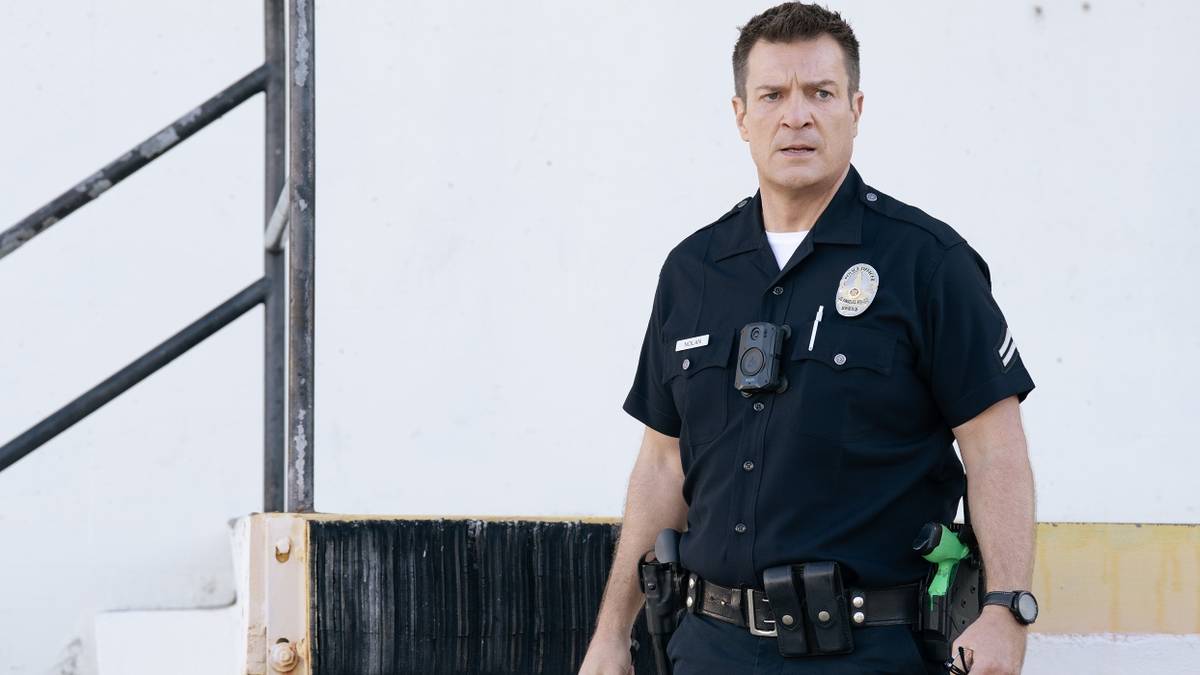
‘The Rookie’s Best Season 8 Episode Goes Completely Different With Full Zombie Horror
Editor's Note: The following contains spoilers for The Rookie Season 8, Episode 10.It's crucial for procedurals to come up with a winning formula that entices viewers to tune in every week. But it's just as important for these types of…
Mar 13, 2026
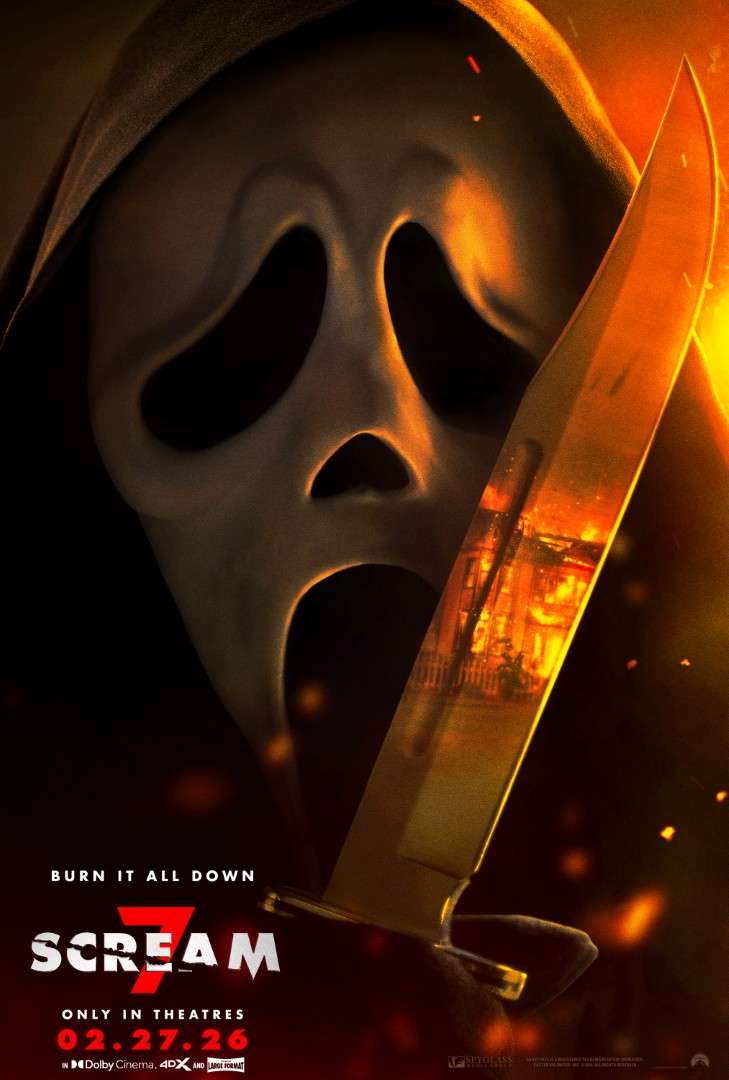
Sidney Prescott Leads a Brutal Throwback
Walking into Scream 7, I wasn’t sure if this entry would be a new reinvention. I know I wanted tension. I know I wanted that uneasy calm before the snap. And most of all, I wanted to see why Sidney…
Mar 13, 2026

Eggs – Film Threat
In writer-director-star James Clair’s short drama Eggs, a man struggling to rebuild his life finds his quiet mornings turning into strange conversations with the very eggs he is meant to cook. I mean, they want him to eat them. So…
Mar 11, 2026
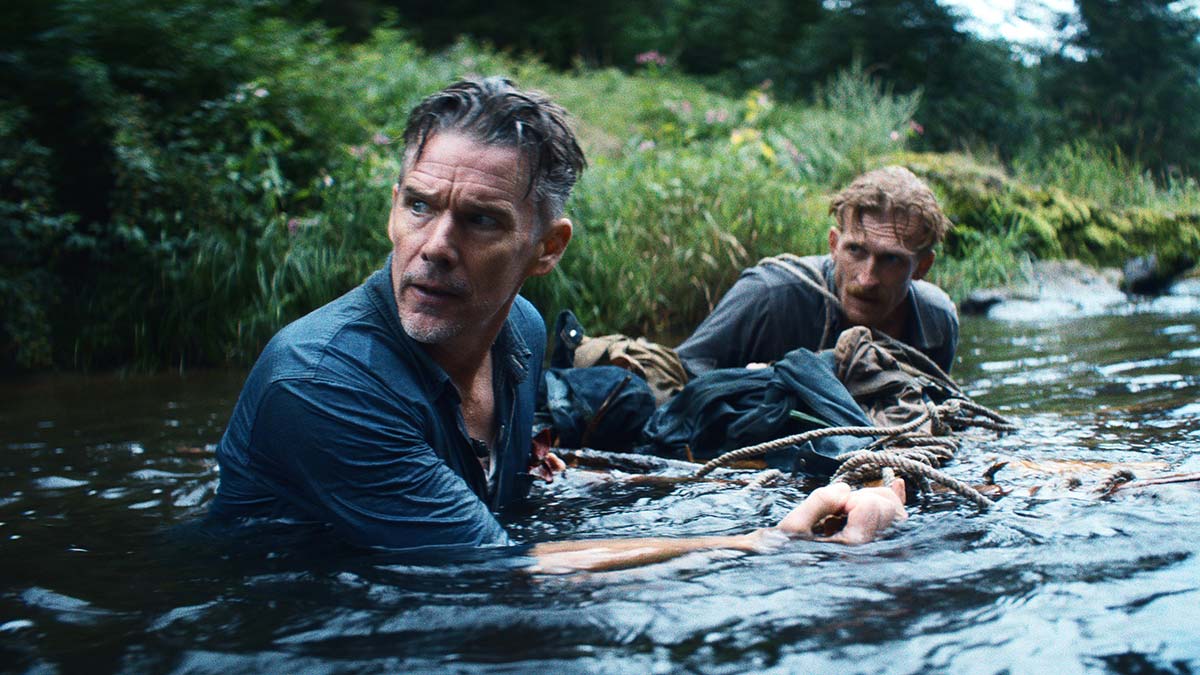
Ethan Hawke Elevates A Rugged, Predictable Gold-Run Survivalist Western[Sundance]
As far as one can tell, Murphy (Ethan Hawke), a father, WWI veteran, and avid car mechanic, has never encountered an insurmountable challenge. Living in Eugene, Oregon, in 1933, four years into the Great Depression, Murphy and his young daughter,…
Mar 11, 2026