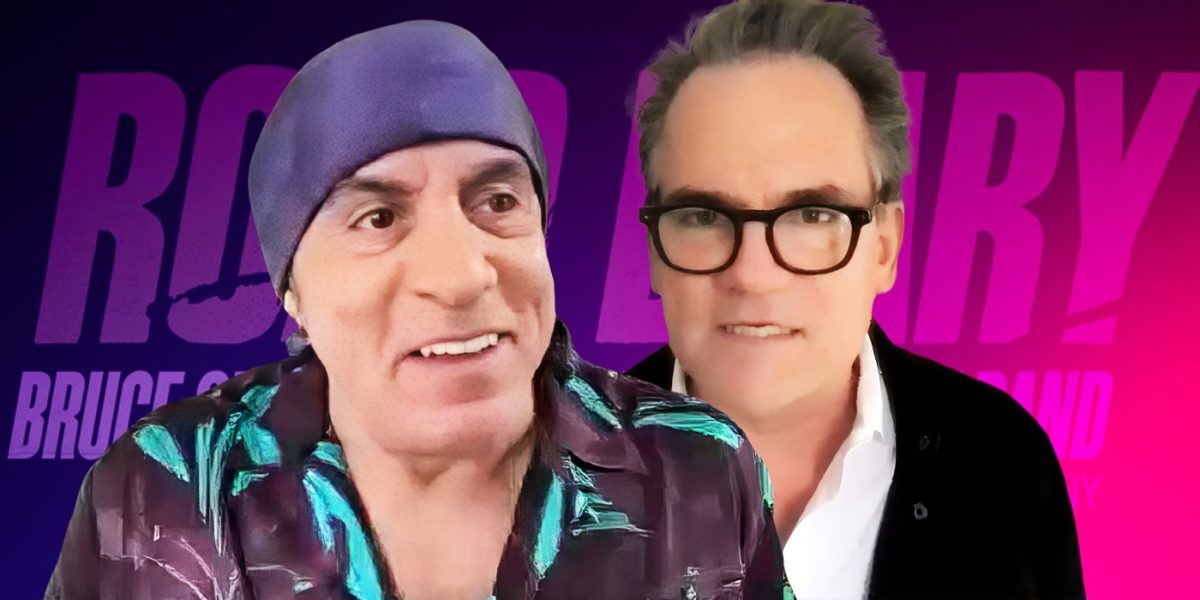
Steven Van Zandt on the New Springsteen Doc and How “Every Tour Could Be the Last” [Exclusive]
Oct 24, 2024
The Big Picture
Hulu’s ‘Road Diary: Bruce Springsteen and the E Street Band’ offers a unique, behind-the-scenes look at the 2023-24 E Street tour.
In this exclusive interview with Collider, E Street sideman Steven Van Zandt and director Thom Zimny talk about how the film tackles both the concert experience and the history of Springsteen’s legendary band.
Van Zandt also chats about the evolution of Springsteen show setlists and names the songs he’d like to see the band tackle live.
In the fall of 2020, Bruce Springsteen released Letter to You, his first new studio album with his legendary backing group, the E Street Band, in more than half a decade. Seeing Bruce live is practically a religious experience for die-hard fans, so expectations for the accompanying tour, the band’s first in three years, were through the roof. However, the COVID pandemic destroyed those plans, and it would be another three years before the full E Street Band could finally return to the road in 2023.
Once they were back on stage, the adoring crowds got a somewhat different experience than they had been used to. Rather than the freewheeling, “anything goes” style setlists the band is known for, the shows instead followed a fairly rigid structure that was inspired a bit by Springsteen’s 2017-18 Broadway residency and told a musical tale of human fellowship, mortality, and the ways in which rock ‘n’ roll can help us power through dark times. Along for the ride was filmmaker Thom Zimny, who serves as Springsteen’s in-house documentarian and who was busy filming the whole thing. That footage has now been poured into a brand-new documentary titled Road Diary: Bruce Springsteen & the E Street Band, which premieres on Hulu this Friday, October 25.
Road Diary offers up a behind-the-scenes view of the tour, starting with the band finally getting back together for rehearsals, so it’s no surprise that Springsteen’s long-time E Street sideman, guitarist and singer Steven Van Zandt, plays a major role. The other E Streeters get plenty of screen time as well, and Zimny also uses the documentary to detail the band’s early days, allowing for original members Clarence Clemons and Danny Federici (who died in 2011 and 2008, respectively) to factor into the tale, as well.
Earlier this month, I had the chance to talk to both Van Zandt and Zimny about Road Diary and all things E Street. In the following interview, we chat a lot about the documentary, of course, but Steven also discusses his role within the band and names what deep-cut Springsteen songs he’d like to play live. Zimny talks about how the filmmaking process works when Bruce Friggin’ Springsteen is your creative partner. And finally, Van Zandt gives us the lowdown on no less than the state of rock ‘n’ roll in America today.
‘Road Diary’ Offers a New E Street Experience
Image via Hulu
COLLIDER: We’re here to talk about Road Diary, the brand new Bruce Springsteen and the E Street Band documentary about your post-COVID tour. I know a lot of what Bruce and the band does gets recorded these days. Thom, you’ve been involved with a lot of other filmed E Street Band projects. What was important to show in this film that maybe fans haven’t gotten to see before?
THOM ZIMNY: As a filmmaker, I wanted to show a side that has not been presented in any of the documentaries, which is the behind-the scenes, fly-on-the-wall moment of a band about to go out on the road again after almost six years not being together. So you have that element. And then there’s the other side of diving deep into the archive and explaining E Street history with the core E Street members of Stevie, Max [Weinberg], Gary [Tallent], and Roy [Bittan]. I wanted that history presented. Then, just bring it up to date with some of the new additions that have been added on to the stage. Explaining that history in that way has not been done. You get some of the beauty of E Street early days and some of the humor, and then digging deep in the vault and finding magical moments of two members — Danny Federici and Clarence Clemons — to bring their power and beauty upfront again to also introduce to an audience.
The other thing is having a sense of what the tour is right now and the structure of this tour — how it held a great story and a narrative in the setlist itself. The power of putting two songs together and coming up with an emotional arc. And then also the simple beauty that I can’t really put into words, which is what it feels like to be with the E Street Band, watching them from the pit. I went to Europe, I went to America, and I tried to capture that audience with the power of raw rock ‘n’ roll. Those were the things that came forward as I started to film. There was this opportunity to go for those themes that have not been hit yet on the other docs. But it was an organic process. There’s no set POV. I’m just trying to keep up with these guys and film.
Steven Van Zandt on the Evolution of an E Street Setlist
Image via Hulu
You’re mentioning setlists, which is actually a big part of this doc. Steven, if you’ll indulge me, I would definitely like to talk setlists for a moment. At the beginning of this film, we see a renewed focus on a defined and somewhat rigid E Street concert setlist, which is maybe influenced a bit by Bruce’s experience with his Broadway show. But then we also see flashbacks to previous tours where you guys are doing the sign requests and the “stump the band” type of thing. So, Steven, I’m curious which version of an E Street concert do you personally prefer — meticulously crafted or a bit more chaotic?
STEVEN VAN ZANDT: [Laughs] Don’t worry. We’re going to bring the chaos either way. That’s all built in. But, honestly, it’s two different things, and, after 40 years of doing it one way, it was fun to do it another way for just one tour. I liked the change of doing the same set every night like a Broadway show because each song had a purpose, which is, more or less, the way I do my own shows with the Disciples of Soul and really the way most bands do it. Only a few bands change songs really, when you think about it. It’s only the jam bands — The Grateful Deads and Phishes and us, you know?
It’s an unusual thing to do what we have done for 40 years. Out of however many songs it is — out of the 28, 30 songs — we’ll change half those songs every night. That’s quite a lot, certainly at least a third. So to do it in a way that was more structured was enjoyable, as far as I’m concerned. Maybe it’s not something you do every tour, obviously. We just did it once, and, already, by the last shows we have just been doing, already it was loosening up to more of a mixture of the new show and the old show. This may never happen again. But it was fun doing it for a while and having each song have a specific purpose and having the theme color all of the songs, even though the set wasn’t done in literally a Broadway way of having a linear storyline. But the themes of mortality and vitality that we balanced it out with were present in all the songs. It colored, most obviously, a song like “Backstreets,” which took on a whole different meaning. But, also, including a song like “Nightshift” — those songs tended to lean on the theme and strengthen the theme.
So, it was just fun to do something different, and it was very, very effective. Many audience members had the most intense experience with that show. People who have been coming for 40 years said that was the most intense emotional experience they’ve ever had. It was just more focused in that direction. And I must mention, Bruce’s writing is extraordinary at this point, and I think, frankly, taken for granted and overlooked. The writing on Letter to You is absolutely extraordinary. And I’m a pretty good songwriter myself, okay? I know it when I see it. [Laughs] It is amazingly personal and a whole different way of writing, a different subject matter. It’s so effective. And I think that also was part of the intensity of the show. I loved it, but I love it both ways.
Image via Hulu
When that setlist does start to evolve — and you even made mention that the setlist has started to evolve this year from what’s covered in the documentary from last year — how does that work? Do you just start rehearsing different things at sound check? Or does Bruce come in with ideas? When songs start moving around and coming in and out in the middle of a tour, what’s the process for that?
VAN ZANDT: Yeah, we just start throwing some other things in, and, if we haven’t done them for a while, we may rehearse it at the sound check once or maybe even backstage. Or not. Sometimes he’ll just throw something in that we just haven’t played in years, and we just kind of jump in. There’s no set pattern to it. It’s just a matter of what Bruce is feeling like that night.
All right, one final setlist question before we move on. Steven, I wanted to ask you if there’s a song or two that you’re always trying to convince Bruce to put back into the setlist, and you just can’t talk him into it.
VAN ZANDT: How much time have you got? [Laughing] There’s a great history of this, starting with every song that got rejected on the albums in the first place. Some of the most amazing songs never made it onto the albums and have not made it into the setlist either. Oh, lord, where do we begin with this? The outtakes through the years, starting with the ones on Tracks — “Loose Ends” and “Restless Nights” and that whole bunch. Then the outtakes on the Darkness [on the Edge of Town] side — “The Little Things (My Baby Does)” and “Gotta Get That Feeling” — that bunch. “Spanish Eyes.” People should have careers with his outtakes! I’m surprised they’re not covered more often, to be honest. But, lately, the one song that I really felt strongly about that I thought we were going to do this past year and half was “Burnin’ Train,” from the new album that we did a fantastic arrangement of in rehearsal. We may have done it once live.
ZIMNY: Once in Barcelona, yeah.
VAN ZANDT: It ended up not being part of the show. That’s the latest one that I’d like to see us doing. But, look, it’s a wonderful problem to have — too many great songs.
‘Road Diary’ Captures Both the Band and the Fans
Thom, there’s a moment in this doc when you’re just focusing on these amazing faces in the crowd, and everybody is wide-eyed. A lot of people are crying, and some people look like they’re just having an epiphany. What’s the process for digging into the footage and finding those specific shots amongst all the faces and all the footage that you must have when you’re putting together something like this?
ZIMNY: The process of figuring out what faces to use in a montage where you’re trying to get something that you can’t explain, which is the magic of E Street, I think that comes from the place of wanting to stay clear of film clichés, meaning certain people pointing at cameras and looking directly in the camera. I wanted honest interaction, and my filmic cues really come from the presence of how the band itself is portraying themselves in the night. It’s a stripped down stage. There are no special effects. There’s a beauty and an energy that reads to me as pure. So when I’m filming in this magical space of the concert, whether it’s the band themselves or the audience, I’m trying to capture that thing that you can’t put into words. And sometimes it might come in with a slow-motion shot or just a shot in a medium close-up where you see someone connect, and you see their eyes have that transformation. To me, that’s the power of music and rock ‘n’ roll. I hunt out those moments. I’ll shoot for two hours, and it’ll only be 10 seconds of one face that gives me that.
But that comes from being around the band, and that comes from being lucky enough to witness — like I did it with Road Diary — the band starting in a small, little black-box theater rehearsing and then, suddenly, in this open field in Europe and the sheer energy shift of that. You want to have that translate in a movie. I was chasing those emotional tones, and I was chasing the emotional thought that music, especially Bruce and the E Street Band, at this time, is really needed in our world after the shutdown and the space that we’re at. So those faces were part of what I was witnessing — that transformation.
Steven, there’s a bit in the doc where Bruce gives you the reins to lead rehearsals for a while without him. Was that nerve-wracking? Or was it more like, “Hey, it’s about time!” What was the thought process when that finally happened?
VAN ZANDT: That’s been our routine forever, really. We made a bit of a joke that he sort of made it official on this tour.
Ah, so it was more just about the title, then!
VAN ZANDT: Yeah, because we had some new people in the band, and they were going to be like, “Why is this guy suggesting something to me? Who the hell is this guy?” [Laughs] So Bruce felt we better make it official just for the new people. But nothing really has changed. Bruce wants to concentrate on the bigger picture. The musical stuff he knows he can trust me with because he knows I know how he thinks, for the most part. We think the same way, pretty much. He’s going to make a change here and there. But, mostly, it’s not something he needs to think about, and, frankly, he has a bigger role to play. The music, of course, has to be right. But his communication with an audience is a very personal one, and I think Thom captures this very well. For the first time, I think it’s revealed that you got to dig really deep down to do what we do, especially as the guy out front.
It seems easy, and we make it look easy. We’ve been doing it a long time. But that doesn’t change the fact that every tour is a new tour. Every record is a new record, and it’s a new experience. Are you ready to go out there and spill your guts for three hours again? Are you ready to go through that again? Because it’s an intense experience for all of us, but mostly for Bruce. That process of literally spilling your guts every night and being naked to the world is a very intense experience that I think requires most of his attention and appropriately so. So, he doesn’t want to have to worry about the details of how he’s doing that. That’s going to be taken care of by me and the rest of the band. The rest of the band are extraordinary in and of themselves. They’re so good. That part of it would require a lot of time from somebody else in some other situation, but it doesn’t really require much time from him. He wants to focus on the bigger picture, and rightfully so.
A Rock Band’s Mortality, and Bringing Springsteen’s Words to the Screen
Image via Hulu
There’s a moment in Road Diary where a fan is being interviewed, and he says that he hopes you guys tour forever, but he’s trying to soak up every last minute just in case. Steven, do you feel that same way? Or do you think Bruce of the band overall sort of feels that same way?
VAN ZANDT: Yes. Every tour could be the last. We’ve lost two of our brothers already, and a little bit of you goes with them. So we make the most of it. Make sure every moment counts. But that’s how we all should live our lives, right? It’s not just rock ‘n’ roll bands. Let’s live in the moment, man. One hundred percent. That’s what life’s all about. So, yeah, we feel the same way.
Thom, I’m curious how Bruce’s narration that appears throughout the documentary came together. Is that something that he writes early in the process? Or does it come later during the assembly of the film when a cut is being put together? How does that work?
ZIMNY: Bruce’s narration is developed in the process of the cutting. There will be times where I will just create something to show him, and I do not have to suggest any details of what the V.O. should say. For example, I can just send him images of the crowd, and he will get a sense of what I’m seeing. Or sometimes it’s photographs and a bit of temp score — a tonal quality — and I’ll have a discussion of time or one of the themes that is represented in his writing or what the band has created as this show. So I will send him visual visual references at times. He will send me some writing that takes it to a whole other level. And then I start all over again and recut the whole thing, and then a score comes in. But I’m sending him a sketch of what I’m hoping it could be.
And then I receive this dream of writing by text and then, the next day, an audio version of it. And then you’re in this wonderful place of how do you represent this idea? With what visual? And you just get out of your own way and start to let the film in the editing room tell you. But, also, I’m standing in the shadow of the band and Bruce and picking up the tonal qualities of the E Street history and also the current show. [With] Road Diary, I stayed close to what I was witnessing and feeling from the music. Also, I’m wearing many hats, because I have the role of director, editor, and also the guy who knows, “This is really amazing. No one’s ever seen this before.” Road Diary gave me a chance to share some of that. Especially with the subtleties of the E Street Band and Stevie and Bruce interacting and working. Some of the subtleties, unless you’re there watching a rehearsal, you couldn’t imagine and you would never see it.
Steven Van Zandt on the Future of Rock ‘n’ Roll in America
Image via Hulu
There’s a bit in this film about how, even though the U.S. audiences are great, things kind of do get taken to the next level when the band goes to Europe. Steven, you’re the expert on this, so I have to ask you: What is the current state of rock ‘n’ roll in America? And what do we need to do to make sure those embers keep on burning?
VAN ZANDT: [Laughs] Oh, man. Look, we’re the luckiest guys of the luckiest generation ever. We grew up in a renaissance that only happens every couple of 100 years, and that set our standards very high. The whole band thing was just a big part of our culture growing up, whether you were a musician or not. The Beatles literally changed our culture overnight, and it wasn’t just for musicians. If you went out as a teenager, you went to the drive-in theater, or you went to see a band. Or you were in a band. That was it. That’s all you did. That’s changed, obviously. The culture has changed. We have a whole range of distractions now for this generation.
Luckily, rock ‘n’ roll is still the biggest thing live. We’ve managed to kind of transcend our own culture at this point, whatever is fashionable, and just carve out our own world. Festivals are kind of keeping things alive, as well as us lucky ones that get a chance to tour individually. But festivals have kind of taken the place of the club scene and even the theater scene and the arena scene, which are mostly gone. The infrastructure no longer exists. So, it’s difficult to say where things are going. I spent the last 25 years trying to recreate an infrastructure to keep things going with my radio network, with my record company, with my publishing companies, with my school curriculum — all of which has to do with keeping rock and soul alive and accessible to future generations so they can experience what we have experienced. You can hear it every day on my radio network.
But it’s just not gonna ever be the biggest part of our culture again because of just so many other distractions. We’ve kind of returned to the cult that we started as, depending on how far you want to go back. You can go back to Little Richard and Chuck Berry and Elvis Presley breaking through. And then the coup d’état that the British Invasion staged in the ’60s when rock ‘n’ roll became the mainstream for 30 years or so. But that was a blip on the radar screen of history. Let’s face it, that’s what it was, and we’re kind of back to being a cult again. Maybe that’s where we belong, you know? We’re an art form born of rebellion and liberation. Maybe that’s where it belongs. It belongs in that underground kind of scene where things are just a little bit on the edge, a little bit experimental, a little bit risky.
Because the corporatization of our world now doesn’t allow for that. The corporatization of all the businesses — music, TV, and movies — is now reducing, reducing, reducing, and worried about the next fiscal quarter for Wall Street. That’s not how things get invented or appreciated or supported, and certainly not how they develop. Because greatness needs to develop. It’s not born. Right now, there’s no room in our culture to develop anything because the corporate mentality of worrying about the next fiscal quarter is all that matters. It’s a real problem. How do we develop things and give them time to develop when there’s not that kind of support from the business world? That’s the challenge, I think, for the future.
Road Diary: Bruce Springsteen and the E Street Band starts streaming Friday on Hulu in the U.S.
Documentary which chronicles the behind-the-scenes preparation for Springsteen’s band 2023-2024 World Tour.Release Date September 8, 2024 Director Thom Zimny Cast Bruce Springsteen , Garry Tallent , Roy Bittan , Max Weinberg , Steven Van Zandt , Nils Lofgren , Patti Scialfa Runtime 99 minutes Producers Bruce Springsteen , Jon Landau , Sean M. Stuart
Watch on Hulu
Publisher: Source link




Eggs – Film Threat
In writer-director-star James Clair’s short drama Eggs, a man struggling to rebuild his life finds his quiet mornings turning into strange conversations with the very eggs he is meant to cook. I mean, they want him to eat them. So…
Mar 11, 2026
Ethan Hawke Elevates A Rugged, Predictable Gold-Run Survivalist Western[Sundance]
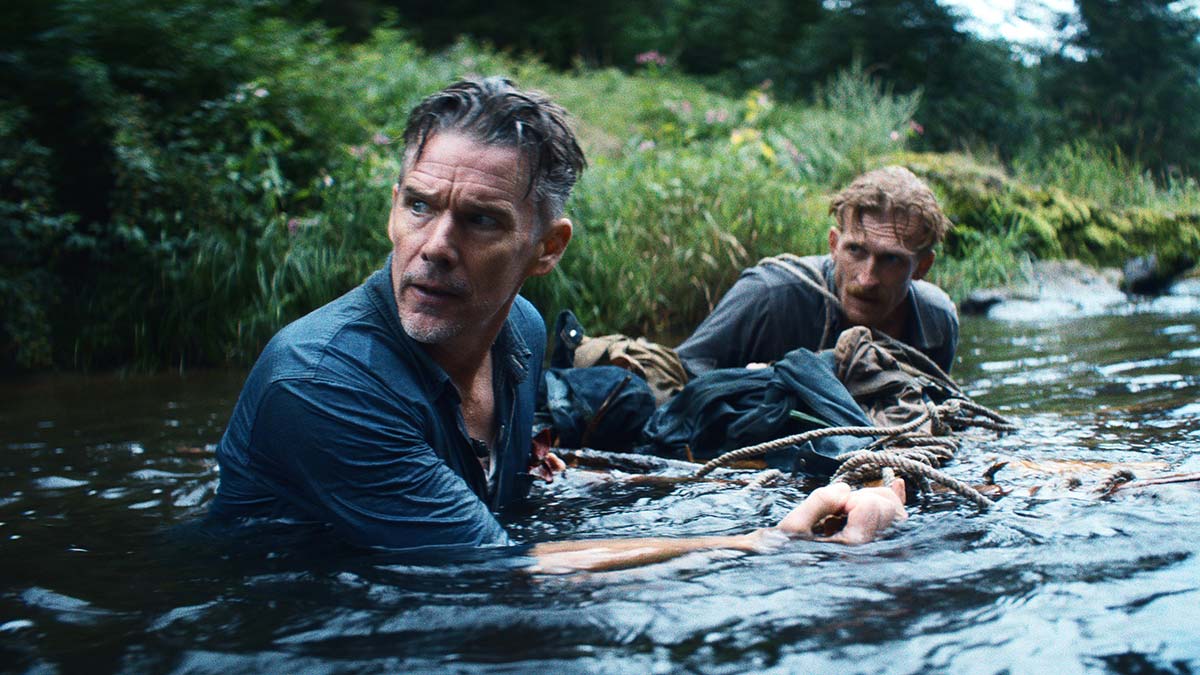
As far as one can tell, Murphy (Ethan Hawke), a father, WWI veteran, and avid car mechanic, has never encountered an insurmountable challenge. Living in Eugene, Oregon, in 1933, four years into the Great Depression, Murphy and his young daughter,…
Mar 11, 2026
The Moment Review | Flickreel
Brat Summer was a cultural phenomenon that I didn’t understand at all. I knew that it was connected to an album that Charli XCX had released. Whenever I asked what Brat is, though, nobody could seem to give a straight…
Mar 9, 2026
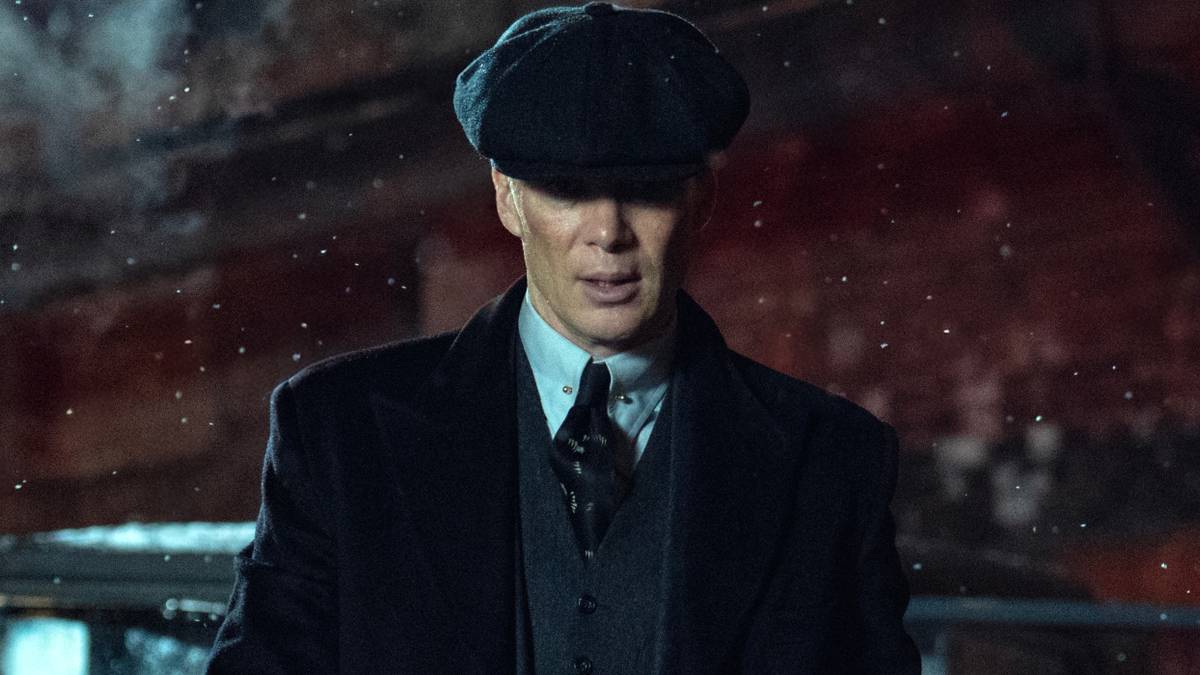
Cillian Murphy’s Netflix Crime Hit Delivers a Brutal, Bleak Finale
It’s been four years since we last saw Cillian Murphy play Tommy Shelby, but seven have passed in the world of Peaky Blinders, with The Immortal Man taking place in 1940, in the middle of World War II. Tommy’s gone…
Mar 9, 2026