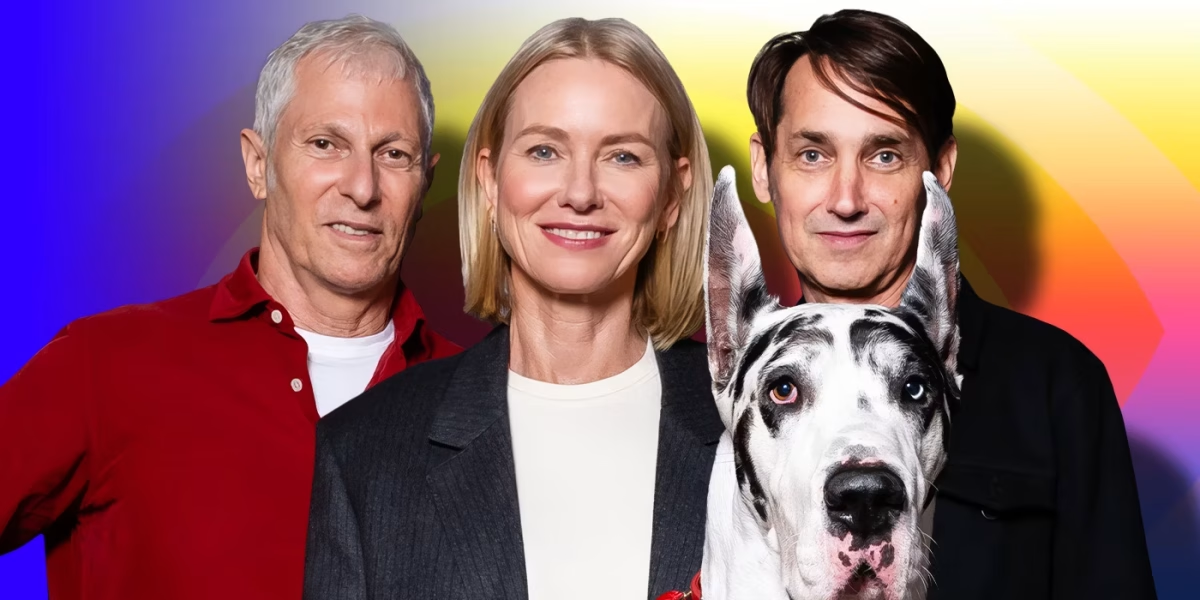
‘The Friend’s Naomi Watts Is Carving Out a New Path in Hollywood
Sep 25, 2024
The Big Picture
Collider’s Perri Nemiroff sits with the cast and co-directors of
The Friend
during TIFF 2024.
Naomi Watts is fascinated with films that explore grief, adored having Bing the dog as a scene partner, and went the extra mile to recruit Bill Murray.
The crew highlights Bing’s magical performance that led to unexpectedly heartwarming and hilarious moments.
While Naomi Watts may have been cast as the lead in The Friend, it is her canine companion, the scene-stealing Bing, that captures all our hearts with his soulful eyes. Watts’ Iris is faced with the grief of losing a dear friend, Walter (Bill Murray), who bequeaths his beloved Great Dane, Apollo (Bing), to her. As she struggles to find a way to live harmoniously with Apollo in her New York apartment, an unlikely yet powerful connection forms between them as they both tackle the loss of Walter.
Co-directors and co-writers Scott McGehee and David Siegel are joined by Watts and Bing at the Toronto International Film Festival where they talk to Collider’s Perri Nemiroff. They delve into how magical it is to have Bing as a scene partner and how his idiosyncrasies create unexpectedly hilarious shots. Watts also reveals how she manages to laboriously contact and hand-deliver a physical script to Murray, who was excited about joining the production of the book-to-film adaptation. Hear about how this animal-centric drama explores grief in the video above, or you can also read the transcript below.
What Is ‘The Friend’ About?
Image by Photagonist at TIFF
PERRI NEMIROFF: I don’t like comparing my interviews, but I have to say yours was one of my most anticipated. I respect you as the star of the movie; but Bing, oh my, what a soulful performance from a dog that I never expected to experience in my life.
NAOMI WATSON: He is one of the most soulful creatures, and he delivered. He will break your heart and melt you unless you are heartless altogether.
It immediately brings me back to the bed and just that stare that I don’t think I’ll ever forget. I’m getting ahead of myself. Clearly, I know what your movie is when we’re at a film festival. A lot of our audience will not know about The Friend just yet. I’ll give this duty to one of you: would you mind giving a brief synopsis of your film?
DAVID SIEGEL: The Friend is a story of a writer and a teacher who lives in a very small rent-controlled department in the West Village in New York City. Her great friend and mentor in life, and a more notable writer than her, unexpectedly dies, and he bequeaths to her his 150-pound harlequin Great Dane. She winds up taking this dog in against her better judgment because she realizes that the dog is grieving the loss of his master as much as she’s grieving the loss of her friend. They slowly get to know each other, get to tolerate each other and then eventually begin to love each other. While at the same time, Iris, the character, is somehow trying to manage keeping the dog there, giving the dog away, all of that.
I’m a dog lover. When the movie started off, I’m sitting there thinking to myself, “Who wouldn’t take this dog in?” But I’m also a New Yorker, so when you start bringing up, like, 500 square feet and rent-control, I understand the pressures there. She makes the right decision, though.
Image by Photagonist at TIFF
This is a beautiful story that is an adaptation. One of my favorite things about an adaptation is you respect the source material, but you also find ways to make it your own. Can you tell me some aspects of the book where you found space for yourselves to make this version of the story your own?
SCOTT MCGEHEE: There’s a lot of space in the book. If you’re familiar with it, it’s a very interior story. But Sigrid, who wrote the book, Sigrid Nunez, she didn’t even give her characters names. It’s far from a movie blueprint; we have a lot of work to do.
SIEGEL: As Scott’s saying, it’s one narrator’s interior monologue in a sense, even though she digresses often in terms of literary experiences and dogs and whatnot. But the throughline was in the book, which is this woman taking in this dog and the relationship that follows.
Because she doesn’t have a name in the novel, I am curious, how did Iris come to you? Was it kind of on the spot, or did you play around with options?
SIEGEL: We played around. It always takes a little bit of time.
WATTS: We changed the last name.
SIEGEL: The character was originally called Iris Dunn. When you make movies, you have to run all names through what’s called ENO in order to make sure that there isn’t a person out there who might object to that. We named her Iris Dixon after our good friend and great screenwriter Leslie Dixon.
That’s beautiful. Someone literally just brought out that same problem earlier, and it’s something I hadn’t really thought about, but it is important with character names.
Naomi Watts Hand-Delivered ‘The Friend’s Script to Bill Murray
“He never wavered on the project.”
Image via Big Creek Productions.
I was reading, and I’m also aware of this, that it’s not super easy to get a script into Bill Murray’s hands, and you, [Naomi], stepped in and did that. I am curious what that’s like from your perspective. Is it easy for another actor to get a script into Bill Murray’s hands?
WATTS: No, not really. We have worked together before, but we’re not always in touch. Though, having gone through this second movie, I think we probably will be in touch more often. I wasn’t sure if his number had changed and certainly people have asked me before, would I pass on a script to him? I’ve done it one other time. When the guys talked to me about who they were thinking of for the character of Walter, and they came up with that name, I instantly just fell in love with that idea and made it my mission to make it happen.
At first, I was a little defensive and said, “Wait, are you just using me to get to Bill Murray? Is that what this is about?” [Laughs] That speaks to my self-esteem. [Laughs] But yes, I loved the idea. I thought I’d take a shot at it. I sent him a text, and he responded right away. But also, the other caveat is that you will not be able to send him an email. He’s not gonna read it digitally. We had to have the script printed and hand-delivered by me. Yours truly. I managed to track down where he was at a certain time. He doesn’t have an agent; he doesn’t have a person to call. It was all, “This may work, and if it does work, it still may not work.” We just don’t know when he’s gonna be there, or you can’t rush the process with him. He loved the story right away. He read the book right away. He didn’t like saying what dates he was available. [Laughs]
SIEGEL: But he never wavered on the project.
WATTS: No, it was always a yes. He just couldn’t say February 18th to 26. Those kinds of things were just annoying details to him.
Appreciate the extra leg work you put into making that happen.
SIEGEL: When he actually showed up to the production office for hair and makeup stuff, we were like, “Okay, he’s in the movie.”
You don’t believe it until someone is physically there, and it’s happening.
SIEGEL: When we arrived on the set on the first day of shooting with him, we said, “Okay, he’s in the movie.”
Naomi Watts is “Endlessly Fascinated” With Exploring Grief in Films
Image by Photagonist at TIFF
Naomi, now I want to come back to you about you signing on yourself. When you first agreed to make this movie, what single part of it were you most looking forward to, but then I also want to know something about the experience that wound up being more creatively fulfilling than you ever could have imagined?
WATTS: Oh, wow. I fell in love with the story of it. This absurdity of having to take on this massive creature in such a limited environment at such a point in her life where she was not able to and the least likely candidate. I loved that story. How do you move through that? How do you navigate grief and inconvenience and anger all at the same time? I’ve definitely addressed grief in many of my films. That does tend to repeat if there is repetition in the choices I make. I think it’s an endlessly fascinating subject. This was also about a really powerful friendship. Romance is explored in great detail, and family stuff, but not friendship so much. As you get older, friendships become extremely meaningful to you. I loved that part of it, as well. What was the second part?
Something that wound up being more creatively fulfilling than you ever could have imagined at the start.
WATTS: This. Bing.
I figured that would be the answer. [Laughs]
WATTS: Because the rule is working with animals and children is actually going to cost you time and money. It often goes badly, and it couldn’t have gone more beautifully.
SIEGEL: He presented challenges to us, but, as you can see, he’s such a lovely creature. He’s so soulful.
MCGEHEE: He always gets up when we talk about him. Yeah, we’re talking about you, man.
He knows. He’s taking the compliment right now. I see the tail wagging.
‘The Friend’s Bing Is “the Cary Grant of Dogs”
Image by Photagonist at TIFF
SIEGEL: We searched for the dog that was gonna play Apollo with our trainer, Bill Berloni. When we met Bing and immediately fell in love with him, his owner and also trainer Bev Klingensmith, that became the absolutely invaluable aspect of being able to realize the movie. Bing loves Bev so much that we could move Bev around in order to attract Bing’s attention. Bev would become Bing’s eyeline. It was truly invaluable in terms of being able to capture his performance.
Do you each remember, for all of you in your respective roles in the production, the first time you saw something that signaled to you that, “Bing is my perfect scene partner and also the perfect star for this film?”
MCGEHEE: We went to Iowa to meet Bing.
SIEGEL: And we saw that position. [Laughs]
MCGEHEE: It was just like this dog is the most charismatic. He’s like the Cary Grant of dogs. There was just no looking at more dogs after we met him. It was just super clear. We just stopped looking and made the movie when he was ready.
Such a beautiful thing. How about for you as a scene partner?
WATTS: I was given this program of how the training was going to go, and I was like, “They don’t understand.” I know animals. I love animals. I warm to them very quickly. I’m not squeamish. Slobber all over me. Do whatever you need. I thought this was overly ambitious, and I would bond with him right away, but it was very carefully thought out by our brilliant Bill Berloni. We had to start with two meetings a day, each for 20 minutes, because you don’t want to overwhelm either of us. You have to build that trust. We just rolled around in my basement, and then each day slowly added more and more tricks to the training, and it was an instant bond.
This is a really weird question, and the answer might be no, but is there anything about a human scene partner and a dog scene partner that you find to be similar?
SIEGEL: That’s a unique question! [Laughs]
WATTS: You have to connect. In all seriousness. There are a lot of good jokes available there, but I’m going to say quite earnestly that you have to feel it, and you have to respond and be open to a dance of some kind. Things were there on the page, and most of the time, he would execute them exactly as we planned for, which is kind of insane. And then, other times, it took longer to get to them, but we’d get something else even more magical. That comes from really trying to move away from cameramen and lighting people and all the other fuss that needs to go on in order to present a beautiful film so that you two creatures can connect. That means eye contact. It means warmth. It means soul.
Bing the Dog Makes Scenes in ‘The Friend’ More Magical
Image by Photagonist at TIFF
Because you just brought up the need to roll with things, and sometimes you find that unexpected magic by veering off course, can you name a time on set when you had to pivot because something wasn’t going precisely to plan, but you found something better in the process?
WATTS: There were so many of those.
SIEGEL: There’s a moment when Iris think she’s going to be leaving the dog with Walter’s second wife, Tuesday, played by Constance Wu, and that doesn’t work out, so she has to rush to a meeting with her publisher with the dog. She gets to the building and there is only a revolving door, and she tries to get the dog into the revolving door, but she can’t do it. The security guard rushes over and starts kind of screaming at her about no dogs being allowed in the building. It had to be done very carefully because we didn’t want Bing to get hurt in the revolving door. But at a certain point, Bing just sat down in the revolving door.
WATTS: That’s an example of an add-on to the question before — I sat down, too.
SIEGEL: And it’s hilarious.
WATTS: Because I was reacting to him. That’s two partners in a scene, just like two actors.
Naomi, you brought this up earlier, and I know everyone’s talking about this, how grief follows through your filmography in a really strong way. I think about the movie Penguin Bloom a lot and the fact that you are leaning into animal movies now hardcore because I adore this movie, and I love that movie so, so much. Is there anything about where you’re at in your career and what you’re interested in that is drawing you to animal-centric stories?
WATTS: I don’t know, maybe I’m getting softer. But it feels timely. There are some rough things going on in the world, and there’s something about this that feels like the balm we need. It reminds you that friendships are important. Love is important. It’s just where I’m at in my age. Softer. I’ve done a lot of dark.
Whenever I feel like doom and gloom, or I’m bummed out by the reality of the world, all I have to do is look at one animal in my life, and it’s like all of that vanishes, even if it’s for the briefest of moments.
‘The Friend’s Crew Share the Important Animals in Their Lives
Image by Photagonist at TIFF
Speaking of that, clearly, I’m a big animal lover and the beating heart in this movie is just absolutely through the roof. I want to know a specific animal in your life who has made a monumental impression, an animal who has maybe made you feel whole in a way that you didn’t expect.
SIEGEL: With me, it’s a very easy answer because I took in a rescue dog maybe 20 years ago now. Her name was Tiger. She was about a year old. She was a very striped, brindled cattle dog mix. The dog had just walked off the street into a person’s yard and I saw the dog at a video store in Los Angeles when I was visiting, and I wound up adopting. I had no interest at that point in adopting a dog, but Tiger turned out to be — I always called her perfect because she was a perfect dog. She loved all people; she loved all humans. She was super playful. Scott knew her super well. She just opened you up to the world in a very particular way. So, Tiger.
Beautiful example. Thank you for sharing that.
MCGEHEE: I had a childhood dog called Pal the whole time I was growing up until I went away to college in New York. I remember Pal left us the night before I came home on a Christmas break, and I’ve always missed Pal. I’ve got a picture of Pal in my office.
WATTS: I’ve got a beautiful dog now called Izzy that I got at the beginning of COVID. But just before COVID started, I lost Bob, who I had for 20 years. He’s a Yorkshire terrier. He made a massive impact on my life.
Image by Photagonist at TIFF
Animals are clearly very important to me. I’ve got my Dewey with me for the rest of my life. He completed me. He made me whole, and he sent me out into the world a cat lover for the first time ever. I appreciate him. I also appreciate all of you for taking the time to share some of your experience with us, but especially Bing. Congratulations on The Friend. I can’t wait for everybody out there to experience it.
Special thanks to this year’s partners of the Cinema Center x Collider Studio at TIFF 2024 including presenting Sponsor Range Rover Sport as well as supporting sponsors Peoples Group financial services, poppi soda, Don Julio Tequila, Legend Water and our venue host partner Marbl Toronto. And also Roxstar Entertainment, our event producing partner and Photagonist Canada for the photo and video services.
Publisher: Source link




Eggs – Film Threat
In writer-director-star James Clair’s short drama Eggs, a man struggling to rebuild his life finds his quiet mornings turning into strange conversations with the very eggs he is meant to cook. I mean, they want him to eat them. So…
Mar 11, 2026
Ethan Hawke Elevates A Rugged, Predictable Gold-Run Survivalist Western[Sundance]
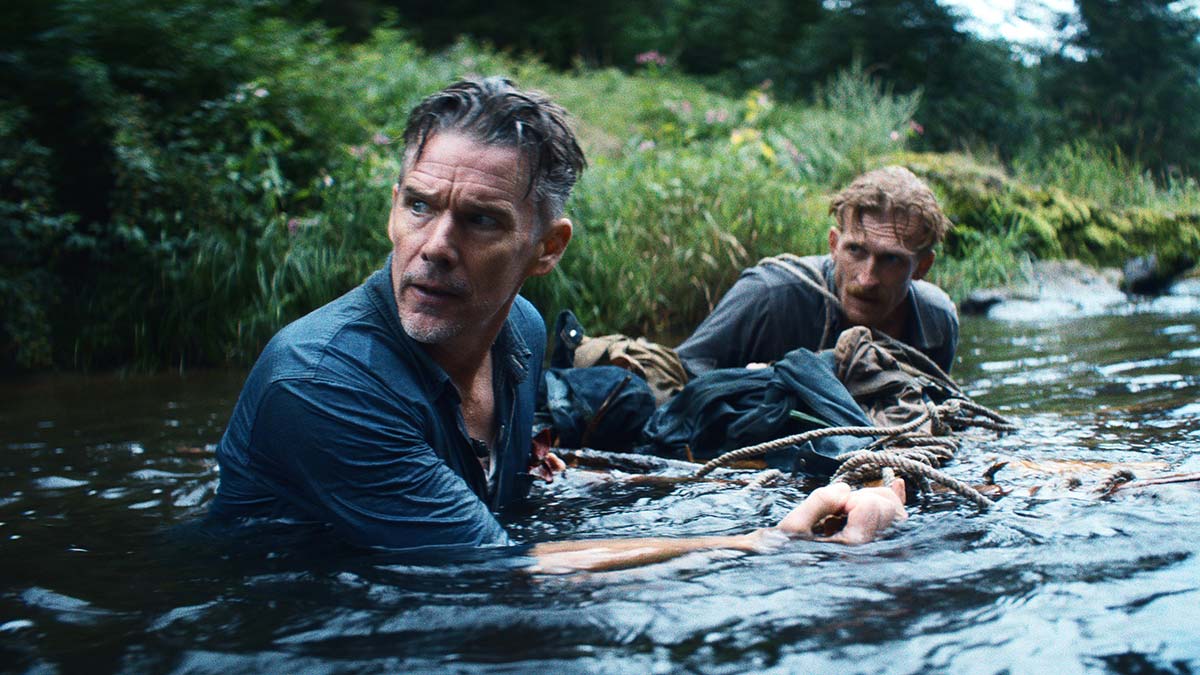
As far as one can tell, Murphy (Ethan Hawke), a father, WWI veteran, and avid car mechanic, has never encountered an insurmountable challenge. Living in Eugene, Oregon, in 1933, four years into the Great Depression, Murphy and his young daughter,…
Mar 11, 2026
The Moment Review | Flickreel
Brat Summer was a cultural phenomenon that I didn’t understand at all. I knew that it was connected to an album that Charli XCX had released. Whenever I asked what Brat is, though, nobody could seem to give a straight…
Mar 9, 2026
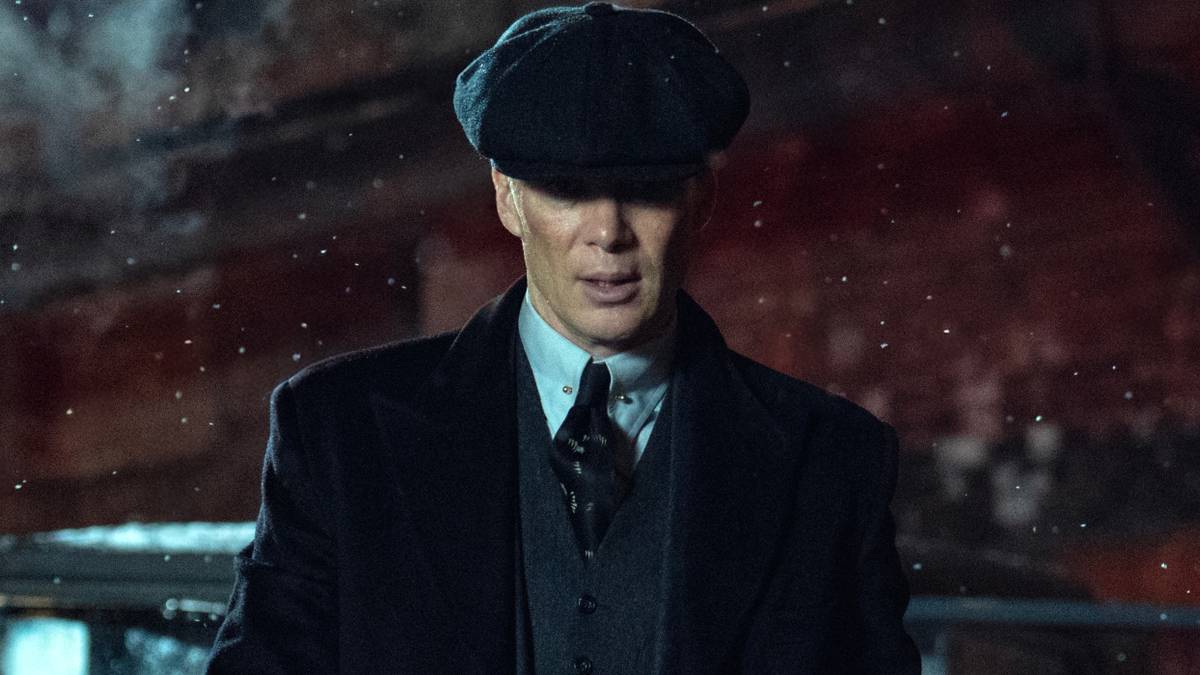
Cillian Murphy’s Netflix Crime Hit Delivers a Brutal, Bleak Finale
It’s been four years since we last saw Cillian Murphy play Tommy Shelby, but seven have passed in the world of Peaky Blinders, with The Immortal Man taking place in 1940, in the middle of World War II. Tommy’s gone…
Mar 9, 2026