‘The Penguin’s Showrunner on What Makes Oz and Sofia So Similar
Oct 6, 2024
[Editor’s note: The following contains some spoilers for The Penguin.]
The Big Picture
‘The Penguin’ series on HBO follows Oz Cobb’s rise in Gotham’s criminal underworld, post-‘The Batman’.
Showrunner Lauren LeFranc focused on Oz’s psychology and boundary-breaking nature for character development.
The series bridges the gap between the first and second ‘The Batman’ films and offers a fresh perspective on Gotham’s allure.
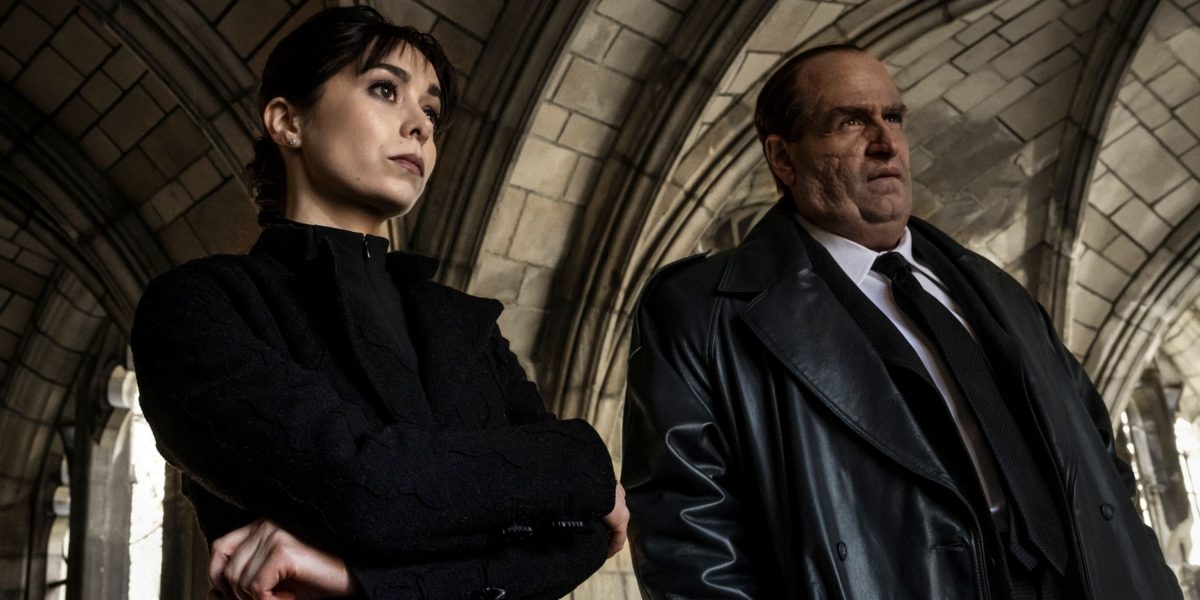
From executive producer Matt Reeves, the eight-episode DC Studios/HBO series The Penguin, which takes place after the events of The Batman and prior to the upcoming sequel, places Oz Cobb (Colin Farrell) in the center of Gotham’s criminal underworld. At the same time, Sofia Falcone (Cristin Milioti), mob boss Carmine Falcone’s daughter, is free from Arkham Asylum and wondering what comes next for her in a boys’ club of organized crime that’s not welcoming her with open arms. Unsure of where things stand between her and Oz or whether they can work together, she’ll find out soon enough, as she vies for control of her late father’s empire.
Collider recently got the opportunity to chat with showrunner Lauren LeFranc and executive producer Craig Zobel, who directed the first three episodes, about what made them each want to have a hand in telling this story. They talked about being the bridge between the first and second Batman films, Oz’s rise to power, how he doesn’t see boundaries the way other people do, whether Zobel had ever considered directing the entire season, what Sofia brings out in Oz, the unsettling dynamic between Sofia and Dr. Julian Rush (Theo Rossi), and the allure of Gotham as a setting.
‘The Penguin’ Allows for a Portrait of Oz That Will Charm and Disgust
Image via HBO
Collider: When you were figuring out what would make this character someone to watch for eight episodes, how did you decide you wanted to make this origin of a monster?
LAUREN LeFRANC: That was my starting place. When I start writing anything, and certainly for this, it involves me asking myself a lot of questions about what I’m trying to do with the character, but also who this person is, most importantly. To me, when I was presented with the idea that this could be a rise to power story over the course of eight episodes, I wanted to make that interesting. I wanted to know what would make that different from other stories that we may have seen or things that have come before. To me, that all leads with the psychology of a character and what makes them tick and digging deeper. That’s the benefit of television and long-form storytelling. You just have the time you can spend with your characters in this way, where you really can feel like you know them. So, it was just starting from that place. I knew Oz’s trajectory from the beginning, so that allowed me to pepper things in the way I saw fit, with the hope that the audience would better understand him too and be charmed by him in one moment and disgusted by him in another moment. That was the goal because I think that’s the type of man Oz is.
When you have a character like this, where you aren’t really sure where you can take him or how far you can push him until you take him there and see if it works, what most surprised you about that journey about where you could take him that you wouldn’t have necessarily expected going into this?
LeFRANC: That’s a good question. What makes him so interesting to write is that very thing. He really pushes every boundary, and he doesn’t really see boundaries in the way that other people do. He’s a rule breaker, and he firmly believes in sort of jumping the line because the world is unfair, and he’s right, in a lot of ways. I think that’s what, perhaps, was most surprising to me, in some regard, feeling how honest Oz was and how much I connected to a lot of what he said, and yet the choices he makes and how violent he is, feels like the wrong solution to those feelings. I thought that was really interesting and compelling, and really problematic, but also speaks to our larger world and a lot of the people who are in power in our world today.
Was there an ongoing conversation about having this fit in between The Batman movie and the sequel to that, and what you could do with it and the choices you could make? Did you feel like you had a pretty good sense of freedom to find that in between?
LeFRANC: I did have a lot of freedom, which I’m really grateful for. That was part of what made it so invigorating, as a writer, honestly. We weren’t adapting a literal comic book. I was afforded the opportunity that Matt [Reeves] had in his film, where he honored the comics and paid homage to them, but wasn’t literally taking any specific story. He just took bits and pieces, here and there. Obviously, I knew that we were the bridge between the first film and the second film, and I knew where Oz needed to end up, in certain terms. But ultimately, once I engaged in this feeling like an intimate show, where we’re really just honing in on our characters and spending time trying to understand them, nothing that we did on the show, in any way, interferes necessarily with the film. It’s meant to just elevate what comes next and have you deeply understand this man who enters the second film. That is what makes it so inherently unique, in part. We really get to understand this man who’s an antagonist to Batman. We’ve spent eight hours with Oz now, which is so much more time than we’ve even gotten to spend with Batman.
Craig, how did you end up directing the first three episodes of this series? You’ve directed one-off episodes of The Leftovers and Westworld, and you did every episode of Mare of Easttown, so how did you end up directing the first three of The Penguin?
CRAIG ZOBEL: In this scenario, it felt like the first three episodes of this story were the first act of the story. Maybe (showrunner) Lauren [LeFranc] would disagree. The first episode is really in the point of view of Oz. It’s about the Penguin and is in the point of view of the Penguin. We get to see the way this guy makes decisions, and we get to be inside his paranoia of, “Oops, I just shot the head of a crime family.” That was fun and cool. And then, with the second episode, even though we’ve already met Cristin Milioti’s character, that is really where we start to learn about Sofia and start to see the point of view of Sofia. That gets flushed out more in episode four, but that’s Sofia’s episode. And then, with the third episode, there’s this other character who has been present from the very beginning, but Victor, Rhenzy Feliz’s character, is front and center, all of a sudden, and we’re thinking about the world from the point of view of this kid who is in this catastrophe, and then moments later, falls in with this crazy, mid-level mobster. It was fun to get to be in all three of those perspectives and try to set up the show. Also, I think the third episode is where you start, plot wise, to be like, “Oh, okay, maybe Oz and Sofia are gonna work together and build this criminal empire.” That sets up the show, and then you can go from there.
Did you ever think about directing the entire season?
ZOBEL: I thought about it. I have, and I certainly would do that again. But for this one, I had just come off of two series in a row where I had directed all the episodes, so it was nice to only direct three.
Considering how popular these DC and Marvel comic book worlds are now, had you thought about, considered, or pursued directing in any of those worlds before, or was it just specifically this that interested you?
ZOBEL: That’s a good question. I’ve always had my ears open, in case there was an opportunity in that scenario, but I wasn’t really looking for anything specific. I felt like it had to make sense. It had to be something that I felt like I could do well. You have to do these things for a long time, so you have to feel confident in it. I would certainly do more franchise things in the world, but I wasn’t specifically seeking it out. I really loved The Batman. I thought it was great. I loved the way that [Matt Reeves] made that movie. I liked the tone of it. It was the type of superhero movie that I needed at the time, so I was excited to get to carry it on.
‘The Penguin’ Shows the Similarities Between Oz and Sofia
Image via HBO
I love that you’ve given Oz a female adversary. That is such a fantastic element to the show. What did you want that character to embody, knowing that Sofia and Oz would constantly be up against each other? What did you want her to bring out in him?
LeFRANC: I wanted them each to bring out something in the other. How I view Sofia and Oz, they’re very similar in a lot of ways. They’re both very smart. They’ve been disrespected in various forms. They have a rich history with each other, and a complicated one. I just thought it was interesting to bring in another person who would have moments where it felt like these two could actually work together quite effectively, if they could get over the beef that they have with each other. And yet, it’s so at the core of what their relationship and that dynamic is. Sofia comes from a wealthy family while Oz comes from a poor family and a poor part of Gotham. Sofia was sent to Arkham State Hospital, which puts her in a very different place, emotionally and physically, than Oz last remembered her. All those little details and all those little elements just felt very rich to me, as I started to unpack those.
There’s something so interesting about the different layers of the different relationships in this. The character dynamics are so fascinating to watch, and we learn about different sides of Oz from each one of them. What did you find yourself most drawn to, with those relationships?
ZOBEL: Yeah, that was the trick. All the relationships have to reflect back on the Penguin because the name of the show is The Penguin. So, how do you use all these different personalities to reflect back on who he is, as a person. Colin [Farrell], Matt and Lauren, but mostly Colin, has found such a really cool guy. We talked a lot about why a person like this would be a criminal. What’s dangerous about a person like this? We kept coming back to how dangerous an insecure man could be. Male insecurity, when unchecked and let to fester in a certain way, can really become a dangerous thing. And so, we were constantly looking for times when Oz could become a little bit vulnerable with someone, and then that meant he had to shut everything down with that person because he had gone that direction. It was a fun thing to play around with, in that way.
That makes Sofia interesting because she’s the underestimated female who is unhinged a bit, but really enjoys and embraces being unhinged.
ZOBEL: It’s like, “If you guys keep gaslighting me, then I’m just gonna be the thing that you think I am.” But also, she doesn’t really like to be wearing that mantle either. She’s so fun in the show. There are just so many layers to that. It’s not a superhero show at all, really, but we get close sometimes with her costume design. In my episode, she’s still pretty conservative, but over the course of the season, she grows into herself and lets her freak flag fly more. She has an awesome style. I can’t wait to see the cosplay.
I also found the relationship between Sofia and Theo Rossi’s character so interesting. There’s something so kind of unsettling and disturbing about the two of them. How would you describe that dynamic? What did you want from that dynamic?
LeFRANC: I did want it to be a little disturbing and weird. They have a very strange, unique dynamic that is hard to pinpoint, and that was interesting to me. I didn’t want to give Sofia a romantic relationship, so what was fascinating to me is the fact that, in every gangster film that I’ve seen, for the most part, the women are secondary, or they are more beta to the man. Sofia gets to be the alpha in this relationship, and Dr. Rush is willingly the beta. To me, that was just more interesting and fun and different from what I’ve seen before. And, as you said, I think it works in a disturbing way, which is really sometimes the goal in our show.
Gotham Represents a Darker, Seedier Side of America
Since the setting really is as famous as some of the characters that inhabit it, what do you feel is the biggest allure of the world of Gotham? It’s been in so many different movies and TV shows, and every time, it feels like we see some different angle of the city that could be around another corner or down another street somewhere.
LeFRANC: I do think that’s what is exciting. I can say that I’ve connected to Gotham because it feels like an American city, but it doesn’t feel like one specific American city. It’s also a seedier, darker side of America, in a lot of ways. It seems to represent that. The truth is, if you look at the cities that we live in, there’s always those sides. And yet, at the same time, I do feel like because we’ve gotten to spend eight hours here, we’re able to show you sides of Gotham that aren’t just that. That was really important to me. In the comics, there’s Crime Alley. That’s literally the name of an alley. In our world, we’re more grounded. I think it was important to show that there are warm neighborhoods with really good, hard-working blue-collar people. With the flood, some of them are more negatively impacted and that is really, literally, what is happening in our own world right now. That’s the benefit of getting to have more time to really embrace Gotham as another character and show all sides of that character.
ZOBEL: I think people like Gotham because you get to peg everything that you think is wrong about a big city on it. You get to blame it. It’s the eternally corrupt big city that has so many problems that it needs a Batman. In general, maybe that’s the allure. For this project, in particular, the allure was to try to talk about class and to show class disparity, which you don’t always really see in a lot of Batman stories. You’re always from the point of view of Bruce Wayne, who’s the richest guy in the world, so it’s hard to talk about that in the way that we were able to talk about it.
The Penguin is available to stream on Max. Check out the trailer:
Watch on Max
Publisher: Source link





Eggs – Film Threat
In writer-director-star James Clair’s short drama Eggs, a man struggling to rebuild his life finds his quiet mornings turning into strange conversations with the very eggs he is meant to cook. I mean, they want him to eat them. So…
Mar 11, 2026
Ethan Hawke Elevates A Rugged, Predictable Gold-Run Survivalist Western[Sundance]
As far as one can tell, Murphy (Ethan Hawke), a father, WWI veteran, and avid car mechanic, has never encountered an insurmountable challenge. Living in Eugene, Oregon, in 1933, four years into the Great Depression, Murphy and his young daughter,…
Mar 11, 2026
The Moment Review | Flickreel
Brat Summer was a cultural phenomenon that I didn’t understand at all. I knew that it was connected to an album that Charli XCX had released. Whenever I asked what Brat is, though, nobody could seem to give a straight…
Mar 9, 2026
Cillian Murphy’s Netflix Crime Hit Delivers a Brutal, Bleak Finale
It’s been four years since we last saw Cillian Murphy play Tommy Shelby, but seven have passed in the world of Peaky Blinders, with The Immortal Man taking place in 1940, in the middle of World War II. Tommy’s gone…
Mar 9, 2026