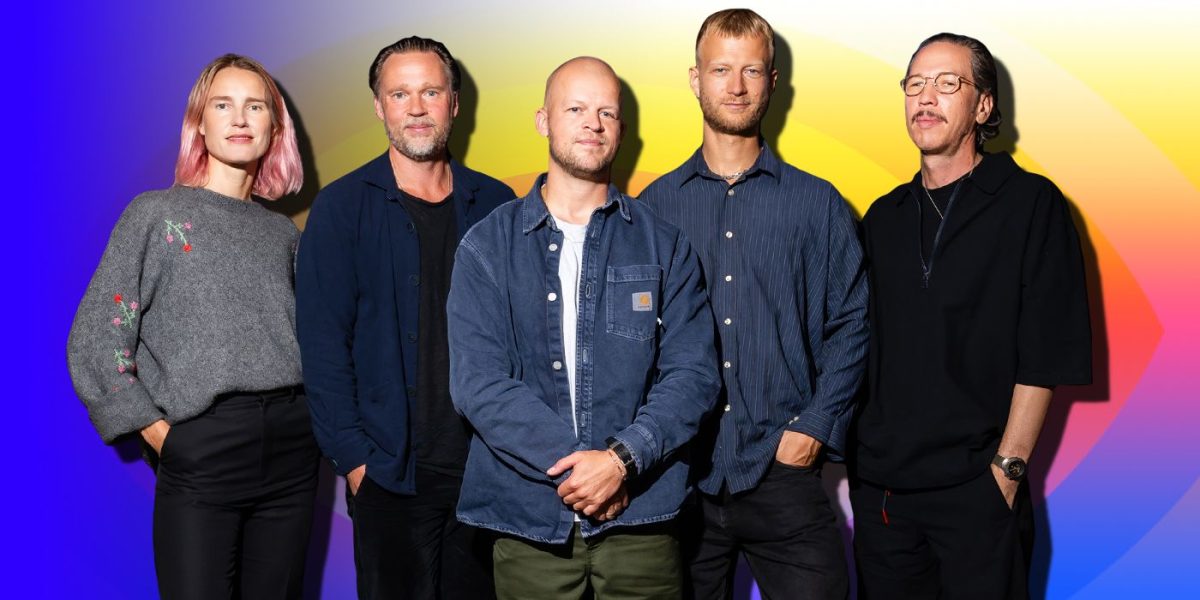
‘The Quiet Ones’ Director & Cast Break Down Making a Movie Based on Denmark’s Most Infamous Bank Heist
Sep 17, 2024
The Big Picture
Collider’s Steve Weintraub discusses
The Quiet Ones
with the director and cast at TIFF 2024.
The Quiet Ones
is a heist film based on a true story reflecting the chaos of the all-time largest Danish heist in 2008.
Director Frederik Louis Hviid and co-stars Amanda Collin, Christopher Wagelin, Reda Kateb, and Gustav Dyekjær Giese discuss how limitations inspired creativity, how cinematography enhanced the realism and time-sensitive essence of the heist, and working with the real people to bring the story to screen.
A plan of attack. A determined team in pursuit of something great. Chaos, quick thinking, scheduling, and money constraints. There’s a surprising amount of crossover between pulling off a heist and producing a feature film. These lessons were learned proudly by the team behind The Quiet Ones, who delighted in the “musicality of violence” filming a movie inspired by Denmark’s most infamous bank heist.
Inspired by true events, The Quiet Ones is a lean, meticulous thriller about the all-time largest — and most spectacular — heist on Danish soil. Set in 2008, the film depicts a team of ambitious, uncompromising criminals as they train and prepare for the ultimate heist, led by boxer Kaspar (played by Gustav Dyekjær Giese). Action-packed and character-driven, The Quiet Ones places the audience in the middle of the chaos, daring them to witness criminal history.
The cast of The Quiet Ones, Amanda Collin, Christopher Wagelin, Reda Kateb, and Giese, along with director Frederik Louis Hviid visited the Collider studio at the Cinema Center at MARBL to talk with Steve Weintraub after their world premiere at the Toronto International Film Festival. During their interview, they talk about their excitement of making a genre film rarely seen in their home country of Denmark, how budget and scheduling limitations actually enhanced their enjoyment of filming, and working with the real people for the movie. They also discuss their regimens and the realities of appearing muscular on screen, and just how many times everyone on the team has seen Heat.
You can watch the full interview at TIFF in the video above or read the conversation transcript below.
Scandinavia Doesn’t Usually Make Movies Like ‘The Quiet Ones’
“A Danish heist film based on a true story.”
Image via TIFF
COLLIDER: The film turned out fantastic. This is my kind of genre, but everyone watching will not have seen it yet. How have you been describing the film to friends and family?
FREDERIK LOUIS HVIID: We’ve been describing it as a Danish heist film based on a true story. It’s about this group of international criminals who meet up in Copenhagen at a very naive time in Denmark where they spent the better part of two years planning this very, very elaborate heist that they were successful in carrying out back in 2008. It’s about the people who form together and pull this heist off, and also a little bit about those who came in opposition to them.
For each of you, talk a little bit about who you play in the film and what drew you to this script and this project.
REDA KATEB: Something that I really loved in the script and in the point of view and the project of Frederik is that for this group of people, money is not the point. The point is a challenge to do something different. And the way we treated these characters, it’s very strong in the script, and in the way it’s telling the story. It’s not one more movie about bank robbing, but it really gives space to the characters themselves.
GUSTAV DYEKJÆR GIESE: This genre is kind of rare in Denmark, I would say, so to read a script like that, I just felt instantly that I wanted to do it both because of how it was written, the feel of the script, and the genre, but also the character of Kasper was interesting to me. I mean, he’s a guy who is a person like anyone with dreams and hopes, and he wants to be somebody and feel like somebody in this life. He has maybe some other opportunities that I have had myself, but he tries to make it and see where it gets him.
It’s interesting because you have to talk without giving away everything.
HVIID: Don’t give it away! [Laughs]
AMANDA COLLIN: Also, naturally, I really wanted to work with Frederik, and at that time, Gustav was also attached, which was really interesting to me. Then I think any chance to be in a heist movie. As Gustav says, it’s not a genre that we see so often in Denmark, and Frederik has a really good musicality for violence.
HVIID: I’ll take the compliment. [Laughs]
COLLIN: And Maria’s part, if you wanna take the conversation a little bit further than just heist and robbery and money, is an interesting character in terms of elevating the movie to talk about what people do in order to be somebody and in order to justify their existence in life. So, I’m really happy that I was allowed.
CHRISTOPHER WAGELIN: For me, when I read the script, I was like, “Are you allowed to do this kind of movie in Scandinavia?” We’re not doing these types of movies, so it felt almost unreal to do a real heist movie, a classic heist movie. To be a part of that felt once-in-a-lifetime because you don’t really do them back home. Also, I heard so much about Frederik; I have friends who work with him. I’m Swedish, so I just heard about this Danish director from my friends in Denmark, like, “You have to take the opportunity to work with him.” And it was wonderful. My character has a line in the movie when he says, “I tried to get out from this business, to quit, but I always come back,” and I think that says something because it’s so much about the identity and the adrenaline rush even more than the money.
‘The Quiet Ones’ Cinematography Reflects the Pressure and Chaos of a Heist
One of the things that I want to compliment you on is that I watch a lot of movies and this is very cinematic. I wanna talk specifically about the beginning. There’s a robbery at the beginning, and it’s a oner. It’s a very ambitious shot in terms of filmmaking. Talk a little bit about why you wanted to do that all as a oner and pulling that off because there’s so much going on.
HVIID: There’s so much going on, and it was a bit of a headache to pull off because, as you said, there’s a lot going on, and there’s a lot of coordination that needed to be done. It’s shot in a way where we are very limited in terms of what we can see and what we can’t see, so we had to be very creative in terms of where we can put the camera and get all the reflections. We rehearsed a lot. Danish shooting hours are very short compared to US shooting days. So, I think we had a couple of hours left, and I don’t think we’d started filming yet because we rehearsed and rehearsed and rehearsed. The thing is, Danish films don’t have the US budget. There’s a lot of shooting going on in the first scene, I can say, and there’s a lot of shooting going on, especially because they shoot on a windscreen at some point, and I think we only had four of those, so we needed to make sure that we got that oner in one of those four tries. There was a lot of rehearsing that went on, but I really think it paid off.
For this type of film, the reason why we did it isn’t just to be flashy. It’s because time is very much an essence in heist films. You’re on time, you’re late — it’s all about getting shit done in time. I think whenever you do a cut, you feel like something’s been taken out of time, if that makes sense. So I really wanted to put the audience in that scene feeling like it’s real and it’s happening now, and you can’t look away. I think that was the reason.
I don’t think the average moviegoer realizes they’re in the middle of an oner, but they feel the pressure building and don’t know why. Cinephiles and people who understand moviemaking understand what the director is pulling off and how challenging it is. I can’t believe you only had four shields.
HVIID: [Laughs] I can’t believe it either.
Another thing I want to compliment you on is how you have the camera reflecting the chaos because your camera work and the rest of the movie is coordinated and it’s very specific, but in the chaos of the robbery, the camera is shaking. You’re frantic. You’re freaking out because of the chaos. Talk a little bit about how you decided how you wanted the camera to move through the movie and why specifically it was chaotic during the robbery.
HVIID: This film is based on a true story, and while we were developing the script, we had a very close collaboration with the real main organizer of the robbery after his release. I mean, obviously he’s the only one who can actually share how it felt to stand inside of a money vault after you just rammed the caterpillar through the concrete wall. He knows what it smells like, he knows what it looks like, he knows what it sounds like. He was like, “Our hearts were beating furiously, and we only knew that we had a couple of minutes because of the circumstances.” I don’t wanna spoil anything, but because of the circumstances, they were already late. He said, “You know what? Money is heavy.” I mean, just picking up a bag of money was like 50 kilos. They knew that they had to run several times, they knew that they were very much in a hurry, and trying to get that franticness in that scene was very important for us.
It actually feels like everything leading up to that goes according to plan sometimes, but this is something different. He said, a very, very interesting thing while we were preparing it. He said, “You can plan everything up to the robbery, and you can plan everything after the robbery, but while you’re in there, nobody knows what’s going to happen.” And I think that was a very interesting way of putting it.
COLLIN: It’s like a movie.
Gustav Giese Worked Out For an Entire Year For “A Few” Days of Filming
“Am I looking as pumped as I possibly can?”
Image by Photagonist at TIFF
For the four of you, you see the shooting schedule in front of you, you know what you’re about to do — what day do you have circled in terms of, “I cannot wait to film this,” and what day is circled in terms of if you have this, “How the F are we gonna film this?”
HVIID: That was a lot of days.
GIESE: Yeah, a lot of the days. The whole car chase, the way we did it was very practical and old-school, I guess. I was thinking, “How is this gonna turn out? I don’t know.” But the whole robbery I was excited about doing. It was very tough, a physical test during long nights and stuff.
HVIID: Three weeks of nights.
GIESE: My boxing scenes, I was looking forward to that, as well. So there was a lot in this film. And all the scenes with the gangsters, all the power struggle, and the underlining intimidating one another. When I read the scenes, I was like, “I’m looking forward to playing that scene. I’m looking forward to playing that scene.” So it’s been one of those experiences for me that I just felt like much of the film was just like that.
COLLIN: Gustav and I worked out a lot. Gustav worked out, like, 100 times more than I did, but definitely scenes you know are happening, the scenes where you have to flash the muscles that you’ve been working on.
GIESE: And I felt a little anxious, as well, about those scenes because I’ve worked out for over a year to try to put on as much muscle as possible within that timeframe. So when you have those few days, then you know, “This is the day for the one fucking year!” [Laughs] And then you try to do everything right, like, “Am I looking as pumped as I possibly can?”
COLLIN: I remember texting you, “I ate oatmeal for breakfast. Is this right or wrong?” [Laughs] You were like, “No, it’s good. Eat it without anything.”
GIESE: Those days were more important when you’ve worked out for a year, eating chicken all the time.
What’s funny is a lot of people don’t realize the Hollywood stars, when you are cut like you can’t believe, it’s because people know that’s the day that you’re filming that scene and purposely drain water.
GIESE: And you can also pump up the muscles, as well, so they look even more. It’s kind of a bad idea to have as an audience, I would say, because you can do all sorts of things to make it look [good]. And the lighting and everything, and sweat.
So, you’re trying to say it’s not all 100% real in terms of this is how you look all the time?
GIESE: [Laughs] Yeah, you’re [not] like that all the time. You can, but I mean, you’re not gonna feel very happy. You’re gonna be miserable.
On ‘The Quiet Ones,’ The Obstacles Were The Fun Part
Imaeg by Photagonist at TIFF
KATEB: About the process of the movie and the limits we had in terms of budget and things like that about what Frederik said about the opening scene, that’s something that was very exciting for us. That’s something we really shared, to have only three takes to do this scene, for example. It was very exciting. We had this scene at the second one, and the last one was just for pleasure. We never shoot a movie. We can have how many takes, as many takes as we want. That’s something very challenging shared in this situation, and precious.
WAGELIN: It’s like free adrenaline. When there’s such like long shots and you have, like, four windshields, you get the free adrenaline. It’s like dancing, and I just love to work that way. It’s not very common that you do those types of scenes, so it felt very exclusive. I know that everybody was under pressure time-wise and budget-wise, but I was just enjoying it. I loved it.
HVIID: That’s the fun part of making films. To me, those limitations actually offer a lot of possibilities in terms of how you are going to creatively make sure that the vision of the film comes through because you don’t have an endless budget. You actually have to do it in time, as it is with every film. But I think that with ambitions as high as they were with this film and with this cast, it was very much a collaborative effort to make sure that we were actually able to pull through by being as creative as we could under the circumstances and making sure that we kept elevating and pushing ourselves. So, with those limitations, actually, I really thrive in those.
Sometimes hitting a wall you have to get around inspires a better creative decision.
HVIID: To me, that’s the fun part of it, seeing your obstacles and then discovering ways of overcoming them.
This is obviously based on a true story, but where did you feel like you could take liberties?
HVIID: I felt like we could take liberties anywhere, to be honest. I was very conscious that we weren’t making a documentary. Obviously, throughout our research with the guys, there were elements where, when I asked him a question, he said, “I can’t go into that because so-and-so hasn’t been caught,” or whatever. And obviously, he couldn’t tell me because people are still out, or they’ve still got the money. So, we had this agreement that if we came to those points where he was like, “I’m sorry, I’m gonna have to pass on that question,” I wouldn’t dive more into it. But I realized that those gaps we needed to fill creatively with film.
After the film was done, I invited him to come see it, to come see those kinds of gaps that we had to bridge. He came out and he was like, “Wow, man, you really hit the nail on the head with those things. It comes pretty close,” which made me quite proud because it felt like we understood the scenarios that he was trying to convey without having him tell on his old buddies.
I totally get it.
The Cast of ‘The Quiet Ones’ Talk ‘House of Dragons’ and the Lasting Impression of ‘A Prophet.’
Image via UGC Distribution
I do have to ask the two of you some individual questions. I love A Prophet , which was very early in your career. What do you remember about making that film, and did you realize when you were making it that it was gonna be so special?
KATEB: It was the first feature movie I shot. I’d just shot a series before, and I did theater before, so that was special in many ways. It was the first world tour. [Laughs] But shooting it was a very special feeling. Actually, that’s something I really keep with me all the time since then. It’s been 15 years now. I would add, that’s also one of the reasons for our meeting with Frederik because you saw it a few years ago.
HVIID: I’ve seen it countless times.
KATEB: We spoke about this film the first time we met.
Image by Photagonist at TIFF
I want to emphasize A Prophet is fucking awesome.
HVIID: Yeah, watch that one!
For sure. I loved Raised by Wolves , and so, so sorry it didn’t go further. When you think back, what do you miss most about making that show?
COLLIN: The latex suit. No, it was a great experience. The work-life balance was really good for me on that one. I had my entire family with me, and it functioned very well. It’s very rare when you get to actually do those things. Otherwise, it’s very family and then removed from family. So, I do miss that. And then, as a woman, when you wanna fight and fly and use a bow and arrow and kick some ass, it’s either in sci-fi or fantasy, so I do miss that combat training. It was lots of fun.
You got to be part of House of the Dragon , which is kind of popular. Just a little bit.
COLLIN: Yeah, I’ve heard of it.
Image by Photagonist at TIFF
I think some people have seen it. What was it like being a part of that in terms of getting that call to join something that millions upon millions of people around the world are gonna be watching?
COLLIN: Luckily, I’ve grown older with time, and so when those things happen, I really feel like I won in life by just being alive and having two healthy children. It’s, of course, exciting because I really enjoy working with people who are very, very nerdy about their job, and on big shows like that, it’s just nerds, which is so great. But nerds also come with low budgets. So, I don’t know. It was just a fantastic experience and everyone was super nice, and I got to wear a cape.
Listen, if I was ever on a show like that, I would be looking around and being like, “What can I borrow and take home with every intention of bringing back?”
COLLIN: That’s me on set, the nerd like, “Oh my god!”
Heist Films Like ‘Heat’ Didn’t Influence ‘The Quiet Ones’
Not directly, at least.
Custom Image by Nimesh Niyomal
I am curious, when you’re making a film like this in this genre, there have been so many iconic films that have come before you. As actors, are you specifically seeking out or re-watching a film like Heat or other things to put your mind in a certain mindset or do you purposely want to avoid those films? As a director, are you watching anything for inspiration, or do you wanna avoid everything?
HVIID: No, I don’t wanna avoid anything. I mean, I’ve seen Heat so many times, I don’t think seeing it for the fifteenth time, I’ll get more out of it. I’ve seen it a million times. I know it inside out. So, I didn’t watch that, but The Red Circle is a film that I tend to go back to. But for everything leading up to production, I actually try to stay clear of those specific genres and try to provide myself with very different films so I can get inspired by other stuff than what we’re doing. Obviously, I’m very inspired by film. I watch a lot of films, and so they also influence my work. So I try to stay away from the films that are in the same genre as the one that I’m making, at least leading up to pre-production.
KATEB: Like Frederik, I had seen so many films, and Heat so many times. But no, it was more about the way we were gonna tell the story together and the space Frederik gave to acting with his very clear choices about angle. We didn’t lose so many angles with the camera and there were really times for acting and space for that. It wasn’t so much about being a gangste, it was just about trying to make something.
COLLIN: Frederik is such a clear visionary director, and it’s such a dream to just step into his vision. And because you’re such a nerd, you feel so safe as an actor, right? You have great taste and musicality, and you know your stuff. So it’s much more, like you say, Chris, a dance and letting go into the ensemble feeling of it, which is really amazing. Keep making movies.
This is your second film, and you’ll be making a third. There’s no getting around that.
HVIID: I hope so.
Special thanks to this year’s partners of the Cinema Center x Collider Studio at TIFF 2024 including presenting Sponsor Range Rover Sport as well as supporting sponsors Peoples Group financial services, poppi soda, Don Julio Tequila, Legend Water and our venue host partner Marbl Toronto. And also Roxstar Entertainment, our event producing partner and Photagonist Canada for the photo and video services.
Publisher: Source link




Eggs – Film Threat
In writer-director-star James Clair’s short drama Eggs, a man struggling to rebuild his life finds his quiet mornings turning into strange conversations with the very eggs he is meant to cook. I mean, they want him to eat them. So…
Mar 11, 2026
Ethan Hawke Elevates A Rugged, Predictable Gold-Run Survivalist Western[Sundance]
As far as one can tell, Murphy (Ethan Hawke), a father, WWI veteran, and avid car mechanic, has never encountered an insurmountable challenge. Living in Eugene, Oregon, in 1933, four years into the Great Depression, Murphy and his young daughter,…
Mar 11, 2026

The Moment Review | Flickreel
Brat Summer was a cultural phenomenon that I didn’t understand at all. I knew that it was connected to an album that Charli XCX had released. Whenever I asked what Brat is, though, nobody could seem to give a straight…
Mar 9, 2026
Cillian Murphy’s Netflix Crime Hit Delivers a Brutal, Bleak Finale
It’s been four years since we last saw Cillian Murphy play Tommy Shelby, but seven have passed in the world of Peaky Blinders, with The Immortal Man taking place in 1940, in the middle of World War II. Tommy’s gone…
Mar 9, 2026