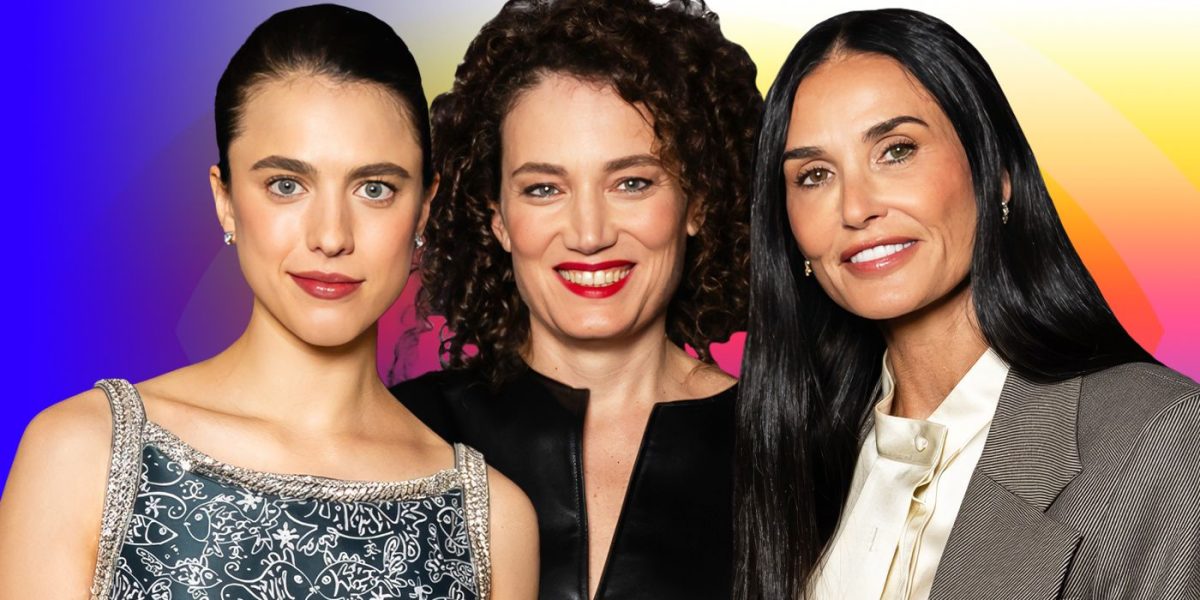
‘The Substance’ – The Prosthetics in Demi Moore’s Body Horror Rival ‘The Thing’
Sep 15, 2024
The Big Picture
Collider’s Perri Nemiroff sits down with
The Substance
writer-director Coralie Fargeat and stars Demi Moore and Margaret Qualley for TIFF 2024.
The Substance
explores societal pressures on beauty and identity through body horror in a narrative about a new dangerous drug.
Fargeat, Moore, and Qualley discuss the film’s themes of self-image, beauty standards, and the challenges of prosthetics.
Writer-director Coralie Fargeat taps into something primal with her body horror movie, The Substance. “I want to let this violence go out and hopefully make a change,” she told Perri Nemiroff while at the Toronto International Film Festival for her movie’s North American premiere. Violence and beauty may not go hand-in-hand with a large part of society, but for people who identify as women and those who feel the weight of beauty standards, the two can often be synonymous when it comes to appearance and self-image. After all, beauty is pain, right?
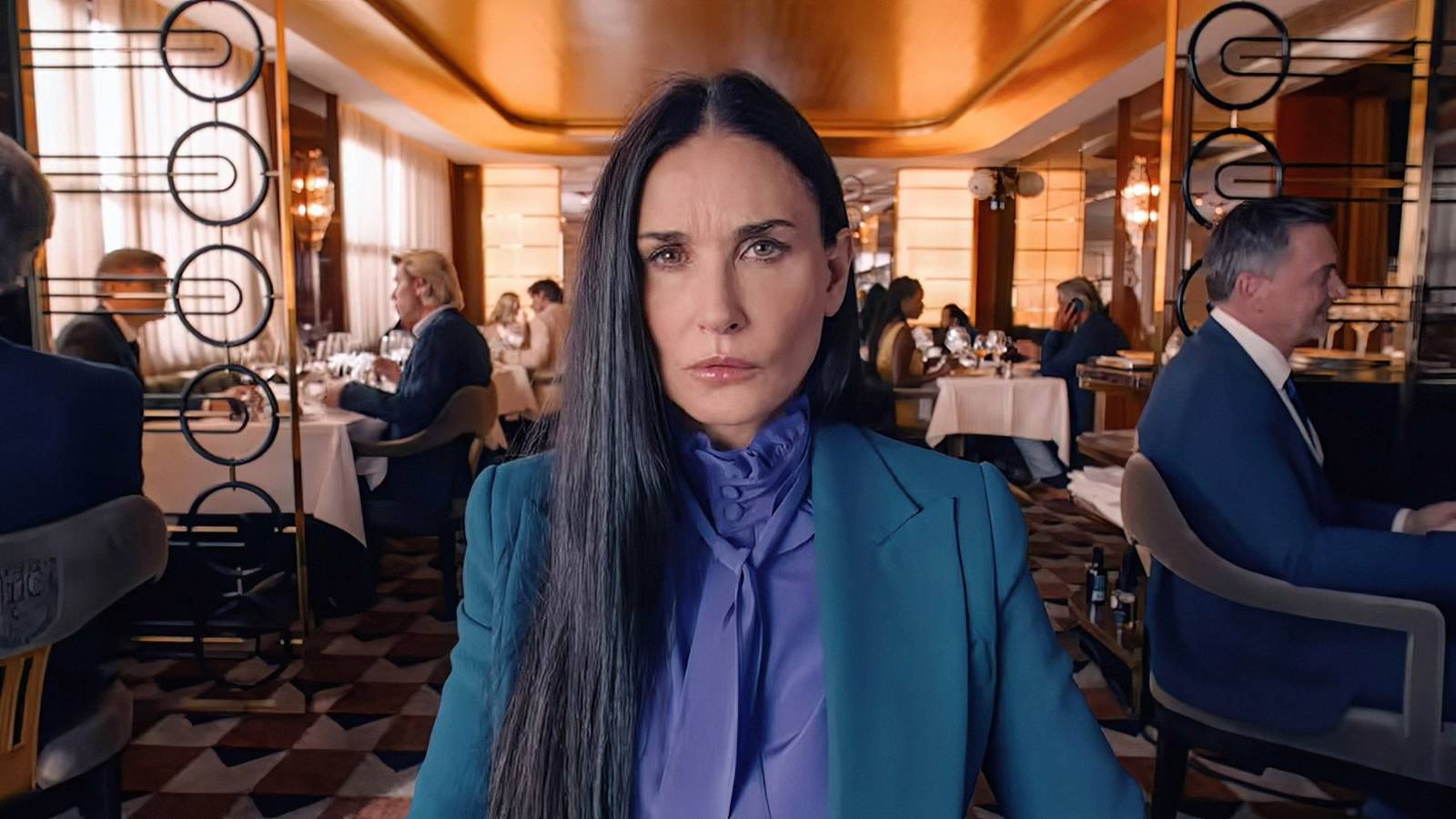
In The Substance, Demi Moore, a Hollywood icon as both an actress and a standard of beauty herself, plays Elisabeth Sparkle, an A-list celebrity who’s peaked. Age has rendered her useless to studio head Harvey (Dennis Quaid), but a mysterious drug offers Elisabeth a second chance. It’s a simple injection that allows her to live in a fresh, new, younger body — sort of. Sue, played by Margaret Qualley, is the cloned product of the drug and an ambitious and physically stunning 20-year-old. These two personalities must share their bodies, one week at a time, or risk biological consequences, but the desire for autonomy is dangerously strong.
Fargeat, Moore, and Qualley all stopped by Collider’s interview studio at the Cinema Center at MARBL to dissect and crack into their body horror feature. How did Fargeat land on this bloody and beautiful approach to the message she wanted to share? The auteur discusses wanting to purge her own self-doubts, and Moore and Qualley share how they discovered their characters through little dialogue and a lot of prosthetics, “tears, and snot.” The trio explain their own struggles with these themes, as well as lessons learned throughout production and tons more.
You can watch the interview in the video above or you can read the interview transcript below.
How Did ‘The Substance’ Come to Exist?
“It’s time now to say, ‘Enough.'”
PERRI NEMIROFF: Coralie, in terms of crafting this story, what is the one specific idea that kicked it all off for you, but then also, did you have a break-story moment on it? Something you came up with along the way that made it feel whole?
CORALIE FARGEAT: I would say the one thing that brought this story to life would be my life. Since I was a kid. I think about how I have to live with my own image and how I learned to be super violent about it, and it made me feel that I was never good enough. At each age, you have a reason that you can find that something is not enough, and I questioned myself about the violence of it. When I was past my 40s and aiming towards my 50s, it became even more violent, that now, “This is it. I’m gonna be erased. It’s the end of it.” And I felt that it was so absurd, but at the same time, so real, this sort being here, that I wanted to say, “I have to do something with it. It’s time now to say, ‘Enough.’ I want to let this violence go out and hopefully make a change.”
You sharing that personal experience via the film is definitely going to inspire a lot of other people struggling with the same thing to find peace with it. So again, thank you for that.
FARGEAT: Thank you. I hope so very much. Also, I want to say I don’t want to add another injunction to women that now you have to feel good about yourself because it’s so passé. I think it’s when you grow up with all those injunctions, getting rid of them is a long journey. It’s step by step, and each one has a reason.
It’s a never-ending journey we always have to work on.
FARGEAT: Exactly.
Image by Photagonist at TIFF
I have a specific rules and lore question because I tend to get obsessed with the details. When you came up with the idea for The Substance specifically, did it come to you fully formed, or was there any playing with how it works?
FARGEAT: Nothing comes fully formed when you write a script. It always starts with an idea, with some intuitions, and in my case, with some images and some sound, which start to give the vibe of the movie that I want to make. Then I think it’s step by step that you get to the core of what is really important and that the ideas arrive. Because I think thematically, you kind of make it clear what you want to discuss, and then you welcome the ideas that are gonna symbolize it the best.
Demi and Margaret, I don’t know if this is how you approach your work, but someone recently brought this up to me, and it weighs on my mind. When you start a new project, it can be a little scary because you’re on unstable ground, but then you have that moment, either in prep or on set, when you do something and you know you have just found your character. Did you have that moment with these characters, and if so, how did it go?
DEMI MOORE: There’s a really interesting aspect because this doesn’t have a lot of dialogue. So for me, I felt like I needed to do a lot more work before I even got to the set to really have all of Elisabeth within me, everything, so that it was alive at all moments, everything that was occurring. So it wasn’t really that it took place on the set, but I think you’re right. That can happen where you kind of lock in. But for me, it was almost, really, before I got there.
MARGARET QUALLEY: I’m like Demi, I do a lot of work before I come to set. For Sue, for example, a lot of it was about a physical transformation, like working out and trying to make my body be what Coralie had envisioned for Sue, which was more curvaceous and strong. Also, I had some help from a prosthetic team because Sue needed to have big boobs, so we glued some boobs on. The physical transformation does a lot. And then also, I spent a lot of time walking around my apartment freaking my husband out by doing Sue in the house, which he didn’t like. [Laughs] So I guess there’s all of that. And then there is, to your point, the feeling when you’re on set, and, in the case of Sue, you’ve got the extensions on, you’ve got the boobs on, you’ve got the outfit on, and you’re like, “Well, we’re doing the thing.”
Image via Mubi
FARGEAT: There were extensions everywhere. [Laughs]
QUALLEY: And it’s like you’ve lost all mobility.
“What’s In a Name?” A Lot Actually…
Where did “Sue” and “Elisabeth Sparkle” come from?
Image via Mubi
Hearing you both say their names makes me think of this. Coralie, I don’t know how much thought you put into this specific detail, but characters’ names can mean a lot. How did you specifically settle on Elisabeth Sparkle and Sue?
FARGEAT: I work with symbolism in my movie. There is not a lot of dialogue, so I imagine sound. I think everything that’s kind of symbolized in a very simple and meaningful way, I like it. For Sparkle, it was this idea to shine, to be under the light, and to have this moment that means happiness. “Elisabeth” — I don’t know why it came that way, but probably because it had this iconic resonance of all the big movie stars in the past. I remember at some point, somebody tried to make me, in production, maybe, change the name because we didn’t want to have legal issues, or I don’t know why. I said, “No. No way.” I don’t know. I knew this name was important.
QUALLEY: For Sue, I always thought — I don’t know if we talked about this — it was because of the shape it makes while you say it.
FARGEAT: I didn’t think about that, but I guess!
I noticed that in that performance beat!
QUALLEY: It’s kind of inherently sexual like that.
FARGEAT: The Sue stuff for me probably had some kind of sexy connotation. Like that Lolita, babydoll — it represents this to me. And again, a way to symbolize what Margaret’s character was.
QUALLEY: For example, you have the name Margaret. It doesn’t lend itself… “Margaret.”
For what it’s worth, “Perri” doesn’t either.
‘The Substance’ Doesn’t Judge the Drive for Beauty
“I wouldn’t blame anyone for just wanting to exist.”
To dig into Elisabeth a little more, The Substance essentially takes a sledgehammer to all the absolutely ridiculous expectations society places on how women should look. But, the movie also never judges Elisabeth for chasing those expectations, which I really appreciated. Was that intentional, and did you two ever discuss it?
FARGEAT: Well, for me, of course, the whole idea of the movie is to make people understand why we think we have no choice but to chase that. That’s the only way, I think, for a long time, society has valued women — through their appearance, through the fact that they are young, that they are sexy, that they can give birth. So that’s the way that you build for yourself, some way to be loved, some way to have a place in the world. When this goes away, you don’t have a place in the world anymore. You want to disappear. So I think many of us think that the only way to still have a place, to still have an existence, to still have people loving us, is through seeking eternal use or hyper-sexualization. I wouldn’t blame anyone for just wanting to exist. I think the way society is still structured, and everything that is around is still making us feel very much that that’s one of the only ways that we have. It’s starting to change a little bit, but I think it’s gonna take a lot of time until we really feel, for real, that we should take our place in the world.
MOORE: I think what’s interesting in the film is that it’s so intimate, in terms of, it really is the experience for Elisabeth with herself. There are external situations, but what I loved is that it’s so much more about what she’s doing to herself, not the judgment that’s even happening outside. I mean, that kind of kicks the film off with that level of despair and rejection that she’s feeling that I think we, as humans, can all relate to. But I think it’s interesting that you say that there wasn’t a judgment because — and I’ve never actually thought about it because I obviously was so much more inside of it — what she was doing to herself was so much more violent than anything that was happening on the outside. Minus Dennis [Quaid] and the shrimp. [Laughs]
I will watch any horror movie, body horror, you name it. I will not flinch. Watching him eat the shrimp might be the first time in years that I actually lifted my hands to cover my eyes.
MOORE: It was, when we were shooting it, the sound, but also, he was so committed. He was so committed. I don’t know how many he actually ate.
FARGEAT: I think he ate two kilos, for real.
Image via Mubi
MOORE: Dennis came in after we lost Ray Liotta, but was so gung-ho, so all in, and really was fearless. He really was fearless.
QUALLEY: He also came in after we’d been working for, like, three months, and he gave us…
MOORE: A little energy injection with his hot Dolce & Gabbana red suits.
I’m going to steal the word fearless now and apply it to both of your performances. When you were gearing up to shoot this, was there any particular scene or quality of your character that you had the most fear about tackling?
QUALLEY: I would say it’s hard because pretty much just, like, every day. [Laughs] Everything was scary!
MOORE: We both were exposed in different ways. Margaret was pushing her body in this overly sexualized way, which was different. For me, having to show up every day and it being about highlighting the things that were my least glamorous, my least attractive. At the end though — I don’t want to speak for Margaret, but I will — I think we both had aspects that were very liberating in the end, because we are one.
QUALLEY: Totally. We are one.
Image via Mubi
Sticking with the idea of needing to be fearless when tackling this, I feel like one of the most important things for having the confidence in yourself to do that is having the right scene partner with you. Can you each tell me something about the other that made you feel safe and gave you the confidence in yourself to go there with these roles?
MOORE: I think we were with each other 100%. Obviously, we didn’t have as many scenes together, and the ones we did have, we were naked on a cold tile floor.
QUALLEY: We know each other really well. Inside and out.
MOORE: But I think it was just instinctively looking out in a very comforting way.
QUALLEY: I also just instantly loved Demi. I loved her from afar for a long time, so then having the pleasure of meeting her, working with her, and getting to know her has just been the best.
Image via Photagonist at TIFF
I’ll follow up on that. Can you each tell me the first thing you saw in the other that made you say, “Demi is the perfect Elisabeth Sparkle to my Sue,” and vice versa?
MOORE: I feel like as soon as Coralie mentioned Margaret. First of all, I already knew the depth and integrity of where she wanted to go and that it was not just about this external image; it was really about somebody who could deliver from the inside. It was already, like, gung-ho, let’s go! I mean, all in. I think that Margaret is willing to get dirty.
QUALLEY: I feel that in your career, too. I mean, she’s delivered iconic role after iconic role — G.I. Jane is one of my favorites of all time. But she’s someone who’s always pushed the boundaries and surprised everyone with how she shows up, going to new territory. This is an obvious example of that.
That quality in all of you is what keeps me coming back to your work!
I’ll ask the two of you to give Coralie some flowers now. Obviously, you need a good leader at the helm to feel safe and comfortable going to these places. What is something she did for you as an actor’s director that you think teed you up for success here?
MOORE: I think it was the script. You don’t come across material that’s so complex and that is daring, that is also creating a visually riveting world. I think Coralie is very detailed, and so she just laid it out there for us.
Beauty Is Prosthetics, Tears, and Snot
Image via Mubi
Coralie, I really want to ask you about some of the blood, gore, and prosthetics, but keep it spoiler-free of course, so broadly — for another filmmaker who wants to swing as big as you do in this movie, what would you say is one “do” and one “do not” you would recommend for using heavy prosthetics based on your experience making The Substance ?
FARGEAT: I would definitely not recommend for a first movie to do that much heavy prosthetics because I think it’s good that you’ve already explored how complex a shooting can be and have a little bit of experience before you go into that world. It definitely creates beautiful stuff and is amazing, but it’s a lot of constraints in terms of shooting. And it’s true, the amount of prosthetics that we had is almost unknown since The Thing. The prosthetic supervisor ended up in a mental hospital, I think, after The Thing because it was huge. I think we don’t realize how it adds a lot of complexity to just creating great performances. Everything was kind of tied to those constraints in terms of timing, in terms of the order we had to shoot. Sometimes we had to shoot in totally absurd order because of the prosthetic constraints. It’s so many hours in the chair to get this done, it’s so uncomfortable to wear. So definitely, that’s not the easiest for the actors to work with. That’s why, also, we ended up having such a long shoot, because I wanted to do everything for real. But then we ended up shooting for almost five months, I think.
When you talk about it, you say, “Oh yeah, it’s good. Let’s do it.” When everything becomes long, all the difficulties are kind of heightened because you don’t have the fresh air to renew yourself. You were mentioning Dennis; he was the new element that arrived. It’s true. That brings a little bit of something different. Otherwise, it’s just almost the three of us in a white room with prosthetics, doing the same thing over and over again, because the film is very obsessive, and redoing the same scenes in different directions. So, I must say, I think we did good going through all this because it was very challenging. It was very uncomfortable at some moments because they had to bear with all the technical challenges. That is not the easiest for the actors to have to work with.
Image via Mubi
MOORE: If you’re a first-time director, don’t do it. [Laughs]
FARGEAT: Yeah, to answer the question. On the other side, it also brought what is also unique in the film. I know, Demi, that you created your iterations of your characters by wearing the prosthetic, and I remember she never complained one second of the long hours in the chairs. Because I think that’s kind of where you were putting, also, the suit of your performance.
MOORE: You start to embody through the transformation. But it is physical for all departments because when you’re in the chair anywhere from six to nine hours, and then you have only so few hours to shoot … And we were doing something that was also, still, very physical, which this is very delicate, all the stuff around the face. You were talking the other day, Margaret, about how it would start falling apart. [Laughs]
QUALLEY: Well my problem was I was having to cry while I had the monster costume on. So — this is graphic — at a certain point, you’re just swimming. There’s, like, a layer of tears and snot inside your prosthetic.
MOORE: And then you start to see a flap raise up, and you’re like, “Ugh!”
QUALLEY: And they’re just trying to re-glue it down, and you’ve just got, like, pools of tears and snot glued to your face.
FARGEAT: And there is the whole industry around them to kind of cool them, like there are hoses to do air cons in the suits. They could only drink with a straw to refresh.
QUALLEY: Notice how she said, “Demi never complained.” Well, that was pointed. [Laughs]
Everything you all went through to pull that off is something else. I’ve seen a lot of things, but I’ve never seen anything quite like this. Also, my horror movie-loving mind appreciates seeing big swings like that, but ones that are done with purpose, with something to say. Job very well done in that respect.
The Legacy of ‘The Substance’ — “We Are One”
“I do believe it is an ongoing journey.”
Image via Photagonist at TIFF
I did want to ask a personal question of each of you based on the content of the movie. Again, this movie basically says a big “fuck you” to every single expectation that is placed on a woman, whether it is about how her body must look or how she operates in the world. Can you each give me an example of something about yourself or the way you operate that you thought was wrong, and then came to realize, “No, you all suck. This is my truth, and I’m going to embrace it now?”
QUALLEY: I mean, so many things. My hands and feet really bothered me as a kid. I have really big feet, and I would put my feet into way-too-small shoes, and then that made my feet worse. I’ve got big, long hands. I was taller than all the boys growing up. And then I remember someone telling me my knees were weird, so I stopped wearing dresses for a long time. [Laughs] There are all kinds of things, but you’re just like, “Well, I’ll never show my knees again!”
FARGEAT: But that’s really the craziest things that really happen. That’s what I mean. The craziness of it is how true it is and how strong it is and how violent it is. That’s crazy.
QUALLEY: We all have little things.
FARGEAT: I mean, the number of ones I have? But totally. And I think to be honest, for me, I would say, I think you have it for life. You can just pretend sometimes that it eases, and it does ease, but I think you find another thing once you get rid of maybe, “Okay, the feet are okay.” Then it’s, “Oh, okay, maybe my elbows are problematic,” or whatever. I think it’s the mental process that is so strong. It’s endless.
It really is. I feel like it’s unfair to ask you all for an example without giving one. I’ll never forget when I first moved out to LA and did my first Collider video, o ne person in the comment section said, “She needs to wax her lip.” I left and waxed my lip for the first time in my life, and then nothing looked any different after . I listened to one commenter for a stupid reason that didn’t apply. I think about that all the time. Whenever I see a comment that criticizes something, now I’m like, “That’s probably not true, and who cares?”
MOORE: For me, I feel like I’ve had my own journey around placing a lot of value, especially when I was younger, on my body and what it looked like, and that if it wasn’t thin, then I was less valuable. But what I’ve come to really see — and I do believe it is an ongoing journey, and we come up against things — is there are a couple of things, which is, we have the circumstances of our collective consciousness that has, for a long time, seen women’s value as diminishing as they age, as there being certain idealized body types, faces, looks that are more desirable than others. But at the end of the day, I feel that all of that is in service to us, that it’s happening for us, not to us, and that it is there essentially so that we can actually get to the place that is of self-love and self-acceptance, because what other people do or don’t do is irrelevant. How we hold it is everything. That’s what creates our reality and experience. It’s like you believing that your upper lip was not acceptable then made you insecure, but thereby you did something to get to the place now where that doesn’t actually matter. But you wouldn’t have known that without that experience.
Image by Photagonist at TIFF
I’m going to lean into self-love for my last question. In this industry, we give each other awards. I think that is super cool. We should keep doing that. But, I find that nobody says “good job” to themselves nearly enough. I want to know something you each accomplished making The Substance that you know you’ll be able to look back on and say, “I am so proud of what I did there.”
MOORE: I think there isn’t any one piece. I feel like it’s the whole. I feel like, for me, knowing that I was letting go of actually needing to look good… I can’t say one thing. I think it was tackling the whole.
QUALLEY: If I really am honest, for me, I was gonna say within the relationship of the conversation we’re having right now, I’m meant to be playing perfect, right? And, like, no one can fucking play perfect. No one’s perfect. So, it wasn’t my idea of perfect now; I’m going to what Coralie’s idea of perfect is under the male gaze within the context of her story, but even that is kind of impossible to do. We are relying on prosthetics and working out and all these things. But I guess the reality is that I didn’t realize how emotionally challenging that was going to be to try to look perfect, so trying to be kind to myself throughout that process and protect myself within that, as naturally, you kind of never feel perfect. And I think in life, I’m pretty okay with that. I like what is different about me, and I can be pretty nice to myself, but when the idea is to play quote-unquote perfect, it can be really hard. So I guess I’m proud of, like, not losing my mind. [Laughs]
FARGEAT: I would say, a bit like Demi, I don’t think there is one specific thing, but for me, obviously just to be able to achieve the movie. As you said, from the very first idea until now, us here, it’s five years of having to fight a lot — to gather everything; to get the movie financed; to not lose my creative freedom, which can also happen for some films; stepping into the English world of making film, but still doing it at home in France, which was great. Basically, accomplishing what I had in my head. It’s a long journey. It can be really tough on the way for all of us, but in the end, I’m really proud that the movie responded. I allowed myself to be strong and ambitious and to think that this movie was important, would matter, and would have a response in the world. But in the end, you never know, so it’s great to have it here.
MOORE: I think that one of the parts of self-love is also being able to depict Elisabeth, to have the rival with Sue, but to be here today also representing being an older woman, that we aren’t that, and that we don’t have to rival — that we are connected, and we are one in other ways. I think that that’s part of the legacy of what we’ve shared.
Eager to check this one out? Fortunately, The Substance is one of the films at TIFF we can all watch soon when the movie hits theaters in the US on September 20th.
Special thanks to this year’s partners of the Cinema Center x Collider Studio at TIFF 2024 including presenting Sponsor Range Rover Sport as well as supporting sponsors Peoples Group financial services, poppi soda, Don Julio Tequila, Legend Water and our venue host partner Marbl Toronto. And also Roxstar Entertainment, our event producing partner and Photagonist Canada for the photo and video services.
Get Tickets
Publisher: Source link






Eggs – Film Threat
In writer-director-star James Clair’s short drama Eggs, a man struggling to rebuild his life finds his quiet mornings turning into strange conversations with the very eggs he is meant to cook. I mean, they want him to eat them. So…
Mar 11, 2026

Ethan Hawke Elevates A Rugged, Predictable Gold-Run Survivalist Western[Sundance]
As far as one can tell, Murphy (Ethan Hawke), a father, WWI veteran, and avid car mechanic, has never encountered an insurmountable challenge. Living in Eugene, Oregon, in 1933, four years into the Great Depression, Murphy and his young daughter,…
Mar 11, 2026

The Moment Review | Flickreel
Brat Summer was a cultural phenomenon that I didn’t understand at all. I knew that it was connected to an album that Charli XCX had released. Whenever I asked what Brat is, though, nobody could seem to give a straight…
Mar 9, 2026

Cillian Murphy’s Netflix Crime Hit Delivers a Brutal, Bleak Finale
It’s been four years since we last saw Cillian Murphy play Tommy Shelby, but seven have passed in the world of Peaky Blinders, with The Immortal Man taking place in 1940, in the middle of World War II. Tommy’s gone…
Mar 9, 2026