‘The Wheel of Time’ Director on the Months-Long Process Behind Making Season 3’s Rhuidean Episode
Mar 26, 2025
Editor’s note: The below interview contains spoilers for The Wheel of Time Season 3 Episode 4.
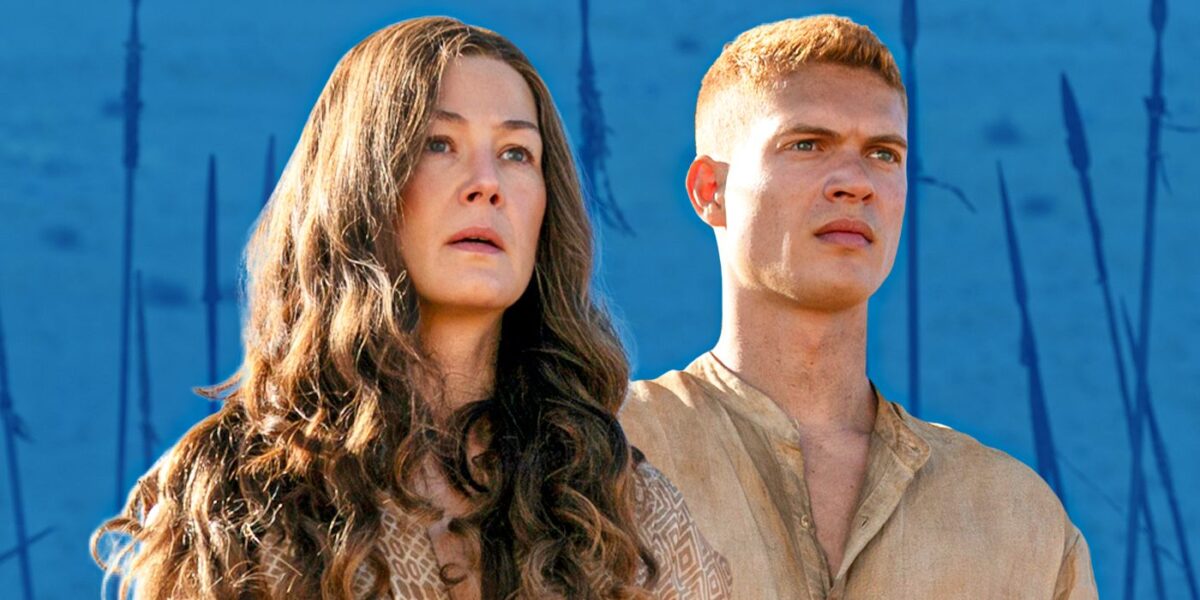
Out of all of the book scenes in Robert Jordan’s The Wheel of Time that the Prime Video adaptation was on deck to adapt, there may have been no sequence that was more anticipated in Season 3 than the trial of Rhuidean. The third season’s most recent episode, “Road to the Spear,” written by showrunner Rafe Judkins and directed by Thomas Napper, follows Rand’s (Josha Stradowski) journey as he ventures into the mysterious “city in the clouds” tucked away within the Aiel Waste to undergo a trial that will confirm his prophesied role as the Car’a’carn. Once he’s in the glass columns, however, Rand begins to see the past through the eyes of his ancestors — and not just his own history, but the history of the Aiel as well. “Road to the Spear” is an expansive, stunning installment that showcases the best of what The Wheel of Time has to offer — impressive locations, emotional character arcs, and a sprawling timeline spanning multiple generations.
In the wake of Episode 4’s premiere on Prime Video, Collider had the opportunity to speak with Napper about the behind-the-scenes process of making “Road to the Spear.” Over the course of the interview, which you can read below, Napper reveals why he wanted to get a headstart in preparing to direct the episode, which department heads he worked closely with in establishing the look and scope of so many different timelines, and why he’s wanted to direct an Age of Legends scene from the beginning of his time on the show. He also discusses how Moiraine’s vision montage was filmed, Stradowski’s incredible performance as seven different characters, and more.
COLLIDER: With every episode of TV, there’s a lot of advanced preparation and planning that goes into making it, but I have to assume, with something like Episode 4, there’s even more planning. How much time did you spend, in advance, preparing for “Road to the Spear”?
THOMAS NAPPER: I spoke to Rafe months before anything had been agreed about doing it, and so I knew well in advance that he was hoping that I would do it. I was actually making a film in Paris, but asked if I could come early to work, because I was so… I won’t say confused. I was slightly worried, because it was such an undertaking. It felt like I needed as much pre-roll, certainly with Rafe and with [production designer] Ondřej Nekvasil before … I wasn’t due to start ’til April, but I showed up in February in Prague, and we had a couple of days just going through everything and just talking about methodology, because Rhuidean didn’t exist. It wasn’t going to be a set; it wasn’t going to exist, ever, as an actual set that we could shoot.
So I was trying to work out with Ondřej how we were going to do it. We had that initial meeting in February. I came back again, I think, at the end of February with my family, and we started work [in] middle of March — just trying to unpack how to do Rhuidean itself, because in my mind, I’d expected us to build a set, and the concept was that we were going to build it on… We were going to have no set, and we were going to do it all using smoke on a stage, and kind of insinuate that there were these big structures and these big buildings, but not actually have them, or have much in there, so that was the first technical thing that we were trying to resolve.
I sat with Ondřej. It was months, really, where we just had a stage, a model of a stage, and we were moving pieces around. We created seven versions of Rhuidean on a stage. When my director of photography, David Luther, arrived, we did so many smoke tests, people thought we were going mad. We were just trying to get the right density of smoke, and technically get it to look right. Literally, we became so geeky about smoke, I can’t tell you, but that is what Rhuidean is. Aside from any of the character work or any of the time travel segments of it, it was just working on Rhuidean, like getting the columns to look right. We did so much testing on these very simple elements, while working to get the right feel for the floating in the rings. There was a lot going on behind the scenes. So we had the same team exactly as we had in Season 2, but we just had this very special brief to make “Road to the Spear.”
[Costume designer] Sharon Gilham was doing a lot of work developing the background of the septs of the Aiel, the seven septs that appear in the Mandein scene, working on the culture of the Aiel. Sarah Nakamura was helping me with the timelines, because [Rand] is going forward in his timeline but going back through his ancestors — who seem to be going forward into the future, but in fact they’re going backwards in Wheel of Time time. So conceptually, it’s trying to do a lot. It’s trying to achieve something that’s quite mind-bending when you step down and think about it.
I basically came to school early and sat in the library, and Rafe had to brief me again and again and again about various things that were going on because I just had so many questions. It was like trying to carry the enthusiasm I had for the script itself and the story itself. I’d listened to it I don’t know how many times on my earbuds, and I felt like I had a grounding in it, and I felt like I’d read the book enough times to know where it sat within the story itself. The challenge was: how are we going to realize this?
‘The Wheel of Time’ Director Thomas Napper Explains How Moiraine’s Visions Were Filmed
Image via Prime Video
Moiraine’s vision sequence uses a really interesting technique, which was showcased initially in the Season 3 trailer. In this episode, she’s in the rings and seeing these thousand, thousand futures, it’s all these potential outcomes of what might happen, what might not happen. It’s very disorienting, and it’s all obviously connected to Moiraine literally spinning and twisting in the rings, but practically, how did you set the camera up to get those shots?
NAPPER: Well, again, we went on quite a journey with that. When I read the script, it felt to me that this hugely powerful woman, Aes Sedai, Moiraine Sedai, is powerless. What I wanted to convey in the storytelling was the idea that the rings are projecting her into these possible futures, but she’s powerless within those sequences. She has no agency to either change or to … She can’t manipulate them or change them or do what Moiraine would normally do. She’s just a visitor within these scenes.
There was an artist filmmaker called Tony Hill in the seventies and eighties in the UK, and I’d seen his work, and he would build these rigs to make his films, which are these beautiful art films and experiments, really. I really felt that that was a perfect way to express this idea. We needed the rig for months and months to take it wherever we were, and once I’d got everyone on board with the idea, and we did a couple of tests, then we started to build it.
It took a while to get it to work, to be honest. It was a complicated rig to make it work, and then to make it work perfectly was another journey as well. So we tested and tested. While we were testing the smoke, and testing the columns, and testing the rig, we were a little test unit for quite a while.
We found a recipe for it, and we found a Czech engineer, named Tomas, who built it for us, and then we took that rig around with us to tell the stories. Rafe and I were working on where we could place them within the sets, how we could do it. Wherever we did it, we had to dig away the set to make it work, so we had to destroy the floors of sets where we were working. It was quite controversial sometimes when we went onto stages, about how we were going to make it work. But I think it succeeds in giving you the feeling of powerlessness, and yet you understand what’s going on, and you can see what’s going on, but you can’t be part of it or change it. That’s how I interpreted those visions.
It feels like you’re falling with Moiraine, just tumbling through them.
NAPPER: Yes. And it inverts and goes upside down, so it sort of feels uncomfortable to watch, which is, I guess, how she’s feeling.
Related
Every Character Josha Stradowski Plays in ‘The Wheel of Time’ Season 3 Episode 4 and How They’re Related to Rand
Rand was always destined to be the Dragon Reborn.
‘The Wheel of Time’s Thomas Napper Wanted to Direct an Age of Legends Scene Since Season 1
Image via Prime Video
I feel like I’m always going to nerd out a little every time this show gets to do Age of Legends scenes. As someone who hadn’t read the books before I watched Season 1, getting to that cold open in the finale is kind of mind-blowing. What do you enjoy about getting to go back and really explore that futuristic part of Wheel of Time that we don’t always get to see, just because it’s so far in the past? There are a few scenes like that in Episode 4.
NAPPER: Listen, I won’t make no bones about it. I’ve wanted to get my hands on the Age of Legends since I started working on the show. I love the fact that we got to shoot it in a location. In the Rhodric section, where he leaves with the carts and leaves with the tree, we got to use the Monument to the African Language in Africa, which is an amazing brutalist sculpture and a monument to African dialects within Africa.
I love the fact that you’re going into the past, and it’s futuristic. I think that’s one of the things about Wheel of Time that people really love. I think it makes it a sci-fantasy. That’s where it takes in a different space, it operates in a different space. The beauty of “Road to the Spear” is that you’re putting those things next to each other, and you’re showing how Mierin Sedai affects Rhodric affects Jonai, how this domino effect happens through the Aiel culture. It’s the contrast between what we had, to then having nothing, and then rebuilding from nothing, as you get to see them do. I think it allows you to really understand the timeline in the show, and it gives you a scissor-cut time slice through the whole fabric of the show — of the weaves of the show, if you like. It’s like a history lesson without being a history lesson.
When I watch it now, I love the fact that it’s emotional, that you feel emotionally connected to these characters in these small chapters. There’s something about them. I think that’s testament to Rafe’s writing, it’s testament to Josha’s performances, and it’s testament to the actors that came in and just did one day on the show, but they brought so much to a bit. In between that, there are all these Easter eggs, [like] how the small tree in the Age of Legends becomes the Tree of Life in the present day. These little journeys, it took so long to work out. It took so long for me to get my brain across the size of the tree through the stories, how big it would be in this scene. We’re not going to see it, but how big would it be? We need to know if it still fits in a cart. What do the carts look like? Even the carts go on a journey through 3000 years. They change, going backwards to the simplest possible cart. I know that’s probably not interesting to TV viewers, but I really enjoyed the level of detail in the episode for that.
Thomas Napper Discusses Revisiting the Dragonmount Cold Open in “Road to the Spear”
Image via Prime Video
This episode also revisits another cold open by depicting the aftermath of Rand’s birth on Dragonmount, with Janduin picking up where we left off at the end of that scene. What was it like to recreate that sequence and essentially get to bookend it? It’s at the beginning of Rand’s trial [in Rhuidean], but it’s also a continuation of that previous scene with his mother.
NAPPER: Yes, exactly. Ciaran [Donnelly] shot that scene at the end of Season 1, and it’s become an iconic fight scene for the show. So the idea was, in a way, to have Janduin fight in the same style, and to be equally brilliant in war. There’s a slight misstep, I guess, in that he should be wearing his veil, but we felt that we wanted to see the transition, that we wanted to see Josha become [Rand’s] father in that moment, and the veil would stop us [from] being able to read that. There were lots of discussions about how to do that scene with Josha and how to play that, but his instincts are so good as an actor. He’s so well-prepared, and he works so hard to prepare himself for these different characters.
The idea that Janduin would fight kind of unfair, or would have a side to his fighting that was really brutal, was quite interesting to me — the idea that he wasn’t going to be Rand’s dad and be lovely. He’s going to be Rand’s dad, and he’s going to be a beast, you know? So he’s horrible. He’s hyper-violent, right from the beginning, and then like seconds later, he’s in the scene where he finds his wife, and the baby’s gone. I think Josha is absolutely brilliant in that scene. That was the first thing we shot, and it laid down a marker for how this was going to go. Full of emotion, full of really huge, huge tragedy, and personal regrets, and then violence and anger in it, all in the space of like two and a half minutes.
And then Rand comes back into his body, and you realize that Rhuidean is no picnic. Rhuidean is going to be a real trial. You’re going to experience real pain, real suffering, and that’s why people don’t make it through this. So hats off to Josha, first and foremost, when I watch it and I see the detail in his performances, and how he’s pulled this off, because it’s such a challenge for him. And then you bring in Sharon Gilham from costume, you bring in Davina Lamont from makeup, building these characters all the way back in March of ’23, working to build all of these characters and make them distinct, and give Josha inspiration, give him food for the characters. Whether it’s weight in the clothing when he’s old, or whether it’s scars on his face when he’s Mandein, whatever we could, we were trying to service the characters in their stories. But I really think Josha’s just done so well with all seven characters. It’s wonderful.
New episodes of The Wheel of Time Season 3 premiere Thursdays on Prime Video.
The Wheel of Time
Release Date
November 18, 2021
Network
Prime Video
Showrunner
Rafe Judkins
Directors
Sanaa Hamri, Ciaran Donnelly, Salli Richardson-Whitfield, Thomas Napper, Maja Vrvilo, Wayne Che Yip
Writers
Amanda Kate Shuman, Dave Hill, Rohit Kumar, Justine Juel Gillmer, Celine Song, Rammy Park, The Clarksons Twins, Katherine B. McKenna
Publisher: Source link




Mason Gooding & James Van Der Beek’s Bad Night Is Aggressively Dull
Ever since the Scream franchise helped put him on the map, Mason Gooding has been a great talent to watch. The genre-bending slasher Heart Eyes is still his best non-franchise role yet, but he's also branched outside of horror in…
Mar 15, 2026
A Grumpy Nick Offerman Keeps This Fish Tale Swimming Along
Animated fish films have been done. Finding Nemo. Shark Tale. Ponyo. So to hear about another doesn't feel like anything new. However, The Pout-Pout Fish, starring Nick Offerman as a grumpy ocean pout named Mr. Fish, is a little different.…
Mar 15, 2026
‘The Rookie’s Best Season 8 Episode Goes Completely Different With Full Zombie Horror
Editor's Note: The following contains spoilers for The Rookie Season 8, Episode 10.It's crucial for procedurals to come up with a winning formula that entices viewers to tune in every week. But it's just as important for these types of…
Mar 13, 2026
Sidney Prescott Leads a Brutal Throwback
Walking into Scream 7, I wasn’t sure if this entry would be a new reinvention. I know I wanted tension. I know I wanted that uneasy calm before the snap. And most of all, I wanted to see why Sidney…
Mar 13, 2026