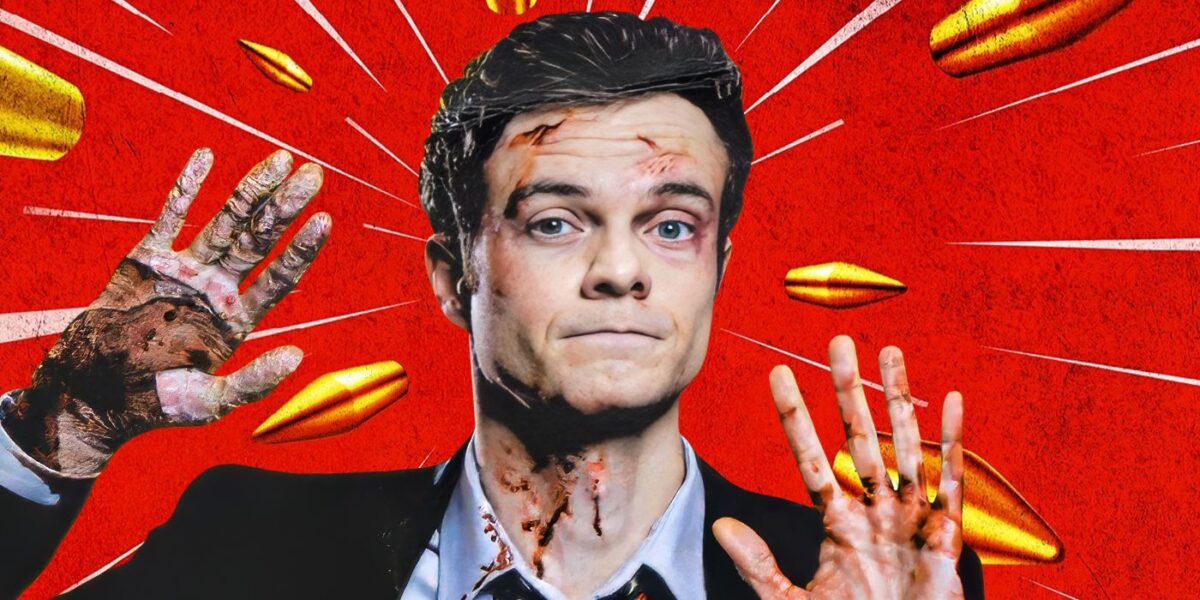
“This Could Definitely Be a Franchise”:’ Novocaine’ Directors on a “Too Jacked” Jack Quaid and Stepping Into Studio Filmmaking
Mar 20, 2025
Summary
Filmmakers Dan Berk and Robert Olsen are making their name in horror, thriller, and comedy films.
Novocaine follows Jack Quaid as Nathan with rare disorder where he can’t feel pain, on a quest to rescue his kidnapped crush.
Berk and Olsen discuss the challenges of pitching a studio film and the chemistry between Quaid and Midthunder.
Filmmakers Dan Berk and Robert Olsen are quickly making a name for themselves in the exciting worlds of horror, thriller, and comedy—often rocking all three in the same picture. They brought us modern horror icons Bill Skarsgård and Maika Monroe in the indie success Villains, as well as Significant Other, their first team-up with Paramount Pictures, with the successful return of Monroe as their lead. Now, as they reteam with Paramount for a full theatrical release, they join forces with an army of incredible young talent like Companion’s Jack Quaid, Prey’s Amber Midthunder, and Ray Nicholson from Smile 2 to bring the pumped-up action-comedy Novocaine to audiences worldwide.
Novocaine follows Quaid’s mild-mannered Nathan Caine living with a disorder called CIP, which makes him literally feel no pain in his simple, easygoing day-to-day life as a bank exec. He works with his crush Sherry (Midthunder) and games online with his buddy Roscoe (MCU Spider-Man’s Jacob Batalon). When Sherry is kidnapped by criminal Simon (Nicholson) during a bank robbery, Quaid realizes he must use his rare disorder to his advantage to rescue her. The film also stars Matt Walsh (Veep) and Betty Gabriel (Get Out).
At our special early screening with Paramount Pictures in 4DX at Regal, Collider’s own Steve Weintraub had the pleasure of sitting down with both Berk and Olsen for an exclusive Q&A. During the conversation, they share with us the massive differences in making a studio picture after making the jump from the independent film helm. They also discuss how a pitch with Paramount goes down in real-time, quality checking the final soundtrack mix for ultracool 4DX showings, how they went on a “secret safari” while shooting in South Africa, and whether Quaid ultimately got “too jacked” for the flick.
This Duo Made the Leap from Indies to Studio Movies
“You’re the gods of this movie.”
COLLIDER: I had such a blast with this. It’s just so fun. But I want to go backwards. Where do you think each of you would be if you did not first meet as roommates in college? Were you assigned by the college? Was it random?
DAN BERK: It was. We were randomly assigned roommates at NYU. Whatever algorithm the bursar’s office is using is really on point, and we should probably be paying some commission, too, for our careers.
Where do you think you’d be right now if you hadn’t met each other?
ROBERT OLSEN: I mean, I’d be dead in a ditch, probably. Honestly, I can’t really imagine where I would be. I think that so much of what we do is a product of our friendship and our tastes colliding and turning into things. It’s luckily something we don’t have to contend with.
This is your first time working with the studio making a film like this one. What do you think would surprise people to learn about being a director in, quote-unquote, Hollywood?
OLSEN: Because we started out, obviously, like so many filmmakers, making indies and micro-budget indies and things like that, I think the biggest difference is that when you’re making those little movies where you went out and got the money from people, and you’re cobbling it together and there’s nobody above you, you’re the gods of the movies. You can do whatever you want. When you’re making a studio movie, you can get fired. It’s a totally different process because there are people above you that you have to be beholden to, and so you have to take creative notes from producers and things like that. We were very lucky to have good producers in this case, but there are certainly horror stories about people being forced to do things they don’t want to do. That’s the biggest thing is being able to collaborate with other people, and that’s something that comes naturally to us since there’s two of us.
BERK: Also, with studio filmmaking, too, I feel like from the outside, and when we were coming up, you imagine it’s, like, 12 mustache-twirling, dastardly executives with cigars hanging from their mouths, making these decisions and squeezing the creative essence out of whatever little movie you have, but it’s really not. The studio is this big monolith, but it’s all made up of people. Our executives that we worked with at Paramount are all just cool, smart people. When you realize that everyone, at least for this project, is on the same team trying to make the same movie, it’s a surprisingly personable and humane process, which is not what we expected when we were in film school, when we thought of studio filmmaking.
It Takes a Village of Department Heads to Make a Movie
“We were punching so far above our weight class.”
Image via Paramount Pictures
This is your first time making an action film. What did you learn making this that you will take with you for the next thing you make that has action?
BERK: To hire really, really talented technicians and department heads around you. On an action movie, the big difference that we realized is that it’s such a deeper collaboration with your stunt coordinator. This is our fifth feature, and we’ve made movies with action in them like someone maybe falls or is chased down a hall, but this is the first time where it’s like, “Okay, you have six or seven huge scenes that have all this choreography.” It’s like building these dances. Before we made this movie, we were concerned, “We have no idea what that process is.” It just seems so daunting from the outside, but then you realize you really are leaning on your stunt coordinator, on your DP, on your AD.
We were punching so far above our weight class on this movie with our department heads. Like our AD, Justin Muller, the last movie he did was Kingdom of the Planet of the Apes, and that’s this $200 million mo-cap extravaganza, and then he comes to do our little movie. That’s not to say he was sleepwalking through it; he gave it just as much effort, but it’s a good example of how we had such talented department heads that it made the scary idea of jumping genres into action not all that scary.
Was this a studio thing where they’re like, “Listen, we’re going to make sure you’re surrounded by the people to help you succeed?” How much were you able to pick out your stunt coordinator and how much is it the studio saying, “You want to hire this guy?”
OLSEN: It was 100% the studio was surrounding us with adults because we hadn’t done this before, 100%. And that’s okay. We’re happy that they did that. If there’s something we learned from this, it’s just to be fearless with those kinds of things because when you jump into a new genre like this or a bigger budget level, you’re also going to get a more experienced crew. So, even though we had never shot a fight scene that lasted longer than 20 seconds, we were still able to feel so confident in what we wanted to do because even though we hadn’t, Stanimir Stamatov and Kerry Gregg, our stunt coordinators, had done dozens of them. So, to really be able to study under their wing and learn from them and everything was one of the most valuable things.
What’s cool is that they pitch you on visual stunts. So, we’ll come into it with a handful of signature shots that we want to get in a given fight scene, but there’s a lot of meat and potatoes in between all of that. Fight scenes are hard to just shot list because they’re so chaotic. Oftentimes, you have to just put the fight on its feet and then see how you’re going to cover it. So, they would come up with a lot of good ideas about that, and they’d previs the fight scene. They make a replica of whatever the set is, let’s say the kitchen fight. They made a whole fucking kitchen out of cardboard boxes and stuff—it was like this Be Kind Rewind thing—and they shot the fight. It’s the stunt players doing the fight, and every time there’s a line that one of the actors might have, they kind of just mumble through it. It’s great to see. Obviously, you shoot it on your iPhone and everything. It’s not something you’d show to other people, but it allows you to have this visual conversation with your stunt coordinator. You’re saying, “Yeah, this is really cool. This part when they’re on the ground, maybe there’s a different way we can cover it.” You go back and forth. You have notes and stuff.
It’s fun just because you don’t have that with other parts of the film at this budget level anyway. When we’re doing more of a thriller movie, you don’t have, like, a jump scare coordinator helping you be scary, you know what I mean? So, that was something we’ll definitely take moving forward is just trusting your department heads. Again, when you’re making indies really early on, sometimes you have to micromanage a bit more. You’re piecing together the crew, but this is just bringing together a bunch of super-talented people. So, we did just as much listening, if not more, than we did talking on this.
The Art of Pitching After “Hundreds and Hundreds” of Rejections
“You just have to collect no’s.”
Image via Paramount Pictures
You went in and pitched this to land the project. Am I wrong about this?
BERK: To an extent, yeah.
What is it like the night before you’re going to pitch something? How much are you in your head about everything you want to say? What is it like for people out there who want to eventually get in the room and do what you’re doing to actually pitch something? Take us behind the scenes.
BERK: Bobby and I have been rejected hundreds and hundreds of times. We have spent two weeks putting together the best pitch in the world. You do it, you knock it out of the park, 40 minutes later, you get a call, “You didn’t get it.” It’s like you just have to collect no’s, and then you get to a yes. Collect 10 no’s, and maybe you get a yes—maybe you collect 50 no’s and then you get a yes. But we’re not in our heads at all about pitching anymore because we just walk into every pitch like, “Well, we’re not gonna get this one, so fuck it.” Then, you have that energy, and then suddenly, it’s like, “Oh my god, we got one!” For every one, there are dozens that you don’t get.
Because there are two of us, looking at how the sausage is made, we write our pitches, and we know exactly what we’re going to say when we go in for a pitch. Not everyone does that. Some people have talking points, or they just are riffing, depending on the kind of filmmaker you are, I’m sure. The Safdies don’t pitch in the same way that we do. We’re really, really precise about that stuff, and we want to make sure that I know what he’s saying, and he knows what I’m saying so that we’re not stepping on each other’s toes. It’s taken many, many pitches to get to that place.
If you really have a good handle on something and you’re passionate about it, it’s less about what you’re saying and more about how you’re saying it. On this movie, we knew exactly what we wanted to do and exactly how we wanted to present this movie. I remember that first pitch to the producers at Infrared and Safehouse [Pictures], our two production companies. It was just like we were really on fire. Our brains were on fire with so many different ideas, and so that pitch was a very successful one. But yeah, we’re not in our heads anymore because we just heard “no” so many times.
OLSEN: Like Dan said, we just live by like this Samurai Bushidō code of, like, “We already lost the pitch.” Once you free yourself of that, you can be more loose. Obviously, the more reps you get and the more comfortable you are, it kind of snowballs. Early on in your career, when you’re trying to get your first big thing, the pitches feel so heavy on your shoulders, but then as you make a couple of things and you know there’s another thing that’s coming, that takes the weight off it. But early on, it’s all just about prepping it, knowing what you’re going to say and the game-planning out, “Alright, what if they say this? What if they say that? What if they don’t like this part?” Having little talking points ready to go.
I also think Zoom made pitching way easier. When we first started pitching, they didn’t have Zoom, and so we were flying to LA for a pitch and sitting in a hotel room, walking back and forth, doing the lines like we’re fucking rehearsing Glengarry Glen Ross or something. So, I think that if you do have to pitch, try to get it on Zoom, and you can put the text of it right by the camera, and your eyes are just there. It’s like a little teleprompter.
You normally write and direct everything, and you guys directed this. I know you worked on the script of this, but it wasn’t your original idea. What was it about this material that said, “Yes, we need to make this?”
OLSEN: We’ve been wanting to make an action movie for the longest time. It’s kind of our favorite genre, even though we’ve done a lot of horror and thrillers. A lot of that is a product of those movies being easier to get made early on in your career. They just are. Good luck trying to make an action movie for your first film. But at the same time, we didn’t want to just do some generic programmer that everybody has seen a million times, so we were just waiting for something that seemed a little left of center, like a little bit more like our taste.
This script, the concept of this guy who couldn’t feel pain being thrust into that situation, stuck out so much because the fight scenes themselves are so different. You’re so used to seeing John Wick kicking a bunch of different dudes’ asses all at once. You’re used to seeing a protagonist who knows how to fight, and they’re kicking bad guys’ asses or whatever. This is just so different because the guy you’re rooting for is getting his ass kicked for 90% of the fight until he figures out some kooky little way to win. That’s what initially drew us in.
Then, the original version of the script was a little more serious. It wasn’t as funny, and we were kind of like, “No, no, no, this has to be funny. There’s got to be a scene of him being tortured and pretending he can feel the pain.” So, luckily, they let us do what we wanted there. They let us take our parts and put everything through our tonal filter. Lars [Jacobson] had a great concept there and gave us a great place to jump off from, but it was really fun to put our stamp on it, too.
4DX Screenings Are Actually a Lot Like Being on a Safari
Berk and Olsen got to help design the 4DX experience.
Image via Paramount Pictures
Someone named Jack gave me a question or two to ask you guys. Ask them about their time in South Africa, specifically when they snuck off to go on a safari when they weren’t supposed to.
BERK: [Laughs] Thanks, Jack. So there’s this weird thing, where—we’re going to get in trouble now—when you go to direct a movie of a certain size, the actors and the directors and some of the producers are considered quote-unquote essential elements. That’s the contract term. The insurance company basically is like, “You can’t do anything fun if you’re an essential element.” You’re not allowed to go swimming, you’re certainly not allowed to fly on an airplane, certainly not allowed to go on a safari, but we shot this movie in South Africa. We have never been there, and for all we know, we’ll never go again. Everything we heard from everyone was, “You’ve got to go on safari if you go to Africa!” So, we had one long weekend on the shoot, and Bobby and I basically just didn’t tell anyone what we were doing. We turned our phones off and disappeared for four days, and we went on a safari. It was the best experience of our lives, and we kept it a secret from everybody until about 90 seconds ago when we told about 100 people.
I’d say you probably told a lot more than 100 people.
BERK: Oh, that’s right… This is being streamed. Well, hopefully, we don’t get in trouble. There must be a statute of limitations, a kind of double jeopardy thing. I don’t know.
I’m assuming the safari was amazing.
BERK: It was incredible. It was, like, the most life-affirming experience of our lives. We’ve never done anything like it. We were two feet away from elephants and lions playing with their cubs.
OLSEN: The animals are right there, bro. They’re right there. It’s crazy. You’re in the thing, and there’s like an elephant, and everyone’s holding their breath. You can hear the twigs snap and stuff. Then, the lions are just walking right by. It’s weird because the animals are used to seeing the cars, and so they just don’t think they’re anything. There are all these sleeping lions around, and the guy just turns the engine back on, and the lions are just sleeping right through it.
I also thought it was going to be like fishing or something where you go and maybe you catch one fish—you probably don’t, and you have a bad time or something—but they know where to find them. All the safari guides are talking to each other in a mix of different languages so you can’t understand what they’re saying, and they’re telling each other, “The lions are over here. Get over here.” They can coordinate it so that you always see them. It was just the coolest thing that has ever happened to me, and I have no regrets about doing that. We’ll see if we get blackballed from the industry for lying about that.
Everyone in this audience is like, “I did not think we were going to be talking about safaris during the Novocaine Q&A, but here we are.”
OLSEN: It’s a lot like watching a 4DX movie, too.
Actually, I do want to bring up 4DX since we’re in the 4DX theater. Did you quality-check this in 4DX? I saw you guys shaking in here, and I was like, “Holy fuck.” Was it crazy in here? What was it like?
OLSEN: It’s nuts. We did. We checked it in this very theater. We did the whole thing, and you got to be like the 4DX equivalent of, “Can I get a little more snare in my headphone?” Where you can kind of be like, “That one’s maybe a little less intense,” or, “Can we get a little spray of a burning smell?”
Did you get to pick out the smells and some of the shakes?
OLSEN: Look, there are very talented people who design the whole movie, and then we come in at the very end and are just like, “It’d be cool if the leg thing tickled your leg here,” or whatever. I don’t want to make it sound like we designed it at all, but yeah, you get to have some input.
BERK: It is cool, though. They tell you the eight smells that they have access to, and many of them are relevant to this movie. One of them is a coffee smell, which for this movie, there’s obviously a really pronounced coffee scene. I know I’m getting old, but I was like, “There should be seatbelts.” I was rocking the fuck around. You can imagine if somebody wasn’t paying attention getting knocked on their ass, but maybe that’s half the fun—the danger of it.
We were over there on the side during the movie, and I could see that the side over there just shakes. I can’t imagine what it’s like for the people.
How Far Did They Want to Take the Injuries in ‘Novocaine’?
“Nate couldn’t feel invincible.”
Image via Paramount Pictures
This is from Jack, as well. What was their line in terms of the believability of Nate’s injuries?
BERK: That was something we talked about a lot because it’s an elevated movie. It’s not a documentary. We’re not trying to sell total reality with any of this, because it just wouldn’t be a movie if that were the case for a million reasons. But you also don’t want to go so far that everyone’s rolling their eyes and being like, “This is stupid.” Nate couldn’t feel invincible. That’s not an element of his genetic condition.
The original script that we were talking about, for example, had a lot more head hits. It had a bunch of pistol whips in the head and all these things that weren’t knocking him out. Once we got with Stanny, with our stunt coordinator, we went and audited the script, and we were like, “Alright, we’ve never been in a fight, but you guys have. Which of these beats would actually knock someone out, or which are unrealistic? When would he be dead?” There were a bunch of things where we shifted a bunch of head hits to body hits, changed a few fight set pieces completely because they just felt like they were going to put too many riggers on his body, even in the unrealistic space that we’re playing in. So, it’s in the middle. We wanted it to still be really, really fun and feel like an action movie. Obviously, every action movie that’s ever been made presses the human body further than it could actually go.
I’ve never noticed that in any action film.
BERK: Oh, based on your fight experience?
100%.
BERK: [Laughs] That’s what I figured.
OLSEN: We felt like we could push it as far as we could as long as he was basically dead at the end. I think if he were just popping up after that fight at the end would be one thing, but we show you that he passed out, finally. In order to keep going, you have these little patch-up scenes. So, we see him at Earl’s patching up a bit and doing the EpiPen. We see him patching up after the rundown house. You just want to have enough of those moments that you feel like you’re still doing something that’s even remotely believable because the second you push it too far, like if you got shot in the chest and just kept going, it would become dumb. You lose the fun of the concept, which is how far can he push it? How much can he hold himself together with duct tape just to get to the end of this?
BERK: In a movie like this, the prosthetics are so, so important. All of the makeup considerations are really, really important. There are so many different stages, so many different little hits and lacerations, and this and that, and bruising that would show up here and here. We had a really extensive, very comprehensive way of tracking all of his wounds with our special effects makeup team, where they had a 3D scan of Jack, and they could bring us through each one of the 100-plus stages of, “Then this is where the cut is, but then in the next scene, it’s been two hours, so there’s going to be some bruising around here.” That was a really, really helpful tool. You can, with a little slider, go through all the damage that his body goes through, and that cross-reference with our stunt coordinators was a way for us to stay on top of it and make sure that he could actually get through this based on the rules of our world.
Jack Quaid Got “Too Jacked” for ‘Novocaine’
“He had to get into really good shape just to be able to shoot this movie.”
Image via Paramount Pictures
That actually brings me to something I wanted to talk about. When you’re making a movie like this, where your main character is getting injured, and there’s blood, and going through progression, how much are you trying to film in any sort of order to make it easier on, so you could film with the progression of his injuries?
OLSEN: We did shoot mostly in order, not all, but that’s also why you do what Dan was just talking about with building the progression, so you know beforehand. We decided long ago how beat up he was going to be after the tattoo fight, after the rundown house, after the ambulance, and so we could jump ahead if we had to because we had already pre-built all of those looks. It’s just nice to shoot chronologically to the extent that you can, but we certainly did a few things out of order there. Obviously, that’s a huge part of this movie, but at the end of the day, he’s going to take a certain amount of time in the chair every day.
That’s the other thing is Jack is such a saint because he had to go through so much makeup on this movie, and not just the cuts and stuff, but the tattoo. That tattoo takes so long to put on, and he was just a total saint because this is not like The Boys. That’s an ensemble. He’s not shooting every single day. Or if he is, it’s not as much. On this, we shot 44 days or something, and he shot 43 of them. He was in there every single day, having to sit in the chair. You get all this stuff done, and then you go and do really physical stuff. He had to get into really good shape just to be able to shoot this movie and do all those fight scenes every day because it’s not just doing the fight scene on the day; you have to practice it a bunch of times. He’s in the gym, him and Ray [Nicholson] and Amber [Midthunder], were all in the fight gym every single day practicing these fights. It’s so much physical work, and you could tell he’s put on some muscle for that. You can tell when he’s laying there in bed looking at the note or whatever. We were like, “Did he get too jacked?”
Related
“I’m Gonna Cry Like a Baby”: Jack Quaid Hints at Hughie’s Future Ahead of ‘The Boys’ Final Season
The actor and the rest of the cast are now hard at work on the show’s fifth and final season.
Jack wanted to send a video message tonight, and I was going to play it, but he’s on set for The Boys Season 5 and was, he said, surrounded by hardcore spoilers, and he could not film anything. So, he apologizes. He wishes he could be here, but he is filming.
BERK: Appreciate that. He was telling us a little bit about how tight the security is. He doesn’t even know what he’s shooting until, like, two days before he shoots it.
OLSEN: We ask him shit all the time. We try to get him to slip up, but he’s really good.
BERK: We know a few things, but we won’t tell.
I love that show so much. I don’t want to know a thing.
BERK: No, we’re upset we do know.
Jack Quaid and Amber Midthunder’s Electric Chemistry Was Almost “Too Good”
“This could definitely be a franchise.”
Image via Paramount Pictures
When did you realize Jack and Amber were going to have such great chemistry?
BERK: That’s a good question because you never know until you have two actors together in the same space. From the first time we Zoomed with Jack, we felt like we knew him for 15 years. He already felt like our best friend. He’s so, so likable and charming and kind, so we knew we had that. Then, the first coffee we got with Amber, we were like, “She’s equally magnetic and charming and kind.” So, we had a sense that this would probably work, but still, you never know. It could be oil and water.
Once we got down to South Africa and we had our first dinner, the four of us, it was just so obvious. We were all just laughing and laughing, again, like we had been friends forever. Then we did our first screen test and actually saw them together, and they were looking at each other and holding hands, and this and that, and Bobby and I just looked at each other, and we were like, “Well, this could definitely be a franchise. This works really, really well.” Then, the first three days of shooting was Nate’s apartment, which was a challenging thing for both of them to just jump right into at the beginning of the shoot, but those scenes after the bar, the quiet, intimate scene where they’re kissing on the couch and stuff, that was right away. That was, like, day two. Watching the dailies, even on the set, watching the monitor, we were like, “Oh, shit, it works!” The electricity. It was a closed set—there were only 20 or 30 crew members there—but it was like they were alone, and it really felt amazing. We could all feel it. Every single person. The crew was coming up to us after and being like, “This is really good, guys.”
OLSEN: Their chemistry was almost too good at one point where we shot a scene that was a post-coital scene of them sitting there, and he was drawing a little tattoo on her arm, but they were so seemingly in love in that scene, it was too much. It was almost like they were this old couple that had been together forever. It almost pushed it a little too far, and so we wound up cutting that scene, and it just moves a little quicker without it. But it just goes to show that they can crank that dial wherever it needs to be. So, I think the level of love that existed in that scene is probably something that you see in the sequel.
BERK: It’s a testament to both of them. It’s so great. We can’t wait for people to see Amber, particularly, because Jack you’ve obviously seen as this lovable Hughie on The Boys, and he’s been in a few movies where he’s played a character like this. Amber, most people know her from either Legion or from Prey, which is so fucking good. She kicked so much ass in both of those, but people think of her that way as, like, “You’re this action ass-kicker,” and she is that, and she’s going to have a long and storied career as an action star, but she’s also just so magnetic and charismatic, and she can play that kind of role, the act one Sherry, so well. We just hope that people see that other dimension of her because it’s really, really impressive.
Related
‘Prey’: The Deleted Scene That Defined the Movie for Amber Midthunder
Midthunder revisits her journey from moving to Hollywood to headlining an Emmy-worthy ‘Predator’ movie.
I love talking about editing. What did you learn from your first friends and family screening? You finally have a cut you’re happy with, and you show it to them. Are you jumping out the window, or are you like, “Oh, this came together pretty good?”
BERK: The first screening that we did was, like, nine people on the Paramount lot. They were just friends of ours who are filmmakers that we know and also just totally not industry-related people. We just wanted to get knee-jerk reactions, and the film played really well. It was 25 minutes longer than what you saw here, and we thought it was pretty lean back then, but we definitely found some scenes we wanted to cut. It’s always a really interesting thing when you first show a movie to a group of people because uninitiated audience members are the most valuable thing in the world because they focus on things sometimes and make assumptions about things that you didn’t intend at all, and sometimes you really don’t want the audience’s attention on that.
When Nate pulls up to the bank, there used to be a shot of a couple, just random people, that were on a bench near the bank, and they were kissing. It was just supposed to further illustrate Nate’s isolation, that he sees these romantic people on the street and it makes him sad because he doesn’t have anyone in his life. That was in the movie and we thought, “Sure, that’s obvious.” Then, four of the nine people thought that those two people on the bench were Sherry and Simon, brother and sister, and they were totally confused because they were like, “Oh, they’re in a romantic…?” We were like, “No, no, no! What?” It was just a wide shot of two people that, I guess, looked like Ray and Amber. But we were like, “Oh, fuck, that’s bad.” So, we just cut that out of the movie because we were like, “If 40 to 50% of viewers are having that confusion, there is a problem.” So, you find dozens of little things like that that just help you hone and focus on what’s important.
OLSEN: Then you move on to the actual test screenings where you’re showing it to 300 people in a theater. That was when we, all of a sudden, started to get really excited. We watched the movie so many times as a director in post that it loses all meaning. It’s like if you say “milk” over and over again, it doesn’t make sense anymore. You’re watching the movie so many times that you just don’t know what to think of it. So, we were confident, but it wasn’t until we were there watching people watch it in a theater together and the reactions—the gasping, laughing, all these things. Until you hear other people doing that, you don’t know what you have. Then, once you do, it’s like magic.
It was so different than the last time we tested a movie, our last film, Significant Other, which is a much different thing because that is you’re doing this vibey, sci-fi thing where you’re trying to create this scary mood, and yet we had temp VFX in it. It’s about this couple that goes camping, and some shit happens, but the first scary thing that happens in that movie is they see this deer that’s staring at them in a very not-animal-like way in the distance, but the VFX weren’t finished. So, what the audience saw was our art director holding a deer head, like just a man in overalls like this with a deer head, and so everybody cracked up. We were like, “No, it’s supposed to be scary! You’re supposed to be scared! We’re establishing a tense tone here.” So, right from the beginning, you’re fucked. You’re never going to overcome that.
Image via Paramount+
For this, it was so much better because there were just less effects. That movie has aliens and stuff. What we were testing was a lot closer to what the final product was. Of course, we still made tweaks after those screenings and stuff, but it definitely felt great to see it work because they come up to you with all the numbers afterward. So, when a test screening is bad, it’s like the worst experience you can have as a creative person where they’re just like, “Okay, so, 72% of people think you guys suck, but 34% of them think that you’re okay and like it.” It was just so heartbreaking. But it was it was awesome to test a movie that people really took to and enjoyed in the theater. Significant Other really found its audience. We’re very proud of that movie, and I think it’s really good, but it’s way harder to test those kinds of movies, like weird sci-fi. Like, Annihilation tested awful, and it did great. It’s an awesome movie. Whereas this is so much more of, like, just get in here and have fun. It’s just a fun time, and I think those kinds of movies just generally test better, and it’s a more fun process.
You both direct. Do you find that one of you is more obsessed with shot selection, and one of you is more like, “I want to be with the actors?” How is it when you guys are on set?
OLSEN: I think I’m more obsessed with, like, craft services. I had a PA on our last movie say to me, “Wow, you really like candy, huh?” So, we tried to be a lot better on this movie. But no, I mean, we’re both generalists. We both do everything. It’s not like one of us is the camera guy and the other one is actor guy, but that’s a process we’ve been working on forever.
The movie has a ton of action. Which sequence was like the backbreaker, the one that everyone on set was like, “We’re never going to fucking get this?”
BERK: It’s a cop-out answer, but this production was so blessed. None of them in practice were back-breakers. Logistically, getting everything together for them, like the climax at the shipyard—we shot that in a field next to our soundstage, nowhere near water. It didn’t have any shipping containers, so we brought in 60 shipping containers. Bringing in the machines to the giant forklifts to move the shipping containers, all that was a headache—not for us, thankfully, but for the crew. [Laughs] But every fight had its complications. The tattoo parlor, that mirror, we had one. They don’t manufacture sugar glass in panes large enough, so that was real glass. We had one mirror, we had one take, and it was just cross your fingers and hope. Thankfully, it worked out.
In the actual practical shooting of it, Bobby and I are such prep hounds. We’re part of the Hitchcock school of prep, where if you prep hard enough, you basically don’t have to show up to set. We do show up because we like doing it, but we prep so hard, and we make sure that everyone knows everything that’s going on. Every single day we distribute our shot list to every single crew member, from the producers to the PAs who are fire-watching outside, so everyone knows what’s going on. Once we’re shooting, it just feels like we’re all executing a plan. There really were no fires that had to be put out on the set. Jack pulled his neck right before the kitchen fight in a pretty debilitating way. That was a little bit hard. You can’t see it on screen, but he couldn’t really move.
OLSEN: I got one. When we were shooting the Zeno scene, there was a dead animal in the wall. We never found it, but we smelled it. It was the worst smell ever, to the point where people were in bad moods. The smell of a thing decomposing is really, really bad, and we didn’t know what it was. We never discovered what it was, but it was the smell of death. I just don’t know of what. I think we were there three or four days, and every day we’d walk in and just be like, “Oh my god, what is that?” And then you’d get used to it after a while.
Image via Paramount Pictures
But like Dan said, the production itself went really smoothly, mostly because we had this awesome, awesome crew. The South African crew was just incredible. Everybody was so enthusiastic, and the schedule wasn’t backbreaking. We really worked really hard with our AD to try not to kill the crew, like you can so often. You can get pushed to push people, and we were just trying to fight to keep the days short so that people were refreshed and excited. I think when you do that, you end up getting even more done than if you try to make people work six days every week and shoot 13, 14 hours and stuff like that, and use a bunch of OT. We don’t think we went into overtime once in this movie, and it was awesome.
Thank you, South Africa crew. By the way, I just want to point out that when I watched this, I was like, “Oh, San Diego… Oh, no, you shot it in South Africa.”
OLSEN: It’s crazy how when you’re in downtown Cape Town, it looks so much like Santa Monica or Malibu or one of those just coastal California little cities. Then it’s crazy because then you go into downtown, and it looks like, “Hey, this could be Manhattan,” or, “This could be New Orleans over here.” Then you go inland, like, 40 minutes, and it’s like wine country, and you’re in Italy all of a sudden. I think that’s why so many people have to shoot down there is because you can make it look like wherever you need to be.
Novocaine is now playing in theaters.
Novocaine
Release Date
March 14, 2025
Runtime
110 Minutes
Director
Dan Berk, Robert Olsen
Writers
Lars Jacobson
Publisher: Source link



Mason Gooding & James Van Der Beek’s Bad Night Is Aggressively Dull
Ever since the Scream franchise helped put him on the map, Mason Gooding has been a great talent to watch. The genre-bending slasher Heart Eyes is still his best non-franchise role yet, but he's also branched outside of horror in…
Mar 15, 2026
A Grumpy Nick Offerman Keeps This Fish Tale Swimming Along
Animated fish films have been done. Finding Nemo. Shark Tale. Ponyo. So to hear about another doesn't feel like anything new. However, The Pout-Pout Fish, starring Nick Offerman as a grumpy ocean pout named Mr. Fish, is a little different.…
Mar 15, 2026
‘The Rookie’s Best Season 8 Episode Goes Completely Different With Full Zombie Horror
Editor's Note: The following contains spoilers for The Rookie Season 8, Episode 10.It's crucial for procedurals to come up with a winning formula that entices viewers to tune in every week. But it's just as important for these types of…
Mar 13, 2026
Sidney Prescott Leads a Brutal Throwback
Walking into Scream 7, I wasn’t sure if this entry would be a new reinvention. I know I wanted tension. I know I wanted that uneasy calm before the snap. And most of all, I wanted to see why Sidney…
Mar 13, 2026