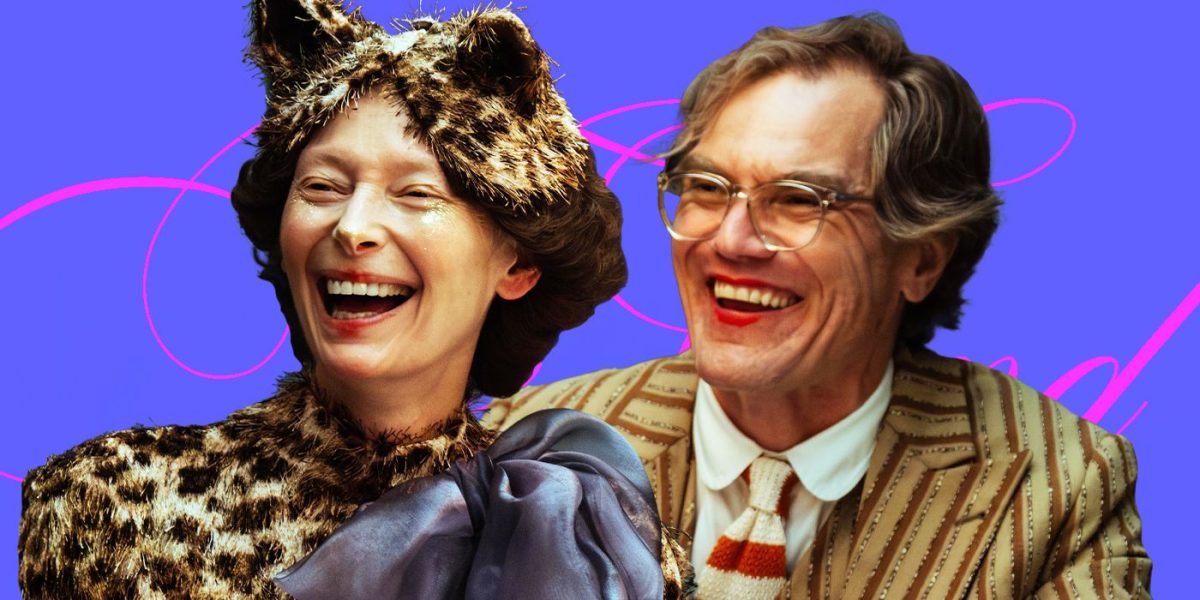
“We’re Looking Headlong Into the Abyss” – ‘The End’ Director Joshua Oppenheimer Opens Up About His Apocalyptic Musical
Dec 5, 2024
The Big Picture
The End
is a rich, complex tale from a deeply cerebral filmmaker.
Oppenheimer tackles the human condition and political themes with nameless characters.
The film explores lies, stories we tell to banish our ghosts and ease regrets.
Joshua Oppenheimer’s 2012 film The Act of Killing is a powerful rumination on how even the most vile of humanity consider their actions within a narrative framework. With its quieter yet no less powerful sister film, The Look of Silence, these are breathtaking masterpieces that live at the summit of non-fiction filmmaking, easily among the greatest documentaries ever made.
It was with both interest and trepidation that his ambitious follow-up was met during its initial festival run (TIFF review HERE). The End is an apocalyptic musical set in a claustrophobic bunker, a family with generic character descriptors such as Son (George MacKay), Father (Michael Shannon), Mother (Tilda Swinton), and Girl (Moses Ingram) providing a profound, provocative look at the lies told in order to soothe existential anxiety. It’s a rich, complex tale from a deeply cerebral filmmaker, resulting in fascinating connections between his previous documentary works and this new flight of fictional fantasy.
Collider spoke to Oppenheimer before the film’s general release, discussing the personal connections to the story, how a real-life oligarch led him to create his own cinematic bunker, and what he’d choose to listen to if his world was crashing down.
The Beginning of the End
How did the process of telling this story begin?
COLLIDER: This film has been a long time coming. When did it first occur to you that you wanted to deal with the end of the world for your first fiction feature?
JOSHUA OPPENHEIMER: I think there are two ways of answering that. My work in general is concerned with lies, the stories we tell ourselves to impose, at the broadest level, a kind of order on the chaos of mortal existence. In the case of the three films I’ve made, I suppose my work is concerned with how we tell stories to ease our regrets in order to try and banish the ghosts of our past.
I’m a filmmaker who approaches every human being in front of my camera with a sense of curiosity and love for that individual soul, no matter how flawed their actions or how misguided their trajectory may seem. There’s an intimacy and warmth in my work that I try to use to implicate the viewer. At the same time, I’m a political filmmaker. I think The End has these two allegorical layers that are superimposed. You have these nameless characters who are all of us; you have a single family, which is any one of our families, and then you have a broader family, the entire human family.
Then there’s sort of a third, but I think the almost least important, allegorical layer. Central to the film’s politics is the concern about inequality and greed. I think we use narratives to defer or banish our pain. In the case of this film, it’s seen in the father’s quest for wealth and quest for a kind of salvation. The building of his oil empire is also a kind of very human attempt at building a legacy and building immortality and legacy, beyond our mortal lives.
Image via Neon
I’ve always been interested in the end of life. Death can provide a moment of moral reckoning, challenging the reality of everything we’ve built, and the stories we’ve told ourselves. We try and make sense out of something that is beyond all sense, and that is our own fiction. At the same time, when thinking about the human family and the political dimension of the film, the end of the world is kind of the same. We face an ending as a species, and we’re looking headlong into the abyss, potentially into our collective demise, while each of us faces a private end.
I’d wanted to make a third film in Indonesia with the oligarchs who came to enrich themselves by taking advantage of a country that was terrified of them in the aftermath of genocide. You can see these men on the periphery of The Act of Killing, and you see some of them in The Look of Silence, too. I of course couldn’t return to Indonesia after The Act of Killing came out, so I started investigating oligarchs who enrich themselves in similar ways.
I found an oil tycoon elsewhere in Asia who had obtained his oil concessions by working with his country’s military to terrorize the people in that region. He was concerned with overcoming his personal death, invested heavily in life-extending medicines that he hoped, while he was still young enough to avail himself of them, to benefit from them. He was also buying a bunker for his family. They invited me along to film their house hunting for this bunker. It was not yet decorated, so it was a kind of a shell that they were supposed to kit out. It was a former Soviet command bunker, and they’re there deep in a mountain, and it was to have many of the same features that you see in The End: A vault for the family’s art collection, wine cellars, a huge garage for their luxury car collection, a pool, gardens, etc.
I was dying to ask them all these questions, but I didn’t know them well enough to ask. I was wondering, how do you cope with the remorse for the catastrophe that you would be fleeing? How would you accept guilt for the loved ones whom you couldn’t bring with you? How would you raise a new generation in this place if it came to that? And, in turn, what would you tell the new generation about what happened, about why you were there, about your life, about the world that you’d built and destroyed? And how would that become a way of sort of whitewashing your past for yourself, making your life digestible for you?
‘The End’s Ambivalent Finale
Image via TIFF
Your title for The Act of Killing is a play on a phrase, as through their performances they’re acting out their murders for the camera. Similarly, The Look of Silence works with the ocular technician’s trade. Here you have a film about finality which is very much not only about death, but also hints at a new, unsettled beginning.
OPPENHEIMER: I’m not sure. I’m curious about this idea that it’s a new beginning in the end, because I’m not sure it is. I think it’s a cyclical ending, sort of where it began, minus the hope, presumably, that someone else will come. You have a child who’s born and who’s fated to end up alone.
To that point, I generally think a lot of people misunderstand the implications of ending of your film. Yes it’s structured like a musical, with an almost happy, hopeful ending providing catharsis, with new life being brought forth. But of course, even a cursory thought as to what happens next is a bit dire.
OPPENHEIMER: With every film I make, there are some people who are confounded by some aspect of it in some crucial aspect. There was a minority of viewers of The Act of Killing who watched it, saw Anwar Congo retching, and thought he was pretending to elicit pathos with his ultimate damnation.
I mean, a lot of people say a lot of nonsense.
OPPENHEIMER: Well, Errol Morris was one who said that, and that’s not inconsequential.
Interesting, given he’s made a career out of recreating things with his documentaries, and so presumed inaccurately that you’d employ the same methodology.
OPPENHEIMER: In my experience screening The End film all over the world, it’s a small minority of people who are convinced by what Girl and Mother sing, the lyrics pointing towards them desperately try to convince themselves that their future is bright. That’s of course a doubling down on the lies. As they continue on the path, I think you’ll see a child who’s also unhappy. You see a father of that child, Son, who’s now downing shots as he’s trying to raise himself for the family birthday party. You see Mother who’s plunged into a kind of abyss of guilt.
I know that some people are so enamored of the idea of bringing a new life into this world, and the arrival of a baby that they take that as a kind of gesture of hope. It is such a powerful symbol for some people. But for me, the ending is despairing. This is a family that is just simply descended further a couple circles of hell from where they began. Plus, they’ve destroyed this young woman who came in with the most beautiful gift, which is the gift of honesty and acceptance. They’ve terrorized her into silence.
How Documentary and Fiction Filmmaking Compare and Contrast
Image via Dogwoof Pictures
How much of a shift was that going from nonfiction to fiction, given the fact that your nonfiction had all of these, let’s say, performative aspects?
OPPENHEIMER: When I make a documentary, the camera is always the antagonist. I think that’s true of all good documentaries. I use that as a kind of metaphor for the situation that I try to create with my subjects and the camera, where we all are pushed beyond our comfort zone into a space where something extraordinary happens. I’ve come to realize that an extraordinary thing happens when you are exploring that gap between how people want to be seen, the performative self they bring to the camera, and then how they really see themselves.
I grew up in a family where there was divorce. My role was sort of to reassure my mother, just because of where I fell in that order of siblings. It felt most comfortable to me as a 7, 8-year old boy was to reassure each of my parents of their own narratives as a way of kind of keeping close to them and keep it feeling safe. My father’s narrative and my mother’s narrative, of course, had to contradict each other. For a while I lost myself. I learned how to please people, but sort of lost my own perspective and my own capacity in that chasm.
When making a documentary, you’re sort of thinking that if we create this situation, it will yield these surprises. You’re creating in a kind of indirect way at 1 or 2 degrees removed from the thing you’re trying to create. Whereas in fiction, I can initiate exactly where the turning point of the scene is going to be. So a crucial difference is that when you’re staging the whole scene, you’re blocking performances to illuminate that turning point.
In fiction I’m also able to work with the participants with full transparency about what a given scene means to me. When you’re working with actors of such profound brilliance, they are digging into their inner lives, into whatever their craft is, to find the truth of that. They find truths that I instantly recognize as authentic because they’re not what I expected. Just as with my documentaries, I’m always looking for those moments of authenticity, those anomalies, those unexpected moments that I instantly recognize as true.
Related Tilda Swinton and Michael Shannon Lead a Post-Apocalyptic Musical in First ‘The End’ Trailer The star-studded ensemble film premieres on December 6.
In the bunker, the family brought their art, they brought their cars, they brought a pool, but they didn’t bring music and they didn’t bring movies. The music is implicit in whether they’re singing, of course, but they’re not sitting around listening to scores, not listening to Bach or The Beatles or whatever.
OPPENHEIMER: Because they sing, music plays this special role of carrying the luminously beautiful, seductive lies that they tell themselves so they can cope with their bleak reality. They sing so that they can get out of bed in the morning, to look in the mirror, face themselves, and carry on despite the apparent hopelessness of the situation. Because the music holds that false hope, it is very important that we not clutter that channel with other music. The character who’s a cynic, the doctor, doesn’t have music. I mean, he doesn’t sing at all.
If it was the end of the world, what music would you want to listen to? What films would you bring to last the rest of your life?
OPPENHEIMER: I simply have to say I wouldn’t want to be in that bunker. But if I hurled myself into that abyss? I think I’d want to listen to the silence, to myself, to the people I love, and not find myself surrounded by artifacts to contemplate or appreciate. But I sure would hope to not ever be in that bunker.
Well, as somebody who appreciates the artifacts that you create, sir, it is such a pleasure to speak with you again. And as somebody who would always surround myself with stuff that you create.
OPPENHEIMER: Thanks so much.
The End is in select theaters on December 6.
The End is a contemplative drama exploring the intertwining lives of strangers during the final moments before a cataclysmic event. As each character reflects on their life choices and relationships, the film examines themes of regret, acceptance, and the delicate nature of human connections in the face of impending change.
Get Tickets
Publisher: Source link



‘The Rookie’s Best Season 8 Episode Goes Completely Different With Full Zombie Horror
Editor's Note: The following contains spoilers for The Rookie Season 8, Episode 10.It's crucial for procedurals to come up with a winning formula that entices viewers to tune in every week. But it's just as important for these types of…
Mar 13, 2026
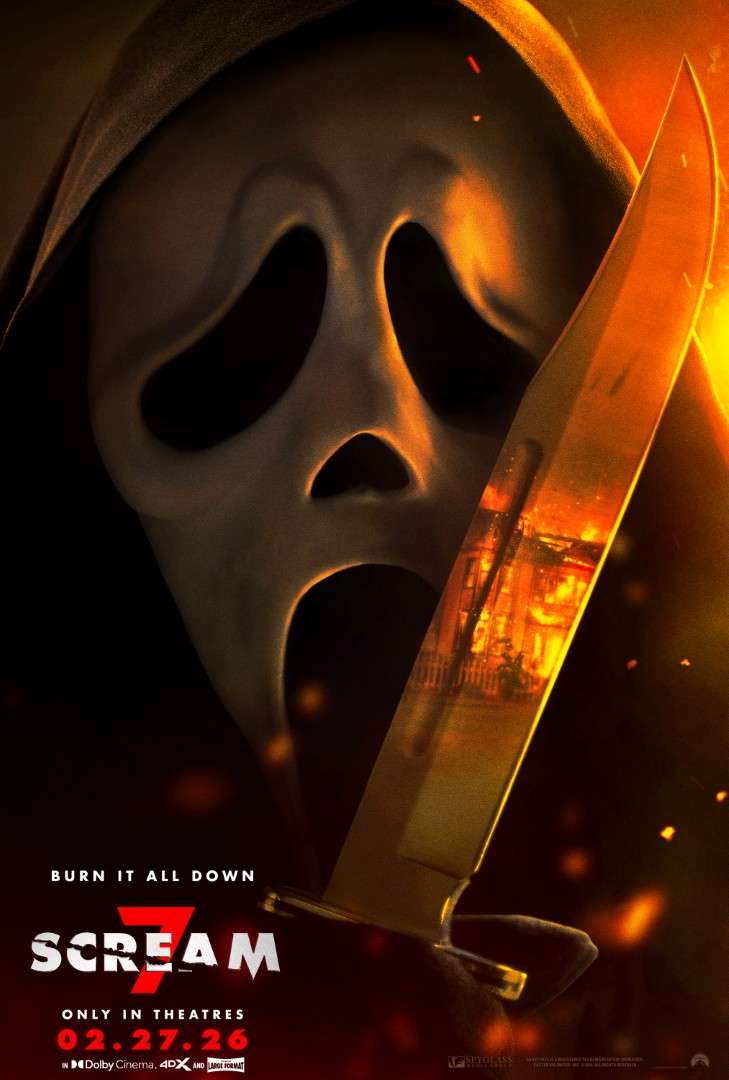
Sidney Prescott Leads a Brutal Throwback
Walking into Scream 7, I wasn’t sure if this entry would be a new reinvention. I know I wanted tension. I know I wanted that uneasy calm before the snap. And most of all, I wanted to see why Sidney…
Mar 13, 2026

Eggs – Film Threat
In writer-director-star James Clair’s short drama Eggs, a man struggling to rebuild his life finds his quiet mornings turning into strange conversations with the very eggs he is meant to cook. I mean, they want him to eat them. So…
Mar 11, 2026
Ethan Hawke Elevates A Rugged, Predictable Gold-Run Survivalist Western[Sundance]
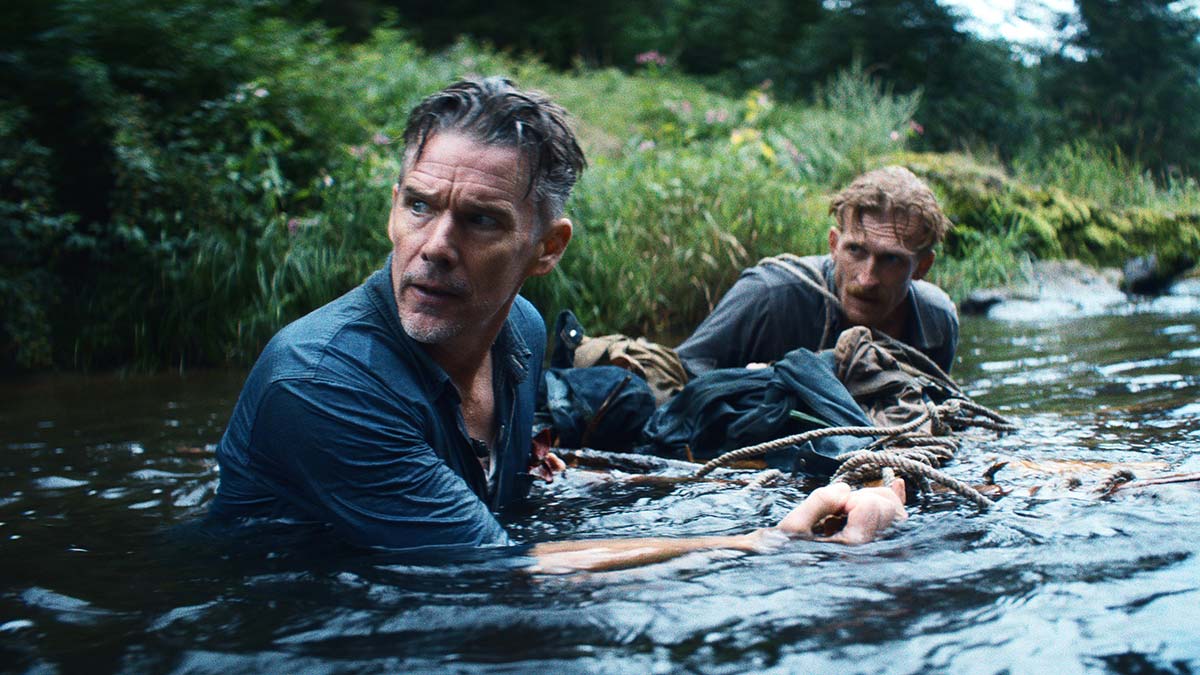
As far as one can tell, Murphy (Ethan Hawke), a father, WWI veteran, and avid car mechanic, has never encountered an insurmountable challenge. Living in Eugene, Oregon, in 1933, four years into the Great Depression, Murphy and his young daughter,…
Mar 11, 2026