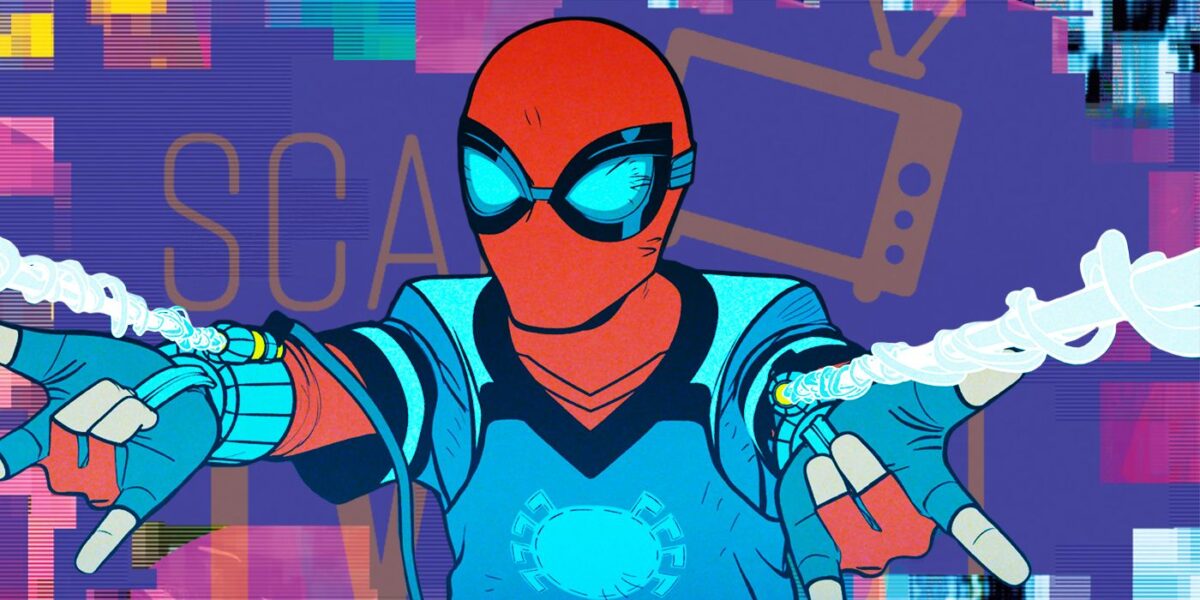
‘Your Friendly Neighborhood Spider-Man’s Creator Shares Updates for Seasons 2 and 3
Feb 23, 2025
Summary
Collider’s Steve Weintraub talks with creator, executive producer and showrunner Jeff Trammell at the 2025 SCAD TVFest panel for Your Friendly Neighborhood Spider-Man.
During the interview, Trammell shares his story from the first pitch with Marvel Studios and takes us inside the writers’ room.
The showrunner shares Easter eggs, his experience working with Colman Domingo and Charlie Cox, the inspiration behind the show’s unique animation, and updates for Seasons 2 and 3.
At this year’s SCAD TVFest, Collider’s Steve Weintraub had the honor of moderating the panel for Marvel Animation’s new series Your Friendly Neighborhood Spider-Man. To dig into the inner workings of an animated television show with one of the biggest studios commanding screens in the last couple of decades, creator, executive producer, and showrunner, Jeff Trammell hit the stage for a one-on-one conversation.
During the panel, Trammell walks us through a day in the life of a Marvel Studios showrunner, from the very first pitch meetings with Kevin Feige to the writers’ room. He talks about working with Oscar nominee Colman Domingo, how getting Charlie Cox as Daredevil changed the trajectory of the series, and the status of Seasons 2 and 3. He also shares the inspiration for the unique throwback animation style, the homage to the ’60s theme song, and so much more. Check out the full conversation in the video above, or you can read the transcript below.
Jeff Trammell Shares His Journey to Marvel Studios
From a security guard at Target to pitch meetings with Kevin Feige.
Image via Getty Images
COLLIDER: You never know how something’s going to be received. What has it been like for you, with everyone raving about it? I believe it’s still at 97% on Rotten Tomatoes after 40 reviews.
JEFF TRAMMELL: It’s satisfying and gratifying. I think people are kind of conditioned to have a certain thing where they latch onto it, or they’re like, “Oh, this is new. It’s not going to live up to the expectations I have for the series.” But with me being such a fan of Spider-Man and wanting to make sure that we did right by the property, I really wanted to make sure that it felt like something that was for new fans, old fans, and anyone in between. So, it’s been really cool to see that so many people are feeling it.
I did a little research on you, and I read that eight years ago, you were working at a Target as a security guard in Detroit. You’re now sitting here at SCAD and have a fucking awesome show on TV. How does someone make that jump?
TRAMMELL: I wish I knew. That was 10 years ago, so what you read was two years old. [Laughs] No, I knew I wanted to work in animation and television. I found out pretty early on when I was, maybe, like 19, that this was what I wanted to do. So, I basically taught myself how to write for television by downloading books and scripts and going through them because I didn’t go to college for anything—I probably shouldn’t say that here. [Laughs] But it was a thing where I wanted to do it, and I taught myself how to. Then, there’s a thing called the Nickelodeon Writing Program that’s incredible, where every year they get thousands of entrants, and basically they pick, like, four. If they pick you, you move to LA for a year and they pay you to learn. So I entered that, I somehow got into the top four, moved out to LA in 2015 to do that, and 10 years later, I’m doing this.
That’s amazing. Can I ask what it was that you submitted that got you in the top four?
TRAMMELL: I wrote a spec script for The League and Bob’s Burgers, and they were both really good.
What’s It Really Like Pitching for Marvel?
“It was very intimidating.”
From what I understand, you pitched Marvel on something else, and then you ended up with this. What did you pitch, and how did you end up with this?
TRAMMELL: You’re asking good questions. I was brought in to pitch on this show—you guys probably never heard of it—called X-Men ‘97. And they were like, “Not you… Because we want you to do Spider-Man.” That’s honestly it. I pitched to Brad Winderbaum, our head of streaming, and then pitched to Kevin Feige, the head of everything. They really liked my pitch, but they were looking for someone who could pick up where X-Men [The Animated Series] left off, and I very much was interested in starting anew, which was the perfect fit for this because so much of this is what we know about Spider-Man, what we love about Spider-Man, but a fun twist on it. I kind of endeared myself to them for that, and then they asked me to do Spider-Man.
I think a lot of people here hear the word “pitch,” but a lot of people don’t know exactly what that entails. A.) How nervous are you the night before you’re getting ready to pitch, and B.) take us through what it’s actually like to pitch something and what it was like at Marvel pitching in case someone here gets to do the same thing.
TRAMMELL: I pitched in 2020 over Zoom during the pandemic, which is even more nerve-wracking because I’m like, “Oh my god, what if my internet goes out? What if I screw up everything?” Leading up to the pitch, I had already pitched to Brad; I knew what I had, I knew Brad liked it, so I was just hoping that Kevin liked it. I was like, “Okay, cool.” Then, I was supposed to pitch the Friday before Thanksgiving, so that’s fun because no one wants to pitch on a Friday because people have turned their brains off for the weekend, usually. Then they asked me to pitch to Kevin at 6:30 p.m., which is a terrible time to pitch anything. Then Kevin was in another meeting, so they pushed it to seven, and then they were like, “He’s still running late. Can we push to 7:30?” I was like, “I can do this another day,” and they’re like, “No, we want to have you pitch before the break so it can be in his mind and fresh.”
So Kevin got on at, like, 7:15 and was super nice. It was the first time I’d ever met him. I told him about myself, my history, working in the Nick writing program, and so on. Then I pitched a version of X-Men that they all really liked. Kevin was nice enough to talk to me afterwards for about 10 minutes, just about working on the X-Men films and everything like that. So it was a really cool experience. It was very intimidating, but when you have an opportunity like that, you just got to throw that away because you don’t want to think, “What if I mess this up?” Or, “What if I don’t get it? What if I screw up?” So I just put all of that out of my head and went ahead with the best version I could.
So when you got on Spidey, how much were you thinking, “I want to have a three-season plan, a five-season plan. I want to really know where I’m going?” And how much is it sort of season by season for you?
TRAMMELL: I came in with, “I can tell four seasons of this easily.” Now that’s evolved to however long they want to do it. I’m ready to keep doing it. I love this world that we’ve built, and there are so many pieces that we haven’t even introduced yet that I’m excited to get to. So, I think it’s cool to come up with a plan but also know that they’re going to throw things that are like, “We’re going to pivot here. Let’s do this,” or, “Don’t use this character,” or, “Let’s use this character.” So, just being flexible in wanting to tell those stories is a big thing, too.
We “Won’t Be Waiting Long” for Season 2
The series has been confirmed for at least three seasons.
Image via Disney+
I could be wrong, but I think you’re doing three confirmed seasons?
TRAMMELL: My boss confirmed three seasons in an interview, so I guess I can say that we had three seasons.
For people who want to do what you do and want to know the behind-the-scenes, where are you in terms of Seasons 2 and 3 in the development process?
TRAMMELL: In terms of Seasons 2 and 3, in 2, we are halfway through the animatic portion for the season. We are about to turn in the final episode of the season, and we’ve already begun getting animation back for Season 2. In terms of Season 3, I’ll be pitching some ideas to my boss in the upcoming weeks for Season 3.
How long does it actually take now that the system is in place? Say they say to you, “We would like Season 4. Let’s start thinking about that.” Is the goal or has anyone told you, “We’d like to do this every year, have new episodes,” or is it every 18 months, or have they not said anything?
TRAMMELL: This feels like you’re trying to trick me into saying a release date.
You know what’s funny? A little bit, but I’m actually also curious. For example, if you have VFX on your TV show, once you wrap, it’s basically a year before you can even think about putting it on the air. I’m just curious about the animation process. Obviously, you’re going to be done within this month with this, so maybe Disney once said to you, “We’d love it if it were every year?”
TRAMMELL: I’ll say this: it took us four years to make Season 1. You’re building a world from the ground up, in 3D at that. We have all those pieces in play. We’re adding to it even more. We’re going to keep pushing things, but it won’t take four years for Season 2. I can’t say how long it will take, but I will say that I don’t think you’ll be waiting very long.
You’ve mentioned that there are a lot of Easter eggs in this show. Now that people have seen the first three episodes, is there anything that they missed or you want to point out?
TRAMMELL: I’m in the second episode somewhere. I’m not going to say where. I’ll let you guys figure it out. It’s a fun Easter egg hunt for you to go get up the numbers on Disney+. But also, I’m sure someone noticed when Peter’s at the pizza shop there’s a Pizza Time! sign. That’s a reference to the [Sam] Raimi movies. There are a ton of little Easter eggs in there, as well.
Related
The 10 Best Quotes From the Sam Raimi Spider-Man Trilogy, Ranked
With great writing comes great quotability.
You can make changes with the voices and animation until the very last minute. When did you actually finish Season 1 where you were like, “Okay, I’m out?”
TRAMMELL: I believe we finished the final process of Season 1 around August of last year. So, very recently, all things considered. That was a lot of getting pushed back so other shows could go ahead of us, working in the DI process, or working in the mixing process. So we probably could have finished up a bit earlier last year, but we ended up finishing in August.
What do you think would surprise people to learn about the making of an animated series at Marvel?
TRAMMELL: They’re really cool. Even with, obviously, wanting to do certain things, like, “I want to gender-swap Dr. Connors, I want to race-swap Norman Osborn,” because I think there’s a really interesting story there. It was never a conversation. It was just like, “Can I do this thing?” “Yeah, sure. Go ahead.” They’re really supportive. They’re really open to me being able to make those changes. Even in terms of things with Peter’s story that you guys will see later in the season. They’ve been really open, which is really cool.
Related
“Our Norman Has Different Nuances”: ‘Your Friendly Neighborhood Spider-Man’ Creator Teases Colman Domingo’s Multi-Layered Norman Osborne
“This is a different guy.”
Originally, I think you were going to do this in the MCU timeline or something and then it changed to an alternate timeline. Can you talk about how close it was to being in the actual MCU and how much freedom you have when it’s an alternate timeline? With the changes you’re making, have they said to you, “You’re pretty much free to do whatever?”
TRAMMELL: Kind of, yeah. When people say we started in the MCU, that’s like when they were like, “Hey, here’s the job. Here’s what the show is, and figure out the rest.” It was kind of like, “We can’t do this if we want longevity. If we want to be able to tell really fun stories, if we want to be able to be like, “Oh, this person can find out he’s Spider-Man.” For example, Ned finds out he’s Spider-Man in Homecoming, so Ned wouldn’t have been able to find out beforehand. It kind of limited what we could do. In terms of being able to make a lot of changes and be very different, it’s definitely afforded us a lot more opportunities.
I would say there are still certain things that probably will line up. One of the things that we have is the backdrop of events of things going on in the MCU within our world that still happen because it’s a tangent, but there are some similarities and some differences. There’s a big one in Episode 4 that you guys didn’t see today that I won’t spoil for people who haven’t seen it, but there are certain things that we can do or certain characters that haven’t popped up in the MCU just yet that we were able to use. But also, you won’t see She-Hulk pop up in an episode because the timeline wouldn’t make sense. So, certain things like that we do kind of stick to the guidelines.
How’d you come up with this title? Originally, if people don’t know, it was Spider-Man: Freshman Year and each season was going to be, like, Sophomore Year, etc. Talk a little bit about how you ended up with this.
TRAMMELL: We decided to change the title, and they were like, “Could you come up with the list of titles?” And I said, “Sure.” I sent a list of titles, and they were like, “Cool, we’re not going to go with any of these. We’re going to go with Your Friendly Neighborhood Spider-Man because Kevin picked it,” and I was like, “Great.”
That is the proper answer.
Oscar-Nominated Colman Domingo “Puts in the Work” for Norman Osborn
“He needs to come across as powerful but also very likable.”
Image via Disney+
You have Colman Domingo voicing Norman, which is awesome. Talk a little bit about getting Colman.
TRAMMELL: Colman is incredible. We were super fortunate to get him. We were trying to figure out who could do Norman because there’s so much weight behind this character and so much gravitas, but also, he needs to come across as powerful but also very likable, very approachable in a lot of ways, even though he’s still such a big entity in this world. So, as we were trying to figure out who we could go with, our supervising director, [Melchior Zwyer], was like, “What about Colman Domingo?” And I was like, “You’re a genius, but also, Colman just got nominated for an Oscar. We can’t go to Colman.” Then we’re like, “Hey, Colman, will you do this?” And he was like, “Yes, please.” And we were like, “Oh, okay.” So, he’s been just a delight to work with and just one of the sweetest, nicest people. He cares so much. It’s clear this is something he wants to do, and he really puts in the work to make sure that Norman is fully realized as a character.
Related
“I Think It’s Overwhelming”: Colman Domingo Reacts to His ‘Sing Sing’ Oscar Nomination [Exclusive]
The two-time nominee spooke to Collider about his most recent nod at the Oscars.
This is your first time doing a show like this and having such creative power. What have you learned making the first season that you wish someone had told you early on?
TRAMMELL: This job is hard. [Laughs] It’s a lot, but it’s awesome. It’s a lot of meetings, and I got into this to be a writer. So when I’m not writing all the time, that feels weird now because I’ve kind of moved into another role. In Season 1, I did a lot of writing. I wrote maybe half the episodes. In Season 2, currently, we’ve expanded our team. I’m only writing maybe one and a half episodes because I’m so busy in meetings or going to design meetings or records or various other things, but I’m still overseeing the story. So, knowing that as you’re in this position and start to move up, you get a little less time to do the things you really want to do because there are so many other things to focus on. All those things are fun, don’t get me wrong, but wanting to be a writer and getting to sit down and write Spider-Man is such a dream. Now it’s like, “Well, I can’t write Spider-Man, but I get to see these designs for Spider-Man, or I get to do this thing for Spider-Man, or I get to direct Spider-Man,” which is really cool, as well. So, just knowing that as you move up, you’re puting on a bunch of different hats, which explains why Kevin wears so many hats.
What’s a Day in the Office at Marvel Studios Like?
Trammell shares his day-to-day creating a television series.
Image by Nimesh Niyomal Perera
For people who don’t realize or, again, they want to do what you’re doing, what exactly are the hours on a Monday through Friday? I don’t know if you go to the office. I don’t know if you work at home. What is it like for you? Are you starting at nine and leaving the office at seven? Is it a seven-day-a-week job, or is it once you check out Friday, you try to take the weekend?
TRAMMELL: We are like a work-from-home hybrid. Most of our crew works from home, although myself and some of the other members do go into the office from time to time for a meeting or a pitch or an edit session or a record. Honestly, each day is really different. There are times when I have maybe four meetings throughout the day, but one of those meetings might be a record, so it’s four hours at a record. I might start at 9:00, and I’m working through until seven because for our vendors in another country, it’s morning there, or there’s a time difference, so we’re in that meeting from six to seven instead of five to six. So, things like that.
It can get really busy. There have definitely been days where I have scripts to do, as well as I have to do tons of meetings, and I have to go record a thing for press afterward, or even with us trying to finish Season 2 and work on Season 3, as well as getting Season 1 out the door fully. It’s a lot of overlap. So it’s definitely a lot of time. I try to clear out the weekends. Things happen, but my big thing is not wanting my crew to feel like they have to work on the weekend. “You work Monday through Friday, and the weekend is your time,” because I don’t want anyone to feel overworked or overstressed. I’ve had a lot of dread from projects where I’ve had things move into the weekend, so I don’t want this to be that for anyone. That’s really important to me. So, usually I’m trying to keep it Monday through Friday.
How ‘Your Friendly Neighborhood Spider-Man” Captures a “Classic but New Vibe”
“A lot of that was about trying to set ourselves apart from everything else.”
Image via Disney+
The 3D cel-shaded animation, as you know, plays homage to the art style of The Amazing Spider-Man comic books by Steve Ditko and John Romita Sr. Why did you want to go for that?
TRAMMELL: A lot of that was about trying to set ourselves apart from everything else, and it’s so hard to find a style that works for you, that works for what we want to do with the story, as well as just to set ourselves apart from everything else. There’s so much Spider-Man in film, comics, games, everything, as well as Spider-Verse, which has so many different versions of Spider-Man in it. So, in trying to find something that allowed us to plant our flag in it, we went back to the beginning and said, “Is there a way to take these classic designs but still modernize them so they aren’t offputting for a younger audience but are very reminiscent of the classic designs?” For us, it was really early on trying to figure out that.
We work with an amazing team at Marvel Studios—our vis ed department and all of our incredible character designers, the main one being Leonardo Romero, who’s so talented and does an amazing job at taking those classic designs and modernizing them and making them so they can fit in this moving comic book world that we have.
I love that the theme song goes back to the ‘60s, but it’s also modern. Can you talk about how that happened and why that was important to you?
TRAMMELL: Very early on, I was like, “Can we do the ‘60s theme?” And they were like, “Probably not.” I was like, “Okay, cool.” Then months later, they were like, “Let’s do the ‘60s theme,” and I was like, “Cool!” [Laughs] But again, we wanted to make sure that it’s something classic that we all love, but also modernizing it, finding a way to make it different. We had a few different versions, and we worked with the incredible team, The Math Club, who do our music for the opening titles, as well as Melo and Relaye, who are two really awesome artists. They took a stab at making this their own, which I feel like they’ve done a great job of giving us something that you hear and it immediately takes you back, and it’s different. So once again, our classic but new kind of vibe.
Making Every Penny Count in Animation
Animation isn’t cheap!
Image via Disney+
Something I’m sure a lot of the students here would understand is that certain shots cost more money and take more time. How did you decide where and when you guys wanted to deploy additional resources on a scene or a shot?
TRAMMELL: Usually, it became those big action moments. As the season goes on, the action gets even bigger and more intense and we really go for it. But also, our show thrives in these really small moments, these character moments where it’s just two characters talking, like that moment with Lonnie and his mom is such a powerful moment. So, making sure that those feel super realized, but also so we aren’t skimping on the animation, they’re making sure that you feel invested and like you’re watching almost a live-action thing for those. Then, once we get to our crazy Spider-Man battles or him web-swinging, those are the moments we really can rack things up and make sure that feels super earned and something you want to sit down and watch. It catches your eye.
What ended up being more expensive to do or more time-consuming than you realized when you started doing this?
TRAMMELL: Just designing characters and models, especially working in 3D. It takes so long to build up this world, and there are quite a few locations where we’re like, “Okay, cool, we’ll do this thing,” and then it’s like, “Well, we’re never going to use this pet shop again that we spent all this time modeling out.” But I think that comes with the territory. So, finding places that we can reuse as we’re telling these stories, but also not making it feel like, “Peter’s hanging out at the pet shop for the fourth episode in a row.” So, just being able to really pinpoint, okay, we’re going to be at the school a lot naturally, so it’s a place we can use a lot, but also, are there other locations that we can continue to revisit but not have it feel awkward that we’re still at these spots?
It’s so interesting because it’s basically just like live-action. If you ever watch a TV show and you see a set that’s beautifully designed in Episode 1, it’s going to be the whole season.
TRAMMELL: Yep. So, all our sets are beautiful. [Laughs]
What are you thinking about with finales? Are you thinking that each season should have its own arc, or do you feel like each season should tease the next?
TRAMMELL: Both. There should be a nice ending to a season to reward a viewer. I don’t think you should ever walk away from it, like, “Okay, cool. Now I’ve got to wait two years to feel any kind of joy from watching this,” but I do think that there should be something that hooks you and has you excited to keep watching. So, for me, I’m very much of the mind of we will conclude a story. We’ll make sure that it feels final. But if you are thinking, “Do I want to watch Season 2? Do I want to watch Season 3,” and so on, there’s a hook that draws you back and gets you interested.
Have you been given any sort of mandate that each episode should be 26 minutes or 24 minutes? Or is it like, “Here’s your budget,” and you can do this many minutes of animation, and you decide how and where it’s going to be?
TRAMMELL: It’s definitely the latter. Early on, we have maybe 250 minutes of animation, so that’s splitting up the episodes with that amount. Some may skew 23, some may run longer to 28. But yeah, it’s deciding, “Where do we need that time the most?” If we’re building out the pilot, obviously, we need more time to set up the world, or if we’re building out the finale, we want to make sure that we’re knocking it out of the park. So it’s trying to find where to alot that time and what’s the best use for it, even though it’s all very precious time.
You obviously are already in the planning stages of Seasons 2 and 3, but are there certain crossovers or characters that you feel like you need to bring in, things that maybe are not what the audience will expect?
TRAMMELL: I was going to make a joke, but I don’t want to get anybody excited about it. I was like, “It’d be cool to see the Ninja Turtles,” but they’re not coming. No one quote me on that. I mean, definitely. There are some characters in Season 2 that I’m really excited to dig into. I don’t want to spoil anything for you guys, so I won’t.
Image via Getty Images
I’m always fascinated by the original idea that you’re going to do versus what ends up on screen. So how dramatically did the show change along the way?
TRAMMELL: Honestly, it’s very much what we set out to do. Outside of that two-month gap of figuring out what the show could be and then realizing, “No, it should be this,” this is it. I opened the script that I wrote back in August of ‘21 the other day, and so much of it is exactly what you guys saw in that first episode. It’s been plussed immensely by our storyboard team, our designers, by our previs, by everyone, but it is still the same story. So, very early on, we knew what we wanted it to be and set out to make it the best version we could.
Charlie Cox Was “Awesome to Work With”
“I haven’t had the pleasure of working with Vincent D’Onofrio…yet.”
Image via Disney+
Charlie Cox and Vincent D’Onofrio are coming back and voicing Daredevil and Kingpin. What the hell is it like getting those two to be in this, and how much fun was it to work with them?
TRAMMELL: I can comment on one of those, because one of those is true. The other is a rumor that got started that is not true. Charlie Cox is in the show as Daredevil. It’s incredible, and I’m excited for you guys to see him. He’s been awesome to work with. I did not know that we would get the opportunity to have him in the show. Very early on, I was like, “Can we use Daredevil?” And they were like, “Yes.” I was like, “Can I use Charlie?” And they were like, “Yes.” I was like, “Are you sure?” Because this was before even the show had been announced. So, yeah, he’s been awesome to work with. I haven’t had the pleasure of working with Vincent D’Onofrio…yet. Hopefully. So, we’ll see.
When you have access to Charlie as Daredevil, how much does that change your plans where you’re originally like, “I think I’ll do one episode with Daredevil, and now maybe I want to have him in a big team-up?”
TRAMMELL: It did not change my plans for Season 1, is what I will say. [Laughs]
I like that.
TRAMMELL: Season 2 is called Your Friendly Neighborhood Daredevil.
Related
Matt Murdock’s Catholic Guilt Is Showing in New ‘Daredevil: Born Again’ Teaser
The series premieres next month.
Episode 1 of Season 1 is called “Amazing Fantasy,” which is a great shoutout to the comics if you’re not familiar with the history of Spider-Man. How’d that happen, and do you have any other episodes that have little nods to Spidey’s history?
TRAMMELL: Yes. Every single episode in the series thus far is taken from or inspired by another comic issue. That was a thing that was important. As we were naming it, I wanted to make sure that were paying, again, homage to his history. So Episode 2 is called “The Parker Luck” because, of course, we all know about the Parker Luck. Episode 3 is called “Secret Identity Crisis,” which is based on Identity Crisis, which is a Spidey arc. They’re all named after that, just like each of the opening credits’ splash page is inspired by an actual comic book that then Leo, our character designer, would take and do a version of that references our show.
You describe the series as a moving comic book, which is achieved through 3D cel-shaded animation provided by Polygon Pictures and CGCG Inc. How did you decide on these companies?
TRAMMELL: We actually went to a few different ones just to figure out the look as we figured out the show, but I believe our producer or someone on our team suggested Polygon, who works with CGCG. They both work together, so they split episodes or share assets between one another. For what we were looking for, which is this 2D/3D hybrid look, Polygon had a lot of history in doing that. CGCG does that, as well, so they were the perfect fit for us. They’ve been incredible to work with. As we’re pushing the show to its limit and pushing it even further in Season 2, they’ve been great partners.
When you start making the first season, you learn what’s easier for the company to do. You learn how to make it. So, how has that actually specifically been utilized for Seasons 2 or 3?
TRAMMELL: A lot of it comes with just knowing, “This company does fantastic fight scenes,” or, “These guys are really great at building the environment we need.” So making sure that if we know that we can split these things this way or it might be cooler to have this team do this episode because they have these capabilities. So, honestly, both of them are great. Both teams are incredible. So, a lot of it is just weighing who we think is going to knock it out of the park for this one versus that one. Because we also need to deliver heavily on Episode 4, so just splitting it up in a way that feels great for both companies because we know we’re going to get the best work from them for either one.
Image via Disney+
How does it work in terms of designing action sequences behind the scenes when you’re writing an episode? Are you writing the actual battle out? Are you describing things or are you sort of like, “Spider-Man and [insert character] fight?”
TRAMMELL: Man, I’d be a terrible writer if I did that. So, I do that… No, I’m just kidding. Honestly, that’s the fun of it, too, is I’m playing with these toys, basically. I’m getting to help build this world. But I like to focus on the important aspects. So, if I were doing—which I did—the script for Spider-Man fighting Speed Demon and Tarantula, or James Maria, I might write, “Spidey is fighting this, he gets kicked into a bus, or he gets kicked off-screen,” and so on and so forth. Or, “Spider-Man listens in using his senses to hear James’ speed tech boots.” I would do something like that that’s really important to the story.
Then, I want to give free rein to our board artists because I know how incredible they are. I came from a board-driven show where it was basically like, “Here’s an outline, and you guys write the script and figure out stuff.” I saw firsthand when I was working on Craig of the Creek how important that is and how much that opens up the world. So, I wanted to make sure that our artists had the freedom to craft the fight however they wanted.
Take a Peek Inside the Writers’ Room
What does a typical workweek look like?
Image via Disney+
There are a lot of people out there who want to write on animation. What is it like for you? It’s Monday morning, you’ve woken up, you have a white page in front of you, and you need to write an episode. Do you still get, like, “How the F am I going to do this?” Take us through how you like to sit down. A lot of writers I’ve spoken to say, “The first few hours I’m awake, I’m the most creative. As the day goes on, not as much.” But some people I know write 9–5.
TRAMMELL: I want to meet these people that are creative in the morning.
I’ve met a lot of people like that.
TRAMMELL: They’re better than me. I very much like to write at night. Sometimes, I’ll even write well after work just because I have the time. It’s, for me, very distracting when, let’s say, it’s 11:00 and I’m starting to write, but I have a meeting at one because I’ll get into it and I have to pull myself out of it to go to that meeting. Then, I have to try to find the flow again. So I’ll try to write later in the day when I know I won’t get interrupted, or I’ll just try to block out the entire day.
But yeah, I would say it’s definitely still intimidating. It’s still weird. I was doing an episode for Season 2, and I’ve written half of Season 1, and I’m super happy with it, but when I got the page in front of me, it’s just like, “Oh man, am I a fraud? Do they know that I’m not good at this?” [Laughs] And that was after following my other writers who had all done episodes that season. So I was like, “Oh man, they’re great. Oh, right. I’m a writer, too. I’ve got to figure out how to do this.” But once you get into it, those muscles kick back in. That episode I could not be more proud of, when you guys see it blank years from now.
Did you do the finale of Season 2?
TRAMMELL: I’m doing half of the finale of [Season 2]. I split it.
How does it work in the writers’ room with you guys? With Season 1 or Season 2, are you doing what certain shows do, which is the white board, and you’re figuring everything out, and then you’re going, “It starts here. We’re ultimately going here, and these are the things that are going to happen. We’ll each do an episode?” So everyone has an idea of what needs to happen in the episode they’re writing?
TRAMMELL: Kind of. What we do is, because I don’t know if you guys can tell from this, we have more than one main character. It’s a bit of an ensemble. So that means instead of just, “What’s this person’s arc?” We have to figure out three people, four people, five people’s arcs, and how do they interweave, and where do they meet, and where do they not meet? What’s too much time between these two characters interacting? So, it’s really a hard balancing act. We figure out where we want to go, where we’re picking up on them, where we want to end them, and then try to intersect other stories through, like a whiteboard, us doing numerous outlines. When we started Season 2, basically, we outlined every episode, and it ended up being, for the entire season, 56 pages of the story before we even went into writing dialogue. So it’s a lot to figure out. It’s a lot to juggle, but I’m super pleased with it.
Your Friendly Neighborhood Spider-Man Season 1 is available to stream on Disney+.
Your Friendly Neighborhood Spider-Man
Release Date
January 29, 2025
Network
Disney+
Writers
Charlie Neuner
Hudson Thames
Peter Parker / Spider-Man (voice)
Grace Song
Nico Minoru (voice)
Publisher: Source link


Wicked: For Good Review | Flickreel
When Wicked finally hit the big screen last year, the consensus was that Jon M. Chu nailed it, but he’d have his work cut out for him with Part 2, Wicked: For Good. Although most would agree that Act 1…
Dec 21, 2025
A Shocking Cliffhanger Puts One Fan-Favorite Character’s Life on the Line
Editor's Note: The following contains spoilers for Tracker Season 3, Episode 9.After eight solid episodes of Tracker's third season, the CBS drama continues to kick butt on a weekly basis, giving us plenty of thrilling weekly mysteries to solve alongside…
Dec 21, 2025
Dishonest Media Under the Microscope in Documentary on Seymour Hersh
Back in the 1977, the legendary investigative journalist Seymour Hersh shifted his focus from geopolitics to the world of corporate impropriety. After exposing the massacre at My Lai and the paid silencing of the Watergate scandal, Hersh figured it was…
Dec 19, 2025
Heart, Hustle, and a Touch of Manufactured Shine
Song Sung Blue, the latest biographical musical drama from writer-director-producer Craig Brewer, takes a gentle, crowd-pleasing true story and reshapes it into a glossy, emotionally accessible studio-style drama. Inspired by Song Sung Blue by Greg Kohs, the film chronicles the…
Dec 19, 2025