Roger Ebert Called This Iconic Actor the Soul of the Film Noir Genre
Jun 21, 2024
The Big Picture
Roger Ebert praised Robert Mitchum as the ultimate noir movie star.
Mitchum’s portrayal of complex anti-heroes and dark characters set him apart as a timeless film legend.
Ebert’s analysis of Mitchum’s nuanced performances showcases the actor’s ability to capture the essence of film noir.
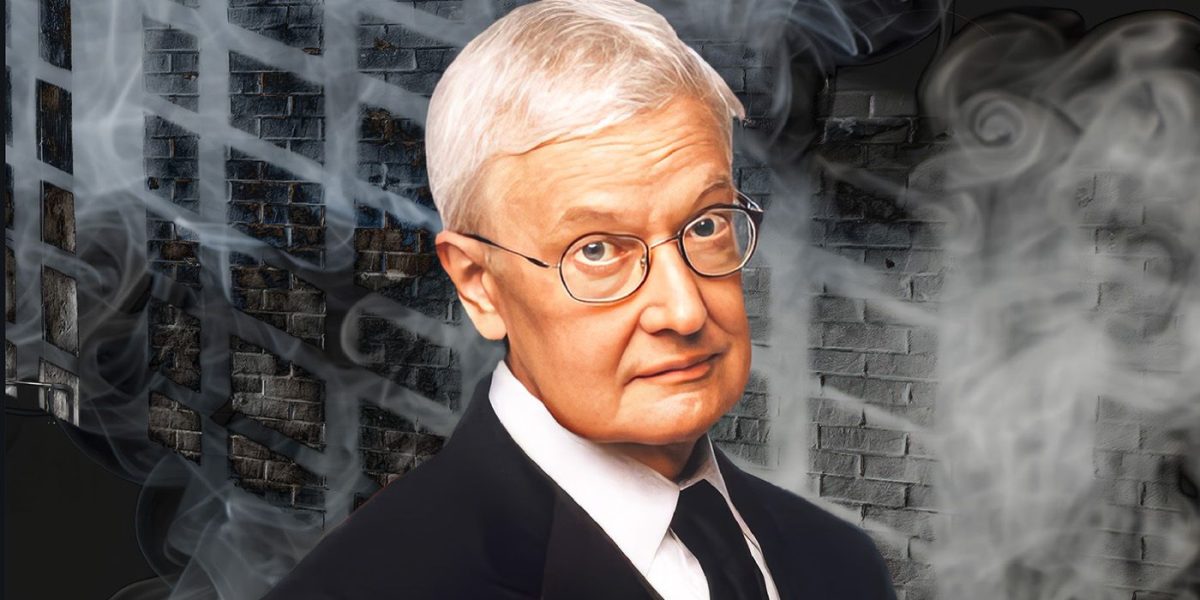
Out of anyone’s opinion on cinema, the voice of Roger Ebert superseded everything. No critic connected with a mainstream audience quite like Ebert, as his ability to connect film as an art form and personal expression resonated with general moviegoers. He was more than just one-half of a pair of thumbs alongside Gene Siskel. He understood the power of cinema and how it can change people’s lives. As a voice for the casual moviegoer, Ebert challenged his readers and viewers on Siskel & Ebert to broaden their horizons, believing deep down that everyone can find value in something deemed “artsy.” One of his finest pieces of criticism arose from a retrospective of one of his favorite actors, Robert Mitchum, describing him as the “soul of film noir.”
Many actors are synonymous with the classic film noir genre, including Humphrey Bogart, Edward G. Robinson, Sterling Hayden, Barbara Stanwyck, and Veronica Lake, but according to Ebert, the one that stood above all was Robert Mitchum. Renowned for portrayals of anti-heroes, Mitchum brought a dark and sinister edge to the movie star archetype in films such as The Night of the Hunter and Cape Fear. His sleepy eyes and laconic voice made him the ideal noir protagonist, exemplified in Out of the Past, Angel Face, and The Friends of Eddie Coyle. Mitchum’s expressive eyes were complemented by a weathered aura to his physicality. Everyone always cites that people looked substantially older than their ages indicated back then, and nowhere is that more applicable than to Mitchum. His natural presence on screen suggests a tired malaise, which suits the haze and discomfort of noirs.
The Night of the Hunter A self-proclaimed preacher marries a gullible widow whose young children are reluctant to tell him where their real dad hid the $10,000 he’d stolen in a robbery.Release Date July 26, 1955 Director Charles Laughton Cast Robert Mitchum , Shelley Winters , Lillian Gish , James Gleason Runtime 92 Minutes Main Genre Noir Writers James Agee Studio United Artists Expand
Robert Mitchum Was a “Harder, Wiser, Darker” Movie Star
Roger Ebert lauded Mitchum in his essay, “Darkness and light,” written following his death in July 1997. The story was a reaction to his death being overshadowed by the passing of another Hollywood legend, Jimmy Stewart, who died just a day after Mitchum. Ebert, who recounted his encounter with the actor in his soulful memoir, Life Itself, labeled Mitchum his favorite movie star. Where Stewart received all the glowing eulogies for playing earnest, well-to-do everyday people in It’s a Wonderful Life and Mr. Smith Goes to Washington, Mitchum represented the flip side of the coin. “He embodied a completely different kind of character on the screen: Harder, wiser, darker,” Ebert wrote of Mitchum, also citing that his grizzled edge acted as a foil to Stewart’s boyish charm. The disparity in memorialization between Stewart and Mitchum parallels the kind of movie stars we idealize. Stewart represented fantasy, while Mitchum tapped into a dark truth of the human soul.
Related Gene Hackman Gave a Haunting Performance in This Brilliant but Forgotten Neo-Noir Thriller Hackman has a bone to pick as a tortured private investigator.
The essay encapsulates why Ebert was the preeminent voice of cinema – a voice that extends beyond his lifetime thanks to the curation of all his work. By identifying Mitchum’s nuances of his smoking and drinking habits on screen, Ebert understands the importance of subtle gestures of acting, especially from a movie star. The former Chicago Sun-Times critic could seamlessly interpret one aspect of a film into a macro reading of the art form, writing in this essay that the actor represented, “the impenetrable mystery of the movies.” No genre was more impenetrably mysterious than film noir, as Ebert credits Mitchum for evolving Bogart’s image as the hardboiled detective and establishing the iconography of noirs for the modern day. From how he sported a fedora, puffed on his cigarette, and ungraciously brawled with other people, Mitchum embodied the soul of film noir.
Robert Michtum Defined Modern Noirs With ‘Out of the Past’ and ‘The Night of the Hunter’
Robert Mitchum’s melancholic energy was beautifully deployed in Out of the Past, the Jacques Tourneur noir about a gas station owner’s quiet life turned upside down upon being recognized by a former criminal associate. In his performance as Jeff Bailey, Mitchum seeks a tranquil life, but the look in his eyes suggests that the past will never be through with him, even if his old associate, Whit Sterling (Kirk Douglas), never encounters him. The film’s fatalistic themes and moody tone are expressed through his face alone. If Ebert was right about one thing, it’s that Mitchum’s ability to make a cigarette hanging from his mouth look like artistry is unparalleled.
The most exceptional film that Mitchum starred in, The Night of the Hunter, pushed the envelope in its depiction of evil through the lens of a charismatic antagonist in Harry Powell, a serial killer posing as a preacher who pursues two children to obtain a hidden stash of $10,000 from their late father. The film was Charles Laughton’s first and last directing effort, and honestly, he may have been wise to never direct again, as it would’ve been hard to match the visual brilliance and harrowing examination of greed and violence of his sole directorial effort. The noir is brought to new levels of dread, with the subject of two kids pushing the emotional stakes to a chilling degree. With this film, Mitchum established another indelible image: his tattooed knuckles, one that reads “L-O-V-E” and the other “H-A-T-E”; Spike Lee paid homage to this in Do The Right Thing with Radio Raheem’s brass knuckles displaying the same contrasting message. Part of his “Great Movies” collection, Ebert’s review describes Mitchum as “uncannily right” for the part of the Preacher, thanks to his “long face, his gravel voice, and the silky tones of a snake-oil salesman.” Mitchum portrays evil of the highest order, yet he is perversely captivating. The Night of the Hunter strikes a poetic balance between cynicism and childlike innocence, a juxtaposition symbolized on Mitchum’s knuckles.
Robert Mitchum Combined a Hard-Edge With Vulnerability
On the exterior, Mitchum’s expressive eyes and weathered age suit him to wear a fedora, smoke a pipe, drink bourbon at a dingy bar, and perform all the expected traits of a film noir. While he played Philip Marlowe in the ’70s adaptation of The Big Sleep, Mitchum created a distinct noir iconography on his own that extended beyond his appearance. Underneath his gruff persona, the actor’s vulnerability extracted the poignancy of the genre. Noir characters, on either side of the law, try to maintain control amid the frenzy of an enigmatic and convoluted plot. With Mitchum, his tired malaise evokes a sense that he has given up control while conveying a desire to make it out alive. This sentiment shines in The Friends of Eddie Coyle, a jaded small-time crook who finds no glamor in the gangster life.
With film noir established as an integral genre of classic Hollywood, Robert Mitchum came along and redefined audience notions of the criminal underworld for the modern day. We understand that morality is not a tale of good versus evil – the side of the law shares the same angst as nefarious criminals. Through his expressive features and transparent soul, Mitchum embodied film noir.
Night of the Hunter is currently available to stream on Prime Video in the U.S.
WATCH ON PRIME VIDEO
Publisher: Source link





Netflix’s 100% Rated Sci-Fi Action Series Returns in First Look at Season 2
One of the best video game adaptations of all time is officially back. Netflix is hard at work on a second season of its most critically acclaimed sci-fi action series, and fans can now get a sneak peek at one…
Jun 24, 2026
Prime Video Cancels Star-Studded, R-Rated Sitcom ‘Kevin’ After One Season
Amazon Prime Video Amazon has canceled Kevin, an adult animated sitcom about a neurotic tuxedo cat (Jason Schwartzman) who moves out on his own after the human couple who takes care of him breaks up. Finding life on the streets…
Jun 23, 2026

HBO Slashes Subscription Costs For New & Existing Users
Over the last few years, Warner Bros. Discovery has held a spot amongst the biggest streamers in the world with its work on HBO Max, even considering the litany of changes that have been made. Famously, this service has switched…
Jun 22, 2026
Why Netflix Canceled Sci-Fi Hit ‘The Boroughs’ After One Season
Streaming hits don't usually get canceled mid-victory lap. A show lands, the reviews glow, it climbs the Nielsen charts, and a renewal starts to feel like a formality, right up until the studio makes a decision. That's what just happened…
Jun 21, 2026