Gradually, Then Suddenly Featured, Reviews Film Threat
Jul 14, 2024
What happens when you run out of money? Where do you go? Who do you turn to? Now, ask yourself this. What happens when a city runs out of money? In Sam Katz and James McGovern’s documentary, Gradually, Then Suddenly, we go in-depth into the U.S.’s largest bankruptcy case when the city of Detroit filed in 2013.
The film’s title refers to a quote from Ernest Hemingway regarding how exactly one finds oneself in bankruptcy. The documentary opens by examining how Detroit got to this position. The Detroit Free Press went back fifty years and concluded that the politicians in charge of Detroit spent too much money, borrowed too much money, and paid too much for stuff. By 2013, all of the city’s debt was 13x the amount of the city’s assets.
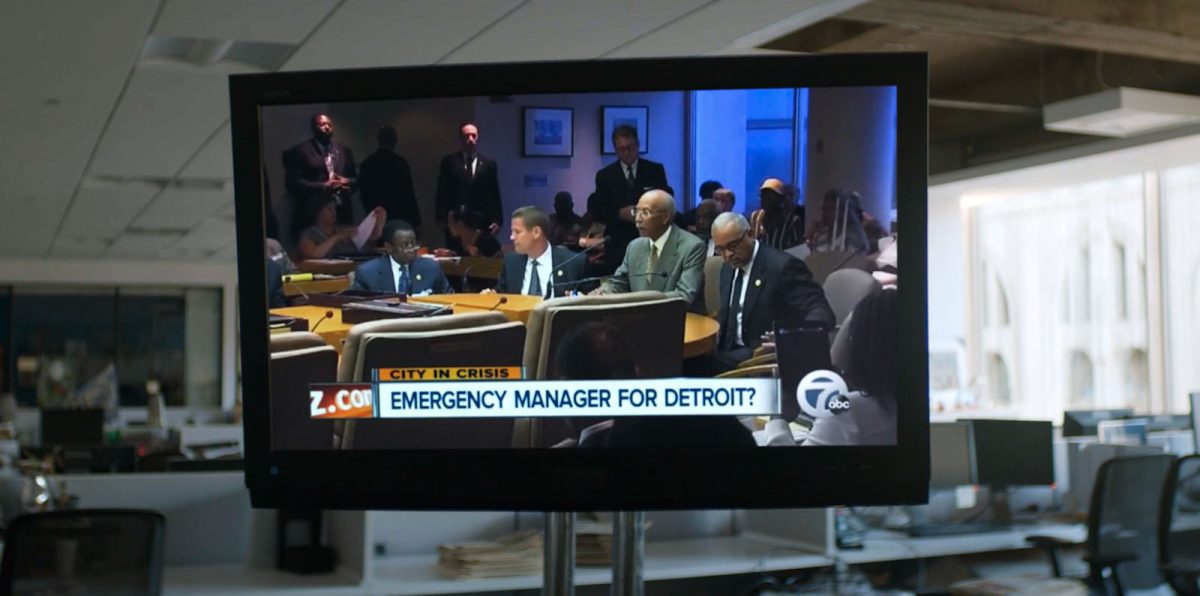
When the city filed for bankruptcy in federal court, Governor Rick Snyder passed the Emergency Manager Act, which allowed the state government to take over the city’s governance by appointing an Emergency Manager to usurp the power away from the city to fix this financial mess.
“…go in-depth into the U.S.’s largest bankruptcy case when the city of Detroit filed in 2013.”
Noted African-American bankruptcy attorney Kevyn Orr was appointed as Detroit’s Emergency Manager. With the city out of cash, Orr took drastic measures to restore the city to some working order. With the priorities to fund police and fire and save widows and children, everything else was on the table for drastic reductions. Let’s just say that no matter what Orr proposed, no one would like it.
Without getting into the weeds of the situation (I’ll leave that for the documentary), the issue of note for us doc lovers was the need to cut city worker pensions. Ah, Hell No! Thousands of Detroit citizens and city workers had been paying into the system since its inception. Times were already tough, and cutting pensions would shift many recipients under the poverty line. At the same time, less money was being paid into the system than what was being disbursed. It was a broken system in massive debt.
Detroit also faced the issue of having very few assets that could be sold. The first was the water and sewer company. The other was the Detroit Institute of Arts, which was owned by the city and, over the past century, purchased art now worth billions. It was clear that the creditors wanted to liquidate the collection to pay pensions and the city’s over 100,000 debtors.
Publisher: Source link








Forget ‘Lioness,’ Paramount’s 114-Episode Non-Stop Action Thriller Is One of the Biggest Shows on Streaming
Taylor Sheridan's hit action thriller, Spec Ops: Lioness, is nearly back with its third season. Season 3 of Lioness debuts on Aug. 2, dropping a new episode each week. While Taylor Sheridan fans are re-watching the series (and Sheridan's other…
Aug 3, 2026

Long-Awaited DCU Superhero Series No Longer Moving Forward After 3 Years
Another day, another superhero project canceled. Despite the box office success of Marvel Studios' Spider-Man: Brand New Day, it was sandwiched between the cancellation of Wonder Man Season 2 and Mahershala Ali confirming he is no longer attached to star…
Aug 2, 2026

Marvel Star & Creator Officially Address Shocking Series Cancellation
In a disappointing turn of events, one of the MCU's most-acclaimed shows has been cancelled shortly after it was confirmed for a second-season run. Featuring quirky and relatable characters, the series gained quite a following for its meta commentary on…
Aug 1, 2026
‘The Rookie’ Already Filmed a Series Finale To Prepare For Its Cancellation
The Rookie is one of the most popular procedurals ABC has aired over the past eight years. It was unsurprising that after ABC's highly popular series Castle ended in 2016, the network wanted to continue its working relationship with the…
Jul 31, 2026